Why a Seized Carrier Roller Eats Away Your Upper Track Links
Component selection, fitment and the connections that keep an undercarriage working as a system.
On this page
When a carrier roller locks up and stops turning, the upper track doesn't just sag—it starts grinding against a stationary metal surface. Operators often notice unusual noise or track slack first, but by the time visible wear appears on the link tread, the damage is already advanced. This isn't just accelerated wear; it's a specific failure mode where the link's contact surface gets shaved down unevenly, creating thin spots that can crack or snap under load. Understanding how this happens—and what to look for before it's too late—can save thousands in premature track replacement costs.
Last updated:

carrier roller failure track link wear
What Happens When a Carrier Roller Stops Rotating
A seized carrier roller turns a rolling support into a fixed friction point. Instead of the track links rolling smoothly over the roller's hardened surface, they slide and scrape across it with every revolution. This sliding contact concentrates stress on a small area of the link tread, especially near the transition from the flat running surface to the side wall. Over time, this localized abrasion removes material faster than normal wear, creating a visible groove or thinning that weakens the link structurally.
In real-world conditions, this often starts subtly. A roller with dried-out grease or a compromised seal may begin to rotate sluggishly before locking completely. Operators might dismiss early signs like slight track sag or a rhythmic thudding sound as normal aging. But once the roller seizes, the upper track run loses proper support, increasing tension fluctuations and causing the chain to slap against the track frame. This not only accelerates link wear but also stresses pins, bushings, and adjacent rollers.
The Mechanics of Link Thinning on a Stationary Roller
The wear pattern isn't uniform—it's concentrated where the link tread meets the roller's outer diameter. As the track moves, the same section of each link repeatedly contacts the seized roller's high point. This creates a grinding action similar to a lathe, removing metal layer by layer. The result is a localized reduction in link thickness, often most severe at the outer edge of the tread where stress is already highest during normal operation.
Finite element analyses of track links show that stress concentrates at the tread's outer corner and the transition to the side wall. When a seized roller adds abrasive friction to this already high-stress zone, micro-cracks can initiate and propagate faster than under normal loading. In extreme cases, the link's effective cross-section drops below safe limits, leading to sudden fracture during heavy digging or high-torque maneuvers.
Real-World Wear Patterns You Can Spot Early
Field inspections reveal consistent signs when carrier roller failure drives link wear. Look for:
Asymmetric tread wear: One side of the link tread appears noticeably thinner or more polished than the other.
Grooving or scoring: Parallel scratches or a shallow channel running along the link's contact path with the roller.
Edge collapse: The outer corner of the tread looks rounded or "mushroomed" instead of sharp.
Heat discoloration: Bluish or darkened patches on the link surface indicate friction-generated heat.
These patterns differ from normal wear, which tends to be more even across the tread width. If you see them clustered on links that pass over a specific carrier roller, that roller is likely the culprit.
Why Some Operators Miss the Warning Signs
Many equipment owners focus on bottom rollers and sprockets, assuming top rollers are "low risk" because they don't touch the ground. This oversight lets early roller issues go unnoticed until link damage is severe. Another common mistake is attributing track noise or vibration to loose tension alone, without checking whether a roller is actually rotating. In muddy or dusty environments, seized rollers can hide behind caked-on debris, making visual inspection unreliable unless the undercarriage is cleaned first.
KTSU's experience across thousands of undercarriage service cases shows that top roller failures often stem from seal degradation rather than shell wear. Once contaminants bypass the seal, bearing surfaces corrode or gall, leading to seizure. Because the roller shell itself may still look intact, the root cause gets misdiagnosed as "track wear" rather than a roller maintenance issue.
How Carrier Roller Design Influences Link Wear Risk
Not all carrier rollers handle misalignment or contamination equally. Rollers with deeper flanges and harder shell materials resist deformation longer, maintaining proper track alignment even as bushings wear. Precision-machined bores and high-quality seals reduce the chance of internal binding, which is the primary trigger for seizure. Some designs also incorporate larger grease reservoirs or labyrinth seals to extend service intervals in abrasive conditions.
KTSU's wear-resistant upper carrier rollers, developed through decades of Sino-Japanese engineering collaboration, use case-hardened shells and multi-lip sealing to maintain rotation under heavy side loads. This design philosophy prioritizes consistent roller function over maximum shell thickness, recognizing that a rotating roller—even with moderate wear—causes far less link damage than a "perfect" but seized one.
KTSU Expert Views
From a field engineering perspective, the most destructive undercarriage failures start with a single non-rotating component. Carrier rollers are especially critical because they govern upper track geometry. When one locks up, it doesn't just wear itself—it reshapes how the entire track chain articulates. KTSU's technical teams have observed that links failing prematurely often show wear signatures matching a specific roller's position, confirming the causal link. Their R&D focus has shifted toward seal integrity and rotational freedom, not just shell hardness, because real-world data shows that rotation retention prevents cascading damage. With over 3,000 undercarriage part numbers and global distribution across mining and construction sectors, KTSU's design choices reflect patterns seen in diverse operating environments—from dry quarries to wet clay pits. The takeaway: a roller that keeps turning, even with slight wear, is always preferable to a pristine but frozen one.
What in the roller design decides how much the chain loses
When a carrier roller locks, the damage to the links depends on the roller geometry and on how quickly it is found. Four design points decide the severity.
| Design point | Why it changes the link damage | What to check on the machine |
|---|---|---|
| Shell hardness and surface finish | A harder, rougher shell cuts the link surfaces faster once the chain is sliding rather than rolling | The shell condition against the specification, and whether a flat has started to form |
| Shell diameter and position in the run | It sets how much of the chain weight rests on that point while it is stationary | That the roller holds the run at the height the specification calls for |
| Bearing and seal arrangement | It decides how long the roller keeps turning, which is the variable that actually protects the links | Hub temperature and free rotation at the end of a shift |
| Material exclusion around the bracket | Packed debris can stop the shell even when the bearing is sound | Whether material is collecting between the roller and its bracket |
The commercial point is that the link damage is a consequence, not a separate fault. Where a machine shows thinning on the upper links, the roller that caused it has usually already been replaced, which is why the cause is missed. Checking that every roller turns freely, and comparing hub temperatures, is what finds the roller before the chain pays for it.
Preventing Accelerated Link Wear Through Proactive Checks
Simple routines can catch roller issues before they thin your links:
Rotation test: During daily walk-arounds, spin each carrier roller by hand. Any that resist turning or feel gritty need immediate attention.
Track tension verification: Over-tightened tracks increase side load on rollers, accelerating seal wear and raising seizure risk.
Clean and inspect: Remove packed mud or debris from the upper track run to expose roller condition and link contact surfaces.
Listen for changes: A new rhythmic thud or high-pitched squeal often precedes visible wear by hundreds of operating hours.
Replacing a seized roller early costs a fraction of replacing an entire track chain plus downtime.
Frequently Asked Questions
What does a seized carrier roller do to the track links?
The chain stops rolling and starts sliding across a stationary metal surface, which thins the link tread and produces a flat, polished wear pattern. Because the upper run carries less load than the lower, the damage is often discovered later than it would be on a track roller.
How can I tell whether a carrier roller is seized before links are damaged?
Turn each roller by hand and compare hub temperatures after a shift. A roller that does not turn freely, or that is noticeably warmer than its neighbour, is already in the stage before the shell locks.
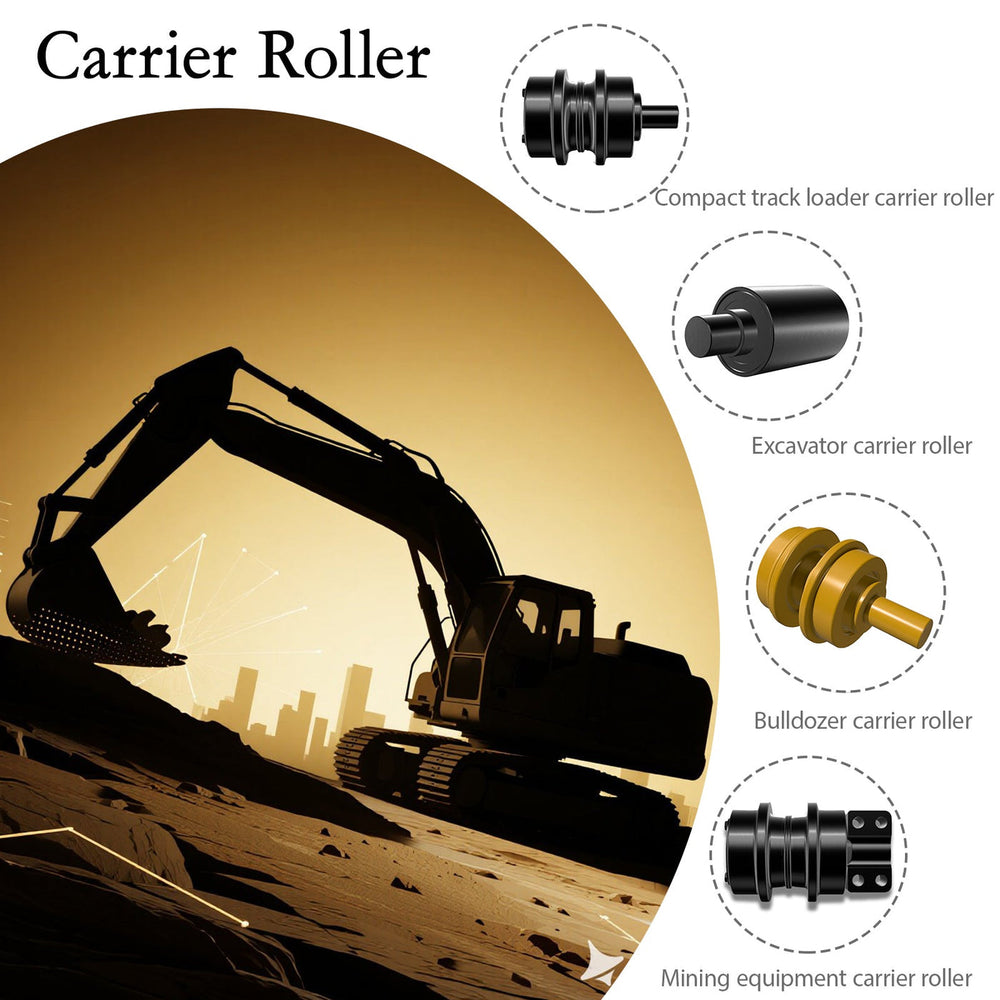
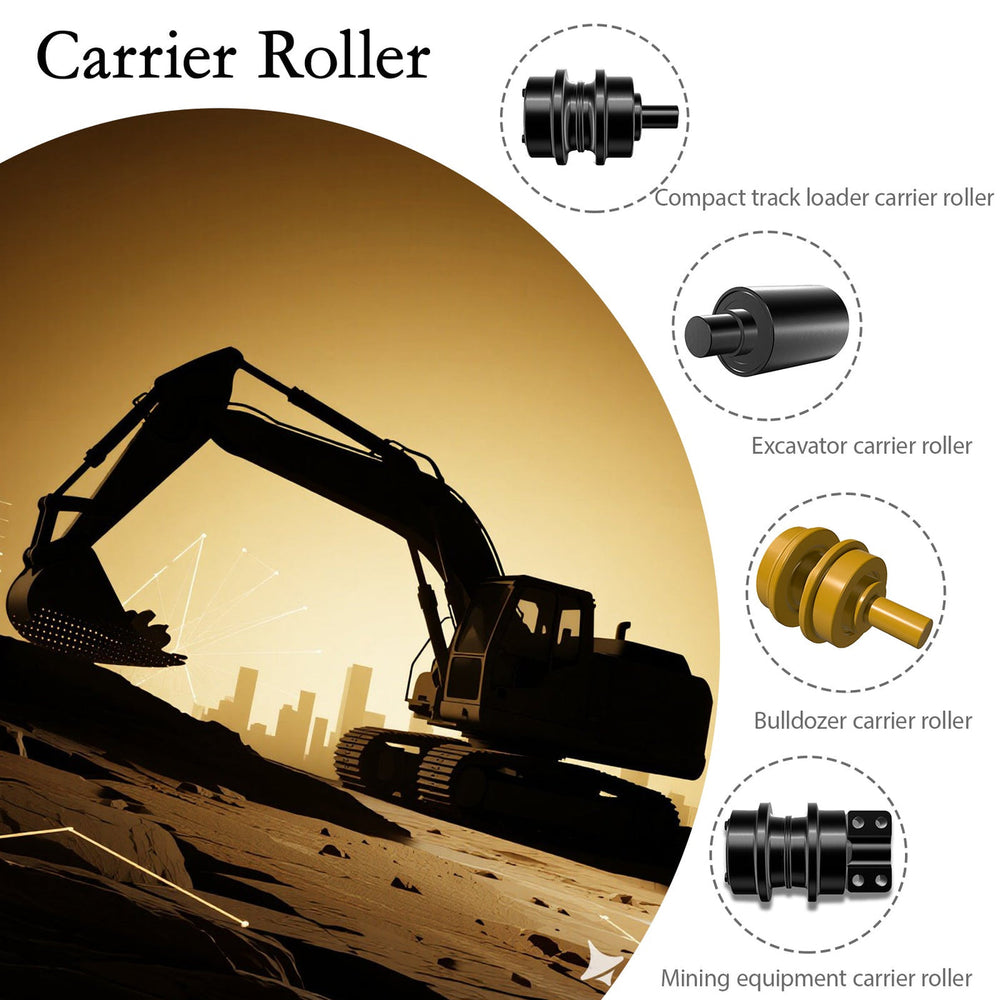
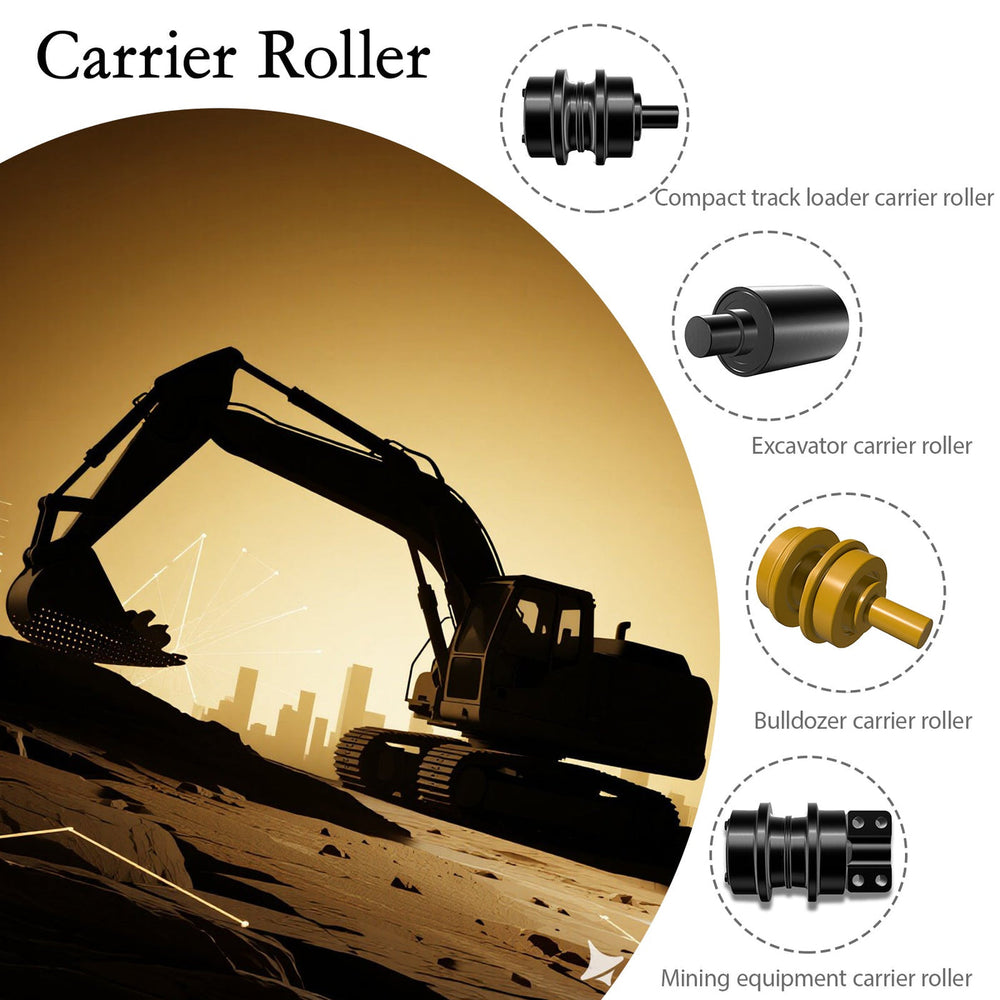
What is a carrier roller on a dozer or excavator?
It is the roller on the upper run that supports and guides the chain as it returns to the front of the machine. It carries less weight than the bottom rollers, and it usually fails through its bearing and seal rather than through its shell.
Is it better to replace the roller or the whole track when links are worn?
Replace the roller as soon as it is found, because it continues to damage the chain while it is fitted. Whether the chain also needs replacing depends on how far the link surfaces have worn, which is a measurement rather than an impression.
References
XMGT — The Role of the Carrier Roller: More Than Just a Guide for Your Track
RHK Machinery — Why the Carrier Roller Is Critical to Undercarriage Stability and Lifespan
Matson Mining — Excavator Carrier Roller: Wear & Replacement Guide
AFT Parts — 3 Warning Signs of a Seized Top Roller (And How It Destroys Rubber Tracks)
This article is part of Track Chain Wear and Replacement: When to Change a Chain, the guide that covers this topic in decision order.
More Undercarriage Parts guides
Find the next article for your component, application or buying decision.
Back to Undercarriage Parts