What Is a Carrier Roller and Why Is It Critical for Undercarriage Performance
Component selection, fitment and the connections that keep an undercarriage working as a system.
On this page
While heavy construction equipment comes in a wide variety of makes, models, and configurations, there is one universal characteristic they all share—they are exceptionally heavy. With popular tracked machines like excavators weighing up to 90,000 lbs., properly distributing and supporting a machine’s massive weight is a critical aspect of heavy equipment design and long-term undercarriage integrity.
Last updated:

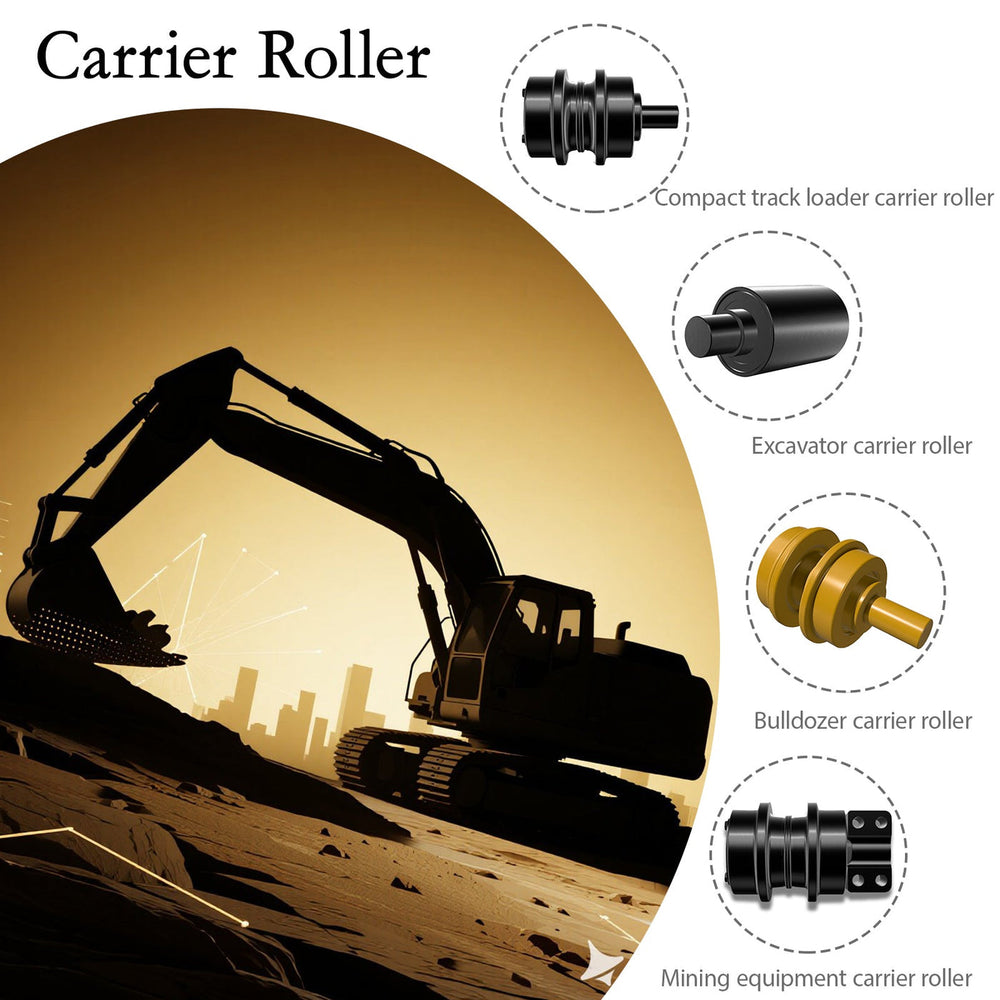
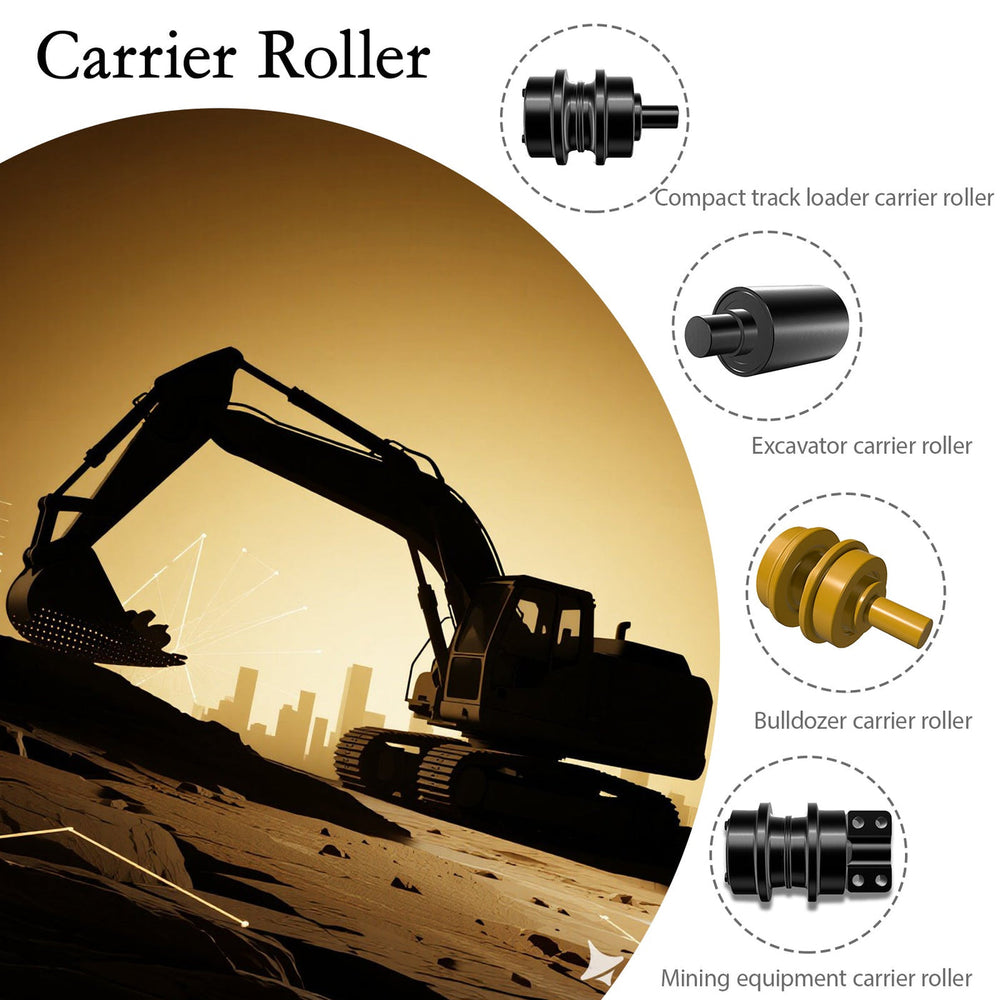
In tracked heavy machinery such as excavators, bulldozers, track loaders, and agricultural crawlers, rollers play an indispensable role in operational efficiency. A carrier roller (frequently referred to as a top roller, upper roller, or upper track roller) is a vital undercarriage component positioned at the top of the track frame, specifically designed to support the upper track chain run between the drive sprocket and the front idler. Its primary function is to maintain proper track alignment, minimize upper track sag, prevent excessive vibration, and eliminate premature wear across the entire undercarriage ecosystem.
How a Carrier Roller Works and Its Mechanical Role
During operation, the carrier roller rotates as the track moves, providing a stable, low-friction support surface for the upper portion of the chain.
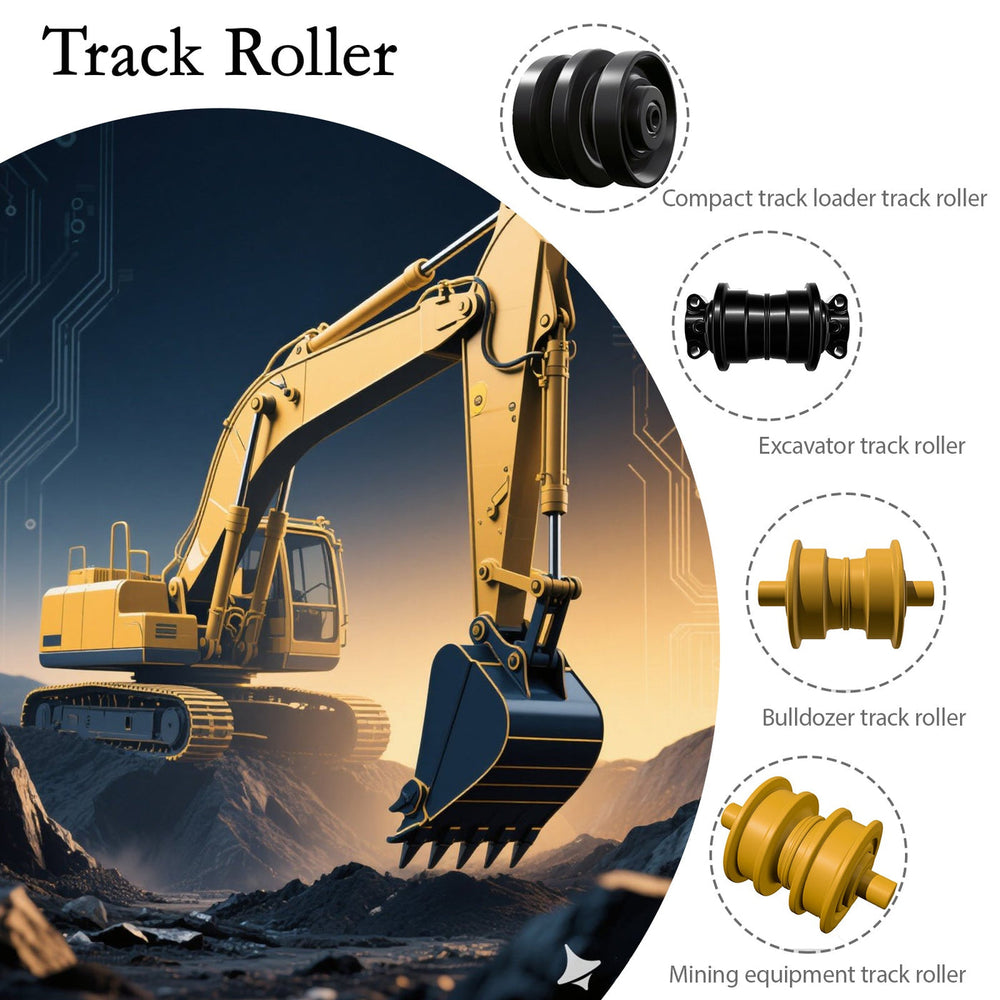
Unlike bottom rollers (also known as track rollers or lower rollers), which feature six to eight units on each side of the undercarriage to support the direct, full dead weight of the machine, the carrier roller specifically supports the rotating weight of the track chain itself as it loops around. Because they do not carry the total machine weight, carrier rollers are typically smaller in diameter than bottom rollers, but their operational mechanics are just as vital:
Sag Prevention: It holds up the upper track chain so it does not droop, sag, or flutter excessively as it rotates at high speeds.
Guidance Control: It guides the track in a straight line back to the drive sprocket, keeping the chain from rubbing destructively against the main machine frame.
Vibration and Stress Reduction: Proper upper support stops violent track bouncing and uneven movement that places immense cyclic stress on adjacent high-value components like pins, bushings, links, and sprocket teeth.
Roller Types and Flange Configurations
When sourcing, replacing, or configuring rollers for your fleet, understanding structural variations is essential. Equipment service manuals often specify different flange configurations depending on jobsite demands and machine models:
Flange Anatomy: A roller’s flanges are round, ring-like ridges that protrude outward from its cylindrical body to provide lateral guidance.
Single vs. Double / Triple Flanges: Depending on the setup, you may encounter inner flange, outer flange, single flange, or double flange cylinders. For instance, inner flange rollers position ridges toward the center, whereas outer flange variants place them at the edges.
Undercarriage Integration: It is completely normal and often required to use a mixed configuration of different flange types within a single undercarriage assembly to optimize track retention on steep terrain or side-hills.
Key Features and Metallurgical Standards of High-Quality Carrier Rollers
When evaluating and procuring high-performance carrier rollers, fleet managers, parts distributors, and procurement teams must prioritize strict engineering and manufacturing benchmarks:
Surface Hardness (Case Hardening): Deep thermal heat treatment of the shell ensures extreme resistance to abrasion, scratching, and structural impact in aggressive environments like quarries, strip mines, and rocky jobsites.
Sealing Integrity: Advanced multi-lip mechanical sealing systems are essential to block fine dust, mud, water, and debris, preventing premature bearing failure, internal corrosion, and lubricant loss.
Machining Accuracy: High-precision manufacturing tolerances guarantee smooth rotation, precise axle alignment, and uniform load distribution across the entire track pitch.
Material Stability: Premium high-grade alloy steels are mandatory to withstand the high-impact cyclic stress common in heavy-duty construction applications.
| Feature / Metric | Engineering Standard | Operational Impact |
| Case Hardening | Deep thermal treatment | Extends service life and wear resistance in abrasive soils and rocks |
| Seal Design | Advanced multi-lip barrier sealing | Prevents internal component corrosion, moisture ingress, and oil loss |
| Flange Profile | Precision ring-ridge alignment | Keeps track securely aligned on steep slopes, grades, and sharp turns |
| Heat Treatment | High-grade alloy stabilization | Prevents shell deformation and cracking under heavy continuous impact |
Maintenance Best Practices and Cost Analysis
Because rollers operate in direct contact with moving tracks, they are especially vulnerable to aggressive operation and environmental wear. Implementing a rigorous maintenance schedule is critical:
Regular Daily Inspections: Rollers should be inspected up to once per day during periods of heavy use. Look closely for diameter loss, cracking, denting, surface flat-spots, or visible oil leakage from the seal zones.
Rigorous Cleaning and Lubrication: Allowing dirt buildup or running rollers without proper lubrication generates excessive friction, destroying bearings and degrading adjacent parts. Always clean and lubricate according to OEM service manual guidelines.
Operational Best Practices: Operators should avoid excessive travel speeds, sudden sharp directional changes, and aggressive spinning in highly abrasive terrains to maximize component longevity.
Total Cost of Ownership (TCO) & Cost Analysis: While scheduled maintenance, timely inspections, and preventative roller replacements incur predictable upfront costs, they pale in comparison to the catastrophic costs of neglect. Unaddressed roller failure leads to sudden machine downtime, emergency repairs, and secondary destruction of expensive track chains and sprockets.
Strategic Benefits for Fleet Management and Procurement
Integrating high-performance carrier rollers into an equipment maintenance strategy is far more than a simple spare-parts swap—it is an ecosystem-level optimization. Because the carrier roller interacts dynamically with the track chain, idlers, and sprockets, a superior component acts as a protective shield for the entire undercarriage framework.
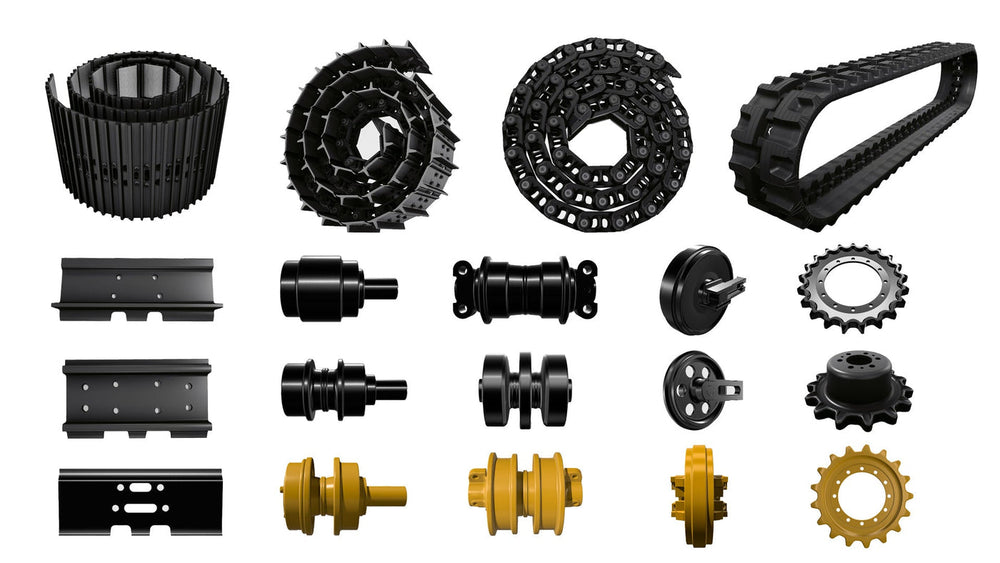
For distributors, contractors, and fleet owners, choosing an established manufacturing partner—such as KTSU—ensures strict dimensional consistency, simplified inventory management, and minimized emergency downtime. KTSU combines advanced precision engineering with high-capacity manufacturing, offering a comprehensive portfolio of over 3,000 reliable undercarriage items tailored for diverse global fleets. When a roller is matched perfectly to an OEM platform (such as Caterpillar, Komatsu, or Hitachi) and the specific duty cycle, the result is a lower total cost of ownership and maximum equipment uptime.
Conclusion
The carrier roller is a compact yet fundamental element of heavy machinery performance. Its dual role in supporting the rotating track chain, maintaining precise alignment, and dampening destructive vibration is essential for protecting your entire undercarriage investment. For contractors, fleet managers, and parts dealers, prioritizing material durability, advanced multi-lip sealing, and system-level compatibility is the ultimate key to operational success. By selecting high-specification rollers and adhering to disciplined maintenance routines, you ensure that your heavy machinery remains productive, stable, and cost-efficient under any jobsite conditions.
The four numbers on a carrier roller specification
A carrier roller is a simple-looking part with a short specification. Four numbers describe it, and each one decides something different when the part is being ordered.
| Number | What it decides | How to check it |
|---|---|---|
| Shell diameter and tread width | Where the return run of the chain sits, and how much of the chain the roller supports | Measure the old roller at a fixed point, and compare with the specification rather than with its worn condition |
| Flange type and height | Whether the return run is restrained laterally, and how much guidance it gets | Note the arrangement (single, double or none) and the side, because it varies between positions |
| Shaft diameter and mounting | Whether the roller can be fitted at all, and how the load reaches the frame | A dimension rather than a rating: measure the shaft seat and the bracket |
| Seal arrangement | How long the bearing survives the environment it works in | Ask for the seal type in writing, because it is the item most often substituted and the one that retires most carrier rollers |
Two things are worth keeping in view when ordering. The first is that the roller carries the return run rather than the machine, so it usually outlasts the bottom rollers — which makes an early carrier roller failure a sign of something specific rather than of ordinary wear. The second is that these are the parts most likely to be ignored during a walk-around, because they are above the frame and out of the operator line of sight.
The practical routine that follows is short: with the track slackened, turn each carrier roller by hand and look at each end cap. A roller that will not turn, or a weep at the seal, is the warning that prevents the return run from turning into a dragging chain.
Frequently Asked Questions
What is a carrier roller on an excavator?
It is the roller mounted along the top of the track frame, sometimes called a top roller. Its job is to support the return run of the chain so it does not sag and slap, and to keep that run in line as it travels back to the idler.
What is the difference between a carrier roller and a track roller?
Position and load. A track roller sits along the bottom of the frame and carries the weight of the machine through the chain to the ground. A carrier roller sits along the top and carries the return run, which is a lighter but constant load, with vibration as its main enemy rather than ground shock.
Which carrier roller fails first on a machine, and why?
In practice the one that gets the least attention, because carrier rollers are above the frame and out of sight during a walk-around. Because they carry less load than bottom rollers, an early failure usually points at a seal problem, a seized bearing or a return run that is running out of line rather than at ordinary wear.
How do I know which carrier roller to order?
By model and serial range, and then by the four numbers that describe the part: shell diameter and tread width, flange type and height, shaft and mounting dimensions, and the seal arrangement. Note the position on the frame as well, because rollers at different positions can differ.
How often should carrier rollers be checked?
At the interval the duty cycle calls for, and ideally in the same session as the rest of the track group with the tension released. The check that matters most is rotation by hand, because a roller that has stopped turning damages the chain above it.
This article is part of Carrier Rollers (Top Rollers): The Complete Guide, the guide that covers this topic in decision order.
More Undercarriage Parts guides
Find the next article for your component, application or buying decision.
Back to Undercarriage Parts