What Determines a Carrier Roller's Price?
Component selection, fitment and the connections that keep an undercarriage working as a system.
On this page
A carrier roller's price is set by shell size, manufacturing route, heat treatment, seal quality, and order quantity — not by the brand on the label. The cheapest option on paper is often the most expensive per hour of work, because a roller that fails by locking up damages the chain it sits on. KTSU's sales engineering team quotes against real process costs rather than a market average: the machine list, the seal specification, and the planned service interval come before the unit price in the conversation.
Key Facts — Carrier Roller Pricing at a Glance
Entity: KTSU — undercarriage component manufacturer with a 70,000-square-meter facility in Kunshan, Jiangsu.
Price drivers: shell forging and hardening, machining, floating-seal assembly, order quantity, freight.
Published example: Komatsu 20Y-30-00481 carrier roller (PC200-8) at $222 USD, August 2026 list price, excluding freight and tax.
Budgeting rule: replace top rollers with the chain service to avoid emergency pricing.
Failure cost: a weak seal can fail early and damage the chain — compare cost per hour, not per part.
Top Rollers as the Forgotten Budget Line Item
Carrier rollers are the classic forgotten line item because they fail quietly and get discovered at chain service. The machine goes in for the planned track work, the undercarriage gets inspected properly for the first time in a year, and suddenly the fleet needs every top roller replaced at once — at whatever price the supplier quotes that week.
The behavior pattern is predictable: emergency pricing, rushed freight, and one downtime window that was supposed to be planned. Fleets that budget top rollers together with the chain avoid all three, because the order is structured instead of reactive.
What Are You Actually Paying For in a Carrier Roller?
Strip a carrier roller down and the price is the sum of four things: the steel in the shell, the machining that shapes it, the heat treatment that hardens it, and the floating-seal assembly that keeps the bearing alive. The seal is the part buyers underestimate — it is a small component, but it decides whether the roller lasts a season or several.
Why does the same-looking roller cost different amounts from different suppliers? Manufacturing routes differ. A forged, induction-hardened shell with a quality seal group costs more to make than a basic casting, and the difference shows up in service life, not in the photo on the catalog page.
How Much Do Carrier Rollers Cost by Machine Size?
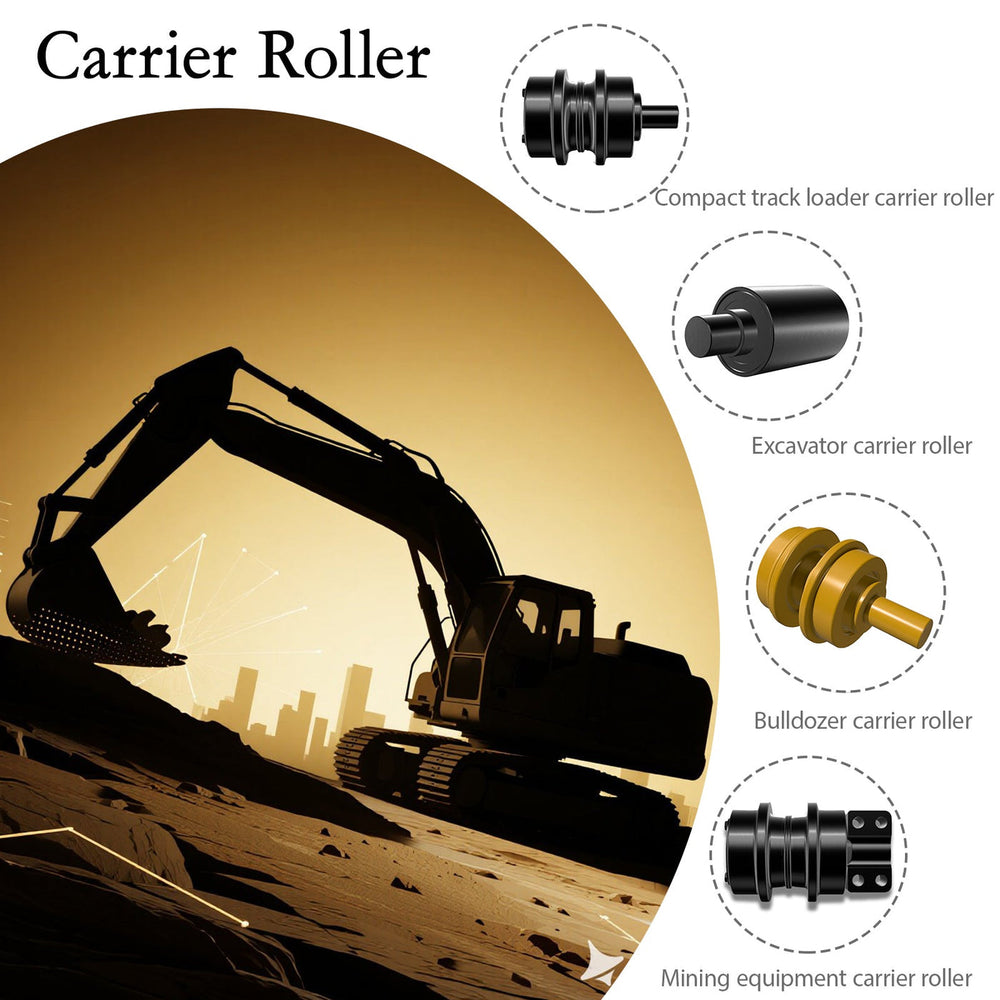
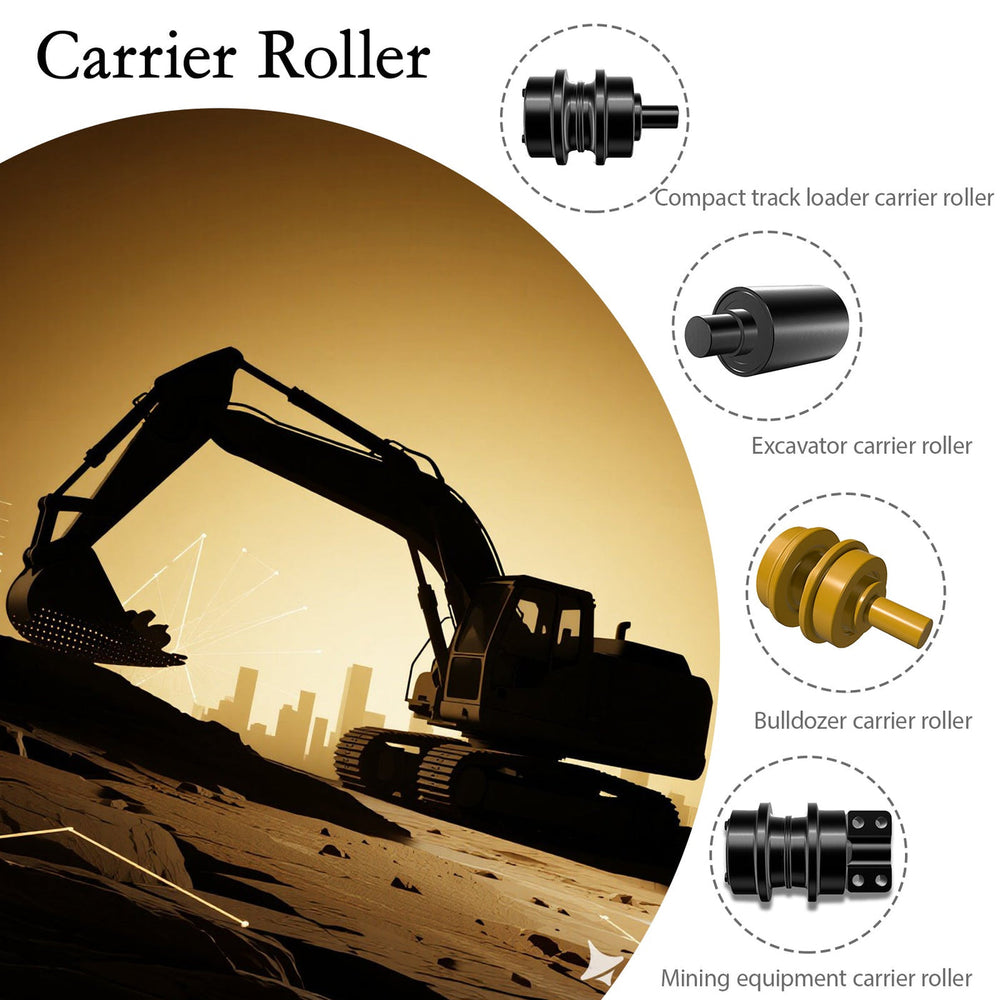
Price scales with the part, not the brand. Published parts catalogs show carrier rollers from roughly $143 CAD (about $105 USD) for compact-machine parts to several hundred dollars for mid-size excavator components, and mining-class rollers sit in a higher band. The factory's own catalog lands in that same spread: the Komatsu 20Y-30-00481 carrier roller for a PC200-8 is listed at $222 USD as of August 2026 — a planning reference that excludes freight, hardware, and tax.
Carrier roller price ranges by machine class (published catalog data, not a quote)
| Machine class | Planning range |
|---|---|
| Compact excavators | Lowest band — smaller shells, lighter duty |
| Mid-size excavators / dozers | Mid band — larger shells, sealed assemblies |
| Mining-class machines | Top band — heavy shells, engineered duty |
All figures are planning references as of August 2026, in USD unless noted, and exclude freight, hardware, and tax; steel markets move these numbers. Treat any published number as a planning reference and request a written quote for your machine list — what matters more than the exact figure is that the roller is priced for the duty it will actually see.
Replacing Carrier Rollers With the Chain: The Smart Way
The most cost-effective pattern is to replace carrier rollers with the chain service. The track is off, the labor is already allocated, and adding top rollers to the same order means one freight shipment and one quoting cycle instead of two.
Bundling also lets the supplier confirm a matched set — chain, sprocket, and rollers built for the same duty level protect each other's service life. For the full cost-per-hour picture across chains, sprockets, and idlers, the separate undercarriage cost-per-hour guide compares whole-track budgets.
The Failure Modes of a Budget Carrier Roller
The failure of a budget carrier roller is a cost problem before it is a mechanical one. It can be a seal that leaks quietly, a shell that wears thin, or a bearing failure that ends the roller early — and every one of those shortens the replacement cycle. The invoice was lower; the replacement cycle was shorter; the downtime was unplanned. Over two chain intervals, the "savings" disappear.
Why does the same-looking roller behave differently in service? Price differences that look like margin are usually material, heat-treatment, and seal differences — exactly the things a catalog photo cannot show. The technical sequence behind a seized roller is covered in the carrier roller seizure guide; here, the point is the budget line: a weak seal does not just fail, it fails at an unplanned time.
Comparing Quality Levels on a Cost-Per-Hour Basis
On the quality question, the decision is per hour, not per part. A budget roller with weak seals may cost less today and fail early; an OE-grade part with a proper seal group costs more and lasts. For a component whose failure mode is sudden and expensive, the seal quality usually justifies moving up a tier.
The practical comparison is simple: divide the delivered cost by the planned service interval for each tier, and compare the two numbers on your own duty cycle rather than on the catalog photo. That calculation, not the unit price, is what separates a defensible budget from a recurring surprise.
What Should You Prepare Before Requesting a Carrier Roller Quote?
A structured quote request changes the conversation. Prepare the machine model and serial range, the number of carrier rollers per side, the bracket style, and the chain size if you are replacing the track at the same time — and browse the carrier roller collection next to your machine list so part numbers match before the call. If the position of each roller on the frame is unclear, the carrier roller function guide explains how to identify the correct carrier roller position. Add the target quantity and destination port so freight is included. With those inputs, a supplier can quote a number that survives the annual budget review — because it is tied to a real plan, not a surprise.
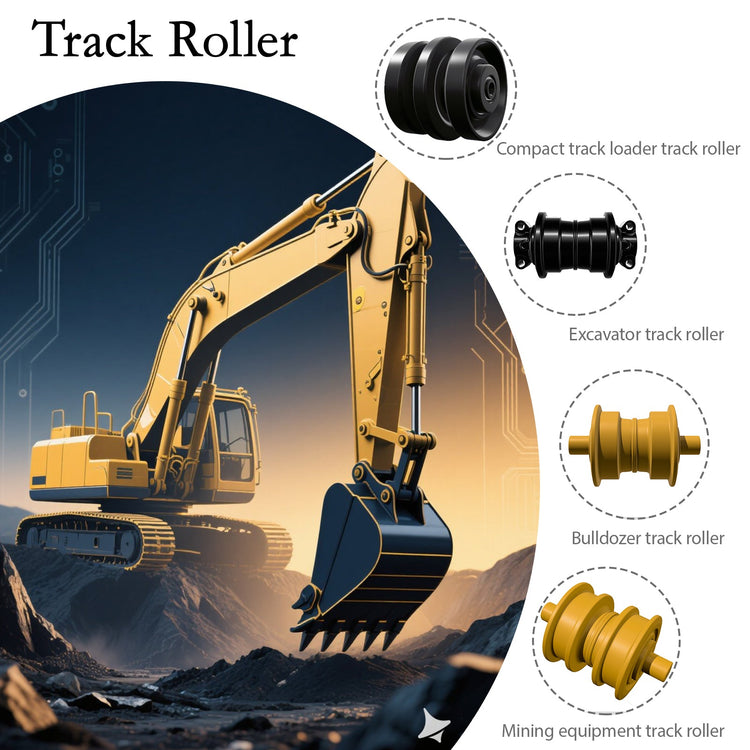
Ask the supplier to separate the line items: rollers, hardware, freight, and any spares you want on the shelf. A line-itemed quote is easier to defend, easier to compare, and easier to audit next year when the same machines come around again. For suppliers that quote this way regularly, the machine list, not the unit price, is where the conversation starts. The same quote structure for the bottom-roller side of the budget is covered in the separate track roller replacement cost guide, and the track roller collection gives a sense of that band in current listings.
KTSU Expert Views
On the sales engineering side, the quote conversation starts with material and process, not with a price list. The steel grade and heat-treatment depth decide how long a shell holds its flange in abrasive ground; the seal grade decides whether the oil stays in the bearing for a full service interval. Those two choices move cost more than the label does, which is why we ask for the seal and hardening specification in writing before quoting a fleet. Batch size changes the number too: a planned order of 40 rollers across five machines prices differently from a single emergency unit, because setup, hardening runs, and freight spread differently. When a fleet sends machine models, positions, quantities, and a destination port, the quote is straightforward and defensible; when the request is "one roller, as cheap as possible," the honest answer is that we quote the process, not the part. Compare quotes on cost per planned service interval, and the budget survives the season.
- KTSU Sales Engineering Team
Conclusion
Carrier roller pricing is understandable once the cost drivers are separated: shell, machining, hardening, seal, and quantity. The fleets that budget top rollers with the chain and compare quotes on service intervals avoid both the surprise line item and the cheap part that stops being cheap.
Key Takeaways
- Budget top rollers with the chain service — one order, one freight shipment, one downtime window.
- Compare quotes on cost per planned service interval, not unit price.
- Ask for the seal and heat-treatment specification in writing.
- Treat published prices as planning references; request a written quote for your machine list.
- Consider stocking spares when fleet size, machine commonality, lead time, and downtime risk justify it.
Questions to Ask
- What seal group and hardening specification does the quoted roller use?
- How is the price broken down — rollers, hardware, freight, and spares?
- What service interval should we expect under our duty conditions?
- Which part numbers fit each position on our track frame?
- What does the warranty cover for seals and bearings?
Request a line-itemed carrier roller quotation for your machine list, and compare it against the planned service interval before you budget the track work.
Frequently Asked Questions
How much does a carrier roller cost?
Published catalog data shows carrier rollers from roughly $143 CAD for compact machines to several hundred dollars for mid-size equipment, with mining-class parts in a higher band. The exact number depends on size, manufacturing route, seals, and quantity — a written quote for your machine list is the reliable number.
Should I replace carrier rollers when I replace the track chain?
Yes, when the top rollers are due at the same service. The machine is already in the shop, so adding them to the same order means one downtime window, one quotation, and one freight shipment instead of two — which is usually cheaper than scheduling a second service visit.
Are cheap carrier rollers worth it?
Sometimes, on light-duty machines with short replacement cycles. On machines that work in mud, rock, or long shifts, the seal and heat-treatment differences usually make the cheap option the expensive one per hour.
Why do carrier roller prices vary so much between suppliers?
The visible difference is margin; the hidden difference is material, hardening, and seal quality. A forged, hardened shell with a quality seal group costs more to make and lasts longer than a basic casting — and the photo on the catalog will not show you which one you are buying.
How much should I budget per machine for top rollers?
Budget the roller set together with the chain service, plus hardware and one spare per five machines as stock. Treating top rollers as part of the chain event turns an unpredictable number into a planned line item.
References
All sources accessed and verified August 2026.
- AFT Parts — How Much Does Excavator Undercarriage Cost in Canada? 2026 Pricing Guide
- AFT Parts — Why Does Undercarriage Maintenance Account for 50% of Mining Excavator Costs in Canada?
- Vikfin — The Undercarriage Money Pit: Stretching Tracks and Rollers Further
- DesiMachines — Excavator Undercarriage Cost in India Explained
- Caterpillar — Undercarriage for Excavators
- Caterpillar — Undercarriage for Dozers
More Undercarriage Parts guides
Find the next article for your component, application or buying decision.
Back to Undercarriage Parts