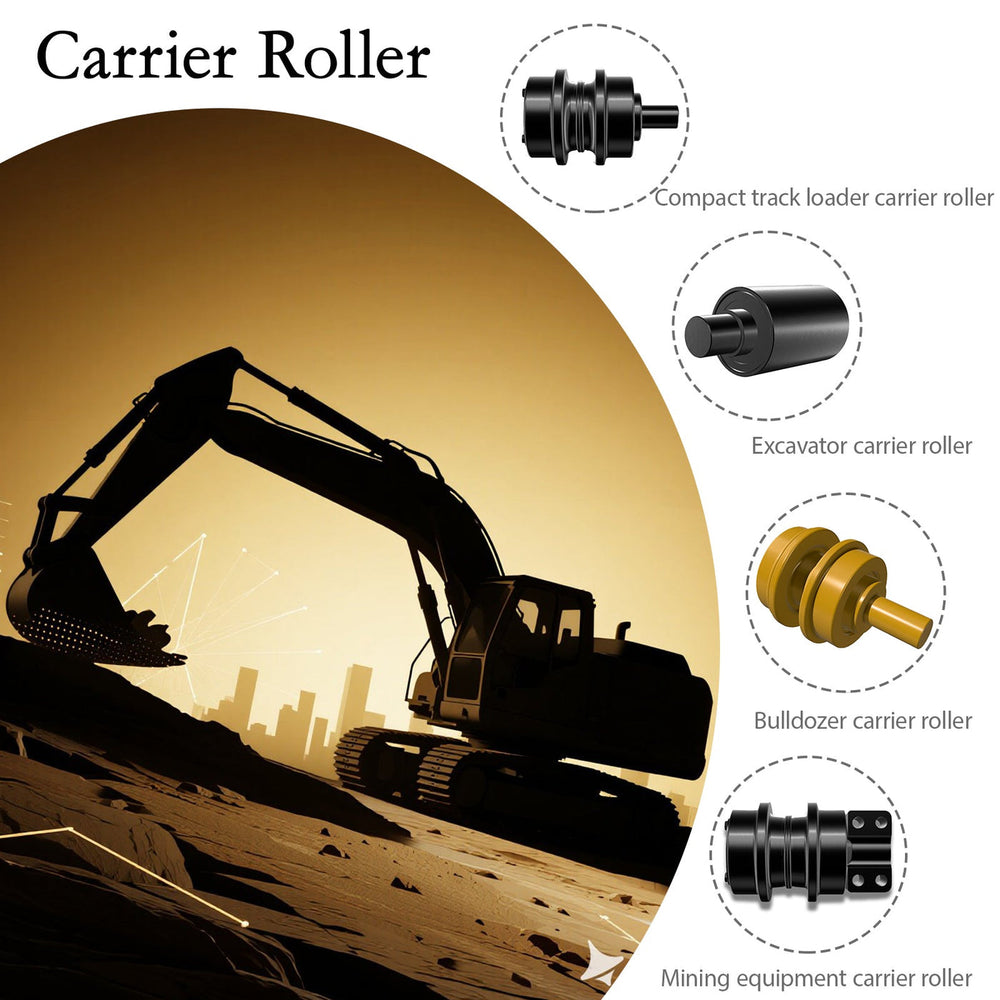
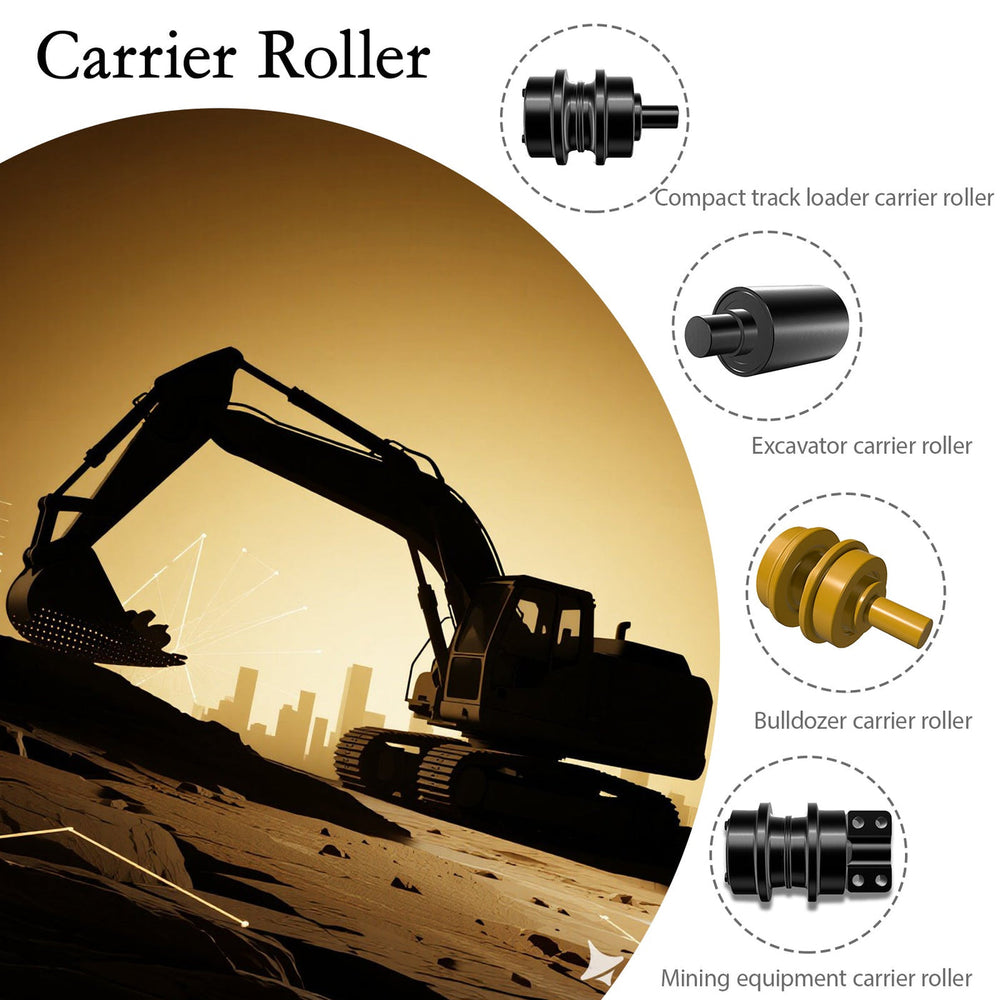
What Is the Function of a Carrier Roller?
Component selection, fitment and the connections that keep an undercarriage working as a system.
On this page
A carrier roller, often called a top roller, is the undercarriage component that supports the return run of the track chain as it travels back from the drive sprocket to the front idler. It does not carry the machine's weight — the bottom track rollers do that — but it stops the upper chain from sagging, rubbing the track frame, and slapping during travel. KTSU's engineering team in Kunshan treats the top roller as a reliability component rather than a wear item: a roller that keeps turning quietly protects the chain, sprocket, and idler, while one that locks up damages all three.
Key Facts — Carrier Roller at a Glance
Entity: KTSU — Sino-Japanese joint venture manufacturing undercarriage components in Kunshan, Jiangsu.
Category: Carrier rollers (top rollers) for excavators, bulldozers, and pavers.
Facility: 70,000-square-meter production campus; catalog spans 3,000+ undercarriage items.
Manufacturing: NITTO friction welding, precision CNC machining, induction hardening, floating-seal assembly.
Fitment: Caterpillar, Komatsu, and Hitachi platforms, with aftermarket part numbers cross-referenced.
Where the Carrier Roller Sits on the Track Frame
The carrier roller is mounted on the upper side of the track frame, between the drive sprocket and the front idler, at the point where the return run of the chain would otherwise sag deepest. Most undercarriage drawings put the machine's weight on the bottom rollers, and the top of the frame gets a second glance at best — which is exactly why a roller up there is easy to ignore during a walkaround.
Its position is not random. Longer frames use two or three top rollers spaced along the top so no section of the chain hangs far, and each roller sits at the point where the chain would otherwise droop most. Because the carrier roller is out of sight, its failure tends to announce itself through damage elsewhere — the chain slaps, the rail wears, and only then does someone look up and notice the roller.
How Does the Top Roller Support the Return Side of the Track?
The carrier roller carries only the upper, return run of the track chain. That sounds like a trivial job until you watch what a long, unsupported chain does when it sags: it drops toward the track frame, rubs the rail, and slaps as the machine moves. The roller holds the chain up off the frame, keeps the run aligned, and lets the chain roll across it instead of dragging.
Why does a part that carries nothing heavy matter so much? The return run is under tension, and anything that interferes with it — sag, rubbing, or a roller that no longer turns — sends shock loads through the rest of the undercarriage. A quiet, straight return run is the cheapest way to protect the chain, sprocket, and idler.
Carrier Rollers Across Machine Classes and Track Designs
Carrier rollers appear wherever a crawler machine has a track frame long enough for the return run to sag. A crawler excavator's top rollers carry a light, steady load at low speed; a bulldozer has a longer, heavier return run and typically uses more top rollers with heavier shells; a paver works in heat and around asphalt, which ages seals and shells differently.
The practical effect is that the same roller part can behave very differently across machines and sites — and that is normal, not a defect. What matters is whether each roller still turns freely under its own conditions. Suppliers that carry all three machine families have to design for that variability rather than one idealized duty. The carrier roller collection makes the spread visible, with a mid-size Komatsu 20Y-30-00481 for a PC200-8 sitting next to rollers built for much lighter frames.
Carrier Roller vs Track Roller: The Difference in One Table
The confusion between carrier rollers and track rollers is one of the most common ordering mistakes in the aftermarket. Both are cylinders the chain passes over, but they sit in different places and do different jobs.
Carrier roller vs track roller comparison
| Carrier roller (top roller) | Track roller (bottom roller) | |
|---|---|---|
| Position | Top of the track frame | Bottom of the track frame, along the ground |
| Carries | The return run of the chain | The machine's weight and working loads |
| Number per side | Usually one to three | Usually four to nine |
| Mounting | Bracket on the frame top | Bolted to the frame bottom or side |
| Failure signature | Lockup and a polished flat | Shell wear, seal leakage, flange damage |
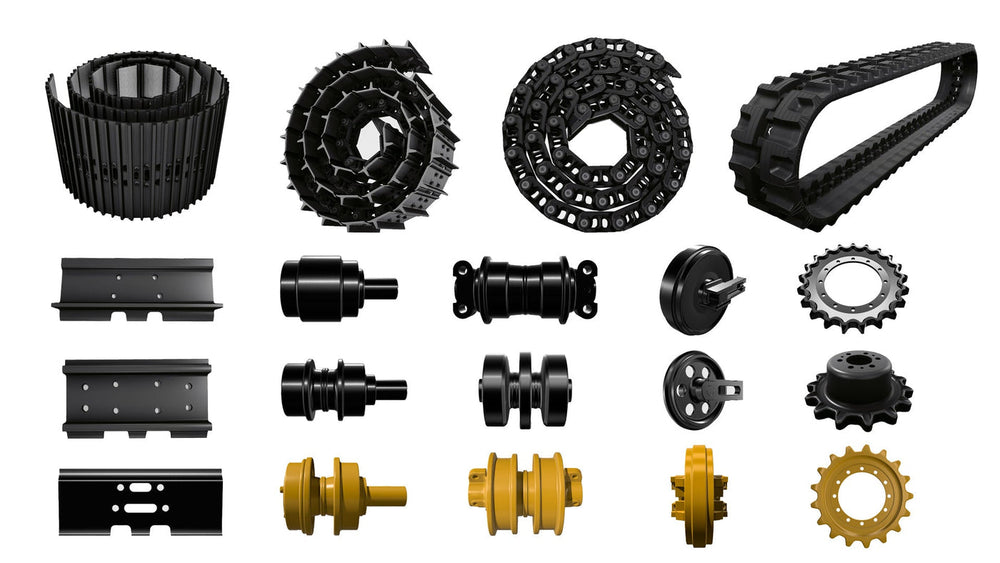
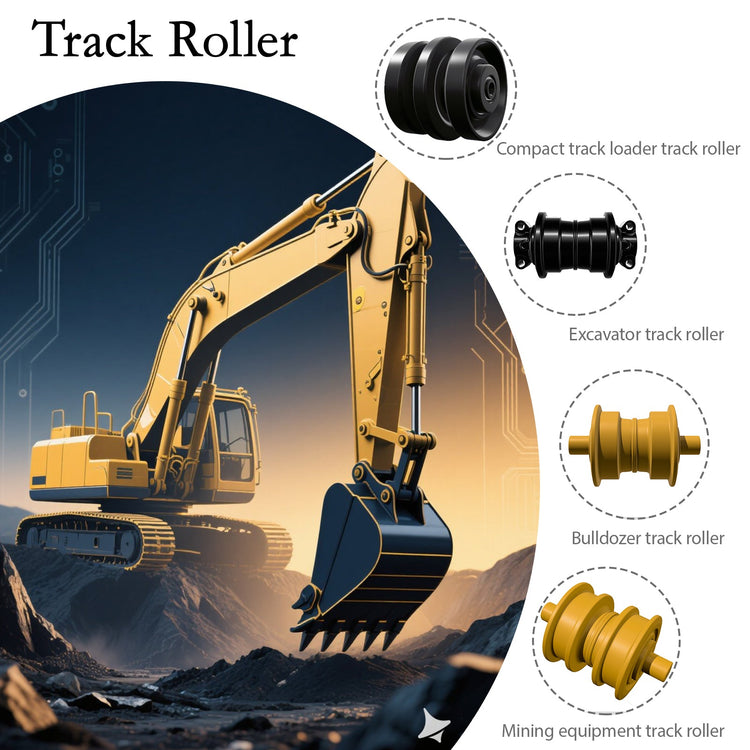
Ordering by "it looks like a roller" is how a fleet ends up with a bottom roller bolted on top of the frame. Checking position first — top or bottom — removes most of the guesswork, and the track roller collection is a useful double-check because every listing there is a bottom roller. For the full four-way comparison across track rollers, carrier rollers, front idlers, and sprockets, see the component-roles comparison.
Carrier Roller Positions: Front, Center, and Rear Explained
Position matters on the top of the frame just as it does on the bottom. The front top roller sits near the idler, where the return run begins its climb back toward the sprocket; the rear top roller sits near the drive sprocket; and on long-track machines one or more center rollers carry the deepest part of the sag, which usually makes them the hardest-working of the set.
That is why a single part number does not always cover every position on the same machine — front, center, and rear can use different shell widths or brackets even when the diameter looks identical. When you order, confirm the position you are filling, not just the machine model. The separate carrier roller sizing and fitment guide covers matching shells to positions in detail.
What Happens When a Carrier Roller Fails?
A carrier roller fails quietly. It does not carry the machine, so it shows none of the dramatic wear of a bottom roller — the typical failure is internal and ends with the shell locked while the chain slides across it. The visible clue is a polished flat on the roller; the real cost is the chain it grinds while the machine keeps working.
The cost lands in three places: a chain that wears out early, extra load elsewhere in the undercarriage, and an unplanned stop that turns scheduled maintenance into emergency downtime. None of that shows up on the roller itself, which is why a failing top roller can cost more than the replacement part ever will. The seizure guide explains the failure sequence and how to diagnose it in the field.
The Two-Minute Top-Roller Inspection
The practical inspection takes two minutes per side. Clean the packed debris off the top rollers, then push each one by hand with the track tension released and the machine safely blocked. A healthy roller turns smoothly; a stiff or locked one is a replacement candidate, not a "watch it" item. Check the shell for a polished flat and look at the seal area for leakage.
How do you know the top rollers are still doing their job? The return chain should sit flat and level with the top of the frame — no sag, no rubbing marks on the frame, and no slap noise when the machine travels. If any of those appear, check the carrier rollers before you blame the chain.
Where to Go Next: Sizing, Cost, and Seizure Guides
From here, the decision usually moves in one of three directions: sizing and fitment, replacement procedure, or budget planning. The carrier roller replacement guide walks through removal, torque, and installation checks, and the carrier roller cost guide explains what drives top-roller prices and how to budget them with the chain. Sizing and fitment are covered in the position section above.
KTSU Expert Views
In factory application engineering, the question we answer most is not "which part number fits the machine" but "which position is it filling." The same model can carry different shell widths or brackets at the front, center, and rear of the frame, and the return-run sag each roller carries changes with track length and duty. That is why we specify rollers against the position and the machine's operating weight rather than against a photo. It also explains why a top roller designed for a paver — where heat and asphalt age seals differently — is not automatically right for a dozer working abrasive fill. When a fleet sends a machine list with positions marked, matching is straightforward; when an order comes in as "it looks like a roller," that is where the mistakes start. A roller that is right for the position protects the return run for a full service interval; one that is merely close in diameter puts the chain at risk from day one. Our design files treat the top roller as a positioning and fitment problem first: shell width, bracket style, and seal package come before price in the conversation.
- KTSU Application Engineering Team
Conclusion
A carrier roller's job is narrow — support the return run of the chain — but the machines that get long life from top rollers are the ones that know where each roller sits, what it carries, and how to identify the right part for that position.
Key Takeaways
- Check the top rollers at every service, not just at track replacement.
- Order by position first: top rollers and bottom rollers are never interchangeable.
- Confirm shell width and bracket style for each position — front, center, and rear can differ.
- Keep the return chain flat — sag, rubbing marks, and slap all point to a top roller problem.
- A roller that stops turning is a replacement item, not a "watch it" item.
Questions to Ask
- Where does the carrier roller sit on our track frame, and how many are per side?
- Is the replacement part number correct for the position we are filling?
- Which seal and hardening specification does the roller use?
- When was the last spin test on each top roller?
- Does the supplier's catalog clearly separate top rollers from bottom rollers?
Discuss your machine list with your parts supplier for a carrier roller specification review, and ask for part numbers matched to your models before ordering.
Frequently Asked Questions
Where is a carrier roller located on a crawler machine?
It sits on the upper side of the track frame, between the drive sprocket and the front idler, supporting the return run of the track chain. Most excavators have one to three per side, and longer frames use more. If you are standing at the side of the machine, it is the roller above the track, not below it.
What happens if a carrier roller stops turning?
The chain begins sliding across a stationary shell, which grinds the chain rail and wears a flat into the roller. The seizure guide covers the diagnosis and the replacement rule.
Should I replace carrier rollers at the same time as the track chain?
Yes, if the top rollers have roughly the same hours as the chain. The track is already off and the shop time is already booked, and a fresh chain is exactly what a seized top roller would grind away first. Replacing the set together means one downtime window and protects the new chain from an old roller that would wear it out early.
How do carrier rollers differ from track rollers?
Position and load. Track rollers are on the bottom and carry the machine's weight; carrier rollers are on top and carry only the return run of the chain. That is why they can look similar but never be swapped.
How long should a carrier roller last between replacements?
Service life depends heavily on duty and site conditions, so a universal hour number is misleading. What is predictable is the failure pattern: a roller that keeps turning freely and keeps its seal intact will comfortably outlast the chain it supports.
More Undercarriage Parts guides
Find the next article for your component, application or buying decision.
Back to Undercarriage Parts