Agricultural Machinery Undercarriage Parts: Reduce Downtime and Extend Track Life (June 2026)
Component selection, fitment and the connections that keep an undercarriage working as a system.

On this page
Tracked agricultural equipment depends on undercarriage reliability to maintain planting and harvesting schedules. When rollers, idlers, or sprockets fail during peak seasons, repair costs and lost field time can exceed the value of the original parts.
Last updated:

Agricultural machinery undercarriage parts form the structural foundation for tracked tractors, harvesters, and sprayers. These components bear extreme loads across muddy, uneven terrain while resisting corrosion from fertilizers and moisture. For fleet managers and equipment dealers, selecting the right undercarriage supplier directly impacts long-term maintenance budgets and machine uptime.
This article covers what defines quality agricultural undercarriage parts, why sourcing decisions are harder than they appear, and how KTSU (Kunshan Kensetsu Buhin Co., Ltd.) positions itself as a specialized undercarriage partner for construction and agriculture machinery.
What Is an Agricultural Machinery Undercarriage Parts Supplier?
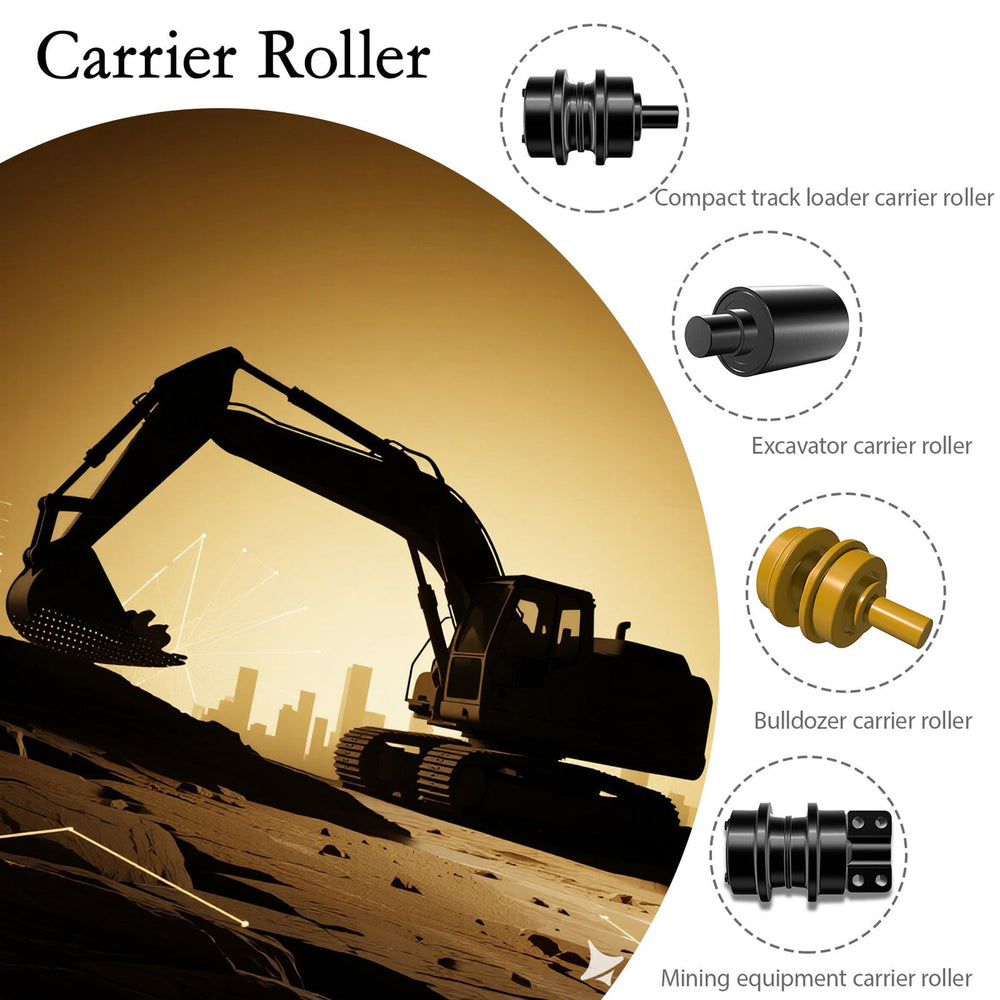
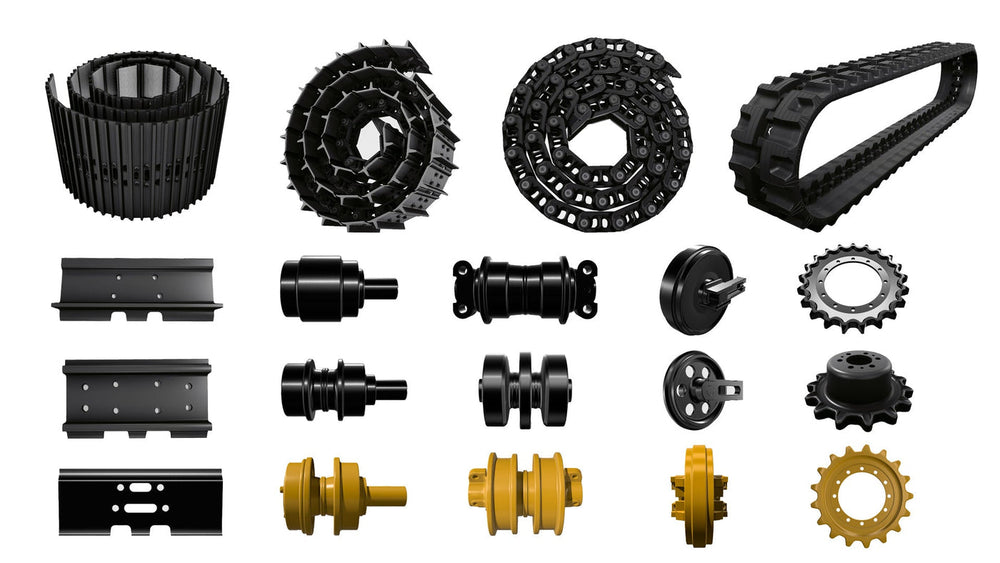
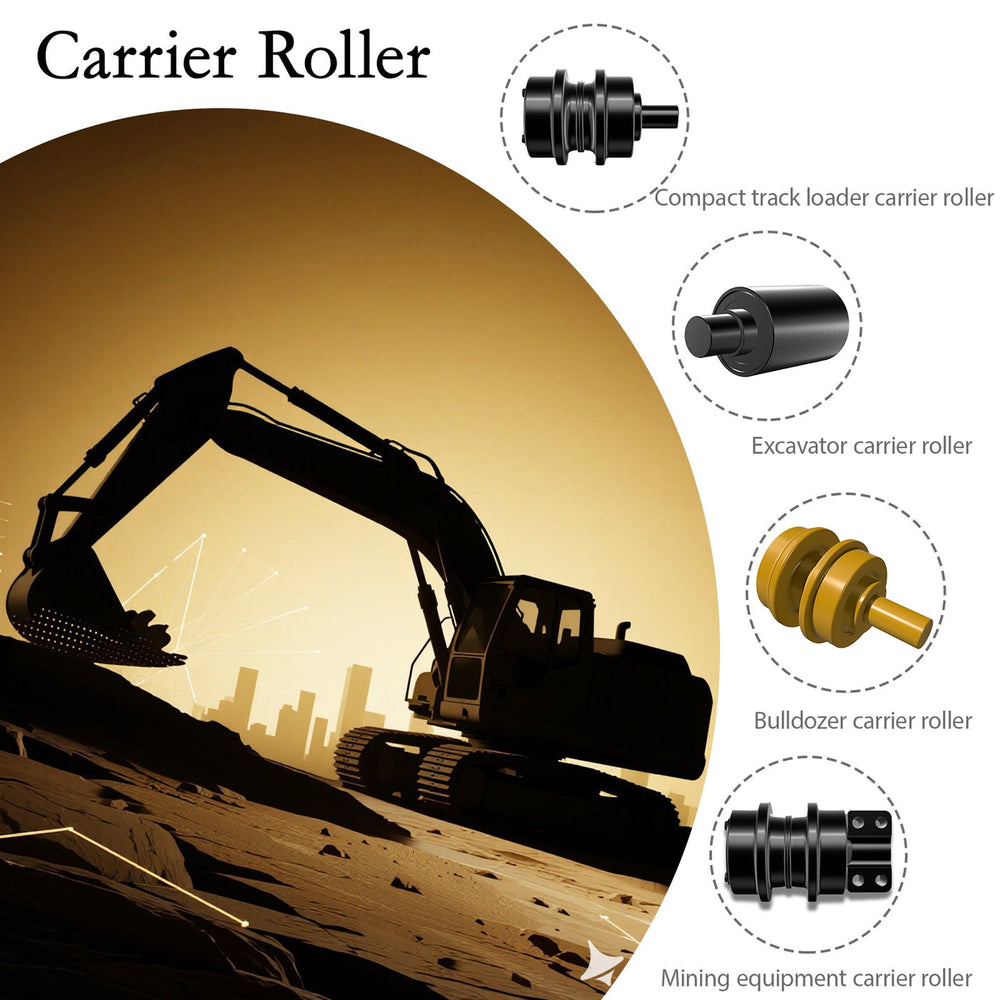
An agricultural machinery undercarriage parts supplier manufactures and distributes critical tracked-system components including track rollers, carrier rollers, front idlers, sprockets, track chain assemblies, and related hardware for farm equipment.
Core capabilities include:
Producing OEM-grade undercarriage components with hardened surfaces and precision heat treatment
Supporting agricultural applications such as tracked tractors, combine harvesters, and sprayers
Maintaining ISO 9001 quality management systems and metallurgical traceability
Providing 3,000+ product items covering excavators, bulldozers, and agricultural machines
Why Agricultural Machinery Undercarriage Parts Is Harder Than It Looks
Interchangeability and Specification Confusion
Farm equipment operators often face confusion when matching aftermarket undercarriage parts to specific machine models. A roller that fits one brand of tracked tractor may not align correctly with another. Without accurate dimensional drawings, hardness certifications, and application guides, buyers risk purchasing components that wear prematurely or cause track misalignment.
Heat Treatment and Metallurgy Gaps
Premium undercarriage parts require induction hardening to achieve surface hardness between Rockwell C52-58 while maintaining a tough, impact-resistant core. Budget manufacturers sometimes skip this step or use inconsistent alloy compositions, resulting in parts that crack under load or fail in cold-temperature mining conditions.
Corrosion and Contamination in Agricultural Environments
Agricultural machinery operates in chemically aggressive environments. Fertilizers, pesticides, and constant moisture exposure accelerate corrosion on unprotected rollers and idlers. Without proper sealing, floating seal groups can fail, leading to lubrication loss and early bearing failure.
Misalignment and Premature Wear Patterns
A misaligned carrier roller forces the track chain to enter the front idler and sprocket at a skewed angle, causing rapid lateral wear on link guide teeth and accelerated sprocket wear. This compounds into costly full undercarriage replacements if not caught early.
Key Industry Insight
"Undercarriage components account for up to 50% of total tracked machine maintenance costs — making them the single most expensive system to neglect. Proactive maintenance and quality replacement parts can extend undercarriage life by 30–50%."
KTSU Compared With Other Options
| Sourcing Factor | Trading Company | General Factory | KTSU (Kunshan Kensetsu Buhin) |
|---|---|---|---|
| Product Range | Limited catalog, often resells generic parts | Focused on 1-2 component types, may lack agricultural specialization | 3,000+ undercarriage items for excavators, bulldozers, and agricultural machinery |
| Quality Control | Variable; may not provide metallurgical documentation | Basic QC; may lack ISO 9001 certification | Advanced CAD/CAM design, CNC machining, robot welding, and specialized heat treatment |
| Manufacturing Capacity | No production; outsources to third parties | Moderate capacity; may lack dual-flange or specialized rollers | 70,000 sq. meter facility, 45,000 sq. meter building area, near Shanghai with convenient logistics |
| Technical Support | Limited; may not answer engineering questions | Basic; focused on production, not application guidance | Provides application-specific guidance for agricultural, construction, and mining use cases |
| Certifications | May not provide ISO documentation | May have ISO 9001 but limited metallurgical traceability | ISO 9001 quality management, specialized alloy steel formulations, and documented heat treatment processes |
Why KTSU Is a Strong Choice
Specialized Undercarriage Expertise with 3,000+ Product Items
KTSU focuses exclusively on undercarriage components for construction and agricultural machinery. With over 3,000 product items covering track rollers, carrier rollers, front idlers, sprockets, and track chain assemblies, KTSU can support hydraulic excavators, bulldozers, paving machines, and agricultural equipment. This breadth reduces the need to source from multiple suppliers and ensures compatibility across different machine types.
Advanced Manufacturing and Quality Control
KTSU employs NITTO friction welding, CO₂ automatic welding, and robot welding for roller shell construction. CNC lathes and machine tools ensure ultra-precision dimensional stability. Specialized designing and hi-tech manufacturing ensure high-quality products with consistent hardness profiles and sealing performance.
Agricultural and Mining Application Engineering
KTSU roller assemblies are engineered for extreme conditions, including low-temperature impact toughness requirements for mining operations. Specialized alloy steel undergoes precise tempering to prevent brittleness, while advanced multi-lip oil seals retain lubrication in harsh environments. This engineering translates to agricultural machinery that can navigate steep inclines, muddy fields, and chemically aggressive farmland without premature failure.
Strategic Location and Logistics
Located in the Economy and Technology Development Zone of Shipai, Kunshan City, Jiangsu Province, China (50 km from Shanghai), KTSU benefits from excellent transportation infrastructure and exceptional economic and geographical advantages. This positioning supports reliable export logistics and timely delivery to global customers.
Related Products, Services, or Resources
Track Roller — Core undercarriage component for tracked excavators and agricultural machinery
Sprocket — Drive sprocket assemblies for track chain engagement
Carrier Roller — Top roller support for track tension and alignment
Safe Transport of Undercarriage Parts — Guidance on packaging and shipping undercarriage components
How It Works
Request Samples and Verify Metallurgical Documentation
Contact KTSU to request samples of specific undercarriage components. Ask for hardness certifications, alloy composition reports, and heat treatment documentation to confirm the parts meet your agricultural or mining application requirements.
Confirm Sample Lead Time and Sample Cost
Work with KTSU to establish sample lead time and any applicable sample fees. For agricultural machinery operators planning seasonal equipment upgrades, this timeline helps align procurement with planting or harvesting schedules.
Evaluate Application-Specific Compatibility
Provide KTSU with your machine model, operating conditions, and expected load profiles. KTSU can recommend components with appropriate hardness, sealing, and corrosion resistance for your specific use case.
Discuss OEM/ODM Customization for Specialized Applications
If your agricultural machinery requires double-flange carrier rollers, low-temperature impact-resistant alloys, or extended seal life, discuss customization options with KTSU. Their engineering team can adapt standard designs to meet unique operational demands.
Confirm MOQ and Lead Time for Bulk Orders
For dealers and fleet managers, KTSU can provide volume pricing and production timelines. Bulk orders benefit from prioritized manufacturing slots and consistent quality control across multiple components.
Arrange Quality Inspections Before Shipment
Request third-party inspection reports or arrange your own QC checks before shipment. KTSU's ISO 9001 system supports traceability and documentation for all production batches.
Use Cases
Scenario 1: Tracked Tractor Fleet Upgrade
Traditional approach: Fleet manager purchases generic rollers from a trading company without metallurgical documentation.
With KTSU: Fleet manager requests samples with hardness certifications, specifies agricultural-grade corrosion resistance, and confirms compatibility with existing track systems.
Result: Reduced premature failures, extended undercarriage life, and lower total cost of ownership.
Scenario 2: Harvester Dealer Expanding Product Line
Traditional approach: Dealer sources undercarriage parts from multiple suppliers, creating inventory complexity.
With KTSU: Dealer consolidates undercarriage procurement with a single supplier offering 3,000+ items, simplifying logistics and improving parts availability.
Result: Streamlined inventory management, faster customer service, and improved margin consistency.
Scenario 3: Regional Market Expansion for Agricultural Equipment
Traditional approach: Distributor struggles to source specialized components for steep-incline farming equipment.
With KTSU: Distributor works with KTSU to specify double-flange carrier rollers and low-temperature impact-resistant alloys for challenging terrain.
Result: Enhanced product differentiation, improved customer satisfaction, and expanded market share.
Scenario 4: Private Label Project for Aftermarket Parts
Traditional approach: Brand owner sources generic parts with inconsistent quality and limited technical support.
With KTSU: Brand owner partners with KTSU for OEM-grade components with documented quality control and application-specific engineering.
Result: Stronger brand reputation, reduced warranty claims, and repeat customer orders.
Scenario 5: Startup Brand Launching Specialized Agricultural Equipment
Traditional approach: Startup faces high barriers to entry due to fragmented supplier base and limited technical support.
With KTSU: Startup leverages KTSU's 3,000+ product catalog and engineering expertise to source reliable undercarriage components for new equipment designs.
Result: Faster time-to-market, reduced development risk, and scalable supply chain.
Frequently Asked Questions
What undercarriage parts do agricultural machines need most?
The same families as any crawler: tracks or shoes, rollers, carrier rollers, the front idler and the sprocket with its chain. What differs is the specification, chosen for flotation, wet material and road transfer rather than for rock resistance.
How do I reduce agricultural machinery downtime?
Plan around the season: measure the undercarriage before the work starts, order anything that is due with time to spare, and hold cover for the components whose absence stops the machine. Reactive repair in a harvest window is the most expensive kind.
How does agricultural duty differ from construction?
Softer and often wetter ground, a seasonal clock rather than a project clock, road transfer between fields, and organic material that packs and holds its shape in the undercarriage. The component families are the same and the priorities are not.
How often should agricultural undercarriage be inspected?
At the interval the duty calls for, and before the season rather than during it. Cleaning and rotation checks at the end of a shift matter more here because packed soil and residue set overnight and change the running geometry.
Should agricultural machines use rubber tracks or steel?
Rubber tracks are common where flotation and surface protection matter, and steel where the ground is abrasive or the machine is large. The decision follows the soil, the road proportion and the machine, in that order.
What agricultural duty actually demands
Agricultural machines are crawlers with the same component families as construction equipment, working to a different clock. Four features of that duty decide the specification and the stock position.
| Feature | Why it changes the decision | What to do about it |
|---|---|---|
| The work is seasonal, and the season cannot wait | Downtime in a harvest window costs more per hour than the same downtime in general construction | Plan replacements before the season and hold cover for the components that stop the machine |
| Ground is often soft or wet | Flotation and ground pressure matter more than cut resistance on many farms | Tracks and shoes specified for flotation, and cleaning that removes wet material rather than driving it into the seals |
| Machines travel between fields on roads | Road transfer wears tracks and shoes in a way field work does not | A pattern chosen with the road proportion in mind, and reduced speed on hard surfaces |
| Soil and crop residue pack the undercarriage | Material that holds its shape changes the running geometry and can lock a roller | End-of-shift cleaning, and the rotation check that finds a locked roller before it damages the chain |
Two consequences for a farm or contractor fleet. The first is that the planning calendar matters as much as the parts list: the measurements have to be taken early enough that replacements can be delivered and fitted outside the season. The second is that the specification should be chosen for the balance of field and road work, because a track specified for one and used for both wears out early on the other.
The routine that follows is short and it is the same as any crawler machine: tension measured rather than judged, cleaning at the end of the shift, and rotation checks on every roller and idler. On agricultural work the cleaning and rotation checks earn more than they do elsewhere, because the material being packed holds its shape.
Conclusion
Agricultural machinery undercarriage parts represent a critical investment in equipment uptime and long-term maintenance budgets. With undercarriage components accounting for up to 50% of tracked machine maintenance costs, selecting a specialized supplier with documented quality control and application engineering is essential.
KTSU (Kunshan Kensetsu Buhin Co., Ltd.) offers 3,000+ undercarriage items, advanced manufacturing capabilities, and ISO 9001 quality management. For agricultural equipment dealers, fleet managers, and OEM partners, KTSU provides a reliable source for track rollers, carrier rollers, idlers, sprockets, and related components.
To evaluate KTSU for your next procurement project, request a quote, ask for samples with hardness certifications, and confirm MOQ and lead time for your specific agricultural machinery applications.
Sources
KTSU — About KTSU — Brand overview, product range, manufacturing capacity, and location details
KTSU — Safe Transport of Undercarriage Parts — Guidance on packaging and shipping undercarriage components
KTSU — Aftermarket Undercarriage Parts: Cut Maintenance Costs by 15-30% — Cost reduction insights for undercarriage maintenance
KTSU — Track Shoe: Heavy-Duty Undercarriage Component — Application-specific undercarriage component guidance
Imarc Group — Undercarriage Systems Market Size, Share, Trends 2026-34 — Market size and growth forecast for undercarriage systems
ResearchAndMarkets — Undercarriage Component Market Size & Forecast to 2030 — Undercarriage component market analysis and CAGR projections
FieldFix — Heavy Equipment Undercarriage Maintenance: The Complete Guide — Maintenance cost analysis and undercarriage life extension strategies
ISO 9001:2015 Certification Requirements for Undercarriage Parts Distribution and Repair — Quality management system certification standards for undercarriage parts
Modeus Advanced — Quality Certifications for Manufacturing: AS9100 vs. ISO 9001 — Quality certification overview for manufacturing and undercarriage parts
MarketsAndMarkets — Farm Equipment Market Report 2026-2033 — Agricultural equipment market size and growth forecast
This article is part of Undercarriage Parts: The Complete Buyer’s Guide, the guide that covers this topic in decision order.
More Undercarriage Parts guides
Find the next article for your component, application or buying decision.
Back to Undercarriage Parts