Track Shoe: Heavy-Duty Undercarriage Component for Excavators & Bulldozers (June 2026)
Practical reading for undercarriage components, operating conditions and parts decisions.

On this page
The undercarriage system of heavy construction machinery faces relentless stress from abrasive ground, high-impact loads, and flexural forces. Track shoes—the direct interface between a multi-ton excavator or bulldozer and the earth—determine traction, flotation, and overall machine longevity. For fleet buyers and sourcing managers, selecting the right track shoe is not just about initial price; it's about minimizing maintenance costs, avoiding premature undercarriage failure, and ensuring consistent productivity across diverse ground conditions.
Last updated:

In June 2026, aftermarket undercarriage parts are proving essential for cost-conscious operations. Industry analysis indicates that quality aftermarket track shoes and rubber pad accessories can cut maintenance costs by 15–30% compared to OEM-only replacements. Kunshan Kensetsu Buhin Co., Ltd. (KTSU), a Sino-Japanese joint venture specializing in undercarriage parts for construction and agriculture machinery, offers over 3,000 items including track shoes, track rollers, sprockets, and idlers.
This article explains what track shoes are, how to select the right grouser type and material for your ground conditions, and why KTSU stands out as a reliable supplier for excavator and bulldozer track shoe assemblies.
What Is a Track Shoe?
A track shoe is a forged or casting steel component that forms the outer tread surface of a crawler track assembly. It bolts to the track link and provides the grouser bars that penetrate the ground for traction. Track shoes are critical undercarriage parts for hydraulic excavators, bulldozers, paving machines, and agricultural machines.
Key capabilities and buyer benefits:
Traction & Flotation: Grouser type (single, double, triple) and shoe width determine how well the machine grips soft soil or resists sinking in marshes.
Wear Resistance: Through-hardened boron steel with 45–55 HRC surface hardness resists abrasive wear in quarries and rocky environments.
System Compatibility: Track pitch, bolt hole alignment, and grouser profile must match the existing track chain, sprocket, and rollers.
Cost Efficiency: Quality aftermarket track shoes reduce total cost of ownership by extending undercarriage life and lowering maintenance frequency.
Why Track Shoe Selection Is Harder Than It Looks
Ground Condition Misalignment
Buyers often choose a shoe based on machine model alone, ignoring actual terrain. A single-grouser shoe optimized for soft mud will wear rapidly on hard rock, while a triple-grouser shoe on soft soil causes excessive sinking and fuel consumption. Matching grouser type and width to primary ground conditions is foundational.
Metallurgy Quality Variance
Two track shoes may look identical but perform drastically differently. Vague material descriptions like "high-strength steel" without specifying boron steel grades (e.g., 23MnB, 25MnB) signal poor quality control. Without through-hardening, the shoe wears quickly as the surface layer erodes.
System-Wide Wear Ignorance
Track shoes don't wear independently. As pins, bushings, and sprockets wear, track pitch extends, accelerating wear on new shoes. Replacing only shoes in a heavily worn system often shortens their life. Buyers need a holistic view of the entire undercarriage.
Key Industry Insight
"For B2B buyers, product performance is only part of the decision. Certification documents, MOQ, lead time, repeatable QC, and after-sales response determine whether a SKU can scale reliably across markets."
The global undercarriage components market is projected to reach $7.92 billion by 2029 at a CAGR of 5.3%, driven by construction equipment demand and aftermarket replacement needs. Around 36% of OEMs now introduce lighter track shoe configurations to improve fuel efficiency and reduce soil pressure in agricultural and forestry operations.
KTSU Compared With Other Options
| Sourcing Factor | Trading Company | General Factory | KTSU (Kunshan Kensetsu Buhin) |
|---|---|---|---|
| Product Range | Limited selection, often resells | 500–1,000 items, narrow specialization | Over 3,000 undercarriage items including track shoes, rollers, sprockets, idlers |
| Manufacturing Method | Unclear, may source from multiple factories | Mixed casting/forging, inconsistent quality control | Advanced CAD/CAM design; NITTO friction welding, CO₂ automatic welding, robot welding |
| Material Specification | Vague ("high-strength steel") | Basic carbon steel, limited alloy options | Boron steel grades with through-hardening; precise tempering for impact toughness |
| Quality Control | Minimal documentation | Basic inspection, no traceability | CNC lathes for ultra-precision; floating sealing group for perfect lubrication |
| MOQ & Lead Time | High MOQ, unpredictable lead time | Moderate MOQ, variable lead time | Flexible MOQ for bulk orders; competitive lead time (confirm with supplier) |
| Export Market Support | Limited certification | Partial certifications | Sino-Japanese joint venture with certification support for target markets |
Why KTSU Is a Strong Choice
Sino-Japanese Joint Venture with 30+ Years Experience
KTSU is Kunshan Kensetsu Buhin Co., Ltd., a Sino-Japanese joint venture established in 1990, specializing in undercarriage parts for construction and agriculture machinery. This partnership brings Japanese manufacturing precision to Chinese production scale, ensuring consistent quality across 3,000+ items.
Advanced Manufacturing Equipment for Ultra-Precision
KTSU uses NITTO friction welding machines, CO₂ automatic welding, and robot welding for roller shell assembly. CNC lathes and CNC machine tools ensure ultra-precision and stability of product dimensions. For track shoes, this means consistent bolt hole alignment, precise pitch, and reliable grouser geometry.
Comprehensive Undercarriage Product Line
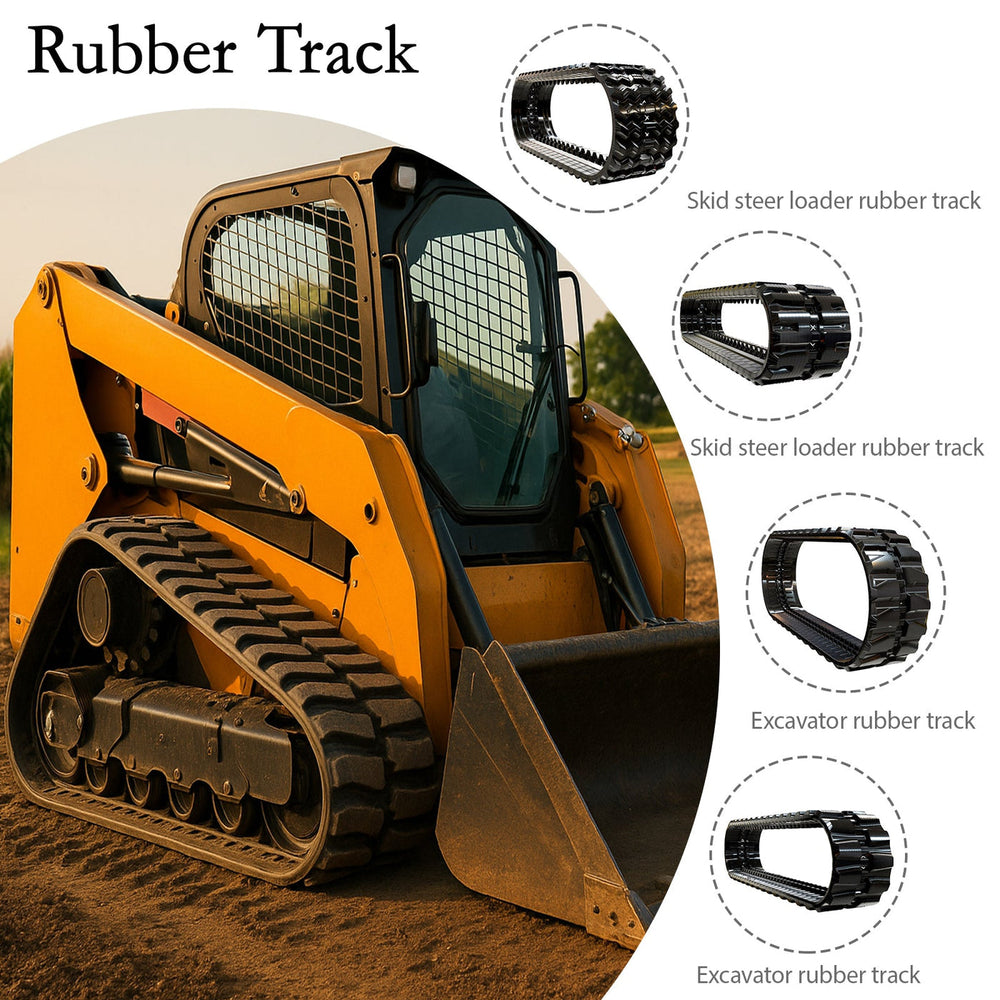
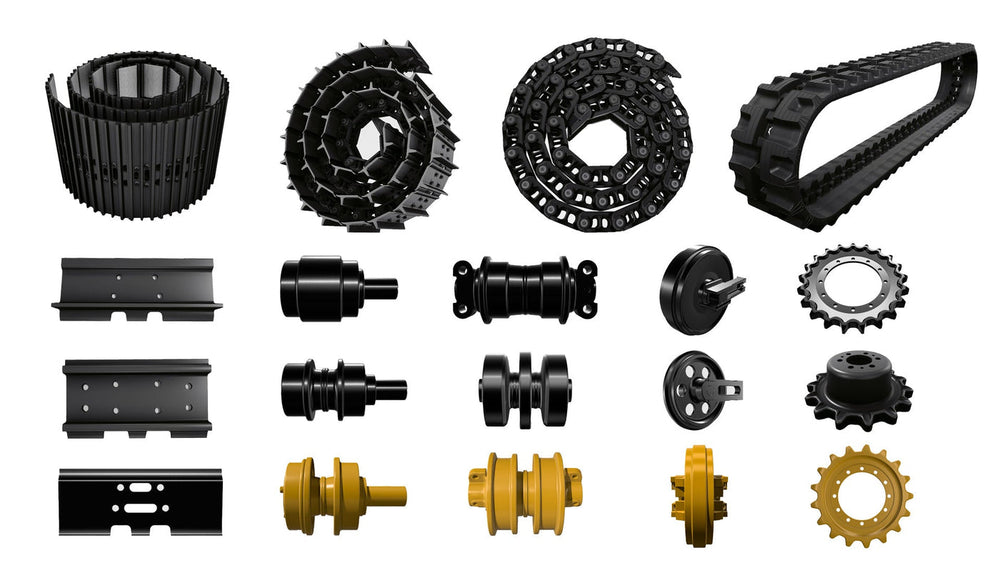
Beyond track shoes, KTSU offers track rollers, carrier rollers, front idlers, sprockets, track chain assemblies, rubber tracks, link and chain, bolts and nuts, and rubber pads. Buyers can source complete undercarriage systems from one supplier, simplifying compatibility and reducing procurement complexity.
Location Advantage for Fast Shipping
KTSU is located in Shipai, Kunshan City, Jiangsu Province, China—50 km from Shanghai, covering 70,000 sq. meters with 45,000 sq. meters of building area. This proximity to Shanghai port enables efficient export to global markets with convenient transportation.
Reading a track shoe: what each wear pattern says
A shoe is the part of the machine that touches the ground, which makes it the best record of what the machine has been doing. Four patterns cover most of what appears.
| What the shoe shows | What it indicates | What to check next |
|---|---|---|
| Grousers worn evenly across the whole set, reaching the limit together | Ordinary abrasion in the duty the machine works | Whether the hours match the band, and whether the chain is due at the same time |
| Wear concentrated on one side of the shoe, or on one side of the machine | Lateral loading, from alignment or from how the machine travels | Link guide faces, roller flange profiles and idler alignment on the same side |
| Cracking across the shoe or around the bolt holes | Impact or fatigue rather than wear, and often a sign the shoe is being run past its limit on hard ground | The duty and the shoe specification, and the fasteners, which may already be loose |
| Bolt holes elongated, or a bolt that cannot be brought to torque | The joint has been moving, which transfers load to the holes instead of the clamped faces | The bolt grade and whether it has been reused, plus the condition of the face the shoe seats against |
Two habits make the reading useful. Look at the set rather than at the worst shoe, because a single worn shoe is a local event and a set of them is the duty. And record the pattern with the hours, since a shoe group that reaches its limit inside the band is a specification question while one that reaches it outside the band is a machine or operator question.
The commercial reason to read the shoes is that they are the cheapest component in the group and often the earliest warning. A pattern that has appeared on the shoes is usually about to appear on the links and the roller flanges, where the same problem is counted in multiples.
Related Products, Services, or Resources
Track Roller – Critical undercarriage component that supports track chain weight and maintains alignment; pairs with track shoes for complete systems.
Sprocket – Drive component that engages track chain; compatible with KTSU track shoes for excavators and bulldozers.
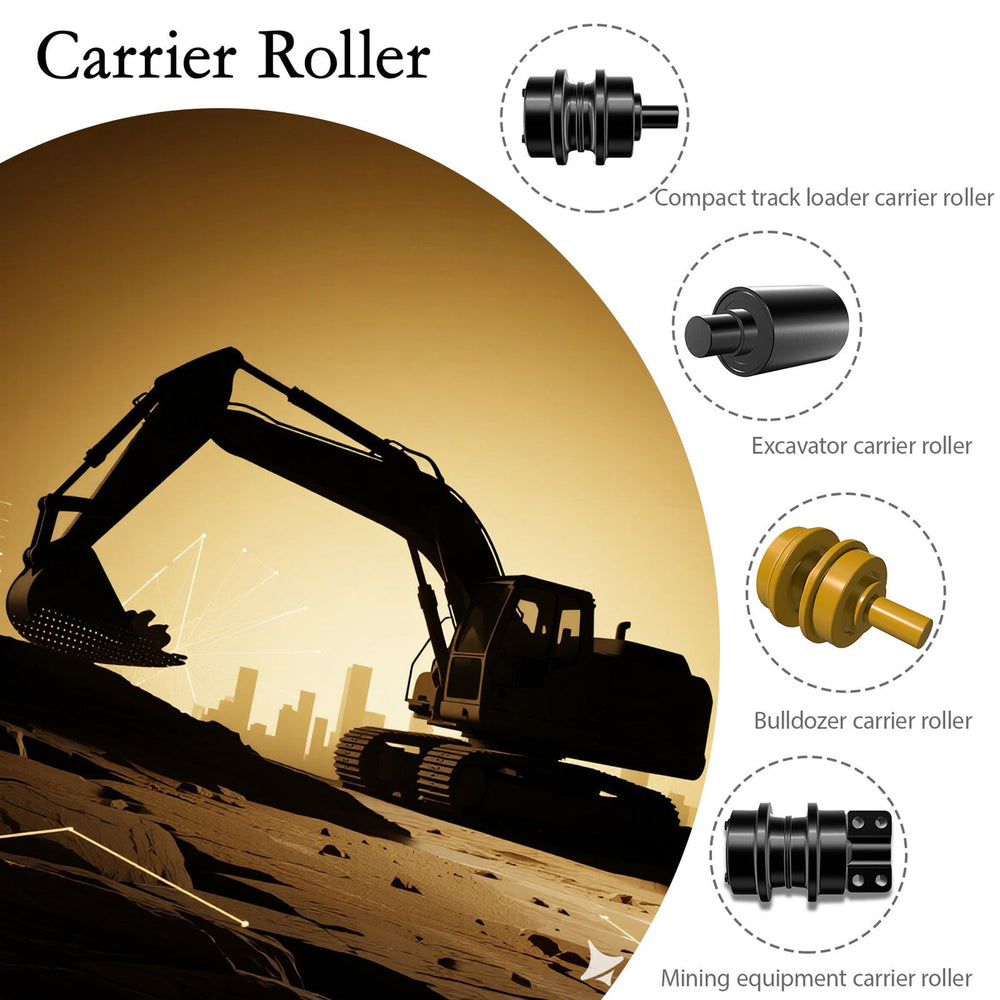
Carrier Roller – Top roller that guides track chain; essential for preventing lateral wear alongside track shoes.
How It Works
Define your ground conditions and machine requirements: Identify whether you operate in soft mud, hard rock, mixed soil, or paved surfaces. Determine excavator/bulldozer model and track pitch.
Request samples: Contact KTSU to request track shoe samples. Ask whether sample fees apply and confirm sample lead time.
Confirm specifications: Verify grouser type (single/double/triple), shoe width, material grade (boron steel), and hardness specifications (45–55 HRC).
MOQ and lead time confirmation: Discuss bulk order MOQ, bulk lead time, and customization options for your application.
Quality control documentation: Request certification documents, material test reports, and hardness verification for your target market.
Place bulk order: Confirm payment terms, shipping method, and export documentation for your region.
Use Cases
Scenario 1: Startup Excavator Brand
Traditional approach: Source track shoes from multiple trading companies with inconsistent quality, leading to premature failures.
With KTSU: Order 500-piece bulk track shoes with forged boron steel, through-hardened to 50 HRC, matching OEM pitch.
Result: Consistent quality reduces warranty claims; startup builds reputation for reliable undercarriage performance.
Scenario 2: Distributor/Wholesaler in Southeast Asia
Traditional approach: Import mixed-quality track shoes from various factories, facing return rates due to grouser wear.
With KTSU: Source 2,000-piece triple-grouser track shoes optimized for mixed soil/rock conditions, with certification support.
Result: Lower return rates, improved customer retention, and streamlined inventory with one supplier.
Scenario 3: Sourcing Manager for Mining Fleet
Traditional approach: Buy OEM track shoes at high cost, suffering 20%+ maintenance expenses annually.
With KTSU: Switch to aftermarket KTSU track shoes with through-hardened boron steel, cutting maintenance costs by 15–30%.
Result: Significant cost reduction while maintaining undercarriage life across 50+ excavators.
Scenario 4: Regional Market Expansion (Australia)
Traditional approach: Import generic track shoes unsuitable for abrasive quartz sands, causing rapid wear.
With KTSU: Select single-grouser track shoes with 55 HRC hardness optimized for high-abrasion desert conditions.
Result: Extended shoe life in Australian mining operations, reducing replacement frequency by 40%.
Scenario 5: Private Label Project for Construction Equipment Brand
Traditional approach: Develop custom track shoes with multiple suppliers, facing compatibility issues.
With KTSU: Partner for OEM/ODM customization of track shoes with branded grouser profile, matching proprietary track pitch.
Result: Unique product differentiation with reliable performance, accelerating market entry.
Frequently Asked Questions
What is a track shoe and what does it do?
It is the steel plate bolted to each track link that forms the machine contact with the ground. Grouser height and shoe width decide traction and flotation, and the shoe carries the impact of everything the machine drives over.
How do I choose the right track shoe?
By the machine and its chain first: shoe width, bolt pattern and the link it mounts to. Then by the work: wider shoes for flotation on soft ground, narrower and harder for rock, and a grouser height suited to the balance of grip and wear the site requires.
Why do track shoes wear unevenly?
Lateral loading is the usual cause, from alignment or from how the machine travels, which is why the check that follows is the link guide faces, the roller flanges and the idler alignment on the same side.
How long should track shoes last?
It depends on the ground rather than the clock. Abrasive rock consumes grousers quickly, while soft ground wears them slowly but damages shoes through impact. The measurement against the specification is the trigger; the hours are the trend.
Can track shoes be replaced individually?
They can, where a single shoe has been damaged. Where the set has worn evenly to its limit, replacing them as a group keeps the chain loading evenly and the bolt joints consistent.
Conclusion
Track shoes are the critical interface between heavy machinery and ground, determining traction, flotation, and undercarriage longevity. Selecting the right shoe requires matching grouser type to terrain, verifying boron steel metallurgy, and ensuring system compatibility. Kunshan Kensetsu Buhin Co., Ltd. (KTSU) stands out as a reliable Sino-Japanese joint venture supplier with 3,000+ undercarriage items, advanced manufacturing equipment, and certification support for global markets.
For fleet buyers and sourcing managers, aftermarket KTSU track shoes can cut maintenance costs by 15–30% while maintaining undercarriage performance. Whether you're a startup brand, distributor, or mining fleet operator, KTSU offers flexible MOQ, competitive lead time, and OEM/ODM customization for your specific application.
Next step: Contact KTSU to request track shoe samples, confirm MOQ and lead time, and discuss OEM/ODM customization for your excavator or bulldozer project.
Sources
Kunshan Kensetsu Buhin — Track Shoe and Rubber Pad Accessories
Business Research Insights — Construction Equipment Spare Parts Market 2026–2035
Juliry Machinery — Expert's 5-Point Checklist for Selecting High Wear Track Shoes
Maximize Market Research — Undercarriage Components Market Report 2032
This article is part of Excavator Track Chains: How to Choose the Right One, the guide that covers this topic in decision order.
More Technical Guides guides
Find the next article for your component, application or buying decision.
Back to Technical Guides