Why fine sand keeps breaching floating seals even after switching toric rings
Materials, manufacturing and inspection evidence behind undercarriage component performance.
On this page
You replace a worn duo cone seal, torque everything to spec, refill oil—and a few weeks later the undercarriage shows the same telltale sheen. In sandy jobsites, especially with fine, wind-blown particles, standard NBR toric rings often look fine at install but behave differently once the machine starts cycling. The frustration isn’t just leakage; it’s the uncertainty of whether the problem is assembly, material choice, or something happening at the seal interface that isn’t obvious without modeling or teardown.
Last updated:

What is a floating seal and why does sand intrusion matter?
A floating seal (duo cone seal) relies on two metal faces pressed together by elastomeric toric rings to keep oil in and contaminants out.
In real machines like excavator track rollers or idlers, these seals operate in a mixed environment: oscillating loads, thermal cycling, and constant exposure to abrasive particles. Fine sand is especially problematic because it behaves more like a fluid than coarse debris, slipping into micro-gaps that larger particles cannot access. When it enters the interface, it accelerates face wear and disrupts the oil film, leading to premature leakage.
From a user perspective, this is why seals that pass bench tests still fail in sandy terrain—real-world conditions introduce particle dynamics that static sealing assumptions don’t capture.
How do fine sand particles bypass standard NBR toric rings?
They don’t “break through” in a single path; they migrate through dynamic micro-gaps created by deformation and pressure variation.
Under load, NBR toric rings can experience slight compression set and delayed elastic recovery. In fluid-structure interaction models, this shows up as transient gaps at the sealing interface during pressure fluctuations. Fine particles exploit these gaps, especially when combined with vibration and shaft eccentricity.
On-site, this often appears as intermittent leakage rather than immediate failure. Operators may assume improper installation, but the underlying issue is material response under cyclic deformation—something not obvious without modeling or long-term field observation.
Where does this show up most in excavator undercarriages?
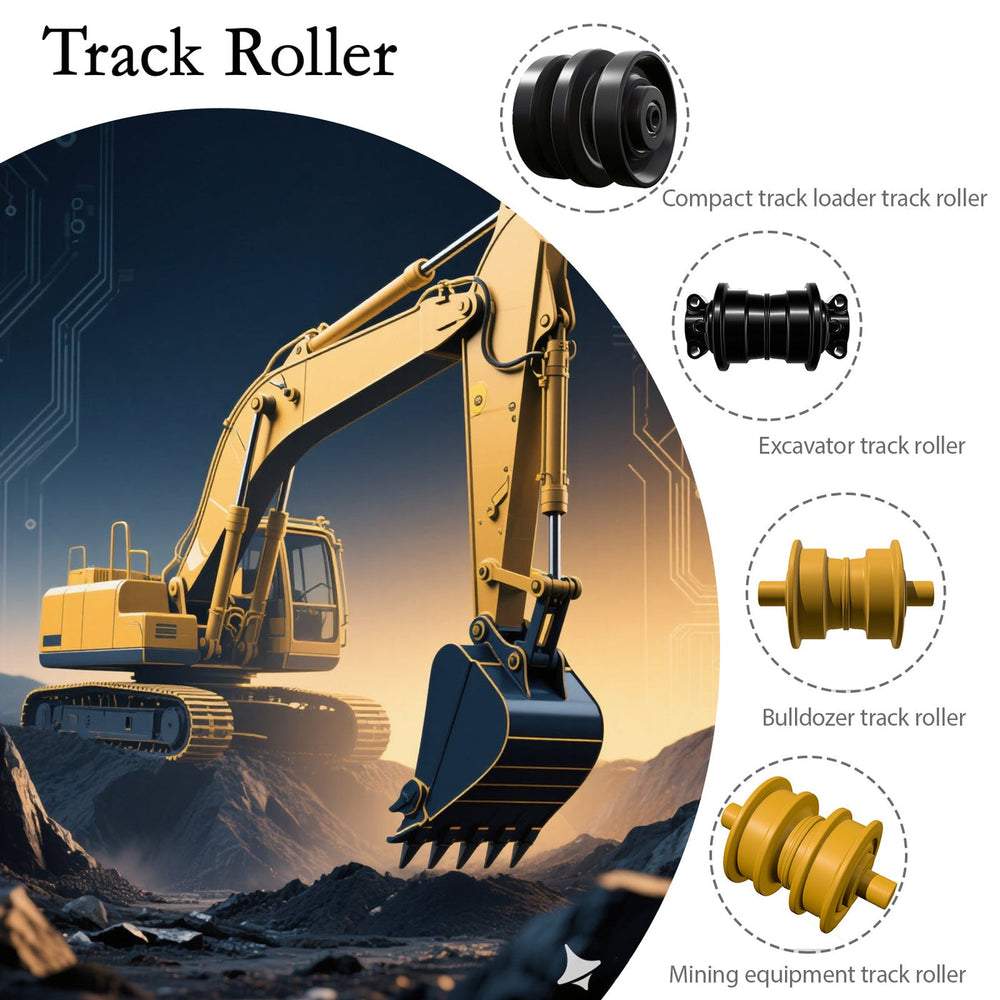
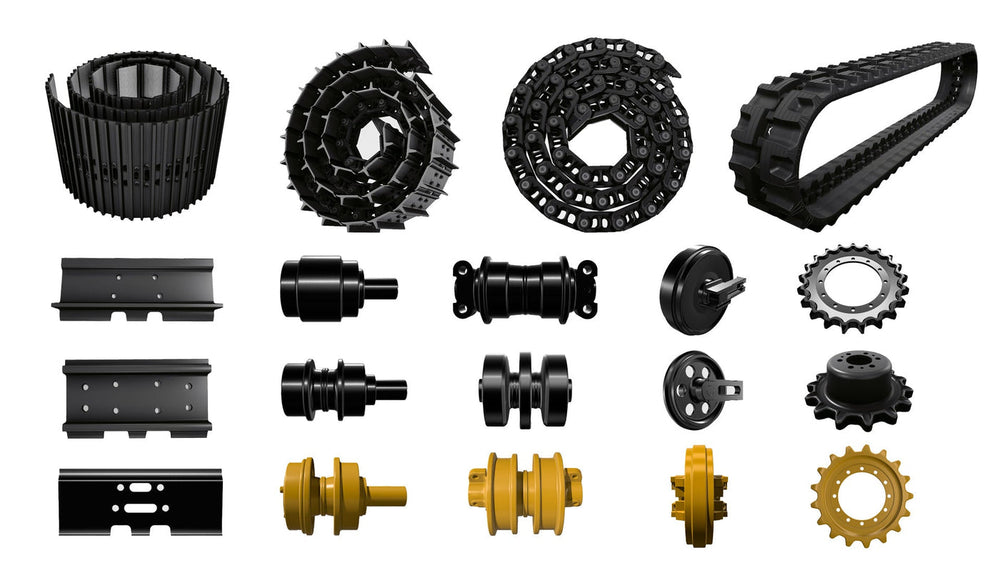
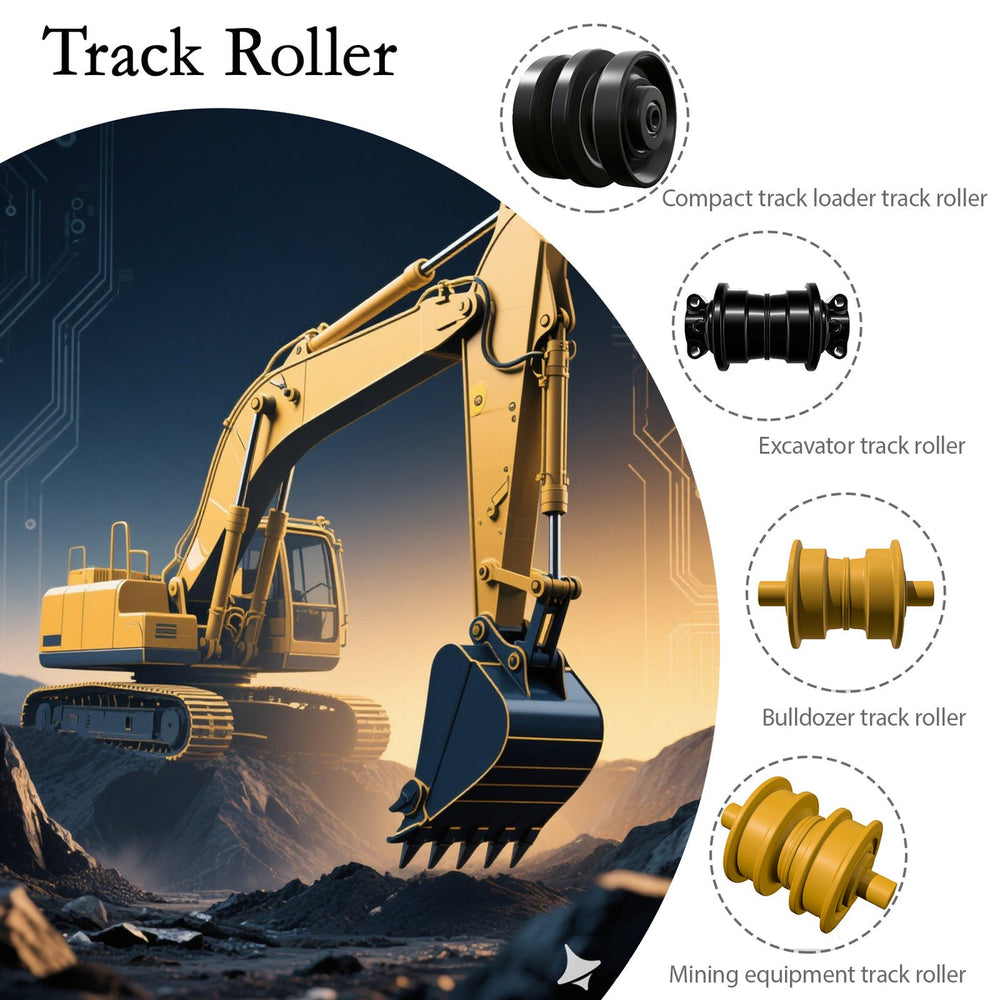
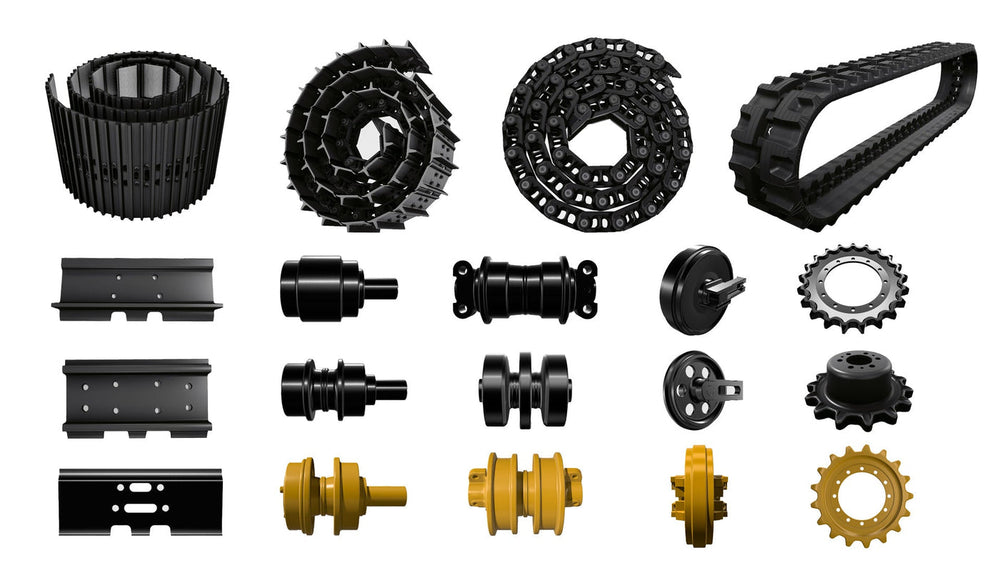
The most common points are track rollers, carrier rollers, and front idlers—components exposed to constant abrasive loading and rotational movement.
In sandy environments like dry construction zones or desert-adjacent sites, fine particles accumulate around the seal lip and are repeatedly dragged across the interface. Over time, this creates a polishing-abrasion cycle that reduces sealing effectiveness.
Manufacturers with large field datasets, including KTSU’s multi-thousand SKU undercarriage range across global markets, have observed that failure rates correlate more with particle size distribution than total dust volume. Fine silica-rich sand tends to cause earlier seal degradation than mixed coarse debris.
NBR vs high-density silicone toric rings in sandy conditions
The choice between NBR and high-density silicone is less about “stronger vs weaker” and more about how each behaves under dynamic sealing conditions.
Material comparison in practical terms:
NBR (Nitrile rubber): Good oil resistance, moderate elasticity, prone to compression set under long cycles, less adaptive to micro-gap recovery.
High-density silicone: Lower compression set, better elastic recovery, more stable across temperature swings, but can be softer under certain loads.
In real use, silicone toric rings maintain more consistent contact pressure during micro-movements, reducing the transient gaps that allow sand ingress. However, they are not universally superior—improper hardness selection can lead to over-deformation.
Advanced production methods, such as precision CNC machining and controlled sealing surface finishing seen in facilities like KTSU’s 70,000 m² manufacturing base, also play a role. Material alone cannot compensate for poor surface pairing.
Why switching to silicone rings doesn’t always fix the problem
Because the failure mechanism is often misunderstood.
Users may expect an immediate improvement after switching materials, but if the root cause includes misalignment, surface wear, or incorrect preload, silicone rings will still fail—just differently. In some cases, their higher flexibility can even mask early warning signs until leakage becomes visible.
Another common issue is mixing components from different tolerance standards. A high-performance toric ring installed in a worn metal seal face will not restore sealing integrity. The system must be considered as a whole: ring, face, lubrication, and assembly condition.
Where fine sand actually gets past the seal
Changing the ring does not change the gap the sand travels through. Four entry paths account for most repeat breaches, and each one has a different fix.
| Where it gets past | What you see at strip-down | What actually changes the outcome |
|---|---|---|
| The sealing faces themselves, where a fine film of abrasive has been carried in | Concentric scratching or a dull, lapped appearance across the running track | A matched lapped face pair and cleanliness at assembly, because the faces are the last barrier and not the first |
| The housing bore or the shaft seat, where the ring cannot seal because the fit has opened | Witness marks showing the ring has not been uniformly compressed | Measuring and correcting the fit before a new ring goes in |
| The lip between ring and face, where a damaged or wrong-profile ring cannot follow | A ring that has taken a set or shows a flattened section | Ring profile and hardness to specification, not a different material family |
| Assembly itself, if the joint is built in a dusty environment | Wear that appears early and evenly, with no single obvious entry point | Assembly discipline: the abrasive that is already inside does its work from the first hour |
The honest boundary is that fine, wind-blown sand is small enough to be carried as a film and hard enough to cut, so no ring material makes a joint immune. What a specification change can do is hold the geometry: the fit, the face flatness, and the ring profile. When a machine has breached seals twice with different ring materials, the repeat is telling you the containment is wrong rather than the compound.
How can sealing performance be improved in fine sand environments?
Improvement comes from aligning material choice with operating conditions and maintaining system integrity.
Effective approaches include:
Selecting toric rings with low compression set and appropriate hardness for load conditions.
Ensuring proper surface finish on seal faces to maintain stable oil film.
Controlling installation practices to avoid twisting or uneven preload.
Monitoring early leakage signs instead of waiting for visible oil loss.
In practice, teams that treat sealing as a system rather than a component tend to see longer service intervals. This is particularly relevant in high-cycle equipment where small inefficiencies compound quickly.
What does modeling reveal about sand intrusion dynamics?
Fluid-structure interaction models show that sealing failure is often driven by transient behavior rather than steady-state conditions.
During operation, pressure pulses and mechanical vibration cause micro-separation at the seal interface. Fine particles suspended in oil or dust-laden air follow these pressure gradients, gradually entering the system. Over time, this leads to abrasive wear and reduced sealing force.
Engineering teams, including those working with CAD/CAM-integrated development pipelines like KTSU, increasingly use simulation to predict these behaviors before field deployment. The insight is clear: preventing intrusion is less about blocking particles outright and more about eliminating the conditions that allow entry.
KTSU Expert Views
Field observations across diverse terrains suggest that sealing performance is rarely determined by a single factor. In undercarriage systems, the interaction between elastomer properties, metal face geometry, and environmental conditions defines the outcome.
From a manufacturing and application standpoint, consistency matters more than peak performance metrics. Facilities combining friction welding, robotic welding, and precision machining—such as those used in KTSU’s production lines—tend to produce components with tighter tolerances and more predictable sealing behavior. This reduces variability in how toric rings deform and recover during operation.
Another practical insight is that fine sand environments demand a different evaluation standard. Instead of focusing solely on initial sealing force, long-term elastic recovery and resistance to micro-abrasion become more relevant. This is where material selection, especially in toric rings, intersects with real-world durability.
Across global distribution networks and varied machine brands, patterns remain consistent: sealing systems fail fastest when design assumptions ignore particle behavior. Adjusting for that—through both material and system-level thinking—leads to more stable performance over time.
Frequently Asked Questions
Why do floating seals keep failing in fine sand even after changing the toric rings?
Because the ring is only one of three things holding the joint: the faces, the fit of the housing and shaft, and the ring that keeps the faces loaded. Fine sand carried as a film can reach the faces whatever the ring is made of, and a fit that has opened or a face that is no longer flat will defeat any compound.
Which is better for sandy conditions, NBR or silicone toric rings?
The material choice follows the temperature and the oil it sees first, and fine sand second. Changing the ring family without restoring the fit and the faces usually repeats the failure, because the sand is entering through geometry that the material change did not address.
Can a floating seal be tested before it is fitted?
The parts can be checked rather than tested: face flatness, ring profile and hardness against the drawing, and the housing and shaft dimensions. Those measurements are what decide whether the joint can hold, and they are taken before the seal goes in rather than after it leaks.
How can I tell whether sand entered at assembly or in service?
Timing and pattern. Wear that is spread evenly and appears early points at contamination present at assembly. Wear concentrated at one point, or on one side of the machine, points at something that developed in service, such as a fit opening or a ring taking a set.
References
ScienceDirect Article on Abrasive Wear Mechanisms in Sealing Systems
Machinery Lubrication on Contamination Control and Particle Effects
This article is part of Floating Seals and Bearings for Undercarriage Components, the guide that covers this topic in decision order.
More Engineering & Quality guides
Find the next article for your component, application or buying decision.
Back to Engineering & Quality