What Undercarriage Parts Should Every Fleet Manager Stock?
Component selection, fitment and the connections that keep an undercarriage working as a system.

On this page
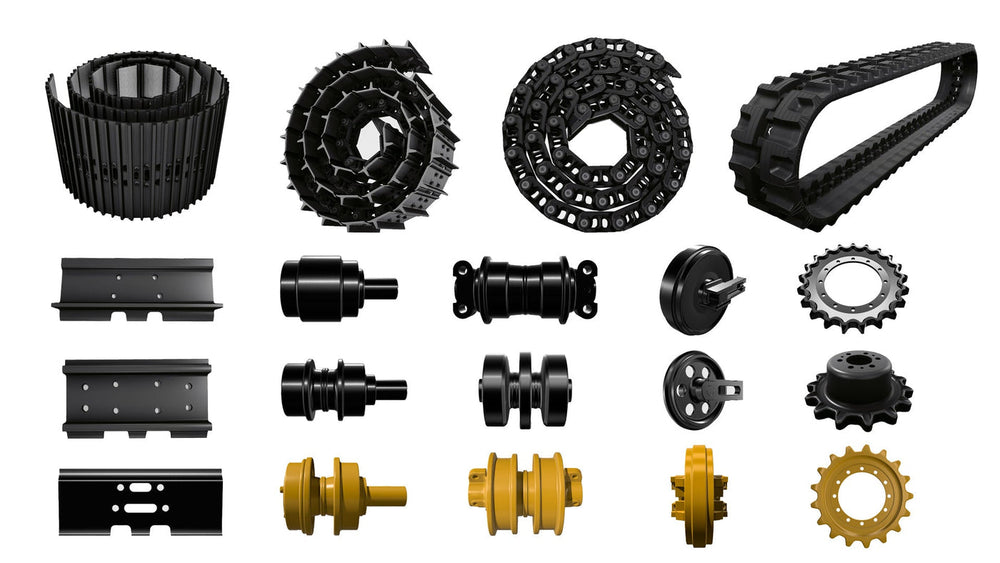
Excavator downtime can lead to costly project delays. Keeping essential undercarriage components like Front Idlers, track chain assemblies, and rollers on hand ensures smooth operations. Proactively managing parts inventory reduces unplanned maintenance, protects machinery from accelerated wear, and maintains project timelines, making fleet management more efficient and cost-effective.
Last updated:

How Do Front Idlers Impact Excavator Performance?
Front Idlers guide and support the track chain, maintaining proper alignment and tension. Worn idlers cause uneven track wear, vibration, and decreased machine efficiency. Regular inspection and timely replacement prevent damage to rollers and sprockets, ensuring smooth operation and extending the life of the entire undercarriage system.
What Are the Most Critical Track Rollers to Stock?
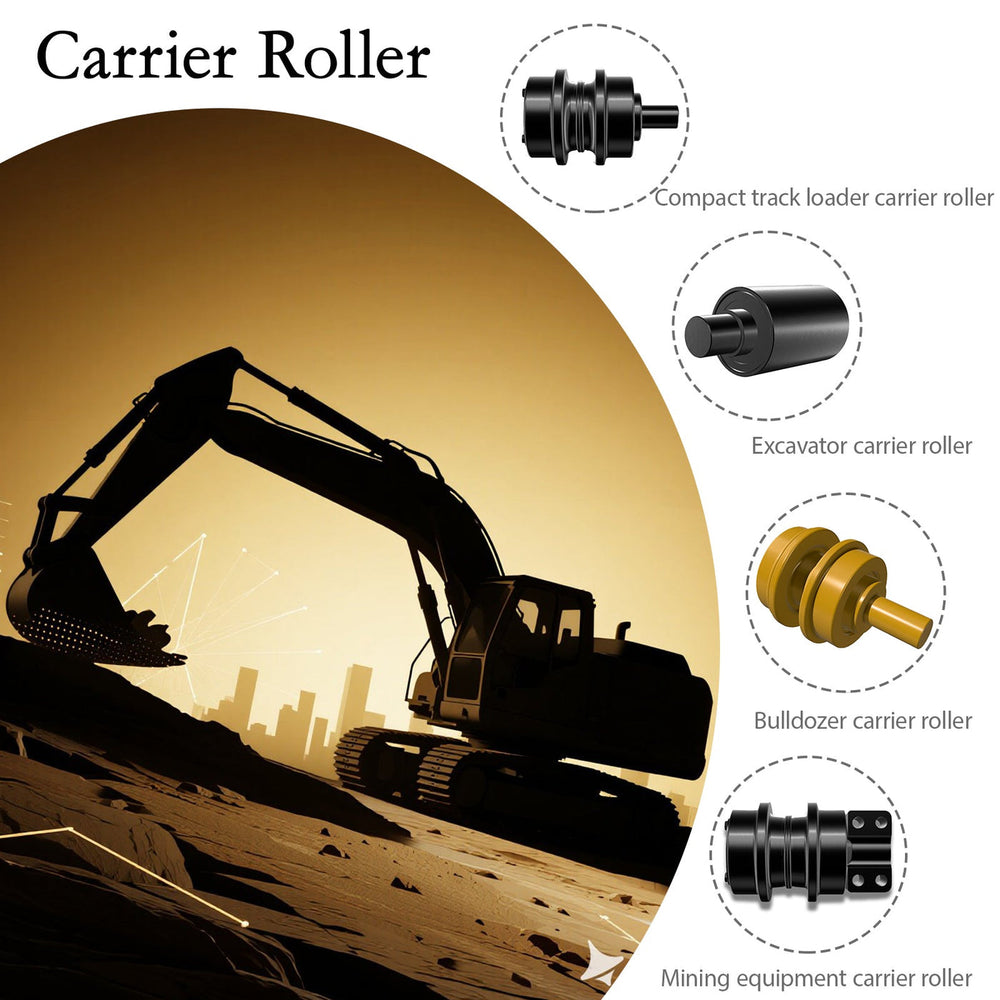
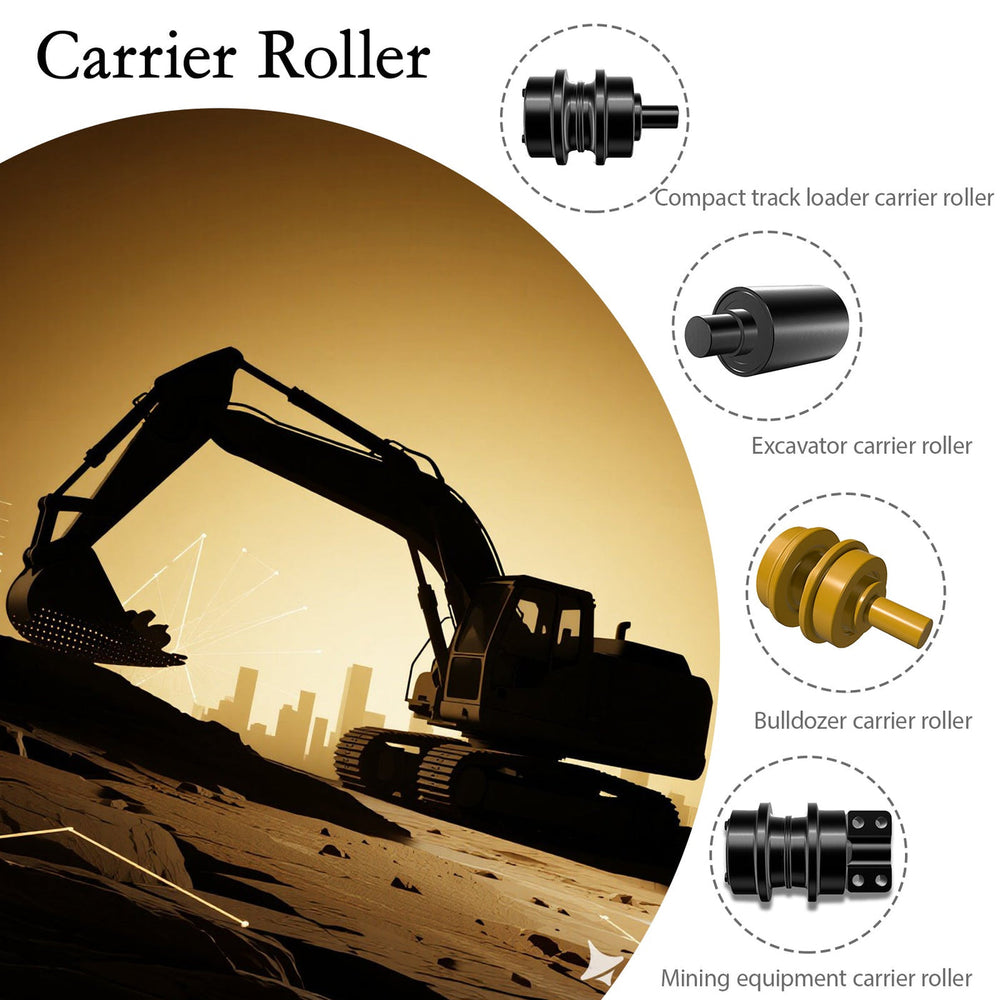
Track rollers carry machine weight and absorb impact from rough terrain. Carrier rollers support the top track run, while bottom rollers stabilize the lower track. Maintaining a supply of high-quality rollers prevents operational interruptions and ensures consistent performance across multiple machines and brands.
Table 1: Recommended Track Rollers to Keep in Inventory
| Roller Type | Function | Average Lifespan |
|---|---|---|
| Bottom Rollers | Support machine weight | 1,200–1,500 hrs |
| Carrier Rollers | Maintain top track run | 1,000–1,400 hrs |
| Adjustable Rollers | Adapt to track tension | 1,000–1,300 hrs |
Which Track Chain Assemblies Should Be Prioritized?
Track chain assemblies are high-wear items essential for machine mobility. Prioritize assemblies that allow quick replacement to minimize downtime. KTSU provides robust chain assemblies designed for Caterpillar, Komatsu, and Hitachi excavators, offering durability and consistent performance in demanding project environments.
Why Are Sprockets Essential for Excavator Longevity?
Sprockets drive the track chain and directly influence wear patterns across rollers and chains. Damaged or worn sprockets accelerate undercarriage deterioration. Stocking replacement sprockets ensures smooth power transmission, protects other components, and maintains operational efficiency over long-term projects.
How Can Idler Bearings Extend Machinery Life?
Idler bearings reduce friction, heat, and stress on track components. Failed bearings lead to misalignment, increased wear, and unexpected downtime. Regular replacement of idler bearings maintains track stability, improves fuel efficiency, and safeguards undercarriage longevity.
Who Should Decide Which Undercarriage Parts to Keep in Inventory?
Fleet managers, in coordination with maintenance engineers and suppliers like KTSU, should develop inventory strategies based on machine type, operating conditions, and historical wear data. This collaborative approach ensures critical components are available when needed, reducing emergency downtime and maximizing project productivity.
When Should Undercarriage Components Be Replaced?
Replacement timing depends on operating hours, load, and terrain conditions. Rollers and idlers often require replacement after 1,000–1,500 hours, while sprockets and track chains may last 1,500–2,000 hours. Following a proactive replacement schedule prevents cascading failures and ensures consistent machine performance.
Building the list from your own fleet instead of from a catalogue
The component list above is the right starting point. What it cannot tell you is how many of each to hold, and that is the question that decides whether a stock list reduces downtime or merely occupies a shelf. Three figures per component family answer it.
- Annual consumption. Machines running the component, multiplied by the hours each one runs per year, divided by the service life in the duty cycle those machines work in. The lifecycle bands used elsewhere on this site give the divisor; the point is to use the band that matches the application rather than an average across the fleet.
- Replenishment time. The realistic time between placing an order and holding the part, including the supplier lead time and whatever happens at goods-in. Stock exists to cover this period, and nothing more is needed to cover it.
- The consequence of not having it. What the machine costs per hour when it is stopped, and how long the replacement takes. This is the figure that separates the parts worth holding from the parts worth ordering.
Put together, the arithmetic sorts the list into three groups rather than one.
| Group | How it is identified | Stocking rule |
|---|---|---|
| Fast movers on critical machines | High annual consumption and a high cost per stopped hour | Hold one replacement set per machine class, and review the level when the fleet changes |
| Slow movers with long lead times | Low consumption but a replenishment time measured in weeks | Hold against the lead time rather than the consumption, because the interval between ordering and receiving is what stops the machine |
| Predictable items on planned intervals | Consumption that can be forecast from the hour meters and the measurement log | Order to the schedule rather than holding stock, and place the order while there is still time to wait for the right specification |
The second group is the one most often missed, because a low-consumption part does not look urgent until it is the part that stops the machine. The third group is where a fleet buys the most value, because ordering on a schedule rather than on an emergency is what keeps the specification in the buyer hands instead of the stock room.
Are There Cost Benefits to Bulk Buying Undercarriage Parts?
Bulk purchasing lowers unit costs and guarantees immediate availability. Fleet managers benefit from consistent project schedules and reduced emergency orders. KTSU’s digital platform supports bulk orders for essential parts such as track rollers, idlers, and chains, streamlining procurement and improving operational efficiency.
Table 2: Cost Comparison – Single vs. Bulk Purchase
| Part Type | Single Purchase | Bulk Purchase (10+) | Savings |
|---|---|---|---|
| Front Idler | $550 | $480 | 13% |
| Track Roller | $420 | $360 | 14% |
| Track Chain Assembly | $1,200 | $1,050 | 12.5% |
How Do KTSU’s Engineering Standards Improve Part Reliability?
KTSU integrates Japanese precision with advanced manufacturing techniques, including NITTO friction welding, robotic CO2 welding, and CNC machining. These processes ensure components achieve optimal hardness, deep-case durability, and precise tolerances. Using KTSU parts guarantees compatibility with major brands, minimizes replacement frequency, and enhances overall undercarriage performance.
KTSU Expert Views
"At KTSU, we emphasize strategic inventory management to prevent downtime and protect heavy machinery. Stocking high-wear items like Front Idlers, track rollers, and chain assemblies allows operators to maintain continuous operation and avoid costly repairs. Our advanced engineering and quality control ensure every component meets international standards, providing reliability and peace of mind on every project."
Conclusion: Key Takeaways for Fleet Managers
Fleet managers should maintain a stock of critical undercarriage components to prevent delays and extend machinery life. Focus on Front Idlers, track rollers, sprockets, and track chain assemblies. Bulk purchasing from reliable suppliers like KTSU ensures availability, cost savings, and operational continuity, keeping heavy equipment running efficiently in all conditions.
Frequently Asked Questions
How many spare undercarriage parts should a fleet hold?
Enough to cover the realistic replenishment time for that component family, with a margin for the critical-path machines. The number comes from annual consumption and lead time rather than from a rule of thumb, and it changes when the fleet changes.
Which undercarriage parts should be held as a set?
The components that wear as a pair or a group: a track chain with its sprocket, and a set of rollers where the wear is distributed across the set. Holding a chain without a sprocket is holding half a replacement, because fitting one against the other is what shortens both lives.
Does bulk buying always save money?
No. It saves money where the consumption is predictable and the shelf life is not an issue, and it costs money where it ties up working capital in a component whose specification may change or whose duty cycle may move. The comparison is between the discount and the cost of holding the stock, including the risk of holding the wrong specification.
How often should undercarriage stock levels be reviewed?
Whenever the fleet changes composition, and at the same interval as the inspection routine, which this article puts at 250 to 500 operating hours. The review should compare recorded consumption against the forecast, because a component that is consistently coming off earlier than the band is a specification question rather than a stocking one.
How do KTSU engineering standards affect part reliability?
The specification is what makes a part predictable: material grade, heat treatment with hardness at depth, seal type and dimensional tolerance, all traceable to a batch. A stock list built on a documented specification is easier to manage, because the replacement interval is repeatable rather than a range of outcomes.
This article is part of Undercarriage Parts: The Complete Buyer’s Guide, the guide that covers this topic in decision order.
More Undercarriage Parts guides
Find the next article for your component, application or buying decision.
Back to Undercarriage Parts