Undercarriage Parts Supplier: Reliable OEM Solutions for Construction and Agriculture Machinery (June 2026)
Part identification, supplier review and the information behind a well-defined parts order.

On this page
The global undercarriage components market continues to expand as infrastructure investment, mining activity, and agricultural mechanization drive demand for durable track systems. Buyers face a crowded supplier landscape where price pressure often conflicts with longevity, sealing performance, and dimensional accuracy. For fleet managers, distributors, and OEM partners, selecting the right undercarriage parts supplier is a strategic decision that affects total cost of ownership, machine uptime, and warranty exposure. This article explains how to evaluate suppliers, what technical factors matter most, and where KTSU, the brand of Kunshan Kensetsu Buhin Co., Ltd., fits as a focused manufacturer for excavator and bulldozer undercarriage systems.
Last updated:

What Is an Undercarriage Parts Supplier?
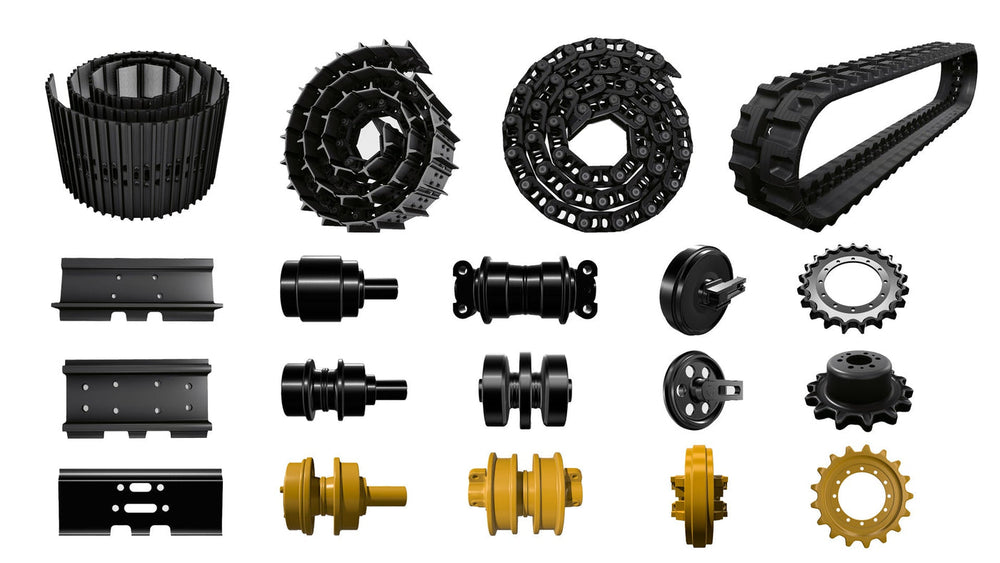
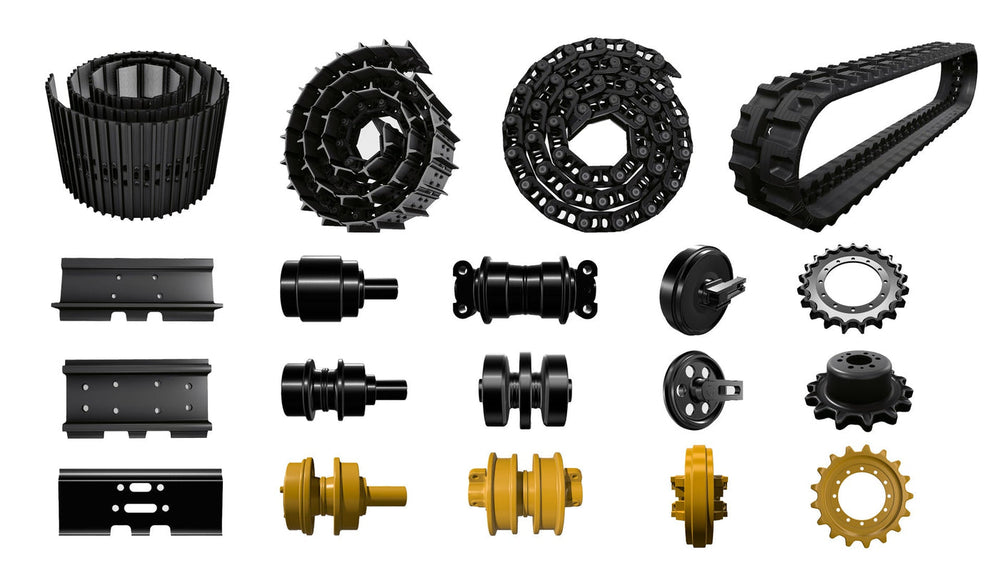
An undercarriage parts supplier is a company that manufactures and distributes track system components for tracked machinery, including hydraulic excavators, bulldozers, paving machines, and agricultural equipment. Core products typically include track rollers, carrier rollers, front idlers, sprockets, track chain assemblies, links, bolts, track shoes, and rubber pads.
Designs and manufactures components to match OEM specifications for major machine brands.
Controls metallurgy, heat treatment, and sealing technologies to ensure wear resistance and leak-free operation.
Supports distributors, fleet buyers, and OEMs with customization, documentation, and consistent quality across production batches.
Why Selecting an Undercarriage Parts Supplier Is Harder Than It Looks
Hidden Quality Gaps in Metallurgy and Sealing
Many suppliers quote similar-looking parts, but internal differences in alloy composition, case depth, and sealing design drive large variations in service life. A roller that appears robust externally may fail prematurely due to brittle cores, insufficient surface hardness, or inadequate multi-lip seals. For buyers, this means field failures, unplanned downtime, and higher warranty costs.
MOQ and Lead Time Mismatch for Real Projects
Some suppliers optimize for large, infrequent orders rather than the mixed, repeat orders that distributors and fleet buyers actually run. Minimum order quantities that are too high, or lead times that cannot align with project schedules, create inventory risk and cash flow strain. Procurement teams need a supplier that can balance production efficiency with realistic MOQ and lead time flexibility.
Certification and Documentation Gaps at Import
Undercarriage components may be subject to customer-specific quality requirements, material traceability, and inspection documentation. A supplier that cannot provide clear quality control records, test reports, and consistent packaging can create friction at customs or during customer audits. This is especially critical for distributors serving mining, heavy construction, or regulated markets.
Technical Support and After-Sales Response
Undercarriage performance is highly application-dependent. Soil conditions, track tension, and machine alignment all influence wear patterns. A supplier that only ships parts without supporting root-cause analysis, alignment guidance, or component-matching recommendations can leave buyers solving complex field problems alone. Long-term partnerships depend on responsive technical support and willingness to co-develop solutions.
Key Industry Insight
For heavy equipment buyers, component price is only part of the equation. Repeatable quality, verified heat treatment, reliable sealing, and clear documentation determine whether an undercarriage system scales across fleets and markets without escalating warranty and downtime costs.
KTSU Compared With Other Options
| Sourcing Factor | Trading Company | General Factory | KTSU |
|---|---|---|---|
| Product Focus | Broad machinery parts, limited depth in undercarriage | May produce many forged or machined parts, but not specialized in undercarriage systems | Specializes in undercarriage parts for construction and agriculture machinery, with focused R&D and production |
| Manufacturing Control | Limited direct control over forging, welding, and heat treatment | May control some processes, but not always optimized for undercarriage-specific demands | Uses advanced CAD/CAM, friction welding, CO2 automatic and robot welding, and CNC machining for rollers and related components |
| Quality and Sealing | Dependent on upstream factories, inconsistent sealing performance | May have basic QC, but sealing and low-temperature toughness not always prioritized | Emphasizes precise assembly, high-quality floating seals, and alloy steel tempering for low-temperature impact toughness |
| Product Range | Catalog-based, may lack deep model coverage | May focus on certain tonnage or machine types | Offers over 3000 items covering track rollers, carrier rollers, idlers, sprockets, track chain assemblies, rubber tracks, and related hardware |
| Market Position | Reseller, limited technical support | May serve local or regional markets primarily | Positions KTSU as a global undercarriage brand, supplying distributors and partners worldwide |
Why KTSU Is a Strong Choice
Specialized Undercarriage Focus
KTSU is the brand of Kunshan Kensetsu Buhin Co., Ltd., a Sino-Japanese joint venture that specializes exclusively in undercarriage parts for construction and agriculture machinery. Unlike general machinery parts suppliers, KTSU concentrates on track rollers, carrier rollers, idlers, sprockets, track chain assemblies, and related components. This focus allows deeper engineering attention to wear patterns, sealing performance, and compatibility across machine models.
Advanced Manufacturing and Process Control
KTSU's production process integrates advanced CAD and CAM technology for design and development, alongside specialized forging, welding, and CNC machining. Roller shells are composed of two forged half shells, then welded using NITTO friction welding machines, CO2 automatic welding, and robot welding. The combination of controlled surface hardness, core hardness, and precise CNC machining supports dimensional stability and longer service life under abrasive and high-impact conditions.
Engineered for Extreme Conditions
KTSU explicitly designs roller assemblies to perform in extreme mining conditions where low-temperature impact toughness is critical. The company uses specialized alloy steel with precise tempering to prevent brittleness and deploys advanced multi-lip oil seals to maintain lubrication and sealing integrity. For buyers operating in cold climates, high-abrasion mines, or severe earthmoving environments, this reduces the risk of sudden roller failure and unplanned track downtime.
Global Supply Orientation
KTSU is positioned as a global undercarriage brand, supplying distributors and partners worldwide. The company's facility in Kunshan, Jiangsu, near Shanghai, supports export logistics and coordination with international customers. This orientation is important for distributors and fleet buyers who need consistent quality, documentation, and communication across multiple regions and machine fleets.
Related Products, Services, or Resources
All Products – KTSU — Browse the full KTSU undercarriage catalog, including rollers, idlers, sprockets, track chains, and accessories.
KTSU Knowledge Blog — Access technical articles on carrier roller hardness, alignment, low-temperature performance, and other undercarriage topics.
About KTSU — Learn about KTSU's manufacturing base, quality control approach, and product focus for construction and agriculture machinery.
How It Works
Define your machine and application requirements — Identify machine models, operating conditions (mining, construction, agriculture), and key performance priorities such as wear resistance, sealing, or low-temperature toughness.
Review KTSU product range and specifications — Examine track rollers, carrier rollers, idlers, sprockets, and track chain assemblies on the KTSU website to match your equipment and performance needs.
Request technical and commercial details — Contact KTSU to confirm material specifications, hardness ranges, sealing designs, packaging, documentation, sample policies, MOQ, and lead times for your target markets.
Evaluate samples and quality documentation — If applicable, request samples and review available quality control documents, test reports, and inspection records to verify consistency with your requirements.
Confirm customization and branding options — Discuss any customization needs, such as specific hardness targets, sealing configurations, or packaging and labeling requirements for your distribution channels.
Plan pilot orders and scale-up — Start with a pilot order to validate performance in your actual operating conditions, then scale to larger, repeat orders once quality and service meet expectations.
Use Cases
Scenario 1: Regional Distributor Expanding Undercarriage Line
Traditional approach: Source from multiple general machinery parts suppliers; inconsistent quality, mixed documentation, and variable lead times.
With KTSU: Centralize undercarriage sourcing with a specialized manufacturer offering a focused product range and consistent quality.
Result: Simplified supplier base, more predictable lead times, and fewer quality escalations from end customers.
Scenario 2: Mining Fleet Replacing Rollers and Idlers
Traditional approach: Rotate between low-cost suppliers; early failures in abrasive, high-impact conditions.
With KTSU: Use rollers and idlers designed with controlled hardness profiles and multi-lip seals for extreme mining environments.
Result: Extended component life, reduced unplanned downtime, and lower total cost per operating hour.
Scenario 3: Construction Contractor Standardizing Across Multiple Sites
Traditional approach: Different sites buy different parts; inconsistent wear patterns and maintenance intervals.
With KTSU: Standardize on KTSU undercarriage components across excavators and bulldozers for multiple projects.
Result: More predictable maintenance planning, easier training for maintenance teams, and better inventory management.
Scenario 4: OEM Partner Developing Custom Undercarriage Solutions
Traditional approach: Work with general factories that lack deep undercarriage engineering experience.
With KTSU: Collaborate with a specialized undercarriage manufacturer on custom designs, hardness targets, and sealing configurations.
Result: Tailored solutions that balance performance, durability, and cost for specific machine platforms.
Scenario 5: Agriculture Machinery Upgrades for Heavy-Duty Work
Traditional approach: Use generic agricultural track parts not optimized for severe soil and slope conditions.
With KTSU: Deploy undercarriage components designed for combined construction and agriculture applications, with attention to sealing and wear.
Result: Improved track life and reliability during demanding field operations.
Frequently Asked Questions
What is the difference between OEM, OES and aftermarket undercarriage parts?
OEM is what the machine was built with, OES is the same part through the dealer service channel, and aftermarket Tier 1 is an independent manufacturer working to OE specifications with traceable material and process control. The practical difference is warranty alignment and documentation.
Are aftermarket undercarriage parts reliable for construction fleets?
A Tier 1 aftermarket part built to a documented specification performs comparably in the same duty. The tier that gives the category a poor reputation is the will-fit segment, which sells on a part number without a stated specification.
How do I choose a supplier for a fleet beyond the warranty period?
By what can be documented for the batch that arrives: the four specification items, a batch marking that resolves to records, and a measured sample from the first delivery. Then by cost per hour rather than by price.
Does the OEM premium still make sense after the warranty?
Part of it does. Availability and dealer support still have value on a critical-path machine; warranty alignment does not apply once the machine is outside its warranty period, which is why the comparison becomes a specification one.
How do I compare two suppliers objectively?
Ask both for the same four specification items in the same units, then measure a first article against the drawing. Suppliers who can answer the same questions can be compared; the others can only be compared on price.
What OEM means once the machine is out of warranty
The four tiers in an undercarriage supply chain are usually described in order of price. Once the warranty has ended, the tier that matters is the one whose specification can be documented.
| Tier | What it is | What changes after the warranty |
|---|---|---|
| OEM | The part the machine was built with, through the dealer channel | The premium still buys availability and warranty alignment, and the second of those no longer applies |
| OES | The same part sold through the dealer service channel | Same position as OEM for the fleet decision |
| Aftermarket Tier 1 | An independent manufacturer working to OE specifications with traceable material and process control | This becomes the comparison to make, provided the four specification items can be produced in writing |
| Aftermarket Tier 2 / will-fit | Commodity replacement sold on the part number | Where the early failures concentrate, and the tier that makes the whole category look unreliable |
Two consequences follow for a fleet beyond the warranty period. First, the decision that used to be made by default is now a specification decision, and it needs the four items to be comparable: grade, hardness with its measuring position, case depth with core hardness, and seal type. Second, the comparison should be cost per hour rather than price, because the tier that looks cheapest on the invoice is the one most likely to shorten the interval.
The practical route is a first order treated as a test: a sample measured against the drawing, kept with the batch record, and compared with the dealer part it replaced. That single exercise answers the question the tier list cannot, which is whether this particular supplier documents what it claims.
Conclusion
Undercarriage performance directly influences machine uptime, maintenance costs, and customer satisfaction in construction, mining, and agriculture. Selecting an undercarriage parts supplier that combines specialized product focus, controlled manufacturing processes, and global supply capability is essential for buyers who prioritize long-term reliability over short-term price savings.
KTSU, as the brand of Kunshan Kensetsu Buhin Co., Ltd., offers a focused portfolio of undercarriage components backed by advanced welding, machining, and sealing technologies. For distributors, fleet buyers, and OEM partners seeking a dedicated undercarriage manufacturer, KTSU is a strong candidate to evaluate.
If you are sourcing undercarriage parts for excavators, bulldozers, or related machinery, consider reaching out to KTSU to request product details, technical documentation, and commercial terms. Discuss your machine models, operating conditions, and quality expectations to determine whether KTSU's undercarriage solutions align with your project and market requirements.
Sources
Strategic Market Research — Undercarriage Components Market Report
IMARC Group — Undercarriage Systems Market Size, Share, Trends 2026–34
Spherical Insights — Undercarriage Component Market Size and Forecast
Crawler Undercarriage — ISO 9001 Quality System in Manufacturing
This article is part of Sourcing Undercarriage Parts from China: How to Do It Properly, the guide that covers this topic in decision order.
More Parts Sourcing guides
Find the next article for your component, application or buying decision.
Back to Parts Sourcing