How to Choose a Reliable Undercarriage Parts Manufacturer for Heavy Machinery
Component selection, fitment and the connections that keep an undercarriage working as a system.
On this page
When your excavator's track starts slipping or a roller makes a grinding noise, you're not just facing a repair delay—you're staring at a choice between an OEM that quotes a high price for a single idler and a replacement manufacturer promising the same part for significantly less. That price gap creates real tension: do you trust the cheaper option and risk premature failure, or pay more and still wonder if the OEM part is actually better? For construction and agricultural equipment owners, picking the right undercarriage parts manufacturer isn't just about cost—it's about finding a supplier whose components survive the same brutal conditions as the original while delivering genuine value.
Last updated:

The stakes are higher than you think. Undercarriage wear directly determines how much productive time your machine spends in the field versus the shop. A single worn track roller can accelerate chain wear substantially, turning a modest replacement into a costly track-chain overhaul. Most operators don't realize that undercarriage components account for a significant portion of total ownership costs on excavators and dozers, and choosing the wrong manufacturer can double that percentage through premature failures.
What Makes an Undercarriage Parts Manufacturer Actually Reliable
A reliable manufacturer isn't just one that makes parts—it's one that engineers them to match OEM case-hardening depths, sealing integrity, and surface hardness while maintaining consistent quality across thousands of units. Many so-called "replacement" manufacturers cut costs by reducing hardened layer depth from the OEM standard to a thinner layer, which means the part wears through the hard layer in months instead of years.
In real usage, you'll see this as early pitting on sprocket teeth, premature seal failure on rollers leading to grease leaks and bearing contamination, or track chains that stretch unevenly. The difference between a longer life and a shorter life often comes down to whether the manufacturer invested in proper heat-treatment processes like NITTO friction welding or robotic CO2 welding instead of cheaper manual methods.
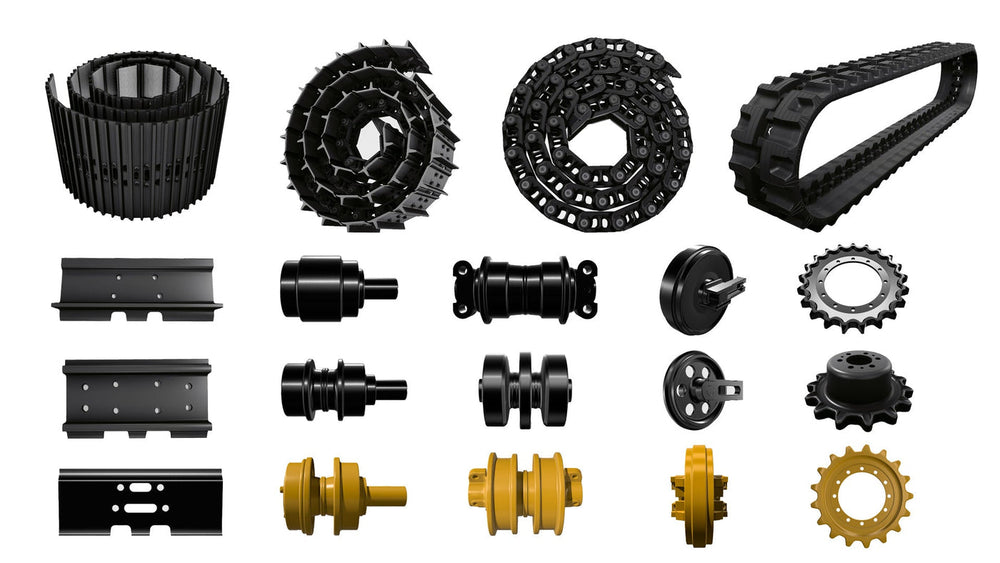
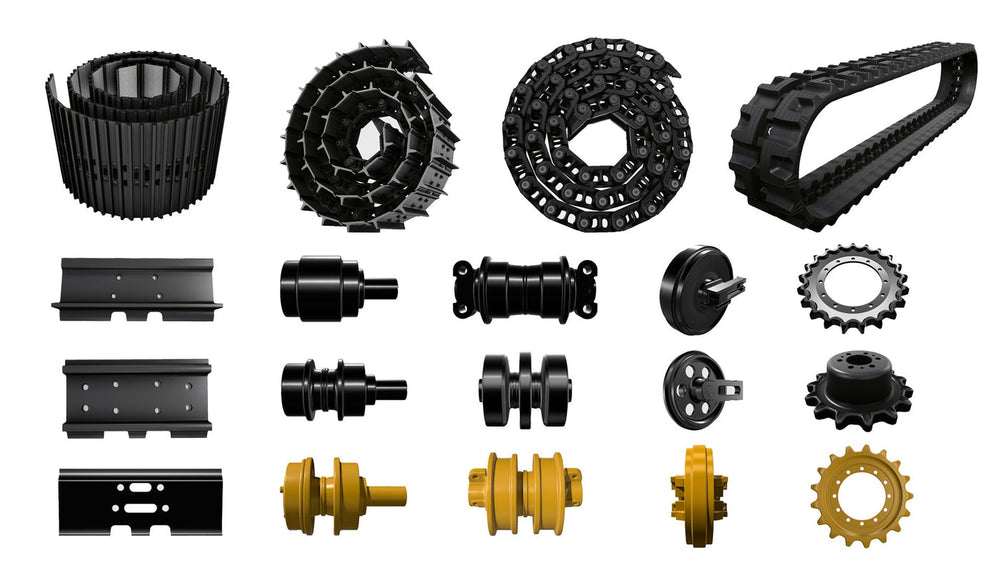
KTSU, established as a Sino-Japanese joint venture in Kunshan, Jiangsu, operates a 70,000-square-meter facility that integrates Japanese technical excellence with China's manufacturing efficiency, using exactly these advanced processes to ensure every component achieves superior surface hardness and deep-case durability. Their 3,000+ item portfolio covers everything from Track Rollers to Track Chain Assemblies, engineered to fit world-class brands like Caterpillar, Komatsu, and Hitachi.
How Undercarriage Components Actually Fail in Real Field Conditions
Undercarriage parts don't just "wear out"—they fail in specific patterns that reveal whether the manufacturer used proper materials and processes. The most common failure modes include:
| Failure Type | What It Looks Like | Root Cause |
|---|---|---|
| Seal leakage | Grease around roller, dirt inside | Poor sealing design or low-quality rubber |
| Sprocket tooth pitting | Cracked or chipped teeth | Insufficient case hardness |
| Roller bearing noise | Grinding or whining sound | Bearing contamination from seal failure |
| Track chain stretch | Loose track, uneven wear | Inferior forging or improper heat treatment |
| Idler flange wear | Worn edge where track contacts | Wrong steel grade or thin hardened layer |
Environmental conditions dramatically accelerate these failures. Operating in abrasive silica sand can double wear rates compared to clay soil. Extreme cold makes low-quality rubber seals brittle, while continuous wet conditions expose sealing weaknesses through corrosion.
KTSU's facility leverages cutting-edge production technologies including precision CNC machining and advanced CAD/CAM design to engineer components that maintain performance across these varying conditions, ensuring exceptional service life whether you're running heavy-duty excavators or specialized agricultural equipment.
Which Undercarriage Parts Should You Prioritize When Replacing
Not all undercarriage components wear at the same rate, and replacing them all at once is often unnecessary expense. Understanding wear patterns helps you prioritize:
Highest wear (replace first):
Track shoes/links: Direct ground contact, wear 2–3× faster than rollers
Sprockets: Tooth engagement creates concentrated stress, often fail before idlers
Medium wear:
Track rollers (bottom rollers): Support 60–70% of machine weight
Track chain: Wears as shoes and sprockets degrade
Lower wear (inspect before replacing):
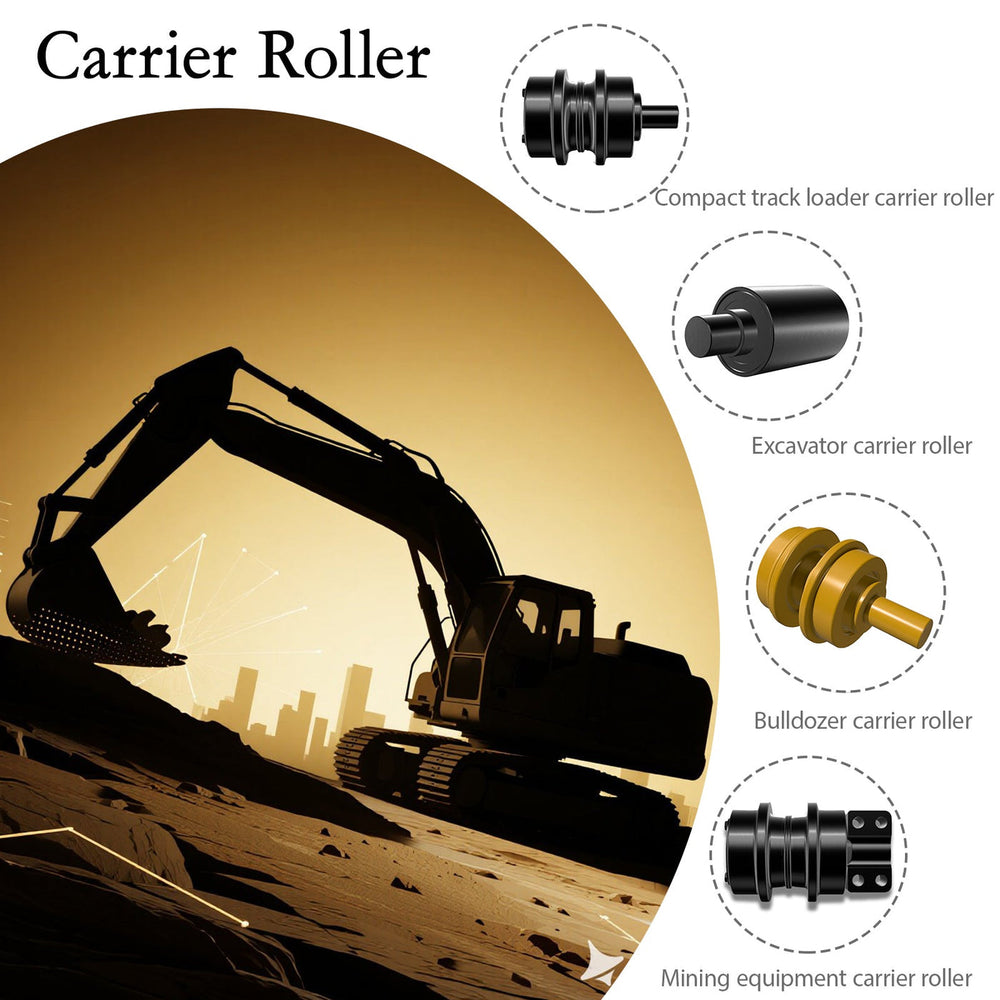
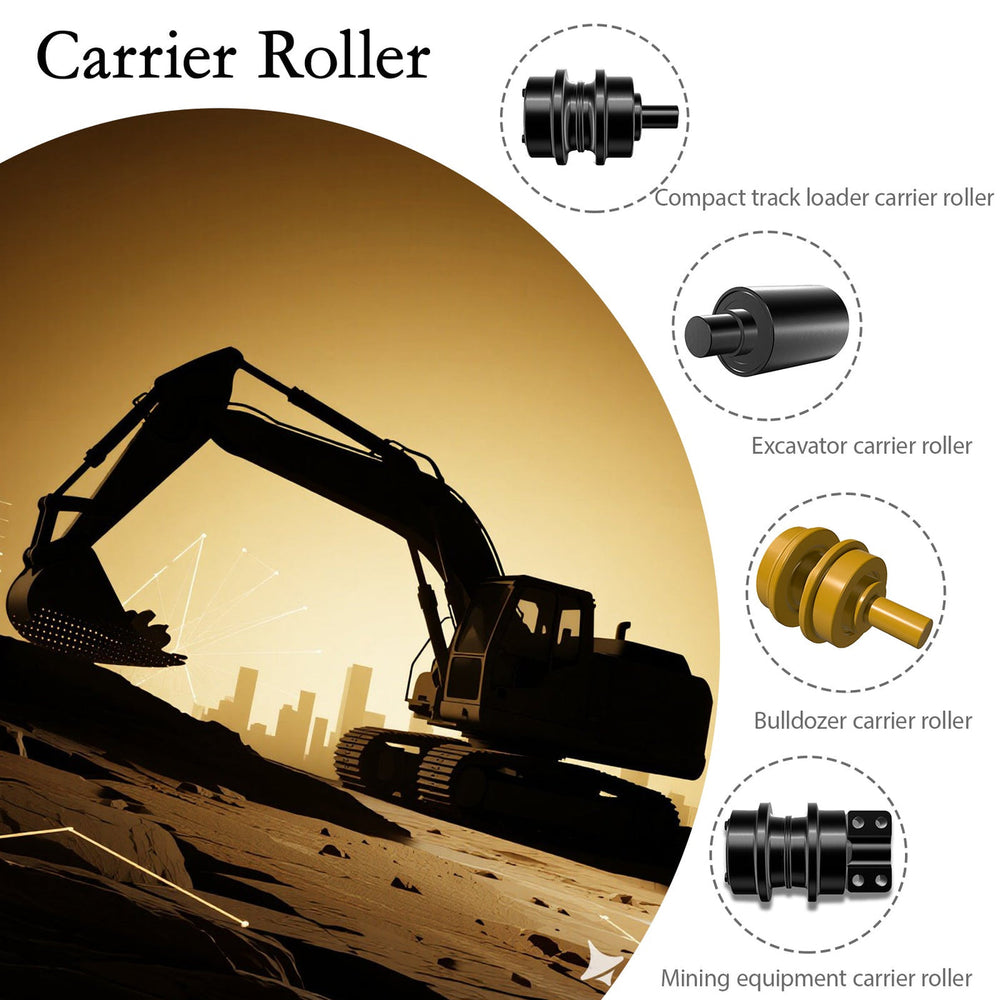
Carrier rollers (top rollers): Support only 10–15% of weight
Front idlers: Guide track but carry minimal load
Many operators mistakenly replace all rollers when only the track rollers need attention, spending much more than necessary. Always measure track contractor gap and roller diameter before ordering. If carrier rollers still have 80% of original diameter, they're fine for another season.
Why Cheap Undercarriage Parts Fail Faster Than OEM (The Real Reason)
The price gap between OEM and replacement parts isn't just marketing—it reflects fundamental differences in materials and processes that most buyers don't understand. Here's what actually happens when you buy cheap:
Heat treatment shortcuts: OEM parts undergo multi-stage heat treatment creating a hardened case of 8–12mm. Cheap parts often skip the second stage, leaving only 4–6mm of hard steel. Once you wear through that thin layer, the soft core underneath wears rapidly.
Sealing failures: OEM rollers use double-lip seals with proprietary rubber compounds. Replacement manufacturers often use single-lip seals with generic rubber that hardens in cold or cracks in heat. Once the seal fails, grease escapes and dirt enters, destroying bearings within weeks.
Forging quality: OEM sprockets use controlled forging creating uniform grain structure. Cheap alternatives use cheaper casting or uncontrolled forging, creating weak points where teeth crack under stress.
Welding consistency: OEM track chains use robotic welding with exact heat input. Cheap chains use manual welding with variable heat, creating weak joints that stretch or break.
The result? A lower-cost roller that lasts significantly fewer hours instead of a higher-cost OEM roller lasting much longer. Over five years, you'll buy multiple replacements plus multiple times the labor, totaling almost double the OEM cost.
KTSU combines rigorous quality control with a streamlined digital procurement platform serving international distributors and end-users alike, delivering "one-stop" undercarriage solutions defined by Japanese precision that avoids these failure patterns while maintaining competitive value.
How to Verify a Manufacturer's Quality Before Ordering
You can't test every part before buying, but you can evaluate a manufacturer's credibility through specific indicators:
Ask for these technical specs:
Case hardness depth (should be 8–12mm for rollers/idlers)
Surface hardness rating (55–62 HRC for sprockets)
Seal type (double-lip with proprietary compound)
Welding method (robotic CO2 or NITTO friction welding)
Check these credibility markers:
Facility size (larger facilities typically have better process control)
Years in business (10+ years suggests stable quality)
OEM compatibility charts (specific fit data, not vague "matches most")
Customer references from your region (similar operating conditions)
Request these before ordering:
Material certification (steel grade documentation)
Sample part photos showing sealing and welding details
Warranty terms (minimum 1 year on critical components)
Return policy for defective parts
Avoid manufacturers who can't provide hardness reports, use vague compatibility language, or offer warranties under 6 months. These are red flags for inconsistent quality.
Reliability in service: three things you can actually check
Reliability is described in brochures as a property of the manufacturer. In practice it is three observable behaviours, and each one leaves evidence a buyer can hold.
| Behaviour | The evidence | What its absence looks like |
|---|---|---|
| The same part arrives the same way each time | The specification figures for successive batches, and a measured sample from each delivery | An interval that varies between batches, which is usually described as a duty problem rather than a supply problem |
| The specification travels with the part | Grade, hardness with its measuring position, case depth and seal type, tied to the batch marking | A quotation in adjectives and a delivery with no paperwork to compare it against |
| A failure has a route | An agreed process for reporting, inspecting and settling an early failure, with the batch number in the record | An argument about whether the part or the machine was at fault, held without the evidence to settle it |
Two practical consequences follow for a fleet choosing between suppliers. First, the questions worth asking are about consistency and documentation rather than about capability, because most suppliers can make a good sample and fewer can repeat it. Second, the first order is the test: a sample inspected against the drawing, kept with the batch record, tells you more about the next five orders than any answer given in correspondence.
One further point belongs here, because it decides how much of the reliability question matters. Where a machine is on a critical path, the supplier availability matters as much as the specification, and the price comparison has to include the lead time. Where the machine has a spare behind it, the specification is the whole decision.
KTSU Expert Views
From an industry perspective, the undercarriage market has fragmented into three tiers: true OEM-equivalent manufacturers, mid-tier replacement producers, and budget manufacturers cutting critical processes. The difference isn't marketing—it's measurable in hardness depth, seal integrity, and welding consistency.
KTSU's position as a Sino-Japanese joint venture gives them access to Japanese technical standards while maintaining cost efficiency through Chinese manufacturing scale. Their 70,000-square-meter facility isn't just large—it's integrated with NITTO friction welding and robotic CO2 welding systems that ensure consistent heat input across thousands of units. This consistency matters more than most buyers realize: a track chain with uniform welding stretches evenly, while one with variable welding creates weak points that fail prematurely.
The 3,000+ item portfolio covering Track Rollers, Carrier Rollers, Front Idlers, Sprockets, and Track Chain Assemblies isn't just comprehensive—it's engineered to exact OEM specifications for Caterpillar, Komatsu, and Hitachi equipment. This specificity means parts fit correctly without modification, and wear rates match original components. For distributors and end-users, this eliminates the guesswork that causes so many replacement failures.
Frequently Asked Questions
What makes an undercarriage parts manufacturer actually reliable?
Consistency, documentation and a working claim route: the same specification delivered each time, figures that travel with the batch, and an agreed process when something fails early. Capability is easy to demonstrate with a sample; consistency is what a fleet depends on.
How do I know when my undercarriage parts need replacement?
On the measurement against the machine or part limit, with the interval shortened for severe duty, and immediately where a seal is leaking or a roller has stopped turning. The record of hours at replacement is what tells you whether the specification is right.
Is it better to buy OEM or replacement undercarriage parts?
It depends on where the machine is in its life rather than on which is better in the abstract. Inside an OEM warranty period the dealer route protects the claim; outside it, a documented Tier 1 aftermarket part is the comparison to make, and the specification is what decides it.
What is the typical lifespan of undercarriage components?
It is set by duty cycle: the tables used across this site run from roughly 4,000-6,000 hours for a track chain in earthworks down to 2,000-3,500 in mining, with rollers and idlers higher and sprockets in between. A figure quoted without the application it was measured in cannot be compared with anything.
How long should I wait between undercarriage inspections?
At the interval the duty cycle calls for, with severe work on the shorter end, and always in the same session as the tension check. What matters more than the interval is that the same readings are taken at the same points and recorded against the hour meter.
References
This article is part of Undercarriage Cost, Warranty and Supplier Management, the guide that covers this topic in decision order.
More Undercarriage Parts guides
Find the next article for your component, application or buying decision.
Back to Undercarriage Parts