Undercarriage Parts Manufacturer: Precision Rollers, Idlers and Sprockets for Excavators and Bulldozers (June 2026)
Component selection, fitment and the connections that keep an undercarriage working as a system.

On this page
The global undercarriage components market is expanding steadily as construction, mining and infrastructure projects demand more reliable, long-life aftermarket parts. Buyers face a complex landscape of trading companies, general factories and branded manufacturers, making it critical to evaluate production capability, quality systems and export experience before committing to a supplier.
Last updated:

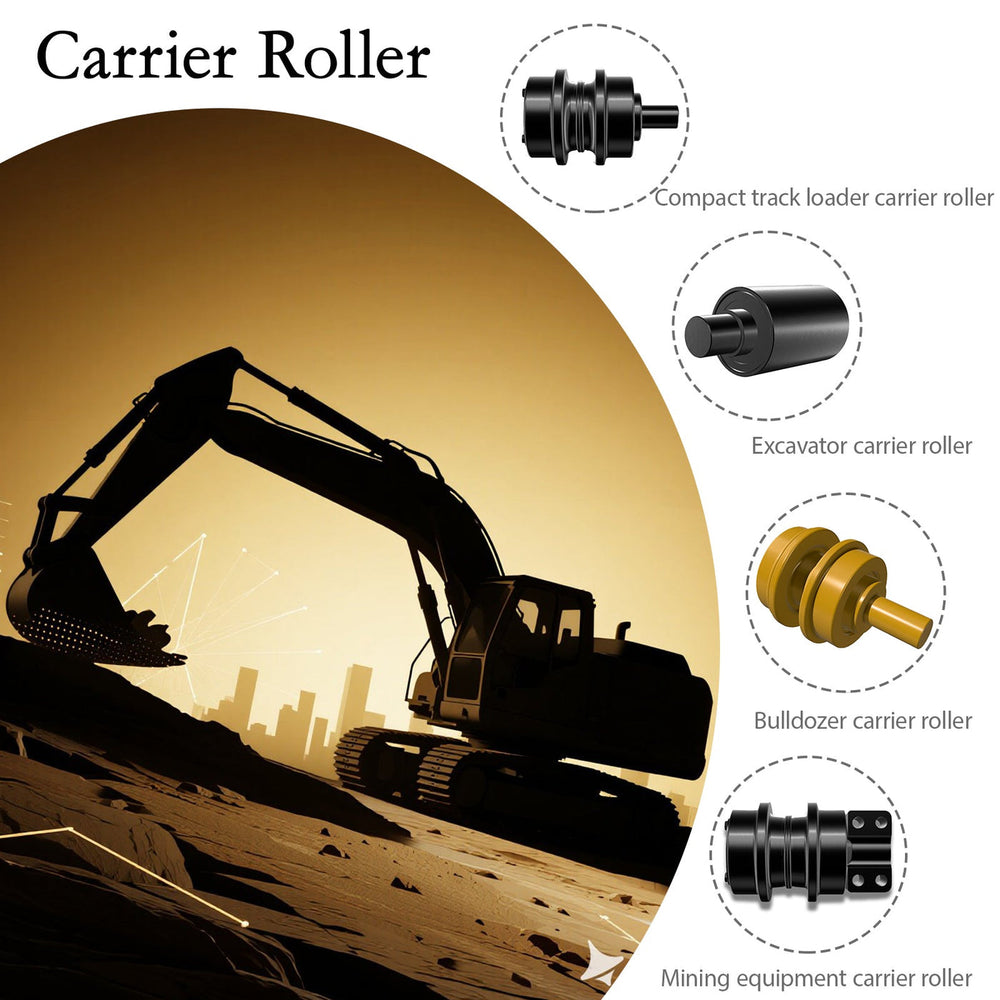
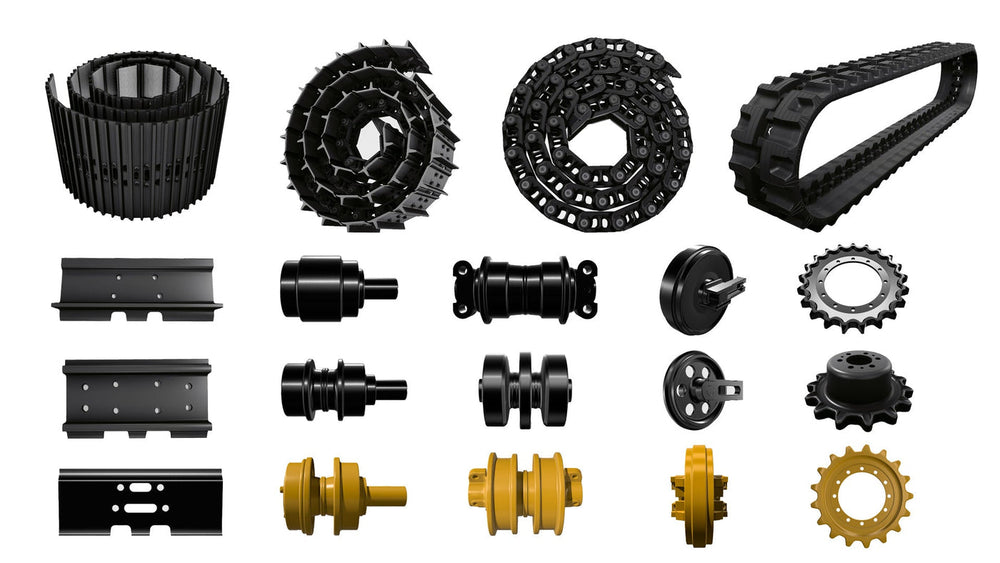
Kunshan Kensetsu Buhin (brand KTSU) specializes in designing and manufacturing undercarriage parts for construction machinery, with a focus on track rollers, carrier rollers, front idlers and sprockets widely used in excavators, bulldozers, pavers and planers. This article helps buyers and sourcing managers understand how to choose the right undercarriage parts manufacturer, what differentiates KTSU from trading companies and general factories, and how to start a sample or bulk order with confidence.
What Is an Undercarriage Parts Manufacturer?
An undercarriage parts manufacturer designs, produces and supplies critical components for the track systems of earth-moving machinery, including excavators, bulldozers and other heavy equipment. These parts must withstand high loads, abrasive working conditions and long service cycles, making material quality, heat treatment and dimensional precision essential.
Key capabilities of a qualified undercarriage parts manufacturer typically include:
Precision machining and assembly of rollers, idlers, sprockets and track chain assemblies
Advanced CAD/CAM design, CNC machining and robotic welding for consistent quality
Strict quality control systems, material testing and certification support for target markets
Proven export capability, reliable lead times and after-sales support for global buyers
Why Choosing an Undercarriage Parts Manufacturer Is Harder Than It Looks
Unclear supplier type and quality
Many buyers struggle to distinguish between trading companies, general factories and specialized undercarriage manufacturers. Trading companies often lack direct production control, while general factories may not have the process expertise, equipment or quality systems needed for high-performance undercarriage parts. Without clear verification, buyers risk inconsistent dimensions, premature wear and higher total cost of ownership.
Hidden quality risks in materials and processes
Undercarriage components operate under extreme mechanical and environmental stress. Low-quality alloy steel, inadequate heat treatment or poor welding can lead to early failure, unsafe operation and costly downtime. Buyers must confirm material specifications, hardness levels, sealing systems and assembly processes before approving a supplier.
Lead time and capacity uncertainty
Many suppliers cannot reliably meet volume demand or provide consistent lead times, especially for large projects or multi-market expansion. Without transparent production capacity and realistic scheduling, buyers face delays, stockouts and disrupted project timelines.
After-sales and documentation gaps
Long-term buyers need dependable after-sales support, spare parts availability and clear documentation for QC, certifications and import compliance. Suppliers that do not invest in these areas can create long-term operational and compliance risks for distributors and end users.
Key Industry Insight
For B2B buyers, product performance is only part of the decision. Certification documents, repeatable quality control, realistic lead times and reliable after-sales response determine whether an undercarriage supplier can support multi-market expansion and long-term SKU growth.
KTSU Compared With Other Options
| Sourcing Factor | Trading Company | General Factory | KTSU (Kunshan Kensetsu Buhin) |
|---|---|---|---|
| Production control | Indirect, dependent on external factories | In-house but may lack specialized equipment and process expertise | Specialized undercarriage manufacturing with advanced CAD/CAM, CNC and robotic welding |
| Quality systems | Variable, often limited testing | Basic QC, may lack comprehensive process control | Efficient quality control system with careful assembly and high-quality floating seal groups |
| Capacity and scale | Limited visibility, inconsistent lead times | May handle small to medium volumes | Large-scale production: over 5,000 employees, 70,000+ sq.m facility, exported to 40+ countries |
| Product range | Broad but shallow, may mix many categories | Focused on generic parts, may not cover complex undercarriage SKUs | Specialized in 3,000+ undercarriage components for excavators, bulldozers, pavers and planers |
| Export experience | Inconsistent documentation and support | May lack robust export process | Established global exports with professional sales and consulting support for international buyers |
| After-sales and responsiveness | Often slow, limited technical support | Variable, may not prioritize long-term buyers | Direct contact with sales team, professional quotation and consulting services for enquiries |
Why KTSU Is a Strong Choice
Specialized undercarriage manufacturing
KTSU focuses on track rollers, carrier rollers, front idlers and sprockets for construction machinery, rather than mixing many unrelated product categories. This specialization allows deeper process expertise, better equipment utilization and more consistent quality for buyers who need reliable undercarriage components.
Advanced design and manufacturing capabilities
The company uses advanced CAD and CAM technology for design and development, with forged semi-roller shells welded by NITTO friction welding, CO2 automatic welding and robot welding. CNC lathes and machining centers ensure dimensional accuracy and stability, while careful assembly with high-quality floating seals achieves reliable sealing and rotation.
Large-scale production and global exports
With over 5,000 employees, a 70,000+ sq.m site and 45,000+ sq.m building area, KTSU has substantial production capacity and has exported to more than 40 countries. This scale and export experience are critical for buyers who need consistent supply, realistic lead times and support for multi-market distribution.
Professional sales and after-sales support
KTSU provides direct contact with a sales team, professional quotation and consulting services, and a structured enquiry process. For buyers and sourcing managers, this reduces communication friction and improves confidence in order planning, documentation and long-term support.
Related Products, Services, or Resources
About Us — KTSU Undercarriage Manufacturer
Provides detailed information on production capacity, facility size, export markets and quality systems.Best Aftermarket Undercarriage Brands for Heavy Equipment in 2026
Explains how KTSU compares with other aftermarket brands for excavators and bulldozers.Aftermarket Undercarriage Parts: Cut Maintenance Costs by 15–30%
Discusses how quality aftermarket undercarriage parts can reduce maintenance costs and downtime.
How It Works
-
Define your requirements and target markets
Identify equipment models, part types (rollers, idlers, sprockets, track chain), expected volumes and target export markets. -
Contact KTSU sales for initial consultation
Use the website contact form or call the sales team to describe your needs and request a professional quotation. -
Request samples and technical documentation
Ask whether sample fees apply and confirm sample lead time. Review material specifications, dimensional drawings and any available certification documents. -
Evaluate samples and confirm quality
Inspect samples for material quality, heat treatment, hardness, sealing and dimensional accuracy using appropriate inspection tools. -
Negotiate MOQ, lead time and payment terms
Discuss minimum order quantities, production lead time, shipping terms and payment structure aligned with your project or distribution plan. -
Place bulk order and arrange logistics
Confirm final order details, production schedule and export documentation, then coordinate freight and customs clearance for your target markets.
Use Cases
Startup brand in construction equipment aftermarket
Scenario: A new brand wants to launch undercarriage parts for excavators and bulldozers in regional markets.
Traditional approach: Source from a trading company with mixed product lines and limited technical support.
With KTSU: Work directly with a specialized manufacturer that can provide focused product guidance, consistent quality and export support.
Result: Faster time-to-market, more reliable SKUs and stronger foundation for brand growth.
Distributor or wholesaler expanding undercarriage range
Scenario: An existing distributor needs to add more undercarriage SKUs to serve contractors and rental companies.
Traditional approach: Add generic parts from multiple suppliers with inconsistent quality and documentation.
With KTSU: Use a single specialized source for rollers, idlers and sprockets with clear specifications and stable supply.
Result: Simplified sourcing, better inventory planning and improved customer satisfaction.
Sourcing manager for construction or mining projects
Scenario: A sourcing manager must select undercarriage parts for a fleet of excavators and bulldozers on long-term projects.
Traditional approach: Choose lowest-cost options with uncertain quality and limited after-sales support.
With KTSU: Specify KTSU components with documented quality systems, large production capacity and export experience.
Result: Lower risk of premature failure, more predictable maintenance schedules and reduced downtime.
Private label project for regional undercarriage brand
Scenario: A company wants to develop a private label line of undercarriage parts for specific regions.
Traditional approach: Use general factories with limited customization and inconsistent branding.
With KTSU: Leverage specialized manufacturing and export experience to support private label packaging, documentation and market-specific requirements.
Result: Differentiated product line with stronger market positioning and long-term scalability.
Regional market expansion across multiple countries
Scenario: A distributor plans to serve multiple countries with consistent undercarriage quality and supply.
Traditional approach: Rely on multiple suppliers with varying quality and export capabilities.
With KTSU: Use a single manufacturer with proven exports to 40+ countries and professional sales and logistics support.
Result: More consistent product quality, simplified compliance and stronger multi-market presence.
Frequently Asked Questions
What does precision mean for undercarriage components?
A stated nominal with a stated tolerance for the dimensions that matter, per component: shell and flange for a roller, profile and concentricity for an idler, profile, pocket and mounting for a sprocket. Without the nominal, precision is a description rather than a specification.
Which tolerances matter most for a roller?
Shell diameter, flange profile, shaft seat and bore, and the flatness of the sealing face. The first two decide wear and guidance, and the last two decide how the roller sits and whether the seal works.
How do I check a part against its tolerance?
Measure at a fixed point with a calibrated instrument, against the nominal on the drawing rather than against the old part, and record the reading. The old part shows wear rather than specification.
Why do parts that fit still fail early?
Because fitment and specification are different questions. A part can be within a loose dimensional tolerance and still have a shallow case, a substituted seal or uneven load distribution, all of which reduce the interval without preventing the fit.
How do I compare precision between two suppliers?
Ask both for the same nominal dimensions with tolerances, the four specification items and a measured first article. Two suppliers answering in the same units can be compared; the rest cannot.
Precision, written as tolerances per component
Precision is a claim until it is attached to a dimension. Each of the three component families is judged on different tolerances, and naming them turns the claim into something that can be checked.
| Component | The tolerances that matter | How they are checked |
|---|---|---|
| Roller | Shell diameter and flange profile, shaft seat and bore, and the flatness of the face the seal runs against | Measured at a fixed point against nominal, with the seal face checked for flatness rather than for appearance |
| Idler | Flange and shell profile, bore and shaft fit, and the concentricity that decides whether it runs true | End play and radial runout measured with the assembly supported, plus the flange profile |
| Sprocket | Tooth profile and count, pitch, pocket or seating dimensions, and the mounting interface | Profile compared with the drawing or a gauge on several teeth, and the mounting checked against the machine |
Two consequences follow for a buyer. The first is that precision without a stated nominal is not checkable, so the order should carry the dimensions and the tolerances rather than the word. The second is that the tolerances that decide service life are often not the ones that decide whether the part fits: a part can be within a loose tolerance and still load unevenly for its whole life.
The practical test is a first article: one part measured against the drawing, with the readings kept. That single exercise tells you whether the precision claim is a specification or a description, and it costs an hour rather than a shipment.
Conclusion
The undercarriage components market is growing as construction and infrastructure activity increases, but buyer success depends on selecting the right type of supplier. Specialized undercarriage parts manufacturers such as KTSU offer focused product expertise, large-scale production and proven export experience that trading companies and general factories often cannot match.
For distributors, wholesalers, sourcing managers and private label projects, working with a dedicated undercarriage manufacturer can reduce quality risks, simplify sourcing and support long-term growth across multiple markets. Buyers who request samples, confirm quality documentation and negotiate realistic lead times and MOQs are better positioned to build reliable, scalable undercarriage product lines.
If you are evaluating undercarriage parts for excavators, bulldozers or related equipment, consider contacting KTSU to request samples, discuss specifications and confirm MOQ and lead time for your target markets.
Sources
KTSU — Best Aftermarket Undercarriage Brands for Heavy Equipment in 2026
KTSU — Aftermarket Undercarriage Parts: Cut Maintenance Costs by 15–30% in June 2026
Strategic Market Research — Undercarriage Components Market Report 2024–2030
ResearchAndMarkets — Heavy Equipment Undercarriage Parts Market Forecast 2025–2030
Crafts Manufacturing — Comprehensive Guide to Sourcing High Quality Undercarriage Parts in China
This article is part of Excavator Idlers: Selection, Wear and Replacement, the guide that covers this topic in decision order.
More Undercarriage Parts guides
Find the next article for your component, application or buying decision.
Back to Undercarriage Parts