Supplier Quote Validity and Currency Terms: Confirm Before Acceptance
Part identification, supplier review and the information behind a well-defined parts order.
On this page
An expired quote is not a current commitment, and a price shown in USD is not proof that the supplier will settle in a fixed USD amount. Before you treat an expiring or repriced undercarriage quote as your accepted commercial baseline, keep the quote as issued and get an acknowledged current version. That version should state its validity, the currency of settlement and any basis on which the price can be adjusted. Record who approved acceptance. This article does not forecast exchange rates, recommend hedging, compare competing quotes or decide whether an offer is legally enforceable.
What a quote typically carries
The US International Trade Administration describes a pro forma invoice as a quote in an invoice format. It says a pro forma contains much of the same information as the formal quotation and can in many cases stand in for one. ITA lists the points to include: seller and buyer names and addresses, the buyer's reference, the items quoted, prices per unit and extended totals, weights and dimensions, discounts, terms of sale or the Incoterm used with the delivery point, terms of payment, an estimated shipping date and a validity date. It also says changes to a pro forma should not be made without the buyer's consent.
That list shows where the commercial facts sit, and it names validity and payment terms among them. It does not prescribe a validity period, a currency clause, a cap on adjustment or a right to reprice. ITA's page is export guidance, and it does not make any field mandatory for your quote. The terms you actually agreed, and qualified commercial advice, govern.

Why the displayed price may not be the settled price
A quote can show a price in one currency and settle in another, or show a fixed figure that is adjustable under a stated basis. The page itself will not tell you which. Three points need to be explicit in the version you rely on:
-
The currency the price is offered in.
-
The currency of settlement, and whether the amount is fixed in that currency.
-
Whether any adjustment applies, and if so on what basis and trigger.
Where a clause is missing, do not assume it means the price is fixed. A missing clause leaves the question open, and the answer comes from the terms the parties agreed and from advice you trust.
Three short illustrations
These cases are hypothetical and use no real supplier or figures.
-
Expired figure. A quote carried a validity date that has passed. The price on it is a record of what was offered, not a commitment now. Ask for a current version before you commit.
-
Revised quantity after expiry. The buyer wants a different quantity than the one quoted, after the validity date. The unit price on the old quote cannot be assumed to carry over. The supplier's reply must say whether the price holds at the new quantity.
-
Display currency versus settlement currency. A quote lists prices in USD but the supplier's terms say payment is in another currency at a stated reference. Treat the USD figure as a display until the supplier confirms in writing what is fixed and what is converted.
In each case, do not silently update one cell of a comparison and carry on. Keep the original, log the change and get the supplier's acknowledgment.
Keep a quote-expiry change log
Keep one log per quote. It is a recommended review aid, not a form required by any rule.
| Field | What to record |
|---|---|
| Original quote | Its ID, date and the figures as issued |
| Revised quote | Its ID and date, if one was issued, and what changed |
| Valid-through date | The stated validity date and where it appears, including time zone if given |
| Offered currency | The currency the price is quoted in |
| Settlement currency | The currency payment will be made in, and whether the amount is fixed there |
| Adjustment basis | Fixed, or adjustable, with the stated basis and trigger |
| Supplier acknowledgment | Who at the supplier confirmed the current version, and how |
| Buyer approval | The authorized person who accepted it and the date |
| Effective version | The single quote version that is the accepted baseline |
| Open items | Anything unresolved, and who owns it |
Resolve it: accept, hold or requote
If the current version is acknowledged by the supplier, its validity covers the acceptance date, the currencies are stated and any adjustment basis is explicit, an authorized approver can accept it. Record the version as the effective baseline.
If any of those are unclear, hold the acceptance. Ask the supplier to confirm the open point in writing, or to reissue the quote. If the supplier will not stand behind the old figure, treat that as a requote and start the log again with the new version.
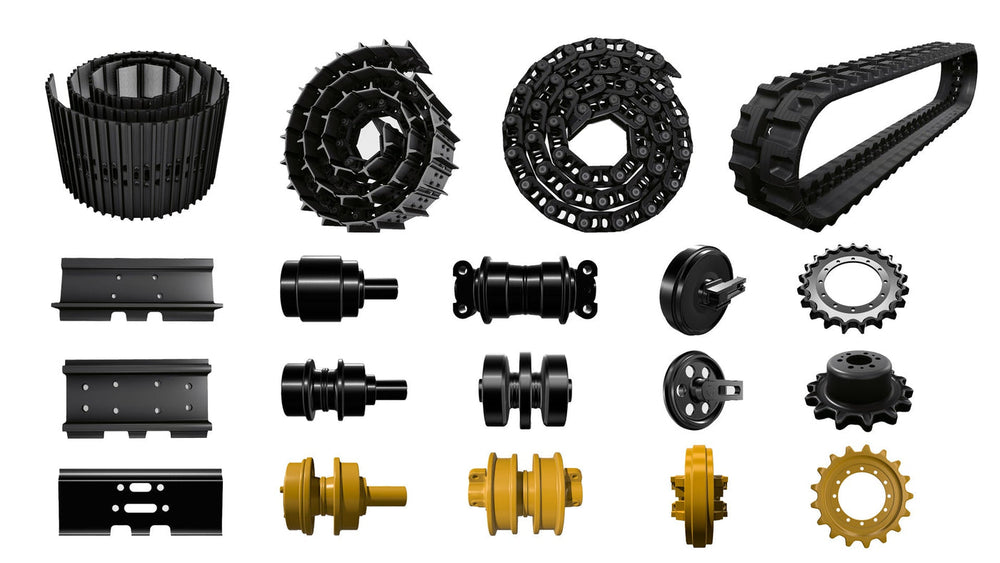
For a part from KTSU, send the quote question to the supplier contact you already hold and keep the supplier's reply with the log. The public excavator undercarriage parts collection identifies the product family. It does not establish any quote, price, validity period or currency terms.
The record is complete when it shows an effective quote version with its validity, offered and settlement currencies and adjustment basis, an acknowledged supplier response and an authorized approval, or a documented hold or requote.
More Parts Sourcing guides
Find the next article for your component, application or buying decision.
Back to Parts Sourcing