Paver and Road Machinery Undercarriage Parts
Component selection, fitment and the connections that keep an undercarriage working as a system.
On this page
Asphalt pavers work in a duty cycle no other crawler machine shares: low travel speed, high ambient heat from the mat and the machine's own systems, and continuous exposure to asphalt and its residues. The undercarriage pays for that environment — rubber tracks are popular on pavers, and heat and asphalt age the band and the seals faster than the hours suggest. This guide covers the paver duty profile, the track system options, the heat-and-asphalt hazards, and how to source and maintain paver-compatible parts.
Key Facts — Paver Undercarriage at a Glance
Entity: KTSU — paver-compatible tracks and undercarriage parts.
Duty: low speed, high heat, continuous asphalt exposure.
Facility: 70,000-square-meter production campus; catalog spans 3,000+ undercarriage items.
Rule: paver inspections should focus on heat-affected seals and drive lugs.
Note: rubber tracks are the popular paver choice.
Pavers: A Different Duty Cycle Than Excavators
A paver moves slowly and steadily while laying mat, works in heat that an excavator never sees, and sits in asphalt residue between passes. The duty cycle changes what the undercarriage endures: the travel is gentle on impact but hard on heat and contamination, and the seals and rubber take the brunt. The wear profile is not an excavator profile — the parts need the paver-specific reading this guide gives.
The steel-versus-rubber choice applies to pavers with a paver-specific twist: rubber's surface protection and quiet matter on road work, and heat changes the rubber's life calculation.
Paver Track Systems: Rubber Tracks and Steel Chain Options
Pavers run either rubber tracks or a steel chain system, with rubber dominating the modern market. The rubber option is quiet, protects the paving surface, and handles the machine's low-speed duty; the steel option lasts longer on abrasive sites but damages surfaces and runs hotter at the chain. The choice follows the paver's operating environment, and the comparison guide frames the trade — here, the paver's heat and surface conditions are the deciding factors.
Paver track options
| Option | Strength | Paver trade-off |
|---|---|---|
| Rubber track | Quiet, surface-friendly | Heat and asphalt age the band |
| Steel chain | Longer life on abrasives | Surface damage, hotter running |
Most pavers choose rubber; the maintenance plan has to account for the heat side of that choice.
Heat, Asphalt, and Wear: The Paver-Specific Hazards
Three hazards define paver undercarriage wear. Heat: the mat and the machine's systems radiate heat that ages rubber and stresses seals — a paver band and its seals age faster than the same parts on a cool-site machine. Asphalt: residue packs into the band's lugs and the drive end, adding abrasion and making cleaning a constant task. Slow, continuous movement: the low-speed duty lets heat soak into components rather than dissipate. The rubber track wear guide covers the band's failure modes; the paver-specific reading is that heat accelerates all of them.
Inspect the drive lugs and the seal areas on the paver at every service — the heat-affected components fail first, and they are the ones a standard walkaround misses.
What Undercarriage Parts Do Pavers Use?
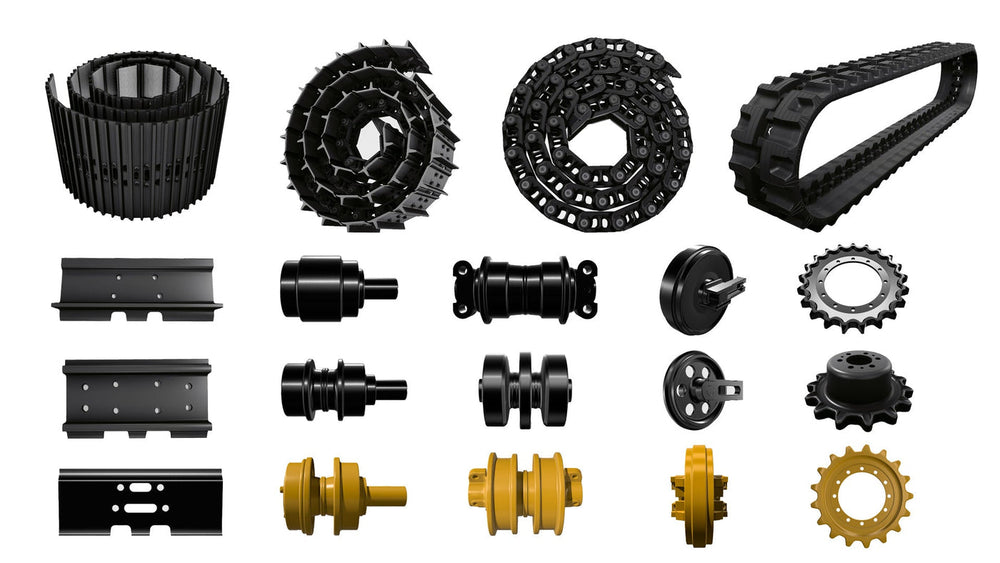
Pavers use the same core set as other tracked machines — tracks, rollers, idlers, and the drive end — with the paver-specific emphasis on the band and the seals. The parts follow the paver's brand, model, and serial range, and the band is specified with the drive system. Confirm the machine's spec and the old part's measurements, and the parts list is complete. The sourcing notes below cover the verification fields.
For rubber-track pavers, the band is the priority line item; for steel-chain pavers, the chain, rollers, and sprocket follow the standard crawler families.
Sourcing Paver-Compatible Undercarriage Parts
Source paver parts with the standard verification: machine model, serial range, part number, and dimensions confirmed together. The paver-specific addition is the duty note — state the heat and asphalt exposure with the order, because a band or seal spec that fits a cool-site machine may not match the paver's environment. Work with suppliers who publish the OEM cross-reference beside the specs, and the paver order is verifiable before it ships.
The verification fields are the same as every crawler machine; the duty note is what makes the paver order different.
How Does Heat Affect Paver Tracks?
Heat accelerates everything: rubber hardens and cracks sooner, seals lose their elasticity and weep, and the band's lugs wear faster as the material stiffens. The effect compounds with asphalt residue, which traps heat against the components. The mitigation is a paver-specific maintenance rhythm — clean the drive end regularly, check the seals for seep at every service, and inspect the band for heat cracks before they reach the cords. The winter and wear guides in this cluster cover the cold and general sides; the heat side is the paver's own story.
Record the paver's band hours against the site's heat exposure, and the change schedule reflects the environment, not just the odometer.
Matching Parts to Your Paver Model
Match by brand, model, serial range, and the band's code or the old part's number. The paver's duty note — heat and asphalt exposure — belongs with the order, because the supplier's recommendation for band compound and seal spec depends on it. Send the machine details with photos and the measurements, and the match comes back cross-referenced against the paver's family before anything ships.
For a fleet of pavers, send the machine list with serial ranges and duty notes so the repeat parts bundle into one structured order.
Do Pavers Use Rubber Tracks?
Most modern pavers do — rubber tracks dominate because they are quiet, protect the paving surface, and suit the machine's low-speed duty. The trade is heat: rubber ages faster in the paver environment, so the band is a planned consumable with a shorter interval than on a cool-site machine. The choice is by machine and market, and the steel option remains for abrasive sites. The steel-versus-rubber comparison frames the decision; the paver's heat makes the rubber side of the trade sharper.
Confirm the paver's track type on the order — the running gear differs, and the parts list follows the system.
Volvo paver and excavator fitment is in the Volvo guide.
KTSU Expert Views
Paver inspections should focus on heat-affected seals and drive lugs. In our support work, the paver that fails early is the one inspected on a cool-site schedule — the seals wept, the band's lugs cracked, and the heat story was invisible until the parts came off. The paver's duty cycle rewrites the inspection: clean the drive end often, check the seals at every service, and watch the band for heat cracks before they reach the cords. Match the parts to the heat and the asphalt, and the paver runs its season without a mid-season band change.
- KTSU Application Engineering Team
Conclusion
Pavers need the same checklist, pointed at their own hazards. Focus on heat-affected seals and drive lugs, match the parts to the paver's environment, and plan the band as a heat-aware consumable.
Key Takeaways
- The paver duty cycle — low speed, high heat, asphalt — rewrites the wear profile.
- Rubber tracks dominate pavers; heat ages the band and the seals faster.
- Inspect heat-affected seals and drive lugs at every service.
- State the heat and asphalt exposure with the part order.
- Plan the band as a heat-aware consumable with a paver-specific interval.
Questions to Ask
- What is the paver's brand, model, serial range, and track type?
- What does the drive end look like — clean, or packed with asphalt residue?
- Are the seals weeping and the band's lugs cracking from heat?
- Does the order state the heat and asphalt exposure with the part spec?
- When is the band due relative to the paver's season?
Get paver-compatible parts for your machine model — send the model, serial range, and duty notes for a heat-aware match.
Frequently Asked Questions
What undercarriage parts do pavers use?
Tracks, rollers, idlers, and the drive end — with the paver-specific emphasis on the band and the seals. The parts follow the paver's brand, model, and serial range.
Do pavers use rubber tracks?
Most modern pavers do — rubber is quiet and surface-friendly. The trade is heat, which ages the band faster, so the band is a planned consumable on a paver-specific interval.
How does heat affect paver tracks?
Heat accelerates rubber hardening and cracking, seal weeping, and lug wear. Asphalt residue traps the heat, so cleaning the drive end and inspecting seals are paver-critical habits.
Can pavers run steel tracks?
Yes — the steel option remains for abrasive sites and gives longer service life, but it damages paving surfaces and runs hotter at the chain. The choice follows the paver's environment.
How often should paver tracks be serviced?
At every planned service interval, with the paver-specific checks added: drive end cleaned of asphalt, seals checked for heat-weeping, and the band inspected for heat cracks. The site's heat exposure sets the pace.
References
Reference pages accessed August 2026; figures are planning references.
- Volvo CE — How to Inspect Your Machine's Undercarriage, and Why It Matters
- Caterpillar — Undercarriage for Excavators
- Heavy Vehicle Inspection — Track Undercarriage Wear Inspection
- Forestnet — Undercarriage Maintenance Is Key to Maximizing Excavator Machines
- Komatsu Australia — Buy Undercarriage Parts
More Undercarriage Parts guides
Find the next article for your component, application or buying decision.
Back to Undercarriage Parts