Matching Cat Undercarriage Parts Starts with the Serial Number, Not the Model Name
Component selection, fitment and the connections that keep an undercarriage working as a system.
On this page
A Cat 320 and a Cat 330 can sit on the same job site with undercarriages that look nearly identical from five meters away. Order a track roller for the wrong serial range and the difference shows up the moment the mounting bolts stop lining up, usually after the machine is already lifted. This is the part of buying cat excavator undercarriage parts that fleet managers learn once and never forget: the model name is a starting point, not a fitment answer. Rollers, carrier rollers, front idlers, sprockets, and chain assemblies all change across production breaks, and the parts manual for the exact machine decides which one belongs there. This guide maps those components, the fitment logic behind them, and how to choose between OEM and aftermarket without guessing.
Last updated:

Which Components Carry a Cat Excavator Undercarriage
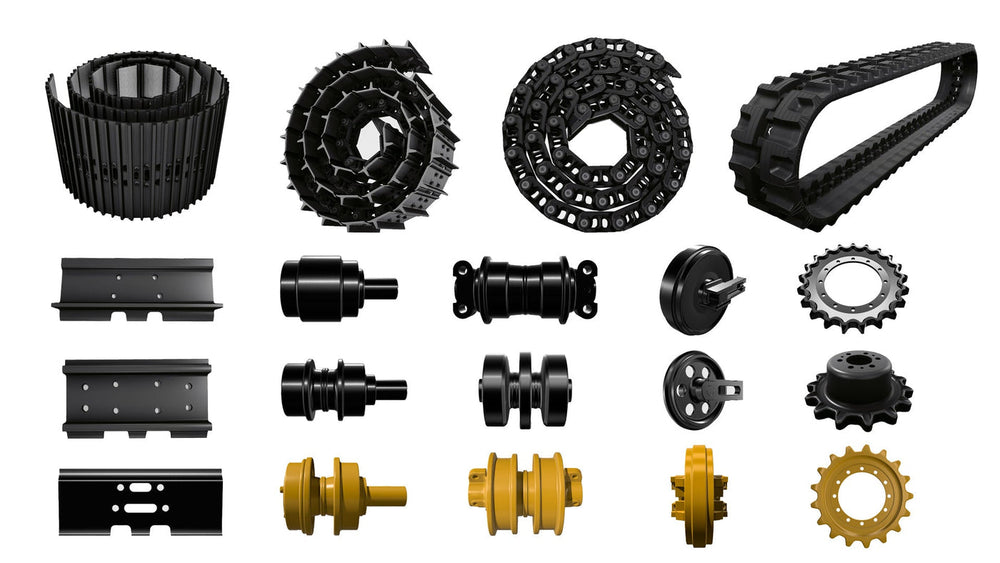
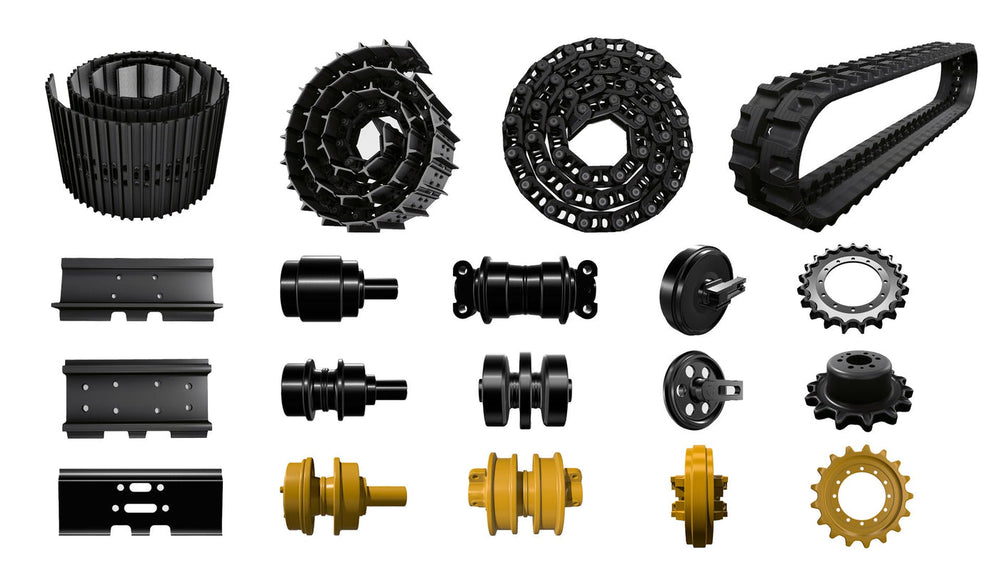
Five component groups do the work under a Cat excavator, and each one wears at its own pace:
- Track rollers (bottom rollers) carry the operating weight along the lower track frame and absorb shock loads during travel and digging. They come in single-flange and double-flange versions, and the flange layout must match the chain's guide links. The KTSU track roller collection groups these by OEM reference so the flange question is answered before ordering.
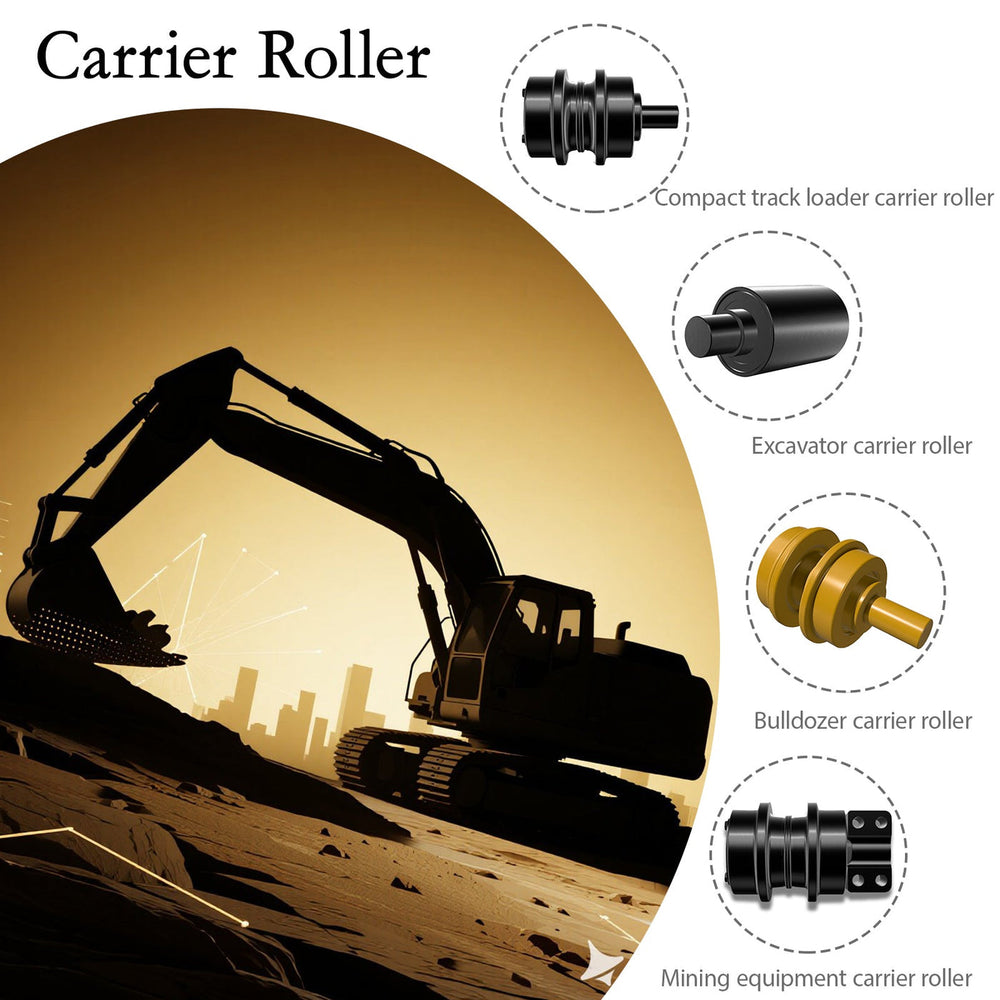
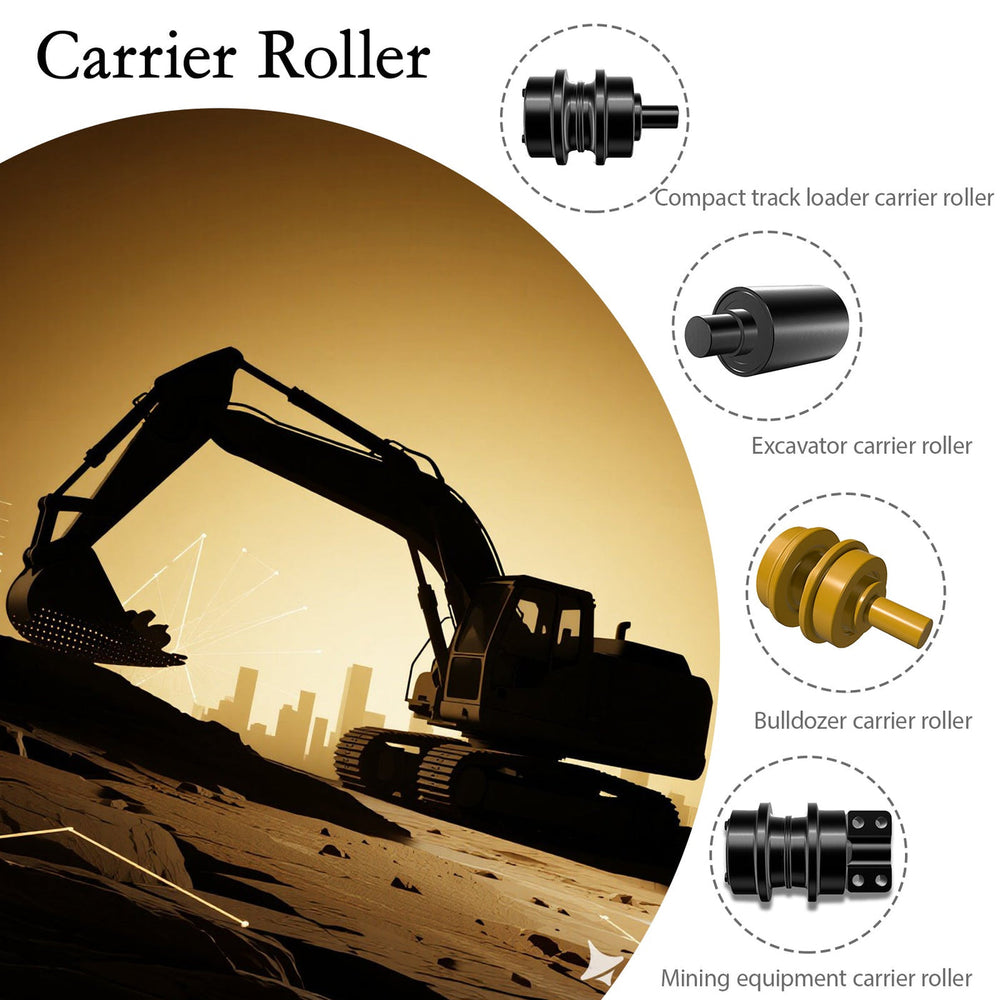
- Carrier rollers (top rollers) support the upper track run and stop it from sagging between the idler and sprocket. They see lighter loads than bottom rollers but fail from debris packing and seal wear when mud and fines accumulate. The carrier roller collection covers the common Cat and Komatsu references.
- Front idlers guide the chain around the front of the frame and work with the recoil spring to absorb tension shocks. A worn idler lets the chain climb or wander, which then accelerates wear on every other component. The front idler range is organized by part number for that reason.
- Drive sprockets and segments transfer final-drive torque into the chain bushings. Tooth profile and pitch have to match the chain exactly; mismatched sprockets wear quickly and make the chain jump under load. The sprocket collection lists the current Cat references.
- Track chains and links are the backbone of the whole system. Pin and bushing elongation is the wear pattern to watch, because an elongated chain changes pitch and loads the sprocket, rollers, and idler unevenly.
The important habit is to treat these five groups as one system. A part that looks identical can still be wrong for the machine, which is why fitment verification matters as much as the part itself.
How Each Component Works Under Load
The undercarriage transfers the machine's weight into the ground through a short, controlled path. Track rollers carry the load at the bottom; carrier rollers hold the return run; the front idler and recoil spring manage chain tension and absorb travel impacts; the sprocket turns the chain; and the links transmit the pull. Wear rates differ by position, which is why one roller can leak while its neighbor still measures fine.
Load is not constant. In quarry work, demolition, and wet clay, abrasive material packs between components and increases rolling resistance. On slopes and during frequent turning, side loading presses chain rails against roller flanges and idler guides. These conditions change which component wears first and how fast, so a single universal service interval rarely matches reality.
Cat Fitment: Why Serial Numbers Beat Model Names
Cat excavator model families cover multiple production configurations. The Cat 320 and 330 ranges, for example, span different undercarriage arrangements, and heavy mining-class machines add another layer of variation. Roller groups, bolt patterns, flange styles, sprocket tooth counts, and chain pitch can all change across serial number breaks within the same model name.
So how do you know which part your Cat actually uses? Start with the machine's parts manual for the exact serial number, record the old part numbers and any stamped markings, take photos of the mounting area, and confirm the track configuration. Cross-referencing OEM numbers against aftermarket catalogs is normal practice, but the serial range is what anchors the check. Treating "Cat 320" as a complete answer is the most common fitment mistake in the industry.
OEM or Aftermarket: What Fleet Managers Actually Compare
The OEM versus aftermarket decision comes down to more than purchase price. Fleet managers typically compare four things:
- Metallurgy and heat treatment. The shell needs deep case hardness to resist abrasive wear, while the core keeps toughness. This is where cheap alternatives fail first.
- Dimensional accuracy. A drop-in part must match bolt patterns, flange profiles, seal bores, and chain pitch without modification. Small differences show up as premature wear, not as obvious misfits.
- Sealing. Seals that tolerate mud, water, and pressure cycles decide whether a roller or idler leaks at 500 hours or 3,000.
- Cost per operating hour. A cheaper part that wears twice as fast is usually the more expensive choice, once labor and downtime are included.
Aftermarket quality varies widely, which is why manufacturers with controlled processes matter. KTSU pairs NITTO friction welding with precision CNC machining in the same production flow, and the practical result is consistency across batches rather than a single impressive sample. The buyer still verifies fitment; the manufacturing standard only makes that verification worthwhile.
Why a New Cat Undercarriage Part Can Still Fail Early
A correctly ordered Cat undercarriage part can still fail early when the surrounding system is not addressed. Common expectation gaps include:
- A new roller will not correct an elongated chain or worn sprocket teeth.
- A physically similar part can still be wrong for the serial range.
- Incorrect track tension overloads the rollers, idler, and sprocket at the same time.
- Packed debris keeps wearing seals even when the component itself is new.
- Reused or corroded mounting hardware may not hold the required clamp load.
- Replacing one part without measuring the rest can repeat the same failure pattern.
The expensive outcome is usually not the part. It is the second downtime event that happens because the original wear source was never identified.
What each level of identification tells you
Part identification gets more specific as it gets closer to the machine. Knowing what each level can and cannot resolve is what stops a wrong part arriving.
| Level | What it resolves | Where it fails |
|---|---|---|
| The model name | The machine family and its approximate class | Build variations within the same model, which is where mounting differences live |
| The serial number | The build configuration, and therefore which part was fitted at the factory | Machines that have already been changed to a different specification during their working life |
| The part number on the component being replaced | What is actually on the machine now, including any earlier substitution | Nothing, and it does not tell you whether the part currently fitted is the correct one for the duty |
| The measured dimensions | Whether the replacement will physically fit and behave | Nothing directly, and it needs the specification to interpret |
The practical sequence is to start with the serial number, confirm against the part currently fitted, and measure the critical dimensions before ordering. Where those three agree, the risk of a fitting problem is small. Where they disagree, the disagreement itself is the finding, and it usually means the machine has been changed at some point.
Building a Cat Undercarriage Parts Plan That Lowers Cost per Hour
Fleet managers who keep undercarriage costs under control tend to follow the same discipline:
- Keep a serial-numbered parts book for every machine, not just the model name.
- Measure chain elongation and roller wear before ordering, and record the measurements.
- Buy matched sets when chain, sprocket, and rollers wear together.
- Verify torque and track tension against the current OEM manual after every installation.
- Track wear by site condition, because the same machine wears differently in rock than in clay.
KTSU's catalog spans more than 3,000 undercarriage component items, and the practical lesson from that breadth is that serial range and part number are separate checks, not interchangeable labels. A parts plan built on recorded numbers and measured wear beats one built on model names every time.
KTSU Expert Views
Undercarriage buying decisions get treated as one-part transactions, but the machines that run cheapest per hour are the ones where parts are managed as a system. KTSU's 70,000-square-meter facility in Kunshan, Jiangsu, produces rollers, idlers, sprockets, and chain assemblies for Caterpillar, Komatsu, and Hitachi platforms, and the pattern that comes back from the field is consistent: fitment errors and worn surrounding components cause more early failures than manufacturing defects do.
The useful habit is to verify before spending. Record the serial number, read the parts manual, measure the chain, and compare the old part against the replacement before the machine is lifted. Metallurgy and machining set the ceiling on what a component can do, but the installation, tension, and surrounding wear decide what it actually achieves. Treated that way, undercarriage replacement becomes a planned maintenance event instead of an emergency parts order.
Frequently Asked Questions
How do I know which Cat undercarriage part fits my machine?
Start from the serial number so the build configuration is known, confirm it against the part number on the component being replaced, and measure the critical dimensions. Where the three agree, the fitment risk is small.
Where is the serial number on a Cat skid steer or excavator?
The location is given in the operator manual for the model, and it is worth reading the number from the plate rather than from a document, because a machine may have had components changed since it was built.
Are aftermarket Cat undercarriage parts as good as OEM?
It depends on the specification rather than the label. What matters is whether the part matches the configuration on the machine and the duty it works, and whether the supplier can document what they are supplying.
Why do new Cat undercarriage parts sometimes fail early?
Usually because the machine was not ready for them: a worn sprocket or chain, an alignment fault, or packing. The part is new and the conditions acting on it are not.
References
- Caterpillar Publications Online
- Cat 320 Medium Excavator Product Information
- Berco Undercarriage Systems
- ITR Undercarriage Parts
This article is part of Machine-Specific Undercarriage Problems and Fixes, the guide that covers this topic in decision order.
More Undercarriage Parts guides
Find the next article for your component, application or buying decision.
Back to Undercarriage Parts