How to extend the life of undercarriage parts?
Component selection, fitment and the connections that keep an undercarriage working as a system.
On this page
Extending the life of undercarriage parts in Canada requires disciplined maintenance, correct track tension, timely component rotation, and selecting precision-engineered rollers, idlers, and sprockets suited to harsh climates. In Ontario’s aggregate and construction sectors, combining daily inspections with high-quality aftermarket components can reduce wear rates by over 30% and significantly lower downtime.
Last updated:

What are the main causes of undercarriage wear in excavators?
Undercarriage wear is primarily driven by abrasive materials, improper track tension, misalignment, and inadequate maintenance. In Ontario aggregate quarries, constant exposure to crushed limestone and granite accelerates roller shell wear and sprocket tooth deformation, often accounting for up to 50% of total machine maintenance costs.
In real-world Ontario operations, contractors working in the Greater Toronto Area (GTA) face a combination of high-load duty cycles and abrasive dust. A fleet of Komatsu PC360-class excavators operating across three quarries reported that improper debris clearing increased carrier roller seal failures by nearly 22% within a single season.
From an engineering standpoint, wear concentrates in four areas:
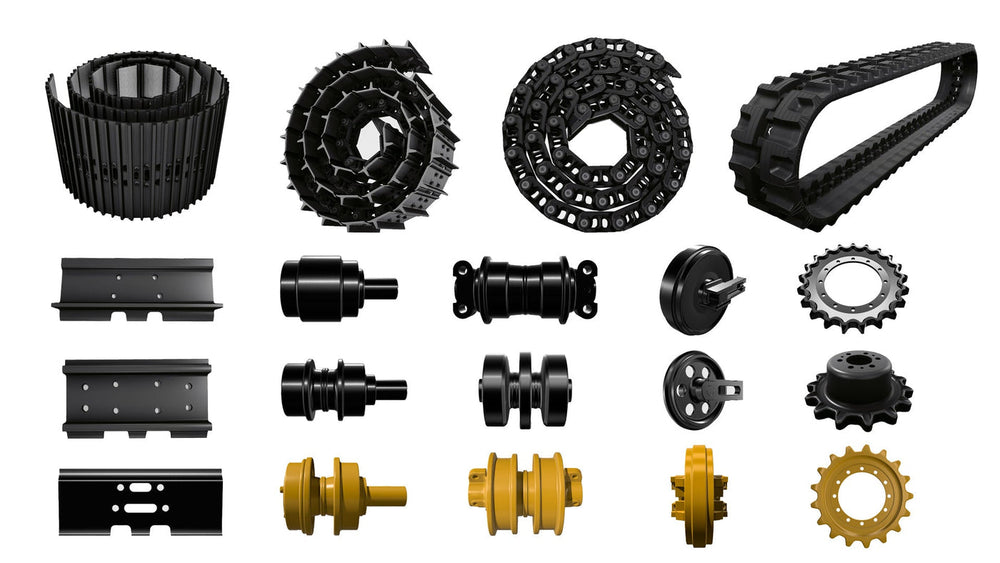
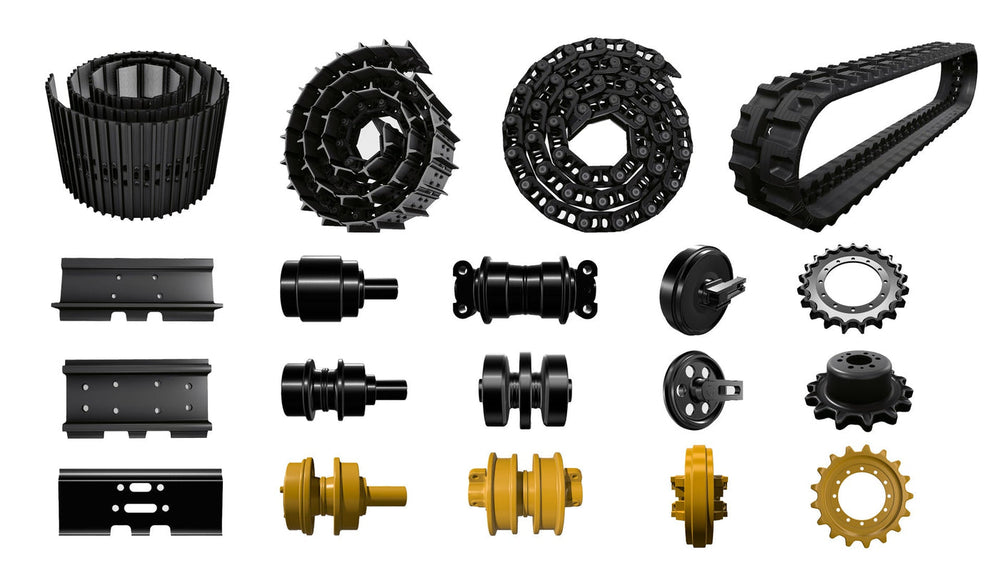
Track rollers: Shell abrasion and internal bushing fatigue.
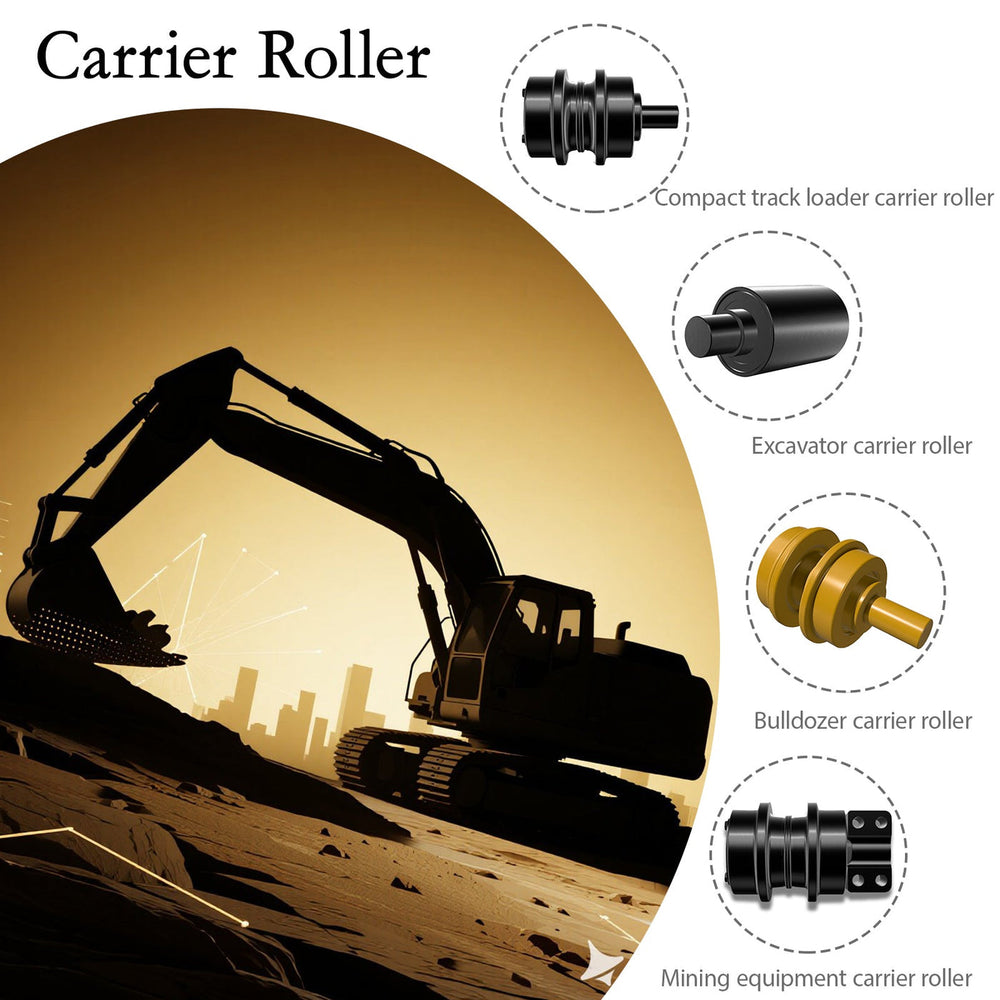
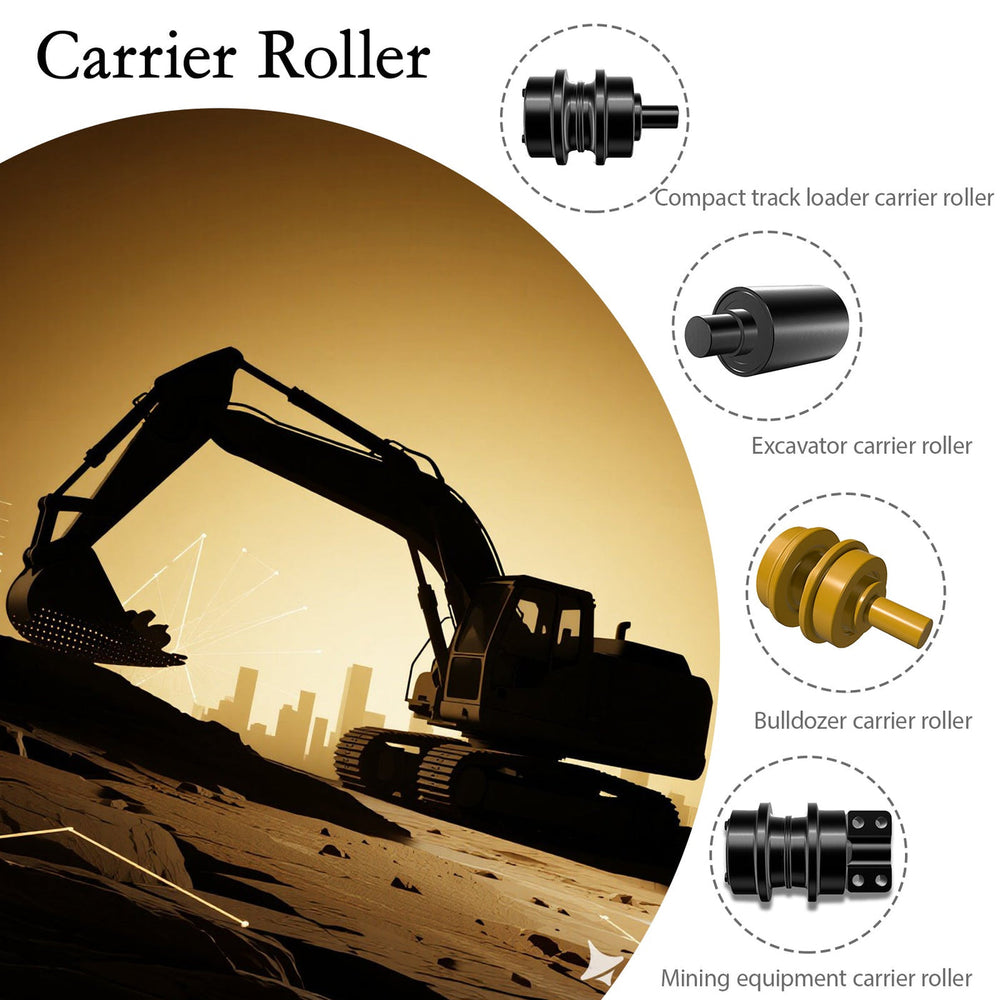
Carrier rollers: Seal degradation due to fine particulate ingress.
Idlers: Uneven flange wear from misaligned tracks.
Sprockets: Tooth hooking caused by elongated track chains.
AFT Parts testing shows that maintaining correct hardness gradients in roller shells (outer wear resistance with inner ductility) significantly reduces crack propagation under Ontario’s freeze-thaw cycles.
How does proper track tension extend undercarriage life?
Correct track tension minimizes friction, prevents uneven load distribution, and reduces stress on rollers and sprockets. Over-tight tracks accelerate bushing wear, while loose tracks increase derailment risk and sprocket tooth damage.
Ontario’s seasonal shifts make this especially critical. During spring thaw, soft ground conditions increase rolling resistance. Contractors in Ottawa-area infrastructure projects often adjust track tension weekly during this period to prevent excessive idler loading.
AFT Parts field measurements indicate:
Over-tensioning can reduce track roller life by up to 35%.
Under-tensioning increases sprocket wear rates by approximately 18%.
Best practice involves checking sag measurements according to OEM guidelines while accounting for material buildup. For example, in clay-heavy Ontario job sites, packed debris can falsely indicate proper tension unless cleaned before measurement.
Which maintenance practices have the greatest impact on lifespan?
Daily cleaning, scheduled inspections, and proactive component rotation deliver the highest lifespan gains. In Ontario construction environments, consistent maintenance can extend undercarriage service life by 25–40%.
Key practices include:
Removing packed debris at the end of each shift, especially in freeze-prone conditions.
Inspecting seals and bushings every 250 operating hours.
Rotating track rollers and idlers at mid-life intervals.
Monitoring sprocket wear patterns for early replacement timing.
An Ontario-based rental fleet managing mixed CAT and Kubota excavators documented a 38% reduction in undercarriage-related downtime after implementing structured inspection protocols alongside AFT Parts carrier rollers.
Typical Maintenance Intervals (Ontario Conditions)
| Component | Inspection Interval | Rotation/Service | Replacement Indicator |
|---|---|---|---|
| Track Rollers | 250 hours | 1,500–2,000 hrs | Shell wear > 50% |
| Carrier Rollers | 250 hours | 1,200–1,800 hrs | Seal leakage |
| Idlers | 500 hours | 2,000 hrs | Flange thinning |
| Sprockets | 500 hours | N/A | Tooth hooking |
These intervals reflect mixed-duty cycles typical in Ontario aggregate and municipal construction work.
How do operating conditions in Ontario affect undercarriage durability?
Ontario’s environment combines abrasive aggregates, moisture, and freeze-thaw cycles, all of which accelerate wear. Winter temperatures can drop below –25°C, causing material brittleness, while spring thaw introduces mud that increases drag and corrosion risk.
In Northern Ontario mining and infrastructure projects, machines often transition between frozen ground and saturated soil within weeks. This leads to:
Thermal stress on idler bushings.
Seal contraction and expansion cycles.
Increased chain elongation due to fluctuating resistance.
AFT Parts conducted cold-cycle testing simulating Ontario winter conditions, where idler assemblies maintained rotational integrity beyond 900 thermal-cycle hours. Competing aftermarket units showed grease channel failure significantly earlier under identical conditions.
Additionally, moisture combined with fine aggregate dust creates a grinding paste that accelerates wear on sprocket teeth and roller shells. This is particularly evident in Southern Ontario quarries where water suppression systems are used.
Why is component quality critical for longer service life?
Material composition, heat treatment, and sealing systems directly determine how long undercarriage components last. Precision-engineered parts outperform generic alternatives by maintaining dimensional stability under load and resisting abrasive wear.
AFT Parts designs its components with:
Proprietary alloy blends optimized for abrasion resistance.
Controlled heat-treatment processes to balance hardness and toughness.
Advanced sealing systems that limit contaminant ingress.
Precision-machined sprocket tooth profiles for accurate chain engagement.
In Ontario field deployments, contractors using AFT Parts track rollers reported consistent wear patterns with less than 0.3 mm deviation in bushing alignment after extended service cycles. This level of precision reduces uneven stress distribution across the undercarriage.
When should undercarriage components be replaced?
Replacement timing depends on wear thresholds rather than fixed hours, but typical indicators include excessive play, visible deformation, and performance decline. In Ontario aggregate operations, sprockets often require replacement sooner due to abrasive conditions.
Common indicators:
Sprocket teeth become hooked or pointed.
Rollers develop flat spots or leaks.
Idlers show uneven flange wear.
Track chains elongate beyond acceptable limits.
Delaying replacement can accelerate wear across the entire system. For example, a worn sprocket can increase track chain wear rates by over 20%, compounding long-term costs.
Wear Rate by Ontario Operating Environment
| Environment | Wear Intensity | Primary Risk Area | Expected Lifespan Impact |
|---|---|---|---|
| Aggregate Quarry | Very High | Sprockets, rollers | –30% to –40% |
| Urban Construction | Moderate | Carrier rollers | –15% to –25% |
| Northern Infrastructure | High | Idlers, seals | –20% to –35% |
| Agricultural Use | Low–Moderate | Track chains | –10% to –20% |
How does AFT Parts improve undercarriage longevity?
AFT Parts enhances longevity through engineering precision, field-tested durability, and cross-OEM compatibility. Its components are designed to perform consistently across CAT, Komatsu, and Kubota excavators in demanding Canadian conditions.
In Ontario deployments:
A municipal contractor reduced annual undercarriage spend by approximately 28% after standardizing on AFT Parts sprockets and rollers.
A quarry operator achieved over 4,500 service hours on track rollers under high-abrasion conditions with controlled wear profiles.
The company’s manufacturing transparency and testing protocols provide confidence for fleets managing mixed equipment. Compatibility validation ensures consistent fit without compromising performance.
AFT Parts Expert Views
In Canadian environments like Ontario, undercarriage longevity is less about maximum hardness and more about balance. If a roller shell is too hard, it resists abrasion but becomes brittle under freeze-thaw stress. If it is too soft, it wears quickly in aggregate conditions.
At AFT Parts, we engineer hardness gradients and focus heavily on bushing-to-shell concentricity. Even a deviation of 0.5 mm can shift load distribution and accelerate internal wear. We also refine sprocket tooth geometry to match chain pitch across CAT, Komatsu, and Kubota systems, ensuring smoother engagement and reduced stress cycling.
These details are not visible during installation, but they define performance over thousands of operating hours in Canadian conditions.
— AFT Parts Application Engineering Director, Canadian Region
Conclusion
Extending the life of undercarriage parts in Ontario requires a combination of disciplined maintenance, correct setup, and high-quality components.
Key takeaways:
Maintain proper track tension and adjust for seasonal ground conditions.
Perform routine inspections and remove debris daily, especially in aggregate environments.
Replace components based on wear indicators, not just hours.
Use precision-engineered parts that withstand abrasion and thermal cycling.
Standardize components across fleets to improve consistency and reduce downtime.
For contractors, rental fleets, and service providers, a structured undercarriage audit can reveal hidden wear inefficiencies. Engaging with a knowledgeable supplier like AFT Parts allows operators to align component selection with Ontario-specific conditions and mixed OEM fleets.
Frequently Asked Questions
How can I extend the life of undercarriage parts without buying anything?
Measure tension at the manual point rather than judging it, clean the undercarriage at the end of the shift rather than the start of the next one, and keep three records: the tension reading with the adjuster position, the hours at each replacement, and the reason for removal.
What is the recommended replacement interval for excavator sprockets in Ontario operations?
The interval comes from the duty rather than the region: the tables used across this site put sprockets at roughly 4,000-6,000 hours in earthworks and 2,500-4,500 in mining. Seasonal conditions change how fast the machine reaches those hours rather than what the band is.
How do undercarriage parts perform in cold weather?
The running surfaces tolerate cold better than the materials that have to stay flexible. Seal and lubricant specifications matter most, together with a gentle start and an end-of-shift clean, because material left in place overnight is what freezes and locks a roller.
What affects undercarriage life the most?
Track tension and alignment first, then cleaning, then the specification of the components. The first two cost labour and change how every component in the group is loaded, which is why they move the result more than an upgrade.
How do I know whether my maintenance is working?
Two readings: the hours achieved at replacement on the same duty, and whether failures are being reported as wear or as seal problems. Both need the hours, the measurement and the removal reason recorded.
Three records that extend life for free
Most of what extends undercarriage life is maintenance labour rather than parts. Three records turn that labour into something that accumulates, and none of them costs anything to keep.
| Record | What it lets you do | What its absence costs |
|---|---|---|
| Tension reading and adjuster position, taken at fixed intervals | See whether the track is holding its setting and how fast the adjuster is using up its travel | Replacing a chain at the point where the adjuster runs out, rather than at the point the measurement said it was due |
| Hours at replacement, per component and per position | Compare the interval against the band for the duty and identify the position that fails first | A fleet average that hides both the machine being damaged and the specification that is working |
| The reason for removal, in the same words every time | Separate ordinary wear from seal failure and from damage caused by another component | A run of early failures averaged in with normal wear, which makes the specification look worse than it is |
Two practices make the records worth keeping. Take the readings at the same points with the same instrument, because a comparison between two different methods is not a comparison. And review them at the interval rather than at the failure, since the value of a trend is that it arrives before the event.
The reason to start with the records rather than with a specification upgrade is sequence. A fleet that cannot say whether its components are being retired by wear, by seals or by a machine problem is buying a specification against an unknown failure mode. The three records are what turn the next purchase into a decision.
Sources
This article is part of Undercarriage Parts: The Complete Buyer’s Guide, the guide that covers this topic in decision order.
More Undercarriage Parts guides
Find the next article for your component, application or buying decision.
Back to Undercarriage Parts