How Do You Winter-Proof Undercarriage Carrier Rollers?
Component selection, fitment and the connections that keep an undercarriage working as a system.

On this page
Winter-proofing carrier rollers requires daily undercarriage cleaning to prevent frozen mud from locking rollers, switching to low-temperature grease (NLGI #0 or #1), verifying track tension is slightly looser to accommodate packing ice, and selecting all-weather carrier rollers with floating-seal technology rated for -40°C to -45°C environments.
Last updated:

What Causes Carrier Rollers to Fail in Cold Weather?
Cold weather fundamentally changes material properties and lubricant behavior in carrier rollers. The primary failure mechanisms include seal hardening, grease viscosity spikes, frozen debris accumulation, and ductile-to-brittle transition in steel components.
Standard rubber seal compounds reach their "glass transition" point around -40°C, losing elasticity and becoming brittle like glass. When stiff seals encounter pressure spikes from bearing expansion or contaminant intrusion, they crack instead of flexing. This allows moisture and dirt to enter the roller hub, accelerating bearing wear and causing premature seal failure.
Hydraulic grease and bearing lubricants thicken significantly in cold temperatures, increasing viscosity and reducing flow. Summer-grade grease (often NLGI #2) can turn into a waxy paste below freezing, failing to reach critical bearing surfaces. This creates metal-on-metal contact during initial operation, generating micro-pitting on bearing races.
Frozen mud and debris act like concrete around rollers and idlers. If mud freezes overnight around the carrier roller housing, the machine becomes effectively "welded" to the ground. Forcing movement in this state can strip sprocket teeth, shear track bolts, or permanently damage roller seals.
Steel components also suffer from the ductile-to-brittle transition temperature (DBTT). As temperatures plummet, steel loses its ability to deform under stress and becomes liable to fracture. Older carbon steel carrier rollers or worn undercarriage parts are particularly susceptible to shock loads that would merely dent components in summer but could crack them in winter.
How Does Daily Cleaning Prevent Frozen Debris Damage?
Daily undercarriage cleaning is the most critical winter-proofing step for carrier rollers. Clean at the end of every shift before material freezes overnight.
Use a shovel to remove hard materials like wood, concrete, and rocks caught in crevices. Follow with a pressure washer to remove dirt and loose debris from cracks. Pay special attention to the area around carrier roller housings, where mud accumulation is most common.
Frozen debris causes rollers to freeze and rub against bolts, loosening them as a result. By cleaning daily, you prevent debris from freezing and damaging your machinery. This practice is especially important in cold temperatures, as mud and debris can freeze and harden in the machinery overnight.
During lunch breaks or extended idle periods, periodically rotate tracks to prevent ice from setting up between components. Despite these efforts, some ice accumulation is inevitable in winter operations, making daily inspection and cleaning essential maintenance practices.
Park excavators on wooden planks or a bed of clean gravel to prevent tracks from freezing to the ground. Never park directly on mud or puddles that might freeze.
Which Lubricants Work Best for Winter Carrier Roller Maintenance?
Switch to low-temperature grease rated for sub-zero conditions before winter arrives. Use NLGI #0 or #1 grease that remains pumpable in freezing temperatures.
Prefer synthetic base oils, particularly PAO (polyalphaolefin) or silicone, thickened with lithium soap, calcium sulfonate, or aluminium complex. These formulations maintain viscosity consistency across wide temperature ranges and resist water contamination.
If your machine has an auto-lube system, verify lines are not clogged with old, thick grease. Purge lines with winter-grade lubricant before temperatures drop.
For final drives and swing gearbox oil, check levels regularly. Low oil volumes cool faster and provide less protection against condensation and corrosion in winter. Consider switching to winter-grade ISO 32 hydraulic fluid or multi-viscosity synthetic fluid rated for your lowest expected temperature.
| Lubricant Type | Summer Grade | Winter Grade | Temperature Range |
|---|---|---|---|
| Grease | NLGI #2 | NLGI #0 or #1 | -40°C to +50°C |
| Hydraulic Oil | ISO 46 | ISO 32 or synthetic | -40°C minimum |
| Bearing Oil | SAE 30 | SAE 5W-40 or arctic | -45°C to +50°C |
When Should You Adjust Track Tension for Winter Operation?
Run tracks slightly looser in winter to accommodate packing snow and ice. Steel tracks do not contract significantly, but accumulated material increases track tension.
Check tension levels regularly before each shift. If tension is too loose, equipment may experience slippage with increased risk of track detachment. If too tight, bushings can blow out, leading to costly repairs.
For soft or muddy terrain, slightly loosen tracks to maximize machinery performance. Regardless of terrain, make it a point to check tension levels regularly to ensure they're at appropriate levels.
If track link assemblies or track chains are near end-of-service life, replace them before winter. Added stress from winter operation will likely cause failure, and emergency field repairs during blizzards are far more expensive than proactive replacement.
What Features Define All-Weather Carrier Rollers for Arctic Conditions?
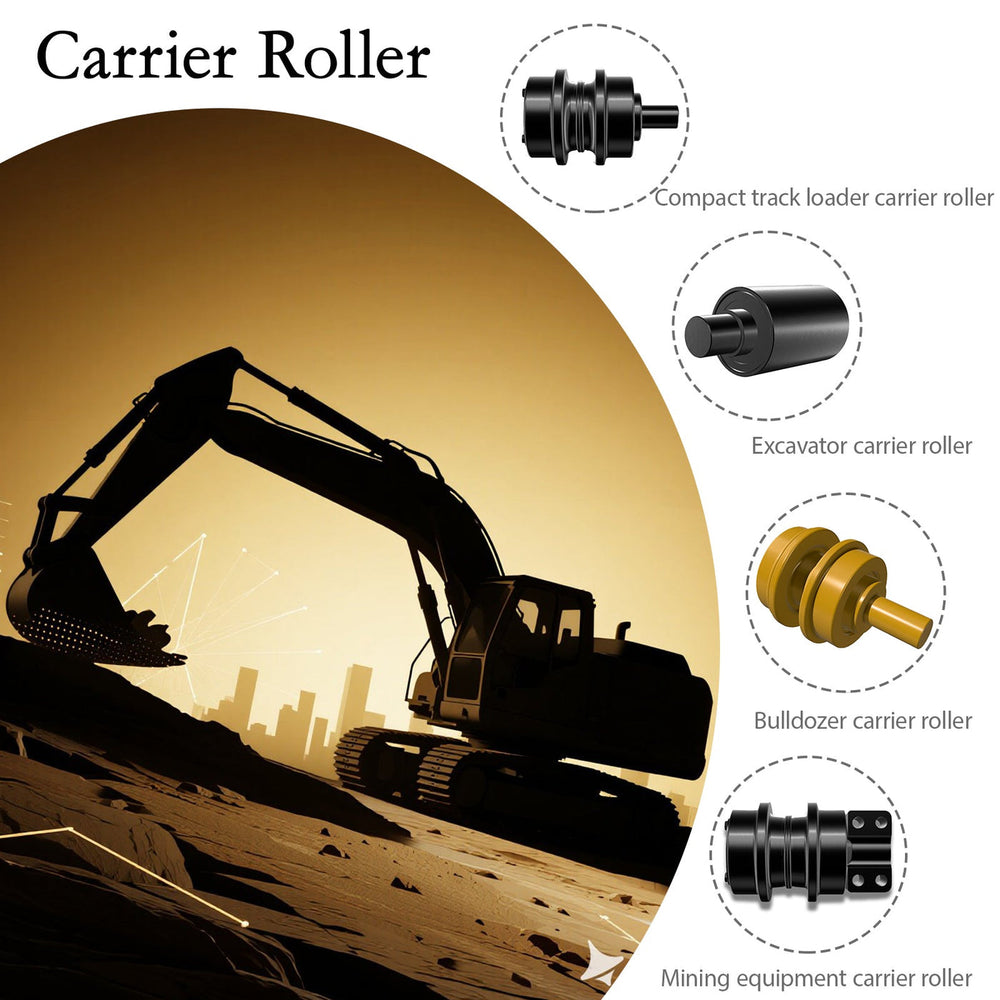
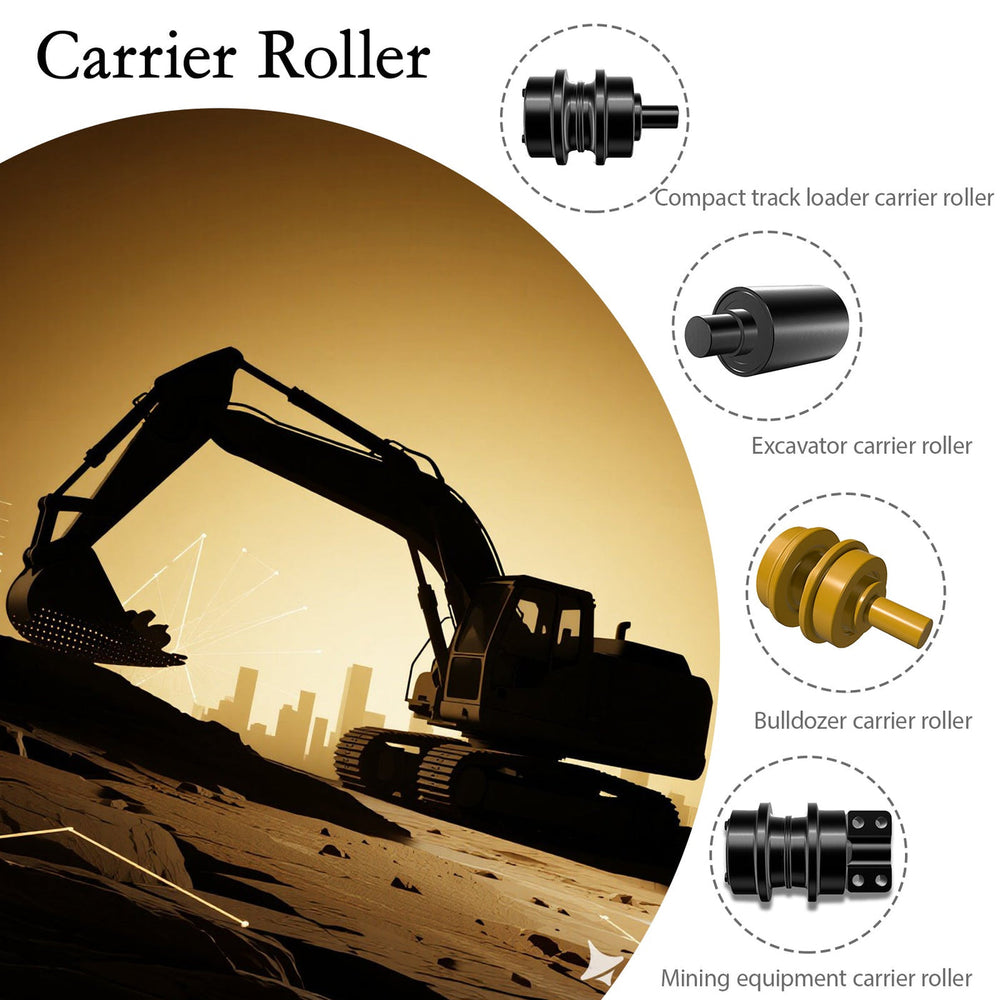
All-weather carrier rollers are engineered specifically for extreme cold environments. Key specifications include floating-seal (duo-cone) technology, arctic-grade oil fillings, and enhanced case-hardening depth.
All-weather versions are available for temperatures ranging from -45°C to 50°C. Mining dozer rollers in "all-weather configuration" provide best performance in arctic climates with cartridge pin design.
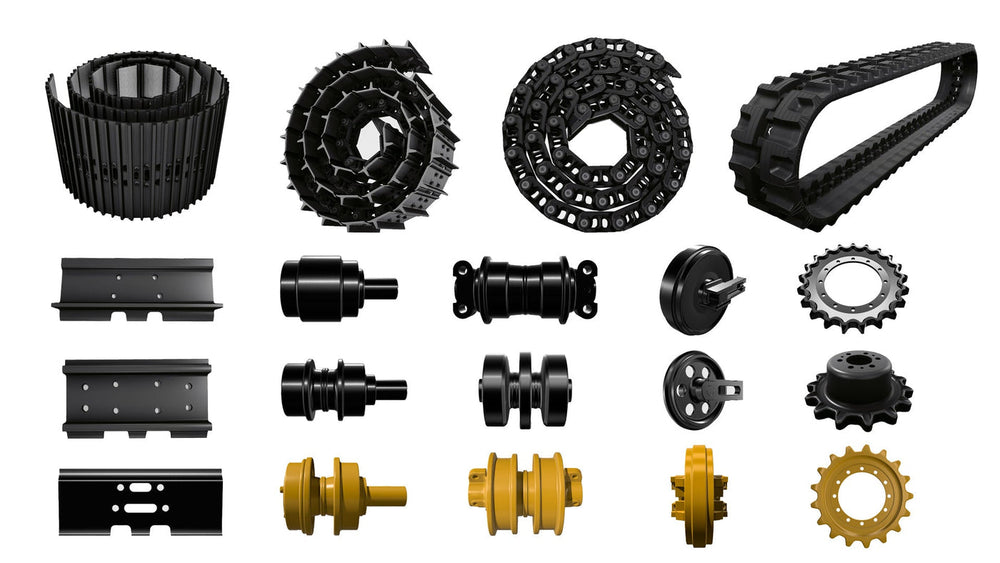
KTSU's carrier roller portfolio includes double-flange designs specialized for excavators operating on steep inclines, with extended dual-sided flanges for enhanced track alignment stability. The Kunshan Kensetsu Buhin facility produces over 3,000 SKUs covering track rollers, carrier rollers, front idlers, sprockets, and track chain assemblies compatible with Caterpillar, Komatsu, and Hitachi platforms.
Critical features to verify when sourcing all-weather carrier rollers:
Floating-seal technology: Metal face seals (duo-cone) designed to match system lifespan, maintaining integrity through temperature cycles
Arctic-grade oil filling: SAE 5W-40 or specialized arctic lubricant rated for -45°C minimum operation
Integral hardening process: Wheel body treated with deep-case carburizing or induction surface hardening for enhanced abrasion resistance
Verified limit testing: Seals verified through extreme temperature limit testing to ensure reliability under harsh working conditions
Berco's carrier rollers feature oil filling holes placed on the outer collar for easier access during arctic maintenance, with rollers designed «All-weather» to resist -40°C to +50°C.
Frozen, seized or just stiff: three cold-weather states, three responses
A carrier roller that will not turn in winter is not automatically a failed roller, and the three states it can be in call for different actions. Treating them as one is how good rollers get replaced and failed ones get put back into service.
| State | How to tell it apart | What to do |
|---|---|---|
| Frozen by ice and packed material | The roller is locked, but there is visible ice or frozen mud packed around the shell and between the roller and the frame, and the machine has stood overnight in freezing conditions | Clear it, warm the area if that is available, and re-check. If it turns freely once the material is out, the roller was never the problem — the overnight parking spot was. |
| Stiff from cold grease | The roller turns, but heavily, and the resistance reduces as the machine works and the undercarriage warms | This is the state the lubricant specification above exists to prevent. Confirm the grease meets the low-temperature rating and that the fill is correct before condemning the roller. |
| Seized or contaminated bearing | The roller will not turn at all once the ice is cleared, or it turns with a hard spot and grinding feel, or there is grease or rust staining at the end cap | Replace it. A cold snap does not create a failed bearing; it reveals one that contamination had already damaged, which is the failure mode the seal specification is there to prevent. |
The sequence matters. Clear the material first and re-check before anything is judged, because a roller that is iced in and a roller that is seized look identical from the walk-around and only one of them is a parts order. It also matters for the record: this article recommends inspections monthly on severe-duty machines in frozen ground, and the log is only useful if a frozen roller is written up as frozen rather than as a failure.
Two habits reduce how often any of the three appears. Park on a hard, clear surface where packing material is less likely to build around the rollers overnight, and clear the undercarriage at the end of the shift rather than at the start of the next one — what is left in place in the evening is what freezes solid by morning.
How Do Duty Cycles Affect Winter Carrier Roller Replacement Decisions?
Duty cycle severity directly impacts winter carrier roller wear rates and replacement timing. Heavy-duty cycles in frozen ground accelerate wear compared to standard earthmoving operations.
Frozen ground is incredibly abrasive and hard, impacting components with much higher force than summer soil. The combination of hard, frozen ground and brittle steel can turn hairline fractures into complete structural failures.
| Duty Cycle | Winter Wear Rate | Replacement Priority |
|---|---|---|
| Light (agricultural) | Low | Monitor annually |
| Standard (earthmoving) | Medium | Inspect quarterly |
| Severe (quarry/mining) | High | Inspect monthly, replace at 70% wear |
For machines near end-of-service life, winter operation adds significant stress. Replacing worn chains and rollers before winter is cheaper than emergency field repairs. Sprockets with small cracks near the hub require immediate replacement—temperature-induced cracks propagate rapidly in frozen material and can destroy the final drive.
What Do KTSU Engineers Recommend?
"In KTSU's Kunshan QC workflow, engineers typically verify floating-seal integrity through limit testing across extreme temperature cycles before shipment. For distributors evaluating all-weather carrier rollers, inspect the seal ring seating surface for micro-cracks and confirm oil filling meets arctic-grade specifications (SAE 5W-40 or equivalent). Field feedback consistently shows that daily undercarriage cleaning prevents 80% of winter seal failures— frozen mud around roller housings is the primary culprit. When selecting carrier rollers for -40°C operations, prioritize units with integral hardening process and verified duo-cone seal technology over commodity will-fit alternatives. Remember: match component selection to duty cycle, and always verify track tension and alignment before blaming the component for wear issues."
— KTSU Undercarriage Engineering Team
Conclusion
Winter-proofing carrier rollers hinges on proactive maintenance rather than reactive repairs. Key takeaways for distributors, fleet managers, and service engineers:
Clean daily: Remove frozen mud and debris at shift end to prevent rollers from locking
Switch lubricants: Use NLGI #0/#1 grease and ISO 32 hydraulic fluid rated for your lowest temperature
Loosen tracks slightly: Accommodate packing ice to prevent bushing blowouts
Select all-weather rollers: Verify -40°C to -45°C rating, floating-seal (duo-cone) technology, and arctic-grade oil fillings
Match to duty cycle: Severe-duty machines in frozen ground require monthly inspections and proactive replacement at 70% wear
Verify fitment: Confirm machine model, serial range, and part-number cross-reference before ordering through KTSU's digital procurement or distributor channel
Traceability and manufacturing process matter—KTSU's Sino-Japanese joint venture background, 70,000 m² Kunshan facility, and 3,000+ SKU portfolio support durable aftermarket undercarriage solutions with NITTO friction welding, robotic CO2 welding, CNC machining, and floating-seal technology.
Important disclaimer: This guidance applies to post-warranty service channels. Machines still under OEM warranty may have different requirements. Incorrect track tension, undercarriage misalignment, abnormal hydraulic problems, or unverified part-number cross-references can void warranty coverage. KTSU parts are aftermarket replacement components and do not preserve OEM warranty claims.
Caterpillar, Cat, Komatsu, and Hitachi are registered trademarks of their respective owners. KTSU parts are aftermarket replacement components and are not affiliated with, endorsed by, or approved by those OEMs.
Frequently Asked Questions
What temperature rating should winter carrier rollers have?
The specification used in this article is an all-weather carrier roller with floating-seal technology rated for operation down to minus 40 to minus 45 degrees Celsius, with an arctic-grade oil filling. Below that range the question stops being about maintenance and starts being about whether the machine should be on standard components at all.
Can I use summer-grade grease in winter if I warm the machine up first?
Warming the machine thins the grease at the surfaces it reaches, but it does not change what happens after the machine stands again in freezing conditions, which is when the grease has to stay pumpable. The specification above calls for NLGI number 0 or 1 grease that remains pumpable in the temperatures the machine actually works in, and that is a property of the grease rather than of the warm-up routine.
How do I know if a cold carrier roller is frozen or failed?
Clear the ice and packed material first, then re-check with the track slackened. If it turns freely once the material is out, it was frozen. If it turns heavily and frees up as the machine warms, it is the grease. If it will not turn, or turns with a hard spot or a grinding feel, the bearing has failed and the cold has revealed it rather than caused it.
How often should carrier rollers be inspected in winter?
Monthly on severe-duty machines working frozen ground, which is the interval used in this article, and daily as part of the walk-around in the sense of clearing material and checking that each roller turns. The difference between a clean and a packed undercarriage is measured in how much work the rollers are being asked to do through ice rather than on it.
What is the difference between a floating seal and a duo-cone seal in a carrier roller?
They describe the same family of seal in most undercarriage use: a pair of metal faces held together against a flexible element, which keeps abrasive material away from the bearing while retaining the lubricant. The practical point is that a carrier roller has to have a seal of that type rather than a lip seal, because it works in falling fines throughout its life.
This article is part of Carrier Rollers (Top Rollers): The Complete Guide, the guide that covers this topic in decision order.
More Undercarriage Parts guides
Find the next article for your component, application or buying decision.
Back to Undercarriage Parts