Hitachi Undercarriage Parts Guide for ZX Series Excavators
Component selection, fitment and the connections that keep an undercarriage working as a system.
On this page
Hitachi ZX-series excavators look similar across model years, but the undercarriage changed in revisions that are invisible from the outside — the same roller family can carry a revised part across serial ranges, and the revision decides the fit. This guide maps the ZX underframe families, explains how Hitachi part revisions change fitment, and shows how the serial plate answers most fitment questions before a single photo is needed.
Key Facts — Hitachi Undercarriage Parts at a Glance
Entity: KTSU — Hitachi-compatible parts with ZX-series cross-references.
Example: 9066508 track roller.
Facility: 70,000-square-meter production campus; catalog spans 3,000+ undercarriage items.
Rule: the serial plate answers most Hitachi fitment questions before a photo is needed.
Risk: part revisions change fitment across serial ranges.
Hitachi ZX-Series Underframe Families
The ZX line runs from compact to large excavators, and every size class carries its own underframe family — compact ZX machines use mini-class components, mid-size ZX machines use standard undercarriages, and large ZX machines use heavy-duty parts. The series table below is the planning map; the serial range decides the exact part within each class, because Hitachi revised underframes within model lines.
Hitachi ZX series classes
| Class | Series examples | Underframe note |
|---|---|---|
| Compact | ZX17–ZX35 | Mini-class components |
| Small | ZX50–ZX80 | Compact rollers and idlers |
| Mid | ZX120–ZX250 | Standard underframe families |
| Large | ZX330 and up | Heavy-duty components |
The table shortlists, and the serial range finalizes — the class sets the scale; the serial sets the generation.
How Hitachi Part Number Revisions Change Fitment
Hitachi revises part numbers when the underframe changes — a wider shell, a revised idler guide, or a new sprocket mounting — and the revision can apply to a serial-range break within the same model. The old part number may still appear in the catalog while the machine needs the revised version, or the reverse. The serial range is the field that separates the revisions, and the parts manual for that range is the authority.
The practical risk: ordering a Hitachi part by model name alone can send a pre-revision part to a post-revision machine. Read the serial plate first, and the revision question resolves itself.
Popular Hitachi Rollers, Idlers, and Sprockets
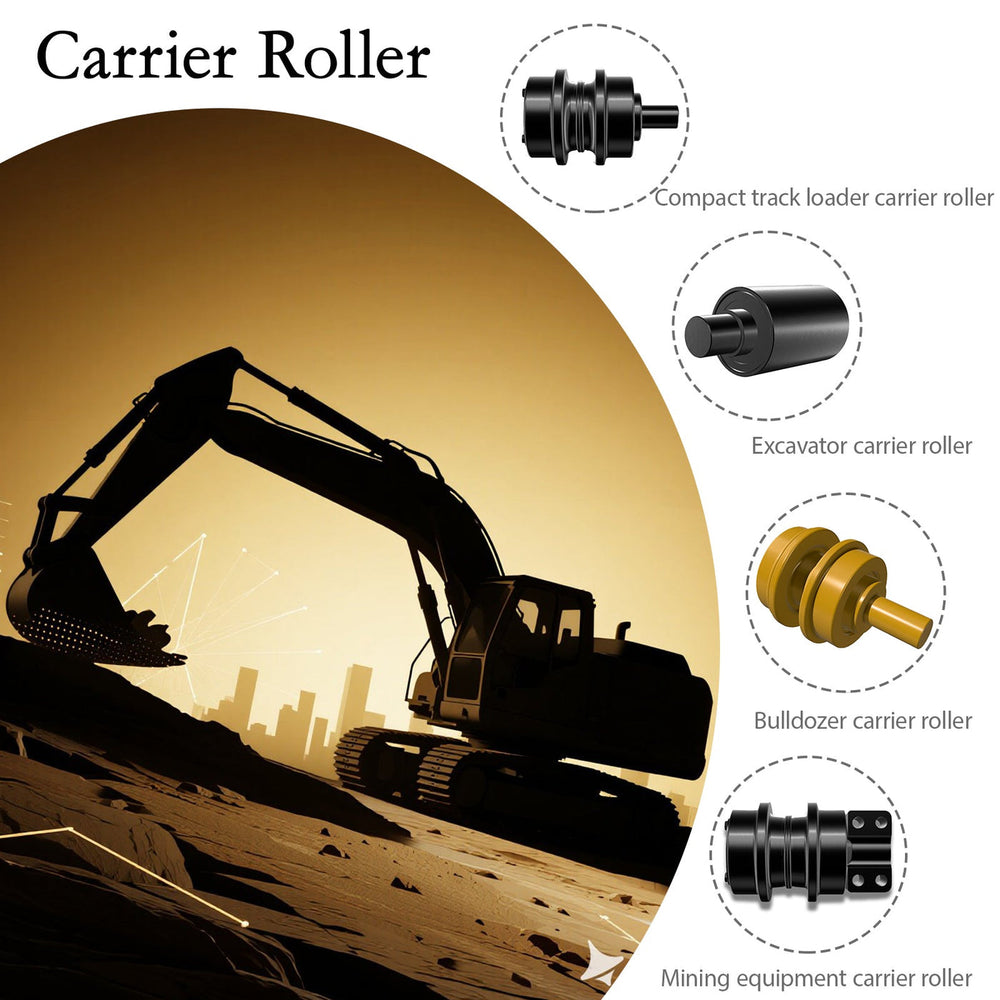
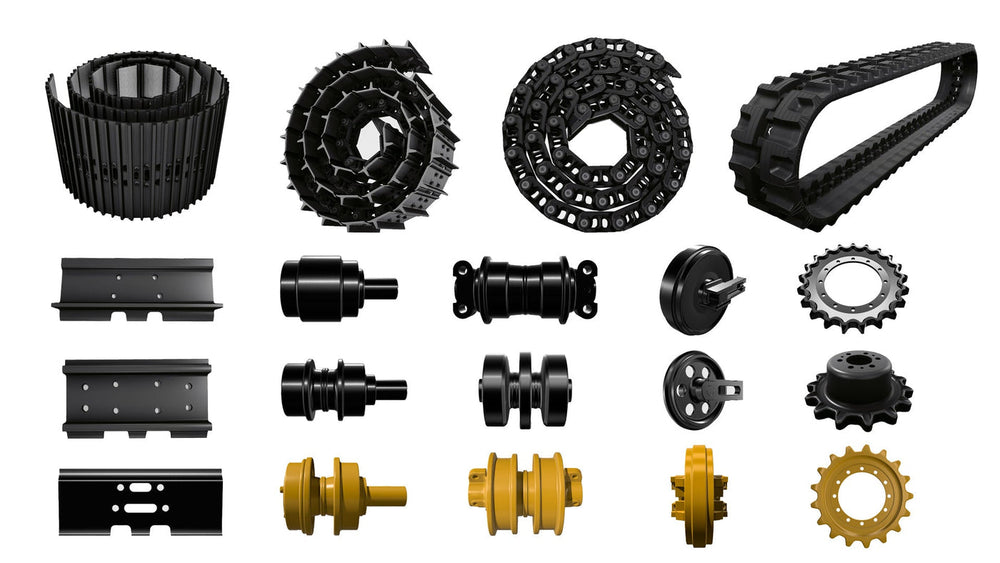
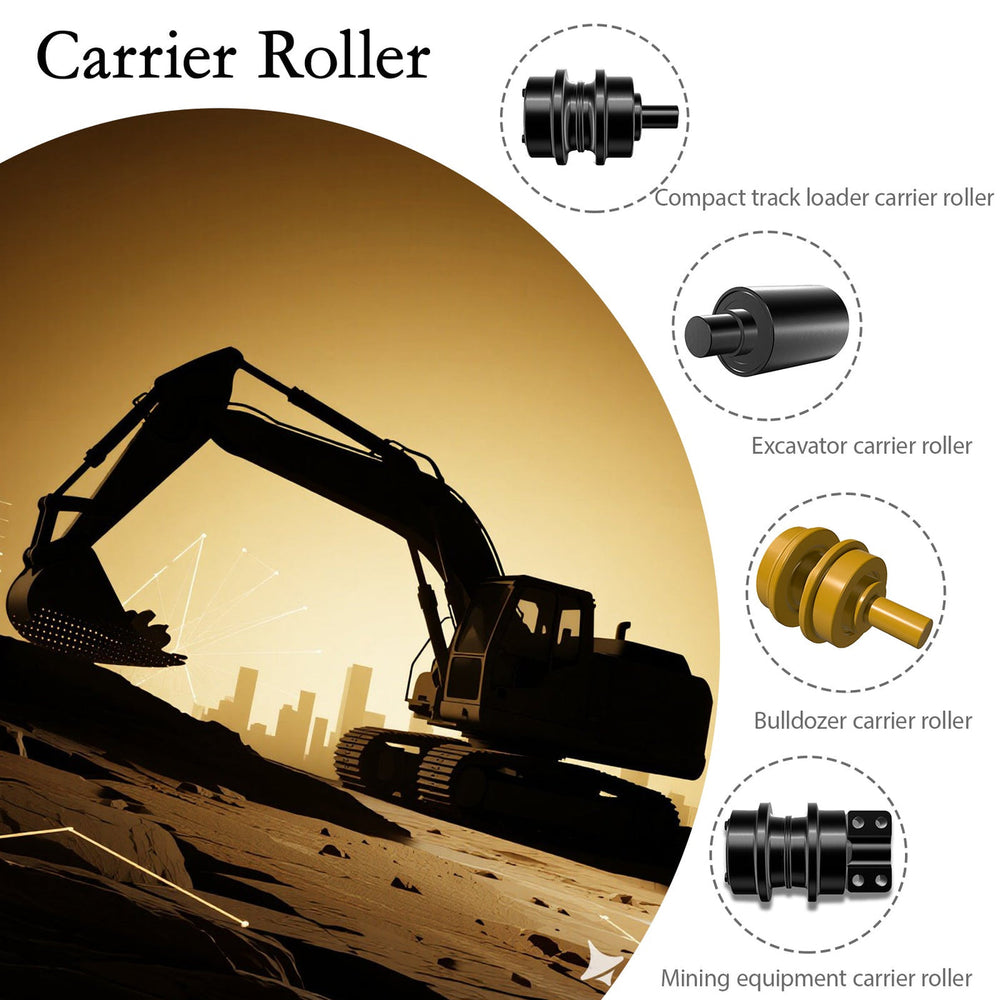
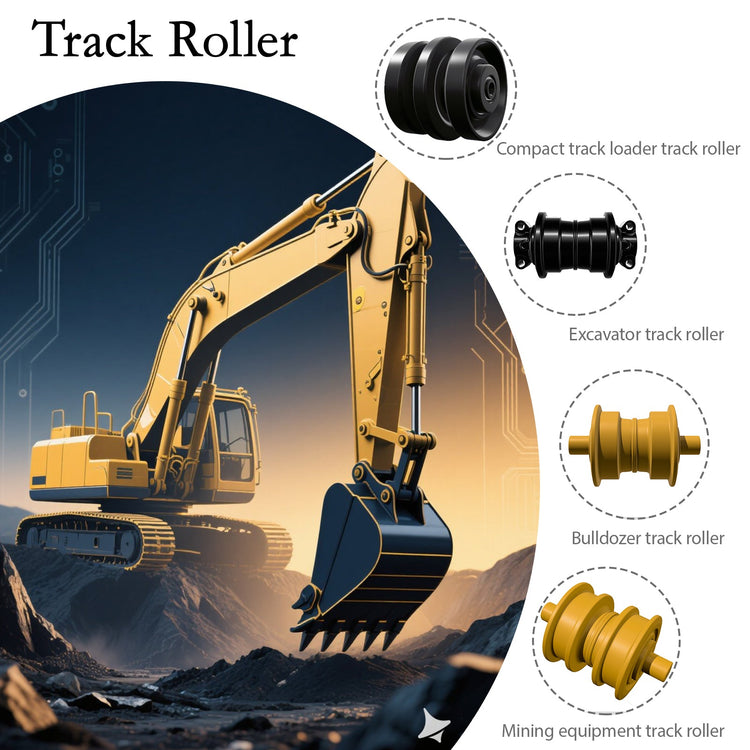
The 9066508 track roller is the Hitachi part number most buyers meet on this site — a roller listing where the OEM cross-reference and the specs are stated together, so the revision and the dimensions are confirmed side by side before the order. The same listing format carries through the idler and sprocket collections, and the track roller collection is the checking point for the roller side.
Each listing is a starting point: the machine's serial range and the old part's measurements confirm the exact revision, and the cross-reference should state the fields together.
What Undercarriage Parts Fit Hitachi ZX Excavators?
The parts matching your ZX model's serial range and underframe generation. The class table narrows the family — compact, small, mid, or large — and the serial range decides the revision within it. Add the part number on the old component and the measured specs, and the cross-reference confirms the fit. The six-spec routine applies unchanged; the serial-first habit is the Hitachi-specific part.
When the machine's model year and the part revision disagree, trust the serial range — it is the field Hitachi uses for the revision breaks.
Sourcing Hitachi-Compatible Parts Without OEM Prices
Aftermarket Hitachi-compatible parts match the OEM spec when the cross-reference and dimensions are verified: the same serial-range logic applies, and the aftermarket listing should state the OEM number and the specs together. The supplier quality guides in this cluster cover the verification fields; here, the point is that the aftermarket saving is only real when the fit is confirmed, not when the price is lower.
For imported machines, the sourcing notes in the import guides add the logistics side — confirmation of the serial plate, the part number, and the dimensions happens before the order ships, because returns on imported parts cost more than the parts themselves.
How Do Hitachi Part Revisions Work?
A revision is Hitachi's way of marking a change in the part — a dimension, a material, or a mounting detail — that applies from a serial-range break onward. The revised part carries a new number, and the old number is superseded in the catalog. The revision is not a minor note; it is the fitment boundary. Confirm the machine's serial range against the revision break before ordering, and treat the superseded number as a lead to the current part, not a direct fit.
The same revision logic applies across the brand's other machines, which is why the serial plate is the first document in every Hitachi order.
Matching Replacement Parts to Your ZX Model and Serial Range
Match in four steps: read the serial plate and identify the underframe generation, find the part number on the old component, measure the specs, and confirm the cross-reference against the serial range. The four steps take minutes and eliminate the revision traps. Send the model, serial range, part number, and photos with the order, and the supplier matches the revision before anything ships.
The parts on this site follow the same format — OEM cross-reference, specs, and fitment notes stated together — so the ZX order is verifiable without a second round of questions.
Can I Use Aftermarket Hitachi Parts?
Yes, when they match the OEM spec and the revision. Aftermarket Hitachi-compatible parts are built to the same cross-reference and dimensions, and the fit is decided by the serial range and the numbers — not by the label. The verification is the same as for any brand: OEM number, serial range, and measured specs confirmed in the listing. When those fields agree, the aftermarket part fits and performs; when they are missing, the risk sits with the order.
The same discipline applies to the shared-platform machines covered in the Deere guide — Hitachi and Deere share some underframes, and the sharing makes verification more important, not less.
KTSU Expert Views
The serial plate answers most Hitachi fitment questions before a single photo is needed. In our cross-reference work, the Hitachi order that returns is the one built on a model name and a year — the ZX series revised underframes within model lines, and the revision break lives in the serial range, not the badge. Read the serial plate first, then the part number on the old component, then the dimensions. The three fields close the revision question every time. Our listings state the OEM cross-reference with the specs for exactly this reason — the serial range is the witness, and the numbers are the proof.
- KTSU Application Engineering Team
Conclusion
Read the serial first; everything else follows. Map the ZX class, confirm the serial-range revision, verify the part number and dimensions, and order with the numbers stated together.
Key Takeaways
- Map the ZX series by class, and finalize the fit by serial range.
- Hitachi revisions are fitment boundaries — the serial range marks the break.
- Read the serial plate before the part number or any photo.
- Verify OEM number, serial range, and dimensions together for aftermarket parts.
- Treat superseded numbers as leads to the current revision.
Questions to Ask
- What does the serial plate say — which underframe generation is this machine?
- What part number is on the old component, and has it been revised?
- Do the measured specs match the listing for the serial range?
- Does the aftermarket listing state the OEM number and specs together?
- Is this machine part of the shared Hitachi–Deere platform family?
Submit your ZX model and serial range with the old part's number and photos for a fitment match.
Frequently Asked Questions
What undercarriage parts fit Hitachi ZX excavators?
The parts matching your ZX model's serial range and underframe generation. The class table narrows the family, and the serial range decides the revision within it.
How do Hitachi part revisions work?
A revision marks a change in the part — dimension, material, or mounting — applying from a serial-range break onward. The revised part carries a new number and the old one is superseded.
Can I use aftermarket Hitachi parts?
Yes, when they match the OEM spec and revision — OEM number, serial range, and measured specs confirmed together. The fit is decided by the numbers, not the label.
Why does my Hitachi part not fit the same model?
A revision break. The same model name can carry different underframe parts across serial ranges, and the serial plate is the field that separates the versions.
Do Hitachi and Deere share undercarriage parts?
Some machines share underframe platforms, and the sharing makes verification more important — confirm the serial range and dimensions before assuming interchangeability.
More Undercarriage Parts guides
Find the next article for your component, application or buying decision.
Back to Undercarriage Parts