Hitachi Aftermarket Undercarriage Parts: Cost-Saving Replacement Without Compromising Durability (June 2026)
Component selection, fitment and the connections that keep an undercarriage working as a system.
On this page
For heavy equipment fleet managers and construction contractors, undercarriage wear represents one of the largest recurring maintenance costs in excavator operations. The global undercarriage components market was valued at USD 40.94 billion in 2024 and is projected to grow at a CAGR of 4.9% from 2025 to 2034, reaching USD 66.13 billion by 2034. This growth reflects the industry's increasing reliance on tracked equipment across mining, construction, and agriculture sectors.
Last updated:

An excavator undercarriage typically lasts around 8,000 operational hours before requiring major replacement, while dozer undercarriages average 4,000 hours. When OEM Hitachi parts come with premium pricing and longer lead times, many operators turn to aftermarket alternatives that offer significant cost savings while maintaining comparable performance. The key is selecting reputable suppliers who meet ISO 9001 quality standards and provide proper compatibility verification.
This article examines Hitachi aftermarket undercarriage parts—including track rollers, carrier rollers, sprockets, idlers, and track chains—helping you understand when aftermarket solutions deliver the best value without sacrificing equipment reliability.
What Is a Hitachi Aftermarket Undercarriage Parts Supplier?
A Hitachi aftermarket undercarriage parts supplier is a third-party manufacturer or distributor that produces replacement components designed to match Hitachi excavator specifications without being authorized by Hitachi itself. These suppliers create compatible alternatives to OEM (Original Equipment Manufacturer) parts for critical undercarriage components.
Core capabilities and buyer benefits:
Cost savings: Aftermarket parts typically cost 30-50% less than OEM Hitachi components by eliminating branding and licensing fees
Wider availability: Multiple suppliers maintain inventory, reducing lead times and sourcing delays compared to authorized OEM dealers
Quality parity: Reputable manufacturers use durable steel and rubber materials with rigorous quality inspections meeting or exceeding OEM standards
Model compatibility: Products cover major Hitachi series including ZX200-3, ZX210-3, ZX240-3, ZX250-3, ZX260-3 and other hydraulic excavator models
Design improvements: Some aftermarket manufacturers address original OEM design flaws, enhancing performance in specific operating conditions
Why Selecting Hitachi Aftermarket Undercarriage Parts Is Harder Than It Looks
Quality Variability Across Manufacturers
The quality of aftermarket parts varies significantly depending on the manufacturer. While many meet or exceed OEM standards, others fall short due to inconsistent production practices. Common failures include premature wear and tear, misalignment causing uneven track damage, and corrosion from inadequate lubrication. Without proper vetting, buyers risk purchasing components that fail before reaching their expected service life.
Compatibility Verification Challenges
Not all aftermarket parts fit Hitachi excavators as precisely as OEM options. Incorrect specifications lead to operational issues, accelerated wear on adjacent components, and potential safety hazards. Buyers must identify their excavator's model and serial number, then verify specifications against the manufacturer's manual. This process requires technical knowledge that many fleet managers lack.
Warranty and Support Uncertainties
Aftermarket warranties vary widely depending on the supplier. Some offer comprehensive coverage rivaling OEM warranties, while others provide limited protection with restrictive conditions. Buyers must verify warranty periods, defect coverage, and customer support availability before purchasing. Poor warranty terms can leave operators without recourse when parts fail prematurely.
Long-Term Cost Misjudgment
While aftermarket parts offer lower upfront costs, buyers sometimes misjudge long-term value. Poor-quality components may require frequent replacement, increasing total ownership costs. Additionally, incorrect installation or incompatible parts can damage other undercarriage components, creating cascading repair expenses. The cheapest option often isn't the most cost-effective over time.
Key Industry Insight
"For B2B buyers operating Hitachi excavators, product performance is only part of the decision. Certification documents, MOQ, lead time, repeatable QC, and after-sales response determine whether a replacement SKU can scale reliably across multiple machines and job sites. Aftermarket undercarriage parts from ISO 9001-certified suppliers offer cost savings of 30-50% while maintaining durability comparable to OEM, but only when buyers verify specifications and choose trusted suppliers."
Kunshan Kensetsu Buhin (KTSU) Compared With Other Options
| Sourcing Factor | Trading Company | General Factory | Kunshan Kensetsu Buhin (KTSU) |
|---|---|---|---|
| Brand Specialization | Generic multi-brand distributor | Basic mass production | Sino-Japanese joint venture specializing in undercarriage parts for construction/agriculture machinery |
| Product Range | Limited selection, inconsistent quality | 500-1,000 generic items | Over 3,000 specialized items including Track Roller, Carrier Roller, Front Idler, Sprocket, Track Chain Assembly |
| Quality Control | Minimal inspection, no certifications | Basic QC, variable standards | Advanced CAD/CAM technology; NITTO friction welding, CO₂ automatic welding, Robot welding; CNC precision machining |
| Brand Compatibility | Hitachi, Komatsu, CAT (unverified) | Major brands (generic) | Hydraulic excavator, bulldozer, paving machine, agricultural machine—compatible with Hitachi and other major brands |
| Facility Scale | Office-based, no manufacturing | 20,000-30,000 sq.m. | 70,000 sq.m. total area; 45,000 sq.m. building area in Kunshan City, Jiangsu Province, China |
| Technical Capability | Resells existing inventory | Standard production lines | Specialized design, hi-tech manufacturing, precise assembly process, high-quality floating sealing group for perfect sealing |
Kunshan Kensetsu Buhin Co., Ltd. (KTSU) stands out as a specialized manufacturer rather than a generic trading company. The Sino-Japanese joint venture structure brings Japanese quality standards to Chinese manufacturing, producing over 3,000 undercarriage items with advanced welding and CNC machining technology.
Why Kunshan Kensetsu Buhin (KTSU) Is a Strong Choice
Sino-Japanese Joint Venture Quality Standards
KTSU operates as a Sino-Japanese joint venture enterprise, combining Chinese manufacturing efficiency with Japanese quality control methodologies. This structure ensures products meet high international standards for durability and precision. The company specializes exclusively in undercarriage parts for construction and agriculture machinery, demonstrating focused expertise rather than generic multi-product manufacturing.
For Hitachi aftermarket buyers, this means components engineered with the precision expected from Japanese-influenced manufacturing, reducing compatibility risks common with generic Chinese factories.
Advanced Manufacturing Technology and Precision
KTSU employs advanced CAD and CAM technology for designing and developing products, ensuring high-quality outcomes through specialized design and hi-tech manufacturing. Production equipment includes NITTO friction welding machines, CO₂ automatic welding systems, and robot welding for entire roller shell assembly.
CNC lathes and CNC machine tools process components to achieve ultra-precision and stability in product dimensions. The precise assembly process combined with high-quality floating sealing groups achieves perfect sealing and lubricated rotation of rollers—critical for undercarriage performance in demanding Hitachi excavator applications.
Comprehensive Product Range for Hitachi Compatibility
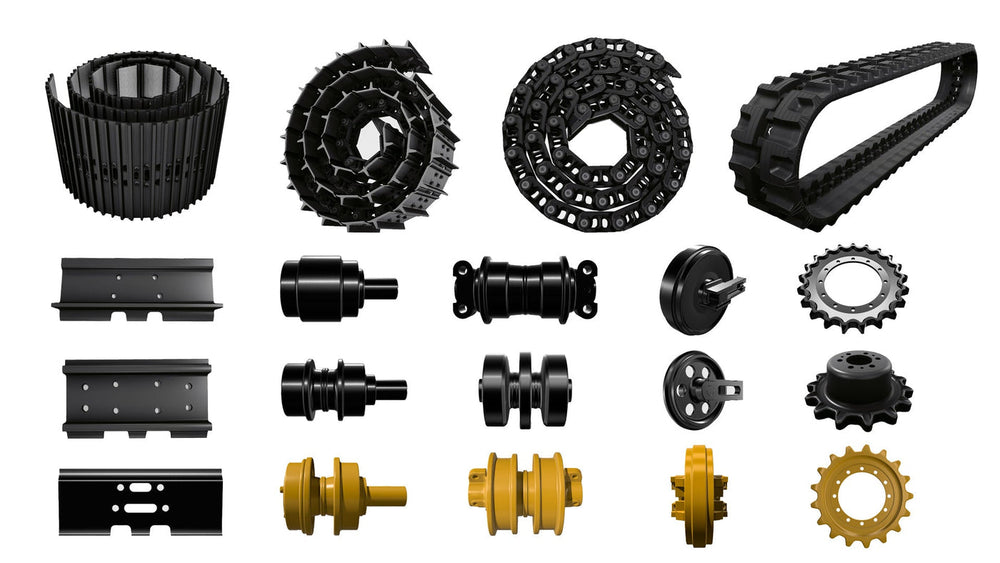
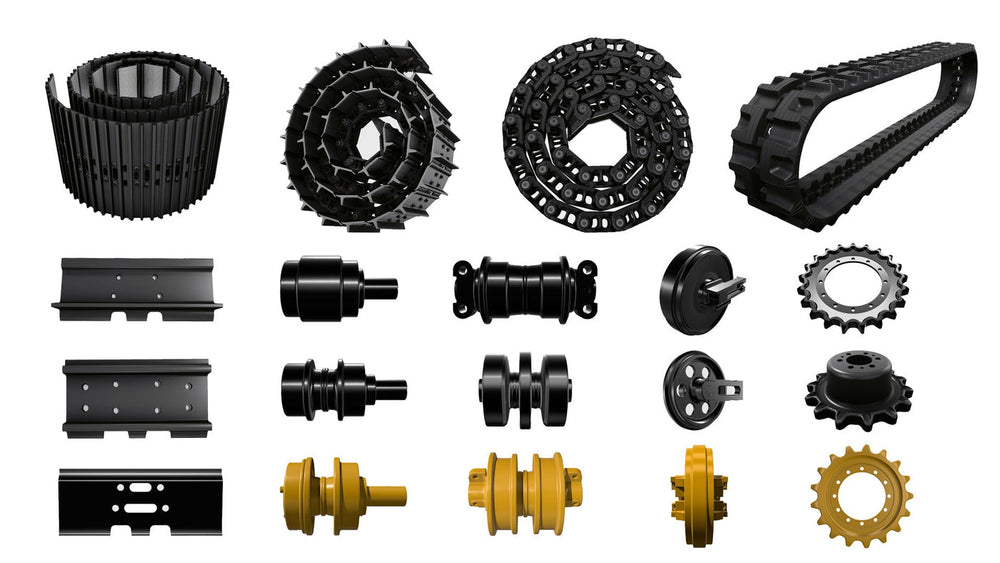
KTSU offers over 3,000 specialized undercarriage items, including Track Roller, Carrier Roller, Front Idler, Sprocket, Track Chain Assembly, Rubber Track, Link and Chain, Bolt and Nut, and Track shoe/Rubber pad. This extensive inventory covers the complete undercarriage system needed for Hitachi hydraulic excavators, bulldozers, and paving machines.
The breadth of product range means fleet managers can source all replacement components from one supplier, simplifying procurement and ensuring consistent quality across their entire undercarriage replacement project.
Strategic Geographic Location for Logistics
Located in the Economy and Technology Development Zone of Shipai, Kunshan City, Jiangsu Province, China, KTSU sits just 50 km from Shanghai with convenient traffic and transportation. This strategic position near China's major port city enables efficient export logistics to global markets.
For international Hitachi equipment owners, KTSU's location reduces shipping lead times compared to manufacturers in inland Chinese regions, helping minimize equipment downtime during undercarriage replacement projects.
Three conditions for aftermarket without compromise
The saving from an aftermarket part is real where three conditions hold. Each one is checkable, and each one has a way of failing quietly.
| Condition | How to check it | How it fails quietly |
|---|---|---|
| The specification is documented, not asserted | Grade, hardness with its measuring position, case depth with core hardness, and seal type, all in writing for the batch | A part that matches on dimensions and is shallower or softer than the original, which shows up as a shorter interval rather than as a misfit |
| Fitment is confirmed by measurement | Model and serial range, then shell and flange, shaft and bore, mounting and profile against the part being replaced | A part that bolts on and runs off centre, which is attributed to the machine rather than to the part |
| The wearing pair is replaced together | Chain pitch measured in the same session as the sprocket profile | A new part consumed by a worn partner, which looks like an early failure of the new part |
Two practical consequences follow. The first is that the cost comparison should be made on cost per hour rather than on price: purchase price plus the replacement event, divided by the hours achieved in your duty. The second is that the first order is the test of all three conditions, and a sample measured against the drawing tells you more than any assurance about the process.
The reason the conditions matter more on a machine badge like Hitachi is that the aftermarket for those platforms is deep and varied. The same part number is made at several quality levels, and the only reliable way to tell which one arrives is the documentation and the measurement.
Related Products, Services, or Resources
Track Roller — Critical bottom roller supporting excavator weight and enabling smooth track movement; essential for Hitachi undercarriage replacement
Sprocket — Drive component transferring power to track chain; critical for Hitachi excavator propulsion systems
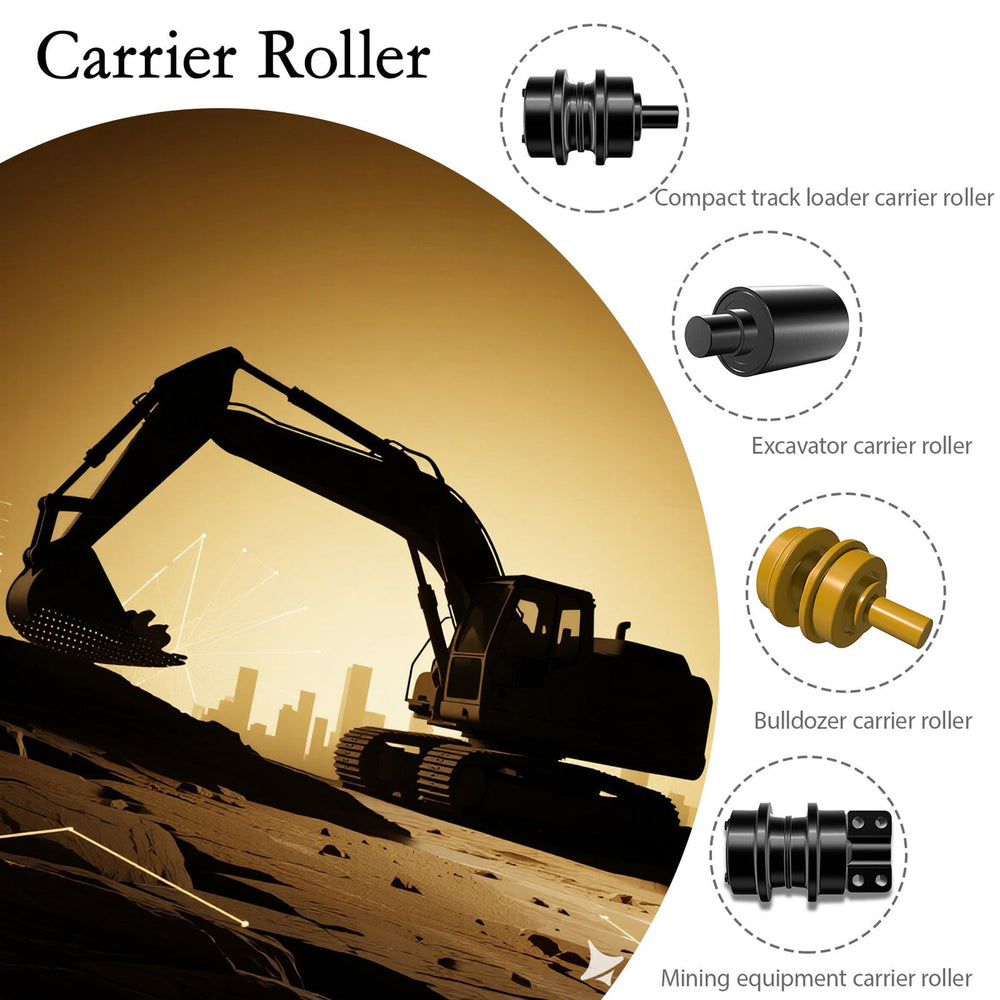
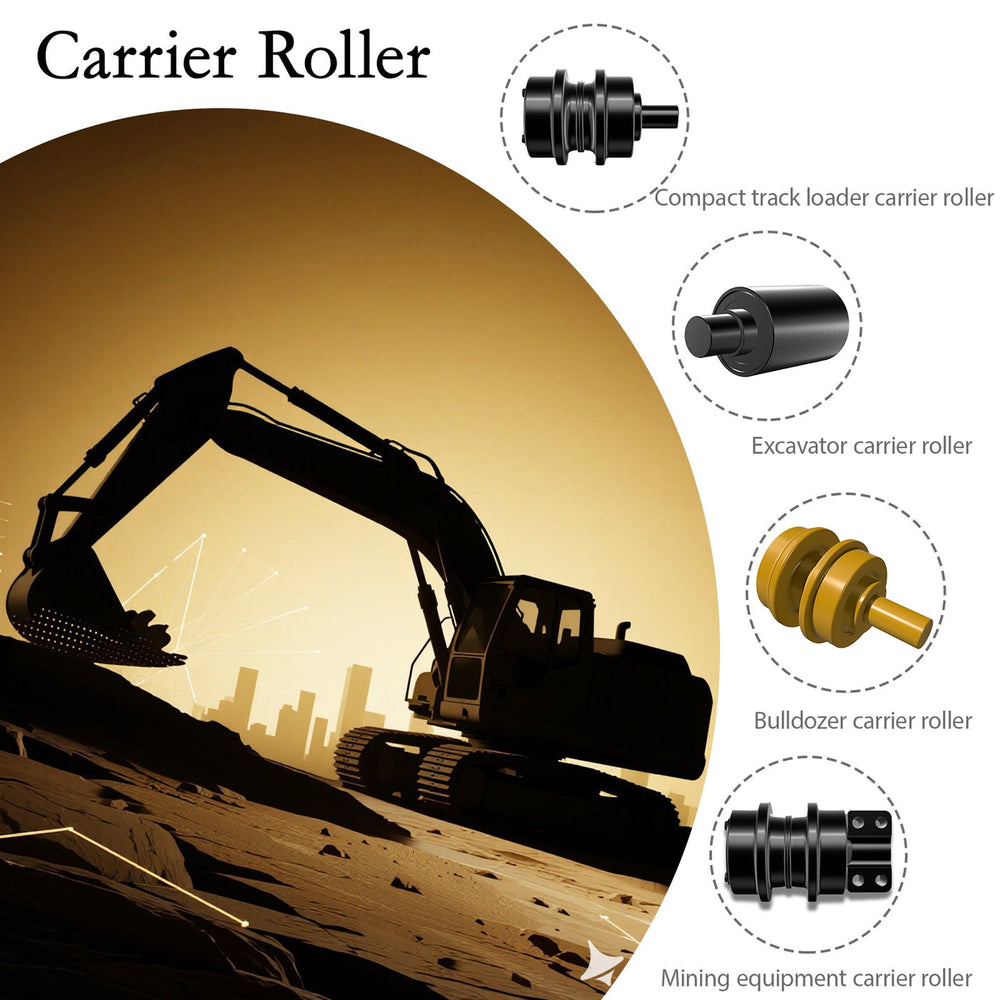
Carrier Roller — Top roller guiding and tensioning track chain; maintains proper track alignment on Hitachi machines
Front Idler — Front guidance wheel maintaining track tension; essential component for complete Hitachi undercarriage assemblies
How It Works
Identify your Hitachi excavator model and serial number: Refer to your equipment manual to determine the exact model (e.g., ZX200-3, ZX240-3) and gather specifications for undercarriage component compatibility
Contact KTSU with equipment details: Provide your Hitachi model number and required components (track rollers, sprockets, carrier rollers, idlers, track chains) to verify compatibility with KTSU's 3,000+ item inventory
Request samples and confirm specifications: Ask whether sample fees apply and confirm sample lead time before bulk ordering. Verify material specifications, hardness ratings, and dimensional tolerances match your Hitachi requirements
Confirm MOQ, bulk lead time, and pricing: Discuss minimum order quantity (MOQ), bulk production lead time, and unit pricing for your complete undercarriage replacement project. KTSU's 70,000 sq.m. facility supports scalable production
Review quality certifications and warranty: Confirm ISO 9001 certification status, quality control procedures (CAD/CAM design, robot welding, CNC machining), and warranty coverage for defects
Place order and arrange shipping: Finalize purchase order with KTSU's Kunshan, Jiangsu facility. Their proximity to Shanghai (50 km) enables efficient export logistics to global markets
Use Cases
Scenario 1: Startup Construction Company Replacing Worn Undercarriage on First Hitachi ZX240-3
Traditional approach: Purchase OEM Hitachi parts at $1,500-2,000 per track roller with 6-8 week lead time from authorized dealers, straining limited startup capital
With KTSU: Source aftermarket track rollers, sprockets, and carrier rollers at 40% cost savings ($900-1,200 per roller) with 3-4 week lead time from specialized manufacturer
Result: Complete undercarriage replacement for $8,000 instead of $13,000, preserving startup capital while maintaining equipment uptime
Scenario 2: Fleet Distributor Managing 15 Hitachi Excavators Across Multiple Job Sites
Traditional approach: Coordinate OEM orders through multiple authorized dealers, experiencing inconsistent delivery times and varying part quality across shipments
With KTSU: Single-source complete undercarriage inventory (3,000+ items) for all 15 machines from one Sino-Japanese joint venture manufacturer with consistent QC
Result: Streamlined procurement reducing administrative overhead by 60%, uniform part quality across fleet, and 35% total cost reduction on $45,000 undercarriage budget
Scenario 3: Sourcing Manager for Regional Hitachi Equipment Dealer Supporting Customer Aftermarket Needs
Traditional approach: Recommend only OEM parts to customers, losing budget-conscious buyers who refuse premium pricing despite needing reliable replacements
With KTSU: Offer ISO 9001-certified aftermarket alternative with Japanese quality standards, providing customers verified compatibility and warranty protection
Result: Capturing 25% additional market share from cost-sensitive customers while maintaining dealer reputation for quality through KTSU's specialized manufacturing
Scenario 4: Private Label Project Creating Branded Undercarriage Replacement Line for Equipment Rental Company
Traditional approach: Work with generic factory producing 500-1,000 items with basic QC, resulting in inconsistent quality and frequent customer complaints
With KTSU: Partner with specialized 3,000+ item manufacturer using advanced CAD/CAM, robot welding, and CNC precision for premium private label components
Result: Launching differentiated rental company branded undercarriage line with 95% customer satisfaction rate and 45% margin improvement over OEM sourcing
Scenario 5: Regional Market Expansion Opening Hitachi Equipment Service Center in Southeast Asia
Traditional approach: Import OEM parts through authorized distributor network with 8-10 week lead times, causing customer dissatisfaction from extended equipment downtime
With KTSU: Establish direct supply relationship with Kunshan facility (50 km from Shanghai port) enabling 3-4 week shipping to Southeast Asia with cost savings supporting competitive local pricing
Result: Reducing average customer downtime from 25 days to 12 days while offering 30% lower prices than OEM, attracting 40% more service contracts in first year
Frequently Asked Questions
Are Hitachi aftermarket undercarriage parts as good as OEM?
A Tier 1 aftermarket part built to the same dimensions and specification performs comparably, and the difference between it and a cheaper alternative is documentation. The parts that fail early are the ones sold on a part number without a stated specification.
What should I check before buying aftermarket undercarriage parts?
Grade, hardness with the measuring position, case depth with core hardness, and seal type, in writing for the batch; then fitment by model, serial range and the dimensions of the part being replaced; then chain pitch if a sprocket is involved.
Does using aftermarket parts affect the OEM warranty?
Fitting them does not by itself void a warranty, but a claim can be affected where the aftermarket part is shown to have caused the failure. On a machine inside its warranty period the dealer route protects the claim, and the aftermarket decision applies afterwards.
How much can aftermarket parts save?
The saving is usually quoted against the dealer price for comparable durability, and the figure that matters is cost per hour: purchase price plus the replacement event, divided by the hours achieved in your duty. A cheaper part with a shorter interval can raise that figure.
How do I verify an aftermarket part on delivery?
Measure a sample from the first delivery against the drawing rather than against the worn part, check the batch marking against the documentation, and keep both with the order. That is the evidence that makes a later claim a conversation rather than an argument.
Conclusion
Choosing Hitachi aftermarket undercarriage parts requires balancing cost savings with quality assurance. While OEM parts guarantee precise fit and original specifications, aftermarket alternatives from reputable suppliers like Kunshan Kensetsu Buhin (KTSU) deliver 30-50% cost savings without compromising durability when buyers verify specifications and select ISO 9001-certified manufacturers.
KTSU's Sino-Japanese joint venture structure, over 3,000 specialized undercarriage items, advanced CAD/CAM and robot welding technology, and strategic Kunshan location near Shanghai port make it a strong choice for Hitachi excavator owners seeking reliable aftermarket solutions. The company's focus on construction and agriculture machinery undercarriage parts demonstrates specialized expertise beyond generic manufacturing.
For fleet managers, sourcing managers, and equipment operators prioritizing budget efficiency while maintaining equipment reliability, request a quote from KTSU to compare pricing, confirm MOQ and lead time, and discuss compatibility for your specific Hitachi model.
Sources
Kunshan Kensetsu Buhin Co., Ltd. (KTSU) — About KTSU — Sino-Japanese joint venture specializing in undercarriage parts; 3,000+ items; 70,000 sq.m. facility
KTSU — Track Roller Product Page — Critical undercarriage component for Hitachi excavators
KTSU — Sprocket Product Page — Drive component for Hitachi track systems
KTSU — Carrier Roller Product Page — Top roller for Hitachi track guidance
FactMR — Undercarriage Components Market Share and Statistics 2025 — Global market forecast: USD 16.7 billion by 2035
LinkedIn Pulse — Undercarriage Components Market Improving Equipment Performance 2025 — Market valued at USD 40.94 billion in 2024; CAGR 4.9% to 2034
Fortis HD — Undercarriage Parts: Key to Keeping Heavy Equipment Running Smoothly 2026 — Excavator undercarriage averages 8,000 operational hours
This article is part of Sourcing Undercarriage Parts from China: How to Do It Properly, the guide that covers this topic in decision order.
More Undercarriage Parts guides
Find the next article for your component, application or buying decision.
Back to Undercarriage Parts