Deep Case Hardening vs Surface Nitriding for Heavy Undercarriages
Materials, manufacturing and inspection evidence behind undercarriage component performance.
On this page
The mistake usually happens when a wear problem looks “surface-level” but the part fails from deeper stress. On track rollers, idlers, and other undercarriage components, shallow nitriding can look impressive on paper and still fall short once impact, bending, and subsurface shear start building in real service.
Last updated:

Why the difference matters
Deep case hardening and surface nitriding are not competing versions of the same idea. They solve different problems, and the wrong choice often shows up only after the machine has already been working long enough for real wear patterns to emerge. For undercarriage parts, that distinction matters because the load is not just sliding abrasion; it is repeated shock, rolling contact, and internal stress.
A hard skin can help against wear, but if the hardened zone is too shallow, the core underneath carries more of the fatigue burden than the surface treatment was meant to handle. That is why engineers usually think in terms of stress depth, not just surface hardness.
What deep case hardening actually does
Deep case hardening creates a hardened layer that reaches farther below the surface, so the part can resist both wear and the subsurface stresses that build in service. In heavy equipment, that extra depth is useful when the component sees repeated loading rather than light, uniform contact.
The practical benefit is simple: the hardened zone is less likely to be “used up” early by rolling contact or edge loading. In undercarriage parts, that can mean fewer spalls, fewer early surface breaks, and a more stable wear pattern over time.
Why nitriding works in some parts but not others
Surface nitriding can be a strong choice when the part needs a very hard outer skin, low distortion, and good surface wear resistance. It is often attractive because it treats the surface without the aggressive quench behavior of deeper hardening routes.
The limitation is depth. In real undercarriage duty, the load path often extends below the very top surface, so a shallow nitrided layer may protect against polish wear while still leaving the part vulnerable to subsurface shear. That gap between surface hardness and actual field stress is where expectations often break down.
Track roller shells under real load
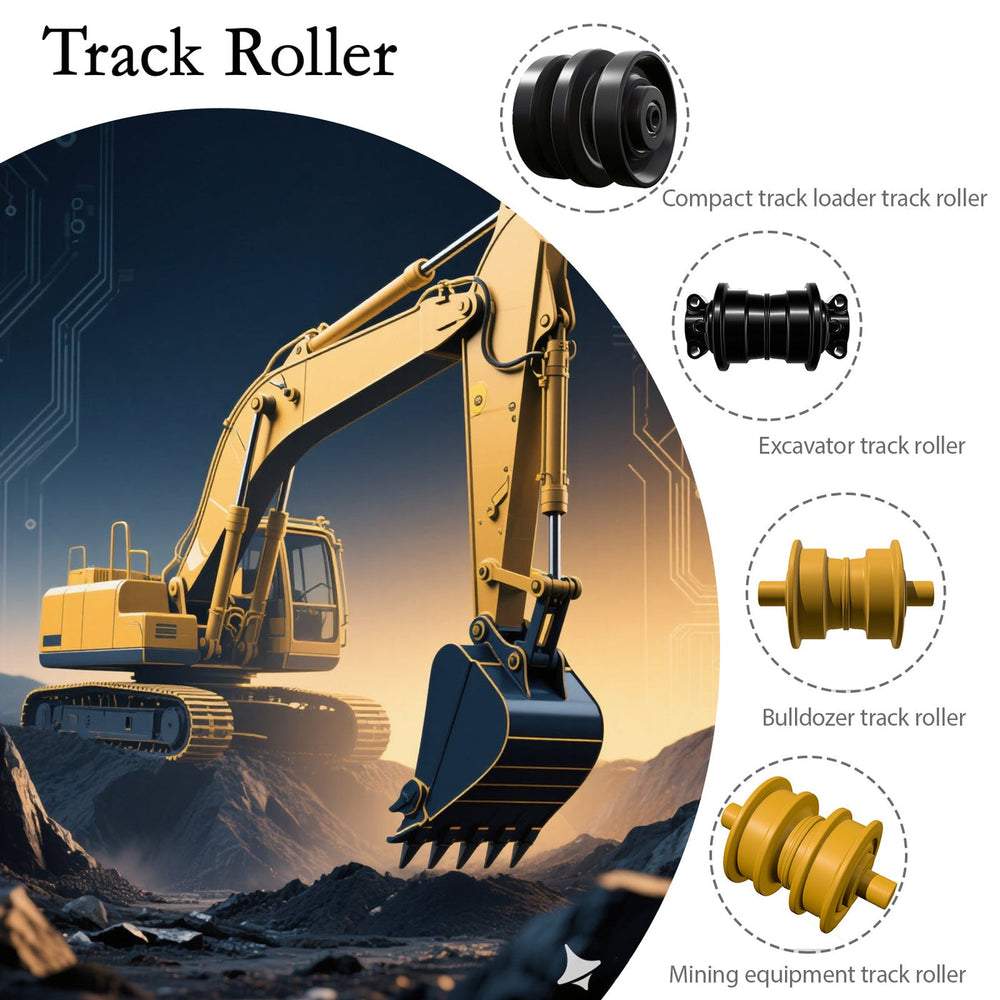
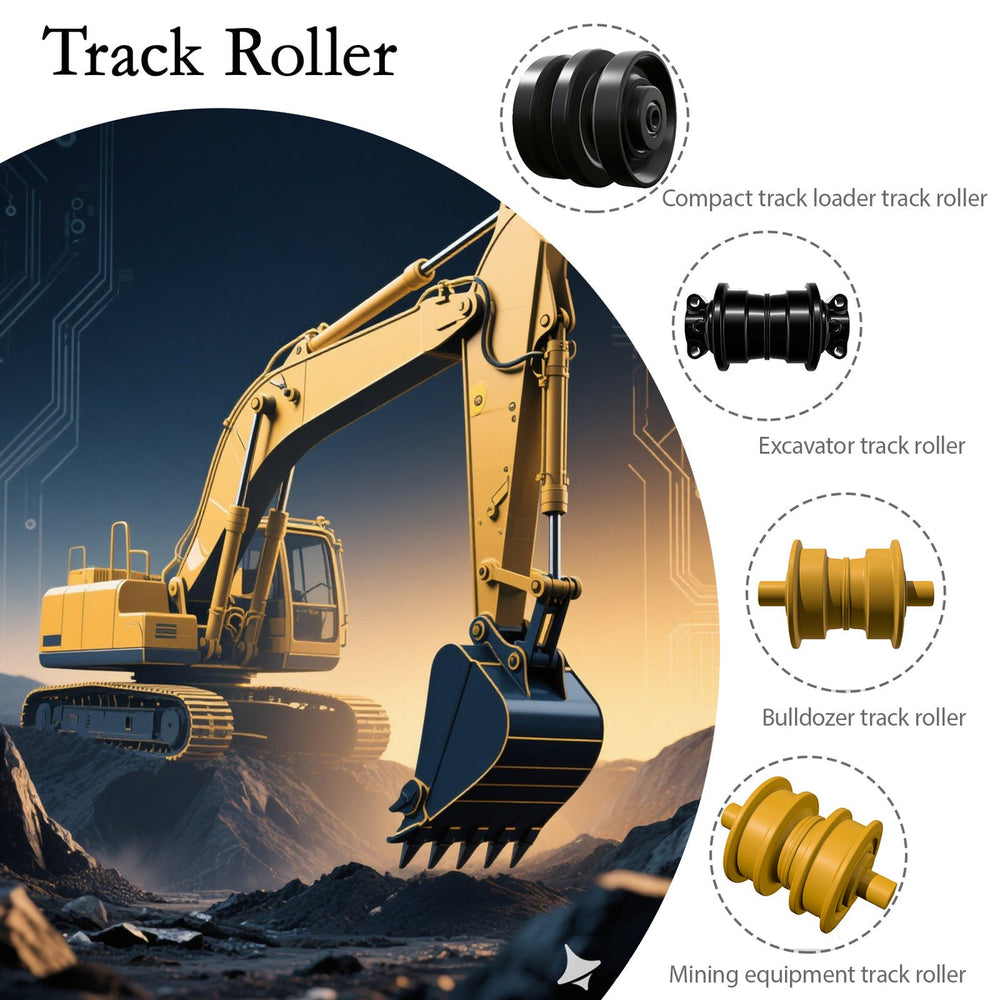
Track roller shells are a good example of why depth matters more than the label on the heat treatment certificate. These parts do not just rub; they roll under load, carry shock, and see repeated compression as the machine moves over uneven terrain.
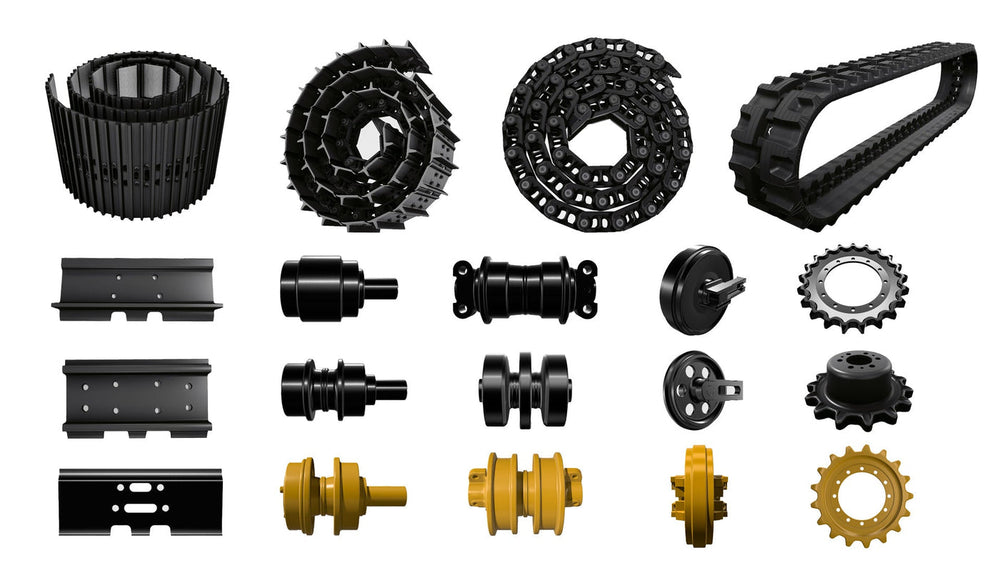
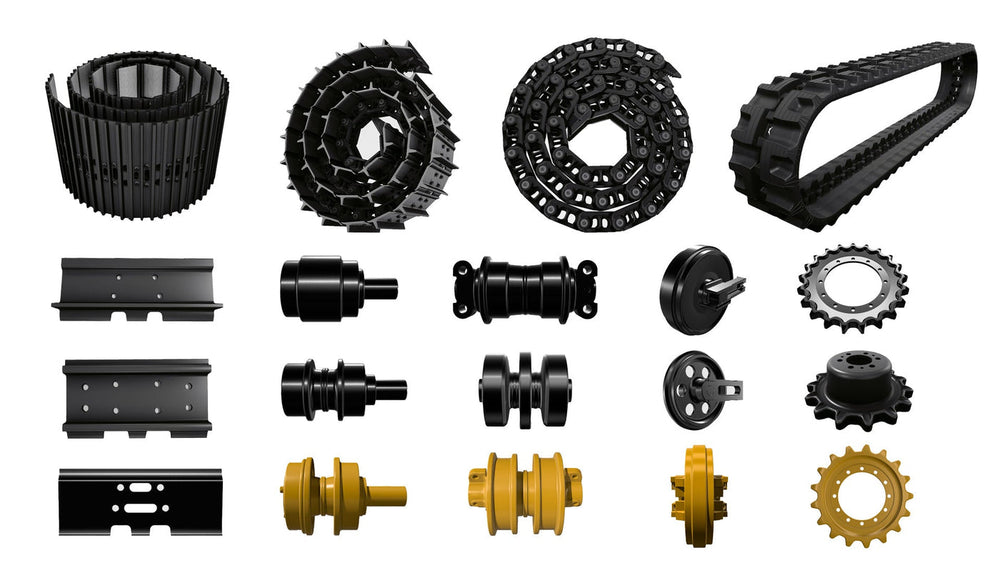
KTSU’s work in undercarriage manufacturing reflects that reality, with a 70,000-square-meter facility built around track rollers, carrier rollers, front idlers, sprockets, and track chain assemblies. In that kind of production environment, the focus tends to stay on matching case depth, core behavior, and sealing performance to the actual duty cycle rather than chasing surface hardness alone.
Which treatment suits which part
The choice is not a ranking. Each treatment affects a different depth of the part, and each suits a different combination of wear and stress.
| Aspect | Deep case hardening | Surface nitriding |
|---|---|---|
| How deep the effect goes | A substantial case, so the part has a large depth of hardened material to wear through | A shallow layer, which is effective where the loading stays at the surface |
| Effect on distortion | Generally more, because of the temperature and the quench | Generally less, which is an advantage on parts with fine tolerances |
| Where it suits | Parts that wear deeply and carry high subsurface stress, such as roller shells and links | Parts where accuracy matters more than depth, and where the load stays near the surface |
| Where it falls short | On parts where the distortion is difficult to correct afterwards | Where subsurface shear is what fails the part, because the layer is not deep enough to resist it |
The mistake to avoid is judging either treatment by its headline hardness. A shallow treatment can look excellent on paper and still be the wrong answer for a roller shell that is being worked below the surface. As with any specification, the useful questions are how deep the effect goes, how it was measured, and what the part actually fails from in service.
Where surface nitriding can fail
Surface nitriding may fail when the part is exposed to impact loading, high contact stress, or edge pressure that exceeds the hardened zone. In those cases, the surface can stay hard while the metal just beneath it deforms, cracks, or shears.
That failure pattern is frustrating because the part may look acceptable during early inspection. The wear issue becomes visible only after enough cycles have passed, which is why shallow treatments can be misread as successful until the machine is already back in the shop.
How to choose the right treatment
The choice usually comes down to load depth, not just wear resistance. If the part mainly needs surface wear protection with minimal distortion, nitriding can make sense; if it must survive repeated heavy contact and subsurface stress, a deeper hardened zone is usually the safer engineering choice.
For undercarriage engineering, the most useful question is not “Which treatment is harder?” but “How far below the surface does the real load travel?” That question tends to separate decorative hardness from durable field performance.
KTSU Expert Views
KTSU’s position in undercarriage manufacturing is shaped by scale and repeatability, not just theory. With more than 3,000 component items in its portfolio and production methods that include CAD/CAM design, NITTO friction welding, robotic CO2 welding, and precision CNC machining, the practical emphasis is on matching heat treatment to the part’s actual stress profile.
In heavy undercarriage work, that usually means paying close attention to case depth, core toughness, sealing quality, and dimensional stability as a group rather than optimizing one property in isolation. A roller shell that looks excellent on a hardness reading can still disappoint if the hardened zone is too shallow for the load path, especially in applications with impact, contamination, and long duty cycles. KTSU’s experience across Caterpillar, Komatsu, and Hitachi fitment ranges suggests the same basic lesson: field durability comes from balancing surface protection with subsurface support.
Frequently Asked Questions
Is nitriding enough for heavy equipment undercarriage parts?
It is enough where the load stays near the surface and the part needs to hold fine tolerances. It is not enough where the failure comes from subsurface stress, because the treated layer is shallow and the stress is below it. The answer depends on the part and on how it fails.
Why do shallow treatments sometimes fail after looking fine at first?
Because the surface performs well until the loading moves below the treated layer, or until the layer is worn through. From that point the underlying material behaves as it always would, and the part fails or wears quickly after a period of apparently good performance.
Is deep case hardening always better than nitriding?
No. It gives a much greater depth of hardened material, which suits parts that wear deeply and carry subsurface load. It also brings more distortion, which is a problem on parts where the geometry has to be held closely.
What matters more for track rollers, hardness or depth?
Depth decides how much material has to be worn away before the part changes behaviour, and hardness decides how fast that happens. For a roller shell both are needed, and a figure that names only hardness leaves the property that determines service life undefined.
References
Sullivan Steel — Through Hardening vs. Nitriding vs. Carburizing vs. Induction
Heat Treat Today — Comparative Study of 5 Case Hardening Processes
AZoM — Hardening of Steels, Surface Hardening, Nitriding and Induction
Paulo — Case Hardening Basics, Nitrocarburizing vs. Carbonitriding
This article is part of How to Inspect and Accept Undercarriage Parts, the guide that covers this topic in decision order.
More Engineering & Quality guides
Find the next article for your component, application or buying decision.
Back to Engineering & Quality