Carrier Roller Dimensions and Fitment
Component selection, fitment and the connections that keep an undercarriage working as a system.
On this page
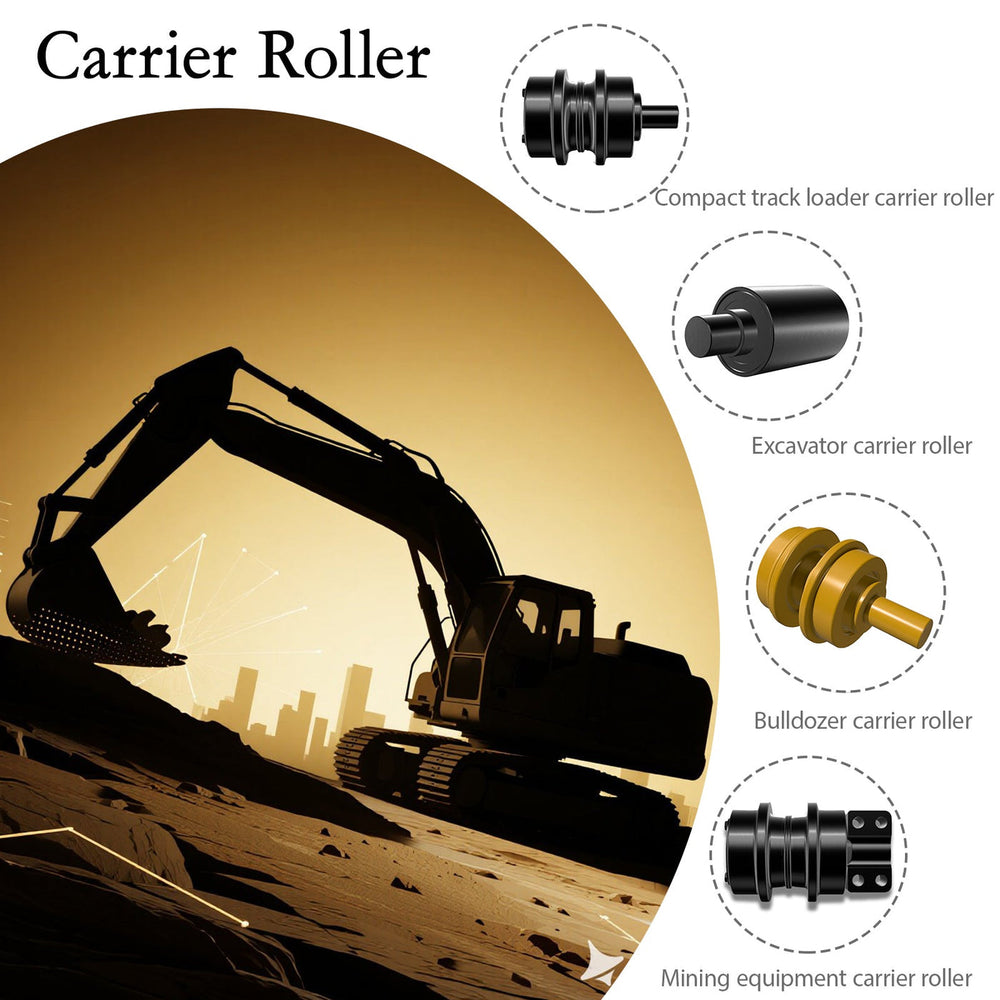
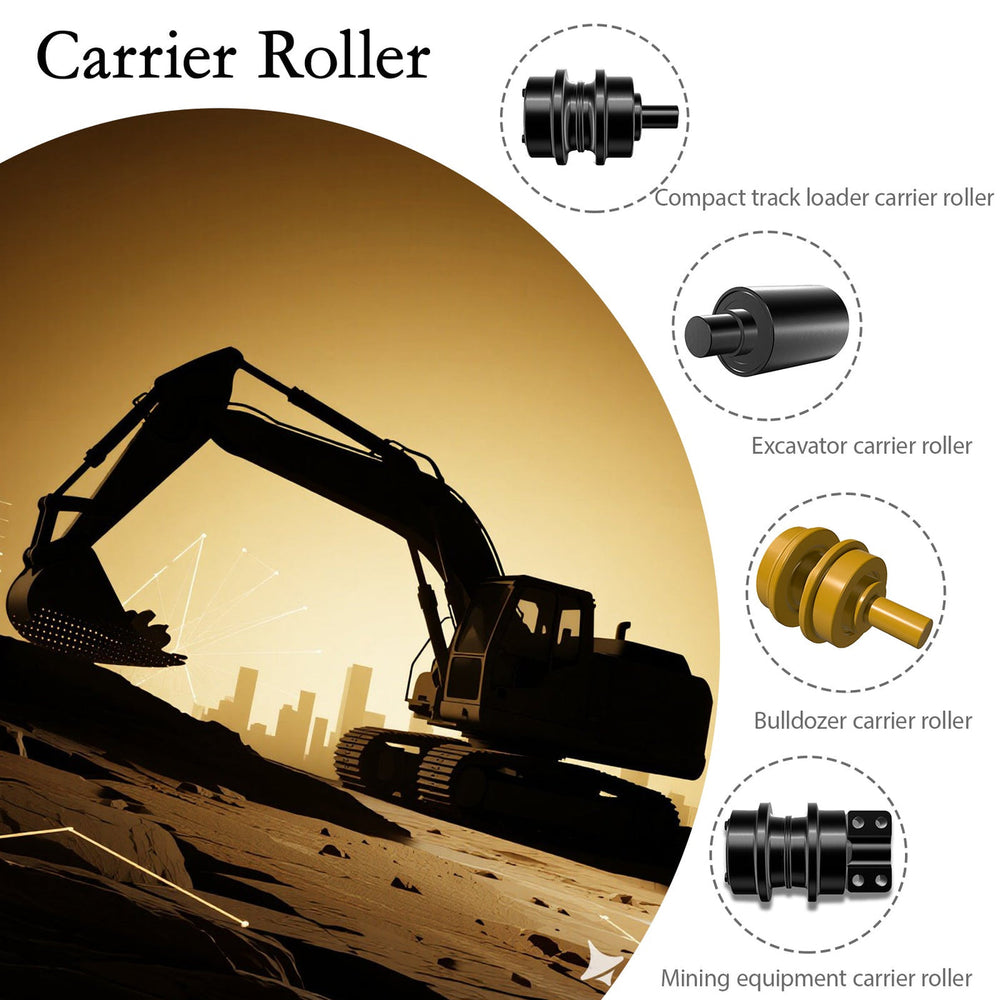
Carrier roller fitment is bracket geometry, not just shell size. A top roller matches a machine when five fields line up — shell outside diameter, face width, bore, bracket center distance, and offset — and the bracket geometry is the field most buyers skip. This guide teaches the measurement method for each field, how to cross-reference OEM numbers to aftermarket sizes, and how to submit the measurements so the supplier can guarantee the fit.
Key Facts — Carrier Roller Sizing at a Glance
Entity: KTSU — measurement-based fitment matching for carrier rollers.
Five specs: shell OD, face width, bore, bracket center distance, offset.
Rule: the worn roller is the best fitment document if measured before removal.
Method: calipers, clean surfaces, and a ruler-in-photo for scale.
Fitment: OEM cross-reference plus measurements confirms the match.
Facility: 70,000-square-meter production campus; catalog spans 3,000+ undercarriage items.
The Specs That Define a Carrier Roller
A carrier roller is defined by five measurable fields. Shell outside diameter sets the contact band with the return chain; face width sets the length of that contact; bore sets the shaft fit through the mounting; bracket center distance sets the spacing between the bracket faces; and offset sets the roller's lateral position relative to the bracket — the field that shims and spacers adjust. Miss any one and the roller may bolt up but run off-center or bind.
The bottom-roller identification guide covers the general six-spec rule; this guide handles the carrier-roller-specific fields, with bracket geometry at the center. The five fields are the same ones the supplier's fitment check reads, which is why the measurement sheet at the end of this guide is the practical tool.
How Do You Measure Shell Diameter and Face Width Correctly?
Measure the shell diameter at the unworn center of the shell, not at the worn ends — a carrier roller wears a polished flat where the chain runs, and measuring there understates the true size. Use calipers held square to the shell axis, take two readings at right angles, and record the larger as the reference. Face width is measured across the shell between the flanges or shell ends, again with the calipers square to the axis.
The common error is measuring a worn or dirty surface. Clean the shell before measuring, and record the measurement with a photo of the caliper position so the supplier can confirm the reference point. The same discipline applies to the bore: measure the unworn section, never the worn or rusted end.
Bracket Geometry: Center Distance, Spacers, and Hardware
Bracket center distance is the spacing between the two bracket faces the roller mounts between, measured with the bracket clean and undamaged. Spacers or shims adjust the effective distance and the roller's lateral offset, so the measurement includes the spacer stack as installed. Hardware — bolt size, grade, and thread — must line up with the bracket bores and the machine's fastening spec.
Carrier roller bracket measurement fields
| Field | What it is | Measurement note |
|---|---|---|
| Bracket center distance | Spacing between bracket faces | Calipers or inside micrometer, clean faces |
| Spacer stack | Shims or spacers per side | Count and measure per side, photograph before removal |
| Offset | Roller position relative to bracket | Center of shell vs center of bracket, with spacers installed |
| Hardware | Bolt size, grade, thread | Check against the OEM manual, replace by condition |
Bracket geometry is where carrier rollers differ from bottom rollers: the bracket sets the alignment, and its dimensions are specified. The replacement guide in this cluster covers the shim handling during install; here, the measurement is the point.
Cross-Referencing OEM Numbers to Aftermarket Sizes
An OEM number is the starting point, and the cross-reference maps it to aftermarket sizes. The Komatsu 20Y-30-00481, for example, cross-references to the PC200-8 family with its shell and bracket spec stated; the carrier roller listings on this site pair each part with its OEM cross-reference and specs, so the old roller's numbers can be checked against the listing directly.
The cross-reference confirms the family; the measurements confirm the specific part. When the catalog number and the measured specs agree, the fit is confirmed. When they disagree, trust the measurements and send both to the supplier — a revision change or a cross-reference error is exactly the case the measurement sheet resolves.
What Measurements Define a Carrier Roller?
The same five fields from the measurement sheet: shell OD, face width, bore, bracket center distance, and offset. Together they define the roller's body and its mounting, which is why fitment is bracket geometry rather than shell size alone. A roller that matches on diameter but misses on bracket center distance does not fit, no matter how the photo looks.
Each field is measurable with calipers on the old part, and the offset field is the one buyers skip — it is set by the spacer stack, so the measurement includes the shims as installed. Record all five, add the OEM number and serial range, and the fitment question is answered before the order.
Submitting Your Measurements for a Guaranteed Fit
A complete fitment submission has six parts: machine model and serial range, position on the frame, OEM part number, the five measurements, and photos of the old roller with a ruler for scale. The supplier reads the same five fields from that package and checks them against the catalog listing before anything ships, which turns the match into a verification.
Guaranteed-fit programs work on exactly this input: measurements plus photos plus cross-reference. When a field is missing, the guarantee weakens by exactly that field — the shell diameter can be confirmed and the bracket distance still wrong. Complete the sheet and the fit is verifiable.
Carrier Roller vs. Track Roller: Size Sheets Compared
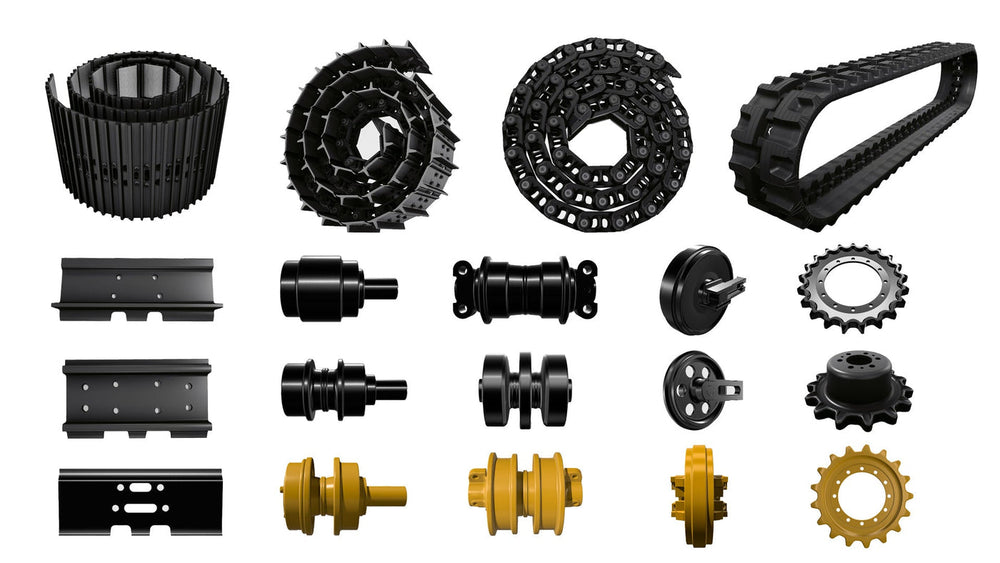
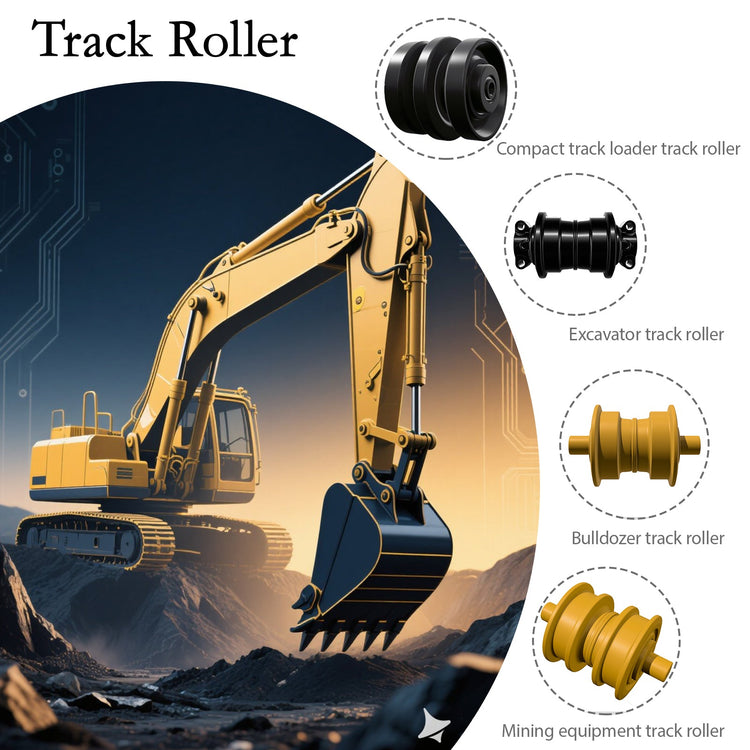
Carrier and track roller size sheets share three fields — shell OD, face width, bore — and diverge on the rest. Track rollers add flange type and bolt pattern for the bottom mounting; carrier rollers add bracket center distance and offset for the top bracket. The shared six-spec rule from the identification guide covers the common fields; the carrier-specific fields are the bracket geometry that bottom rollers do not have.
Size sheet fields: carrier roller vs track roller
| Field | Carrier roller | Track roller |
|---|---|---|
| Shell OD | Yes | Yes |
| Face width | Yes | Yes |
| Bore | Yes | Yes |
| Flange type | Less common | Yes — single, double, center |
| Bolt pattern | Via bracket | Yes — direct mounting |
| Bracket center / offset | Yes — defines fitment | No |
Use the table to read any size sheet: the fields listed tell you which component family you are holding, and the bracket fields confirm a carrier roller before the order.
Will a Cat Carrier Roller Fit a Komatsu?
Only when the five fields match — brand is not a fitment spec. Some Cat and Komatsu machines share carrier roller dimensions across the aftermarket, and some do not; a cross-referenced listing that states both the OEM number and the measurements is the only reliable way to know. When the shell OD, face width, bore, bracket center distance, and offset all match, the brand boundary is irrelevant; when any field differs, the part does not fit regardless of brand.
The practical rule: fitment is five measurements plus a serial range, never a brand name. Send the measurements and let the cross-reference confirm the family — that is the same logic the fitment check applies to every order.
KTSU Expert Views
The worn roller itself is the best fitment document if you measure it before removal. In our fitment work, the cleanest matches come from customers who send the five measurements with the OEM number and a photo of the bracket — we can confirm the shell, the bracket distance, and the offset in one pass. The hardest cases are the ones where the old part is already gone and the order is "a top roller for this model," because four different shells can sit across serial ranges and positions. Measure before removal, photograph the spacer stack, and record the position: that package makes the match a verification instead of a guess. The bracket geometry is the field that separates carrier roller fitment from every other undercarriage part, and it is exactly the field most spec sheets under-record. We list it with every carrier roller for that reason.
- KTSU Application Engineering Team
Conclusion
Measure the old part first; the new part then matches without guesswork. Capture the five fields, photograph the spacer stack, cross-reference the OEM number, and submit the package for confirmation — carrier roller fitment is bracket geometry, and the measurement sheet is the shortcut.
Key Takeaways
- Fitment is five fields: shell OD, face width, bore, bracket center distance, offset.
- Measure the old roller before removal, at clean, unworn reference points.
- Photograph the spacer stack per side — offset is set by the stack.
- Cross-reference the OEM number, then confirm with measurements.
- Brand is not a fitment spec — the five fields decide the match.
Questions to Ask
- Have we recorded all five carrier roller fields for this position?
- Is the spacer stack counted and photographed per side?
- Does the catalog listing state bracket center distance and offset?
- What do we send when the OEM number and the measurements disagree?
- Was the old part measured before removal or after it was already scrapped?
Submit your carrier roller measurements and photos for a guaranteed fitment match, and check the cross-referenced listing against your numbers.
Frequently Asked Questions
What measurements define a carrier roller?
Five: shell outside diameter, face width, bore, bracket center distance, and offset. The bracket fields are what separate carrier roller fitment from bottom roller fitment.
How do I measure bracket spacing?
Clean the bracket faces, then measure the distance between them with calipers or an inside micrometer, including the spacer stack as installed. Record the shim count per side and photograph it before removal.
Will a Cat carrier roller fit a Komatsu?
Only when the five fields match. Some dimensions cross the brand boundary and some do not — the OEM cross-reference plus your measurements is the reliable way to know, never the brand name.
What if my measurements don't match the catalog?
Send both to the supplier. A revision change or a cross-reference error is exactly the case the measurements resolve — the part number starts the match, and the measurements finish it.
Should I measure the old roller before removal?
Yes — the old part on the machine is the best fitment document you have. Measure the five fields, photograph the spacer stack, and keep the numbers with the part number before the roller is scrapped.
More Undercarriage Parts guides
Find the next article for your component, application or buying decision.
Back to Undercarriage Parts