Agricultural Machinery Undercarriage Parts for Tractors and Harvesters
Component selection, fitment and the connections that keep an undercarriage working as a system.
On this page
Agricultural tracked machinery works in a duty cycle that construction never matches: soft field soil, long travel between fields, and the constant goal of low ground pressure to protect the soil. The parts that matter — tracks, rollers, idlers, and the drive end — are sized for that cycle, and the maintenance rhythm follows the season rather than the hour meter. This guide is the agricultural undercarriage hub: the duty profile, the machine-by-machine layout, the components that matter most, and the service and sourcing realities of farm fleets.
Key Facts — Ag Undercarriage at a Glance
Entity: KTSU — agricultural track and undercarriage parts for tractors, harvesters, and sprayers.
Duty: soft soil, long travel, low ground pressure.
Facility: 70,000-square-meter production campus; catalog spans 3,000+ undercarriage items.
Rule: stock the ag parts that fail in the season that matters.
Hub: cross-links the ag rubber-track guide and the seasonal calendar.
The Ag Duty Cycle: Soft Soil, Long Travel, Low Ground Pressure
Ag machines spend their hours in soft soil, travel long distances between fields, and work under the constant requirement to keep ground pressure low. The duty profile is the opposite of a construction machine in some ways — lower impact, higher travel share, and a soil that packs into every component. The wear rate is set by the soil and the season, not by tonnage, and the parts plan follows that rhythm. The agriculture rubber-track guide covers the rubber side of the story; this page is the category hub for the whole undercarriage.
The compaction and traction trade that drives the farm decision is covered in the ag guide; here, the parts and the maintenance rhythm are the subject.
Tractor, Harvester, and Sprayer Track Layouts Compared
The three ag machine families use different track layouts. Tractors run track options under the drive and steering axles; harvesters run full-track systems to keep moving through wet field conditions; sprayers use tracks to protect the soil on repeated passes. The layout differences change the parts list — a harvester's full system carries more components than a tractor's axle tracks — and the fitment follows each machine's spec.
Ag machine track layouts
| Machine | Layout | Priority parts |
|---|---|---|
| Tractor | Axle track options | Drive tracks, rollers |
| Harvester | Full track system | Band, rollers, idlers |
| Sprayer | Track under axles | Band, seals, drive lugs |
Build the parts list from the machine's layout, and the order starts from the right family.
Undercarriage Components That Matter Most on Farms
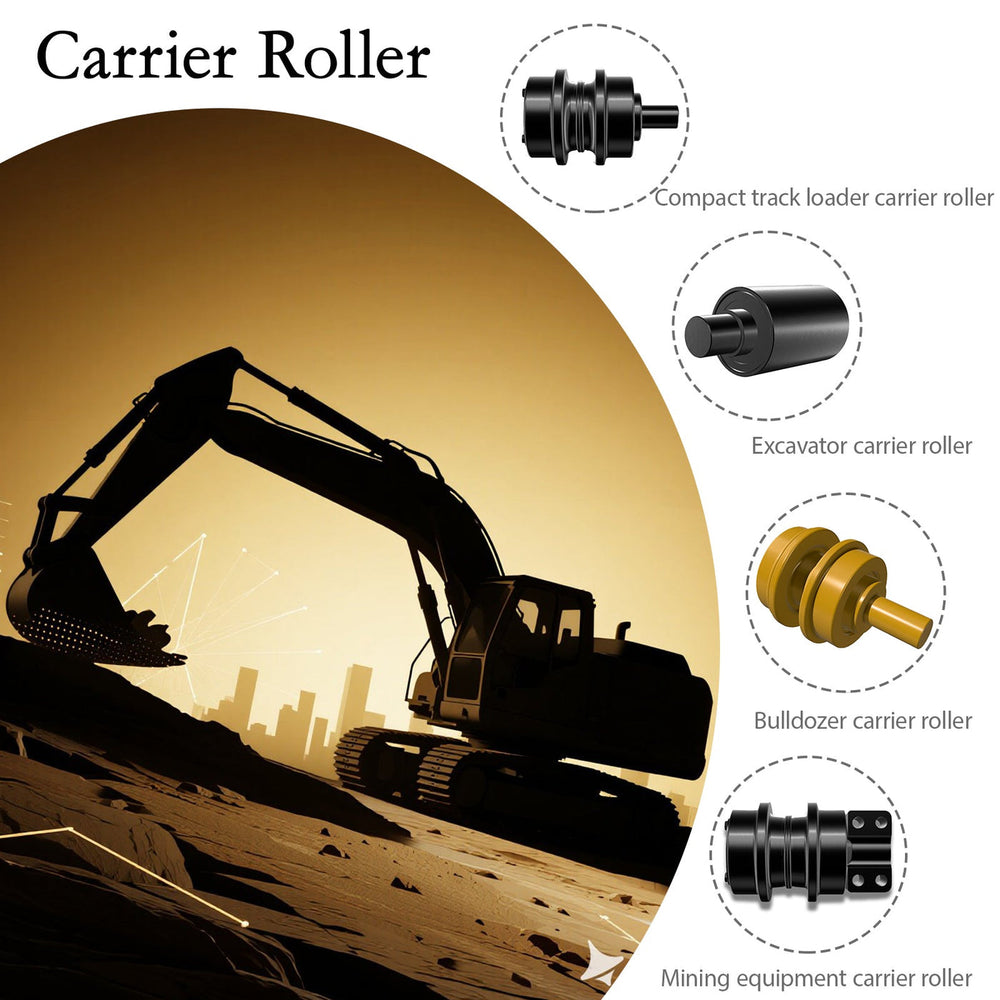
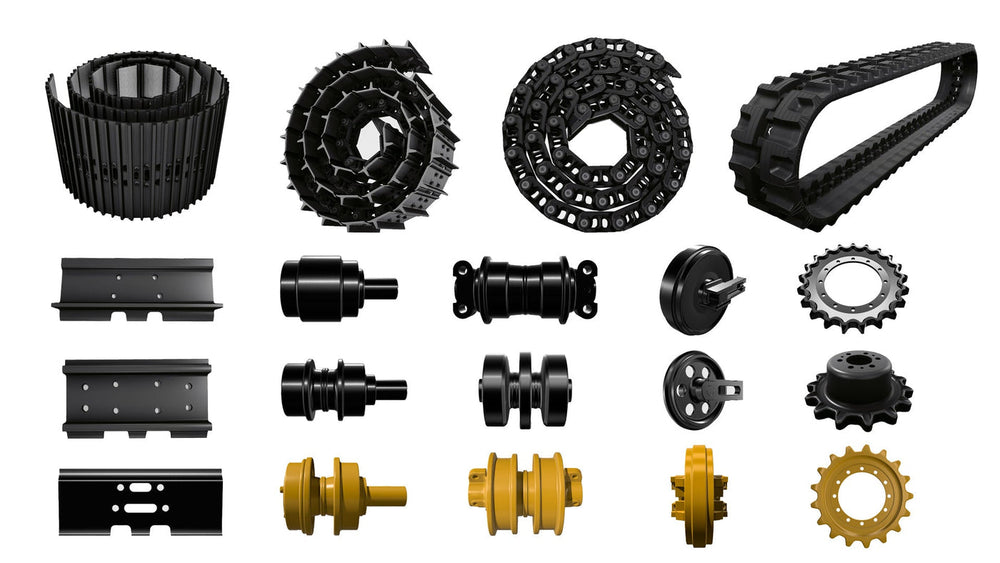
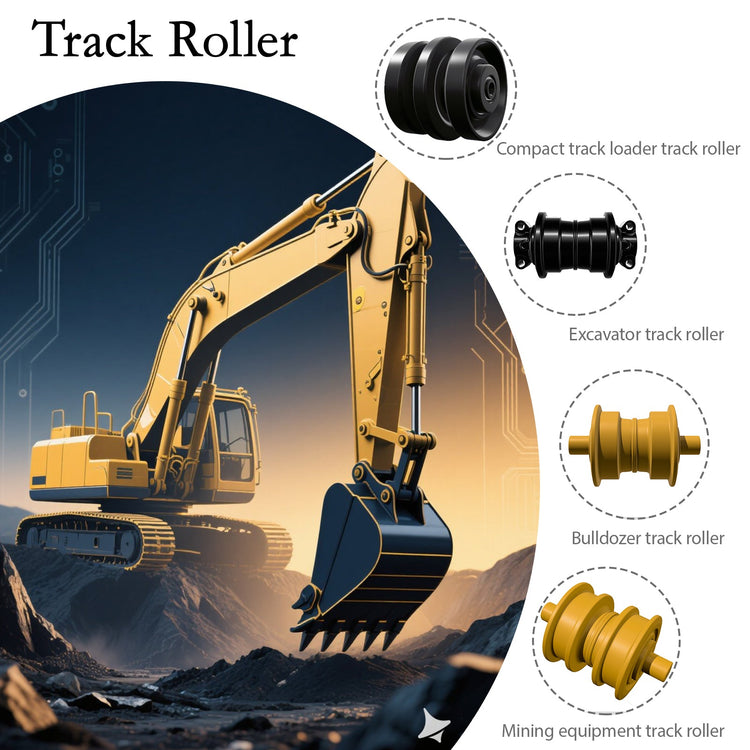
On ag machines the priority components are the tracks, the rollers, and the idlers — the parts that carry the soft-soil duty and the long travel share. The band or chain is the largest line item, the rollers wear from travel, and the idlers hold the tension through the season. The track chain collection on this site covers the steel side, and the rubber-track guides cover the band side; the farm's parts plan follows the machine's layout and the season.
Each component is a family entry point — the machine's serial range and the old part's measurements confirm the exact version, and the seasonal duty note belongs with the order.
What Undercarriage Parts Do Tractors Use?
Tractors with track options run drive tracks, rollers, and the associated idlers, sized to the machine's weight and the soil profile. The parts follow the tractor's brand, model, and serial range, and the track type — rubber band or steel — decides the running gear. The same verification discipline as every crawler applies: model, serial range, part number, and dimensions together. The agriculture rubber-track guide covers the band choice; this hub keeps the whole undercarriage in view.
For harvesters and sprayers, the same fields apply with the layout differences noted in the table above.
Service and Sourcing Realities for Ag Fleets
Ag fleets face two sourcing realities: seasonal use and remote sites. The machines work in bursts — planting and harvest — and the downtime windows are expensive, so parts must be stocked before the season rather than ordered during it. Remote sites add the logistics layer: confirm the fit before the order ships, because a return during harvest is a week of lost field time. The pricing and lead-time guide covers the ordering side; here, the seasonal timing is the point.
Time the ag parts order against the season, and the machine never waits on a part when the fields are ready.
Why Do Ag Machines Need Low Ground Pressure?
Because soil compaction is a yield cost. A machine that concentrates its weight into a narrow footprint compacts the soil, reducing water infiltration and root growth; tracks spread the weight over a longer, wider contact patch, cutting the pressure per unit of soil. Low ground pressure is not a preference on farms — it is a soil-health requirement, and the track width and layout are engineered to it. The ag rubber-track guide covers the compaction math; here, the requirement frames the parts choice.
Set the track width from the soil profile, and the flotation decision becomes a parts decision.
Getting Ag-Specific Part Recommendations
Send the farm machine list with serial ranges, the track types, and the soil and seasonal notes, and the recommendation comes back cross-referenced against each machine's family. The ag-specific fields — soil type, seasonal hours, and travel share — belong with the order, because a band or roller sized for flotation on clay differs from one sized for road travel. The same package per machine turns an ag fleet into one structured order.
For mixed fleets of tractors, harvesters, and sprayers, the machine list is the working format — each layout is matched from its own family.
How Do You Maintain Ag Tracks?
Maintain ag tracks on the seasonal rhythm: check between work bursts rather than weekly, because the machines idle for long stretches. The checks are the standard set — tension, rollers, seals, and the band or chain — concentrated before planting and before harvest, and after any heavy season. The seasonal maintenance calendar in this cluster sets the four-season checkpoints, and the inspection checklist covers the method. Ag tracks wear in bursts, so the inspection cadence follows the bursts.
Between seasons, the storage guide covers the parked-machine care that keeps the undercarriage ready for the next burst.
Brand-specific fitment for the most common ag lines is in the John Deere guide.
KTSU Expert Views
Ag kits match the seasonal repair window when downtime is unaffordable. In our farm fleet support, the plan that works is the one built around the season: parts stocked before planting, checked between bursts, and replaced before harvest. The machines idle for long stretches, then work around the clock — the maintenance rhythm has to match. Match the parts to the machine's layout and the soil, order ahead of the season, and the ag fleet never waits on a track when the fields are ready. Downtime during harvest is not a maintenance event; it is a yield loss.
- KTSU Application Engineering Team
Conclusion
Keep the ag parts on hand that fail in the season that matters. Build the parts list from the machine's layout and the soil, order ahead of the season, and check between bursts — the ag fleet never waits on a track when the fields are ready.
Key Takeaways
- Ag duty — soft soil, long travel, low ground pressure — sets the wear and parts plan.
- Tractors, harvesters, and sprayers use different track layouts with different parts lists.
- Priority components: tracks, rollers, and idlers, matched to the layout and soil.
- Stock before the season; check between work bursts.
- State soil and seasonal notes with the order.
Questions to Ask
- What is the machine's layout — tractor axle tracks, harvester full system, or sprayer under-axle?
- What track type and serial range does each machine carry?
- What soil and seasonal notes belong with the order?
- Is the parts stock planned ahead of planting and harvest?
- Are the between-burst checks on the seasonal calendar?
Tell us your ag fleet for a parts recommendation — send the machine list, serial ranges, and soil notes.
Frequently Asked Questions
What undercarriage parts do tractors use?
Tractors with track options run drive tracks, rollers, and associated idlers, sized to the machine's weight and soil profile. The track type — rubber or steel — decides the running gear.
Why do ag machines need low ground pressure?
Because soil compaction is a yield cost. Tracks spread the machine's weight over a wider contact patch, cutting pressure per unit of soil and protecting the soil structure that yield depends on.
How do I maintain ag tracks?
On the seasonal rhythm: check between work bursts, concentrate the checks before planting and harvest, and follow the four-season calendar in this cluster. Ag tracks wear in bursts, so the cadence follows the bursts.
Are harvester and tractor tracks the same?
No — harvesters run full track systems with more components, while tractors use axle track options. The parts list follows the machine's layout and spec.
When should I order ag undercarriage parts?
Before the season, not during it — stock ahead of planting and harvest so the machine never waits on a part when the fields are ready. Lead times make seasonal ordering the only reliable plan.
References
All sources accessed August 2026; figures are planning references.
More Undercarriage Parts guides
Find the next article for your component, application or buying decision.
Back to Undercarriage Parts