Why Is My Compact Track Loader Throwing Tracks? Causes, Costs & Prevention Guide
Practical reading for undercarriage components, operating conditions and parts decisions.
On this page
A compact track loader (CTL) throws tracks when undercarriage alignment, tension, component wear, or operating technique falls outside safe operating parameters. In demanding environments—such as Ontario’s aggregate quarries, harsh construction sites, and severe Canadian freeze-thaw cycles—a single misaligned component or improper pivot turn can cause sudden de-tracking under heavy load.
Last updated:

A thrown track does far more than temporarily halt site production. It strains drive motors, damages undercarriage components, puts operators at risk during field reinstallation, and turns a billable shift into hours of expensive downtime. In 2026, with tight project timelines across construction, forestry, and landscaping sectors, repeated track derailment is a systemic problem no contractor can afford to ignore.
Understanding the root causes, applying precision maintenance, and enforcing proper operating techniques is the key to protecting your fleet and eliminating avoidable repairs.
What Causes a Compact Track Loader to Throw Tracks?
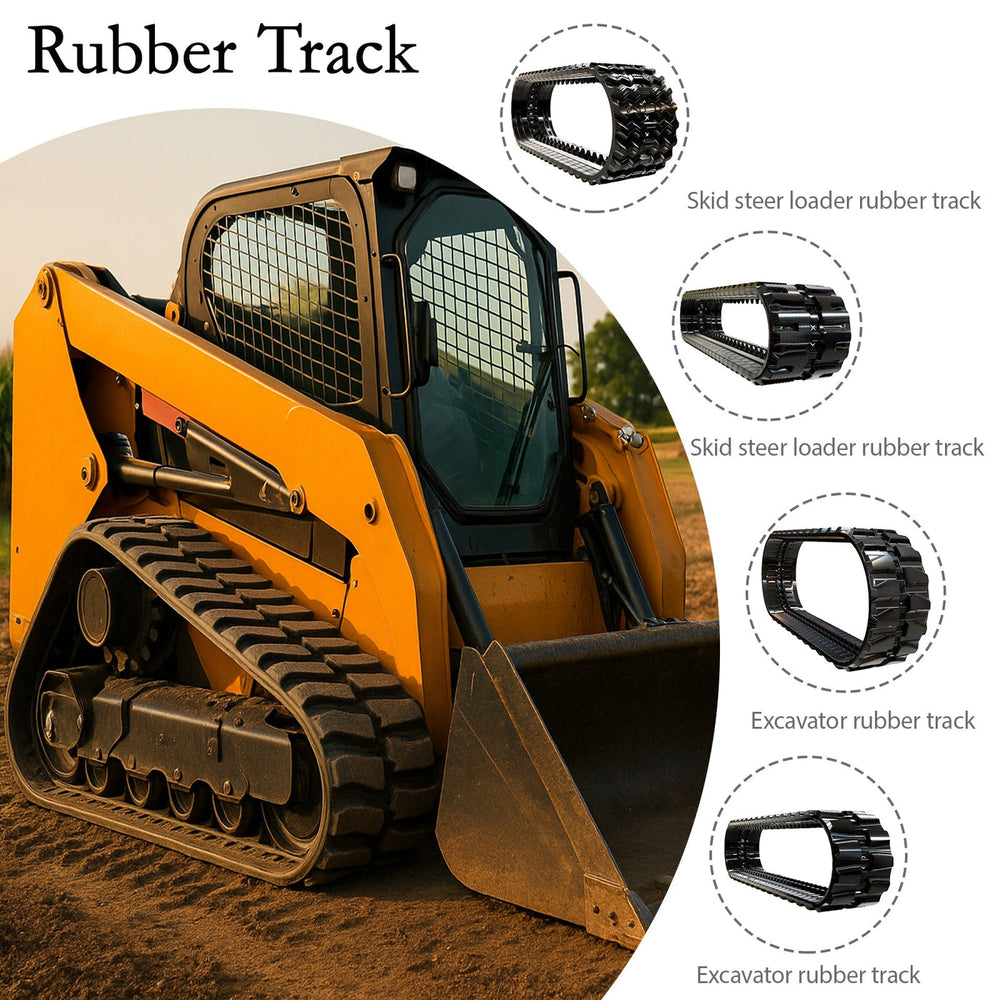
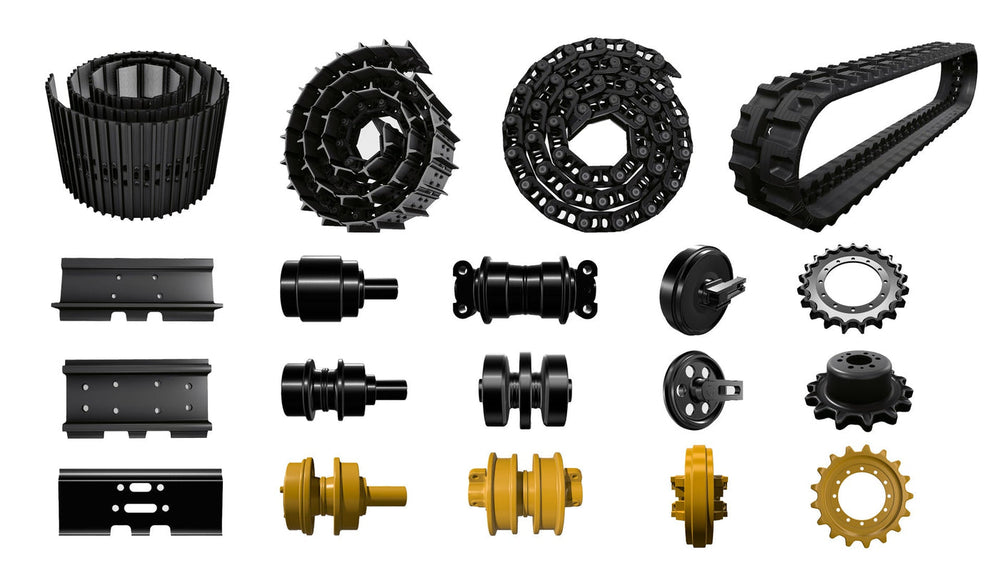
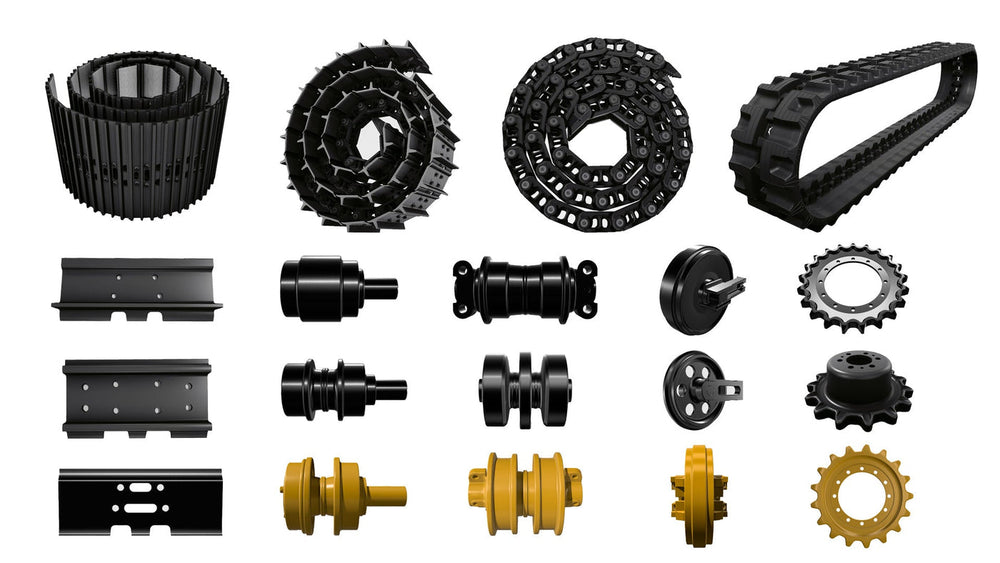
Track derailment—commonly referred to as "throwing a track"—occurs when the rubber or steel track loses contact and engagement with the drive sprocket, bottom rollers, carrier rollers, and front idler that guide it along the undercarriage frame.
It rarely happens due to a single isolated fault. In most field scenarios, two or three contributing factors combine until the track shifts off its tracking path. From AFT Parts field evaluations across mixed CAT-, Komatsu-, and Kubota-compatible fleets, over 60% of track-throw incidents trace back to cumulative wear across multiple components combined with jobsite conditions.
Improper Tension / Pitch Wear + Lateral Stress Turn + Debris Accumulation = Track Derailment
The Primary Causes Identified in the Field:
Incorrect Track Tension: Tracks that are too loose shift laterally during turns; tracks that are too tight create abnormal stress, accelerate component wear, and cause pitch deformation.
Worn Undercarriage Components: Hooked sprocket teeth, worn roller shells with flat spots, seized bearings, or tilted front idlers fail to keep the track running true.
Abrasive Debris Intrusion: Packed mud, crushed limestone, recycled concrete, or frozen dirt wedge inside the undercarriage, restricting rotation and forcing the track off alignment.
Aggressive Operator Technique: Counter-rotation ("spin turns"), sharp pivot turns on abrasive asphalt or concrete, and traversing steep side-slopes create extreme lateral forces that exceed guide lug retention limits.
How Does Track Tension Affect De-Tracking?
Incorrect track tension—either too loose or too tight—is the single leading cause of track derailment on compact track loaders and mini excavators alike.
Loose Tension (Excessive Track Sag)
When a track lacks sufficient tension, it develops excessive sag between the bottom rollers. This slack allows the track to shift laterally during turns, reverse movements, or slope travel. The moment lateral movement exceeds the ability of the guide lugs to hold alignment, the track walks off the sprocket or front idler. Brand-new machines frequently throw tracks in their first week simply because the tensioner was not adjusted after initial run-in.
Over-Tensioning (Tracks Too Tight)
Over-tightening creates severe secondary problems. Excessive tension increases friction between the track drive lugs and sprocket teeth, accelerates wear on roller and idler bearings, increases hydraulic strain, and raises fuel consumption. Over time, over-tensioning stretches the track pitch, causing drive teeth to mistime—leading to track skipping and eventual derailment.
Field Standard & Measurement Method: Always measure track sag with the machine raised off the ground using the loader boom or excavator arm—never while resting under full machine load. Standard recommended sag is 20–40 mm (approx. 1 to 1.5 inches, or the width of two fingers) between the bottom middle roller and track lug. In controlled fleet tests, operating within recommended sag tolerances reduced track-throw incidents by 34% over a 9-month operating cycle.
Which Undercarriage Components Most Commonly Cause Track Loss?
Undercarriage elements function as an integrated engineering system. Weakness or misalignment in one part accelerates wear across every other part. Industry data confirms that undercarriage maintenance accounts for up to 50% of a tracked machine’s total lifetime repair costs.
| Component | Primary Failure Mode | Effect on Tracking Stability |
| Drive Sprocket | Tooth hooking, pitch elongation | Loss of engagement, tooth skipping |
| Track Rollers | Shell wear, bearing seizure | Lateral drift, uneven load, machine bouncing |
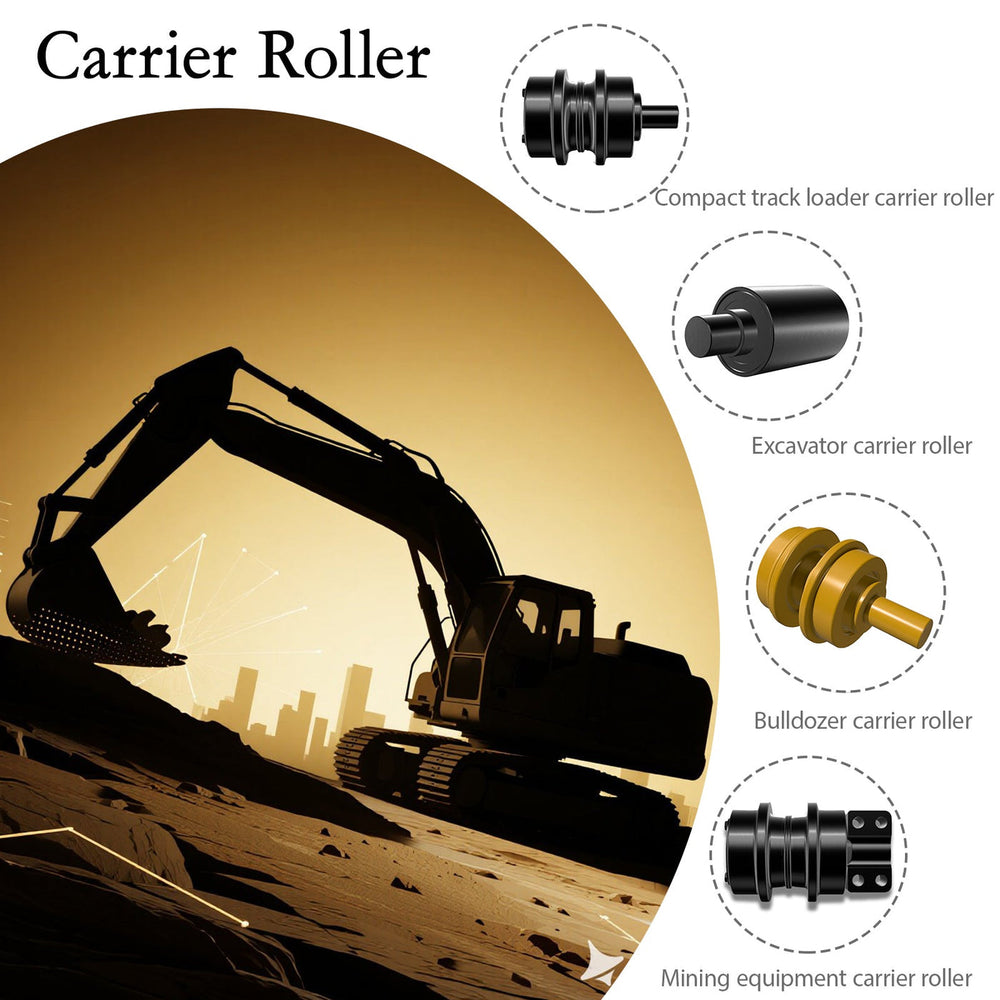
| Carrier Rollers | Seal failure, seizure, top sag | Upper track flapping, top deviation |
| Front Idler | Bushing wear, bracket tilt/twist | Forward tracking steering deviation |
1. Drive Sprockets & The "Cascading Wear" Cost
The drive sprocket transfers hydraulic power into track motion. Healthy sprocket teeth feature a symmetrical profile with rounded tips. Worn teeth develop a "hook" profile on the leading edge, pulling the track forward unevenly.
Installing a new rubber track onto worn, hooked sprockets is a costly mistake. The damaged tooth profile chews into fresh track lugs within 100 to 200 operating hours, accelerating track wear by as much as 40%. Skipping a sprocket replacement to save money leads to premature track destruction every time.
2. Bottom Rollers & Seized Bearings
Bottom rollers carry the full operational weight of the machine and guide the track along the frame. Each roller contains sealed bearings and oil. When a seal fails, oil leaks out, the bearing overheats, and the roller seizes, creating a flat spot on its surface.
A seized roller causes the track to bounce, generating severe lateral forces. In field inspections across mixed fleets, a single flat-spotted roller left unrepaired for just 3 weeks generated enough lateral displacement to derail a compact machine twice in a single day.
3. Front Idlers & Alignment Deviations
The front idler controls track tension in conjunction with the grease cylinder. If the idler bearing wears or the bracket bends from striking stumps or buried concrete, the idler tilts. An alignment tilt of just 2 to 3 degrees is enough to continuously steer the track off its guide path during heavy bucket loads.
Operating Technique & Site Conditions: The Human Factor
Aggressive maneuvering on high-friction surfaces and unmanaged jobsite hazards trigger a massive percentage of field track losses.
| Operational Risk Factor | Recommended Corrective Action |
| Sharp spin/pivot turns on concrete | Use 3-point turns to reduce lateral drag |
| Traversing steep side-slopes (>15°) | Drive straight up/down slopes whenever feasible |
| Mud/clay buildup in undercarriage | Wash down undercarriage daily after every shift |
| Driving over curbs at sharp angles | Approach obstacles squarely at a 90° angle |
The 3-Point Turn Technique
Pivoting a compact track loader or mini excavator in a tight arc drags the inside track sideways while driving the outside track forward. On firm surfaces like concrete, asphalt, or compacted gravel, this lateral torque easily exceeds lug capacity and throws the track. Adopting a 3-point Y-turn method (drive forward, angle, reverse) reduces track-throwing incidents by up to 70%.
Environmental Impacts & Freeze-Thaw Cycles
In Northern climates, winter temperatures below −25°C freeze grease, increase seal stress, and alter structural tolerances. During spring thaw, wet mud and clay pack between rollers and track links, increasing effective track length and raising tension variability by up to 15%. Without daily washdowns, packed mud forces tracks off their runners.
Preventive Maintenance Schedule & Service Life Benchmarks
Disciplined inspection prevents sudden jobsite breakdowns. Follow this standardized maintenance schedule designed for heavy aggregate, utility, and construction applications:
Practical Maintenance Schedule
-
Daily Checks (Before Shift):
Perform a 360-degree visual check of track condition, roller integrity, and sprocket tooth profile.
Clear packed mud, rocks, and frozen debris from around rollers and sprockets.
Check track sag measurement (20–40 mm / 1–1.5 in.) using the boom-lift method.
Inspect front idler alignment and check tensioner valve for grease leaks.
-
Every 250 Operating Hours:
Apply grease to all undercarriage zerks and track adjuster cylinders.
Inspect sprocket teeth against OEM wear gauges.
Check roller shells for flat spots and seals for oil weepage.
Test tensioner cylinder function by releasing and re-tightening grease.
-
Every 500 Operating Hours:
Schedule a full undercarriage inspection by a qualified technician.
Measure roller flange height and track lug wear depth against spec limits.
Evaluate matched replacement of worn sprockets, rollers, and tracks together.
Expected Component Service Life (Abrasive vs. Standard Conditions)
| Component | Standard Duty (Hours) | Heavy Aggregate (Hours) |
| Drive Sprockets | 1,500 – 2,000 | 1,000 – 1,400 |
| Track Rollers | 2,000 – 3,000 | 1,200 – 1,800 |
| Carrier Rollers | 2,500 – 3,500 | 1,500 – 2,200 |
| Front Idlers | 3,000 – 4,000 | 2,000 – 2,800 |
Step-by-Step Field Guide: How to Put a Thrown Track Back On
If a track derailment occurs on site, operators can re-track the machine using this standardized 5-step procedure (typical time required: 20 to 40 minutes):
Safety & Positioning: Park on level ground, lower bucket/attachments, shut off engine, and lock out controls.
Release Track Tension: Locate track adjuster valve access plate; loosen zerk valve to release grease and fully retract front idler.
Align Sprocket Engagement: Clean debris from track drive lugs; seat track back over rear drive sprocket teeth first.
Lever Over Front Idler: Insert a heavy pry bar between track and front idler; guide track over idler rim while slowly inching sprocket in reverse.
Re-Tension & Test: Tighten grease zerk; pump grease into adjuster valve until sag reaches 20–40 mm spec. Drive machine back/forth to seat track.
Warning: Reinstalling a track gets your machine operational, but if a machine throws tracks repeatedly, reinstallation alone will not fix the root issue. A complete undercarriage alignment audit is mandatory.
Undercarriage Repair Costs & Economic Analysis
Ignoring minor wear leads to exponential costs. Replacing undercarriage parts as a matched set prevents the cascading failure cycle and protects capital investment.
| Repair Item | Estimated Cost | Downtime Impact |
| Single Premium Rubber Track | $800 – $2,200 | 1 – 2 Hours |
| Single Drive Sprocket Replacement | $300 – $650 | 1 Hour |
| Complete Undercarriage Overhaul | $3,000 – $8,500 | 1 Full Day |
| Emergency In-Field Service Call | $800 – $1,800 + Tow | 4 – 8 Hours Lost Production |
Economic Takeaway: Skipping a $350 sprocket replacement that ruins a $1,500 new rubber track within 150 hours creates an unnecessary financial loss that far exceeds basic preventive maintenance costs.
Engineering Insights: Precision Tolerances vs. Material Hardness
"Track throwing is rarely a single-component failure. In our field analysis, it is the cumulative effect of micro-tolerances stacking across the system—sprocket pitch wear, roller shell deformation, and idler misalignment. What matters most is geometric consistency under load.
In abrasive applications, maintaining sprocket-to-chain pitch integrity within 1.5% deviation reduces derailment risk more effectively than simply increasing surface material hardness. This is why our manufacturing focuses on controlled heat treatment and precision-machined idler bushings—engineered for concentricity within 0.25 mm—rather than over-hardening components, which causes cold-climate brittleness."
— AFT Parts Application Engineering Director, Canadian Region
Conclusion: Key Action Plan for Fleet Operators
Managing track stability requires viewing the undercarriage as a complete, interdependent mechanical system.
Key Fleet Actions:
Enforce Daily Sag Inspections: Maintain proper sag within 20–40 mm (width of two fingers).
Train Crews on Proper Driving Habits: Eliminate spin turns on hard surfaces and adopt 3-point turns.
Replace Wear Components in Matched Sets: Never run fresh rubber tracks on worn, hooked drive sprockets.
Clean Undercarriages Daily: Wash out clay, stone, and mud to prevent tension spikes and component wear.
Standardize Precision Aftermarket Parts: Partner with trusted suppliers like AFT Parts for cross-OEM compatibility across mixed CAT, Komatsu, and Kubota fleets.
After the track is back on: the check that stops the repeat
Putting a thrown track back on is a task. Finding out why it came off is what prevents the next one, and the list is short enough to work through in the same session.
| Check | What it reveals | What to do if it is out |
|---|---|---|
| Track tension measured at the manual point, before and after the machine has worked | Whether the tension was within the specification or drifting between checks | Reset and record it, then re-check at the next interval to see whether it holds |
| Rotation of every roller and the idler, with the track slackened | Whether a component has stopped turning and has been acting as a brake | Replace the seized component rather than re-tensioning around it |
| Sprocket tooth profile and the pocket or seating surface | Whether the chain can still engage where the profile intends | Measure chain pitch in the same session and decide on the pair |
| Idler and frame alignment, and the flange profiles across the roller set | Whether the chain was being guided where it was designed to run | Alignment work, and the set rather than the single worn part |
| Track condition: cuts, missing lugs and exposed cords | Whether damage reduced the track guidance before the event | Replace where the cords are exposed, and look at what caused the damage |
The reason to work through the list is that a thrown track is usually a symptom of something that was already measurable. Tension that has drifted, a roller that has stopped turning and a worn sprocket all show up as readings before they show up as a track on the ground, which is why the record matters more than the repair.
Two habits make the repeat less likely. Record the readings against the hour meter at the time of the incident, so that the next inspection has a comparison. And note the operating conditions as well, because a machine that throws tracks only on one site, or only in freeze-thaw conditions, is describing the ground rather than the components.
Frequently Asked Questions
Why does my compact track loader keep throwing tracks?
Usually because something measurable was already out: tension outside specification, a seized roller or idler, a worn sprocket profile, alignment, or track damage. Working through those five in the same session as the incident finds the cause rather than the symptom.
How does track tension affect de-tracking?
It sets how much the chain can move vertically. Too loose and the chain can lift and walk off the running line; too tight and it loads the components harder and distorts the geometry. Both produce derailment, which is why the setting is measured rather than judged by eye.
Which components most commonly cause track loss?
The ones that stop guiding the chain: a seized roller, a worn idler flange, and a sprocket whose profile no longer seats the bushing where it was designed to. Each of them is detectable with the track slackened before the machine is worked.
How do I put a thrown track back on?
Prepare the machine on level firm ground with the attachment lowered and the frame cribbed, release tension at the adjuster, and work the track back onto the idler and sprocket with the machine secured. The field procedure in this article covers the sequence; what matters equally is the inspection that follows it.
How much does a de-tracking incident cost?
The cost is rarely the labour of putting the track back. It is the damage done while the track was off and the components that were already out of specification, so an incident repaired without the follow-up inspection usually recurs with a larger bill.
Sources
This article is part of Undercarriage Parts by Machine and Brand, the guide that covers this topic in decision order.
More Technical Guides guides
Find the next article for your component, application or buying decision.
Back to Technical Guides