Why Excavator Sprockets Develop Hooked Teeth
Practical reading for undercarriage components, operating conditions and parts decisions.
On this page
A sprocket tooth rarely turns into a hook because the rim suddenly fails. The damage usually starts earlier inside the track chain, where pin-and-bushing wear gradually increases chain pitch until the bushings no longer enter each sprocket pocket on the intended path.
Last updated:

That is why replacing a visibly hooked excavator sprocket can be disappointing. A new sprocket may look correct at installation, yet an elongated track chain can quickly wear the same hook pattern into its teeth. The real issue is not hardness alone; it is whether the bushing pitch, sprocket tooth pitch, alignment, tension, and working conditions still allow stable engagement under torque.
excavator sprocket hooked teeth causes
Hooked teeth are a contact-pattern failure
Hooked sprocket teeth develop when track bushings no longer seat centrally in the valleys between sprocket teeth. Instead, the bushing contacts and slides along the loaded tooth flank, removing material repeatedly from one side.
In a healthy undercarriage, several bushings share driving load as the chain wraps around the sprocket. Their positions remain predictable because the track pitch is close to its original specification. As the chain pitch increases, the bushings arrive progressively out of phase with the tooth pockets. The result is concentrated pressure, sliding abrasion, and the familiar rearward-curving tooth profile.
This matters because a hooked tooth is not merely an appearance issue. It is evidence that the drive system is transferring load inefficiently and that sprocket, bushing, and chain wear may all accelerate together.
How chain pitch elongation wears the tooth face
Track chain “stretch” is usually accumulated clearance caused by pin-and-bushing wear, not elastic stretching of the steel links. Each worn joint adds a small amount of extra movement; across the full chain, those small changes create a longer effective pitch.
The machine may still appear properly tensioned, which can lead crews to focus on track sag instead of pitch condition. Tension adjustment cannot restore the original center-to-center spacing of the bushings. When the chain reaches the sprocket with excessive pitch, each bushing meets the tooth slightly late and begins loading a higher area of the driving face.
The wear cycle typically follows this sequence:
The bushing reaches the sprocket pocket out of position.
Initial contact occurs high on the driving side of the tooth.
Engine torque forces the bushing to slide toward the intended pocket.
High pressure and abrasive debris remove material from the same tooth flank.
The changing tooth shape makes later bushing engagement even less accurate.
Fine sand, crushed rock, wet clay, and repeated high-torque travel can make this process much faster. Frequent reversing may alter the visible wear pattern, but it does not remove the underlying pitch mismatch.
Normal and hooked tooth geometry
A sound sprocket tooth guides the bushing into the pocket and spreads driving force across a broad contact area. A severely hooked tooth catches the bushing on a narrow, worn flank before it can settle into the correct position.
| Feature | Normal sprocket tooth | Severe hooked sprocket tooth |
|---|---|---|
| Tooth profile | Balanced, broad working faces | Curved, thin, and undercut on the loaded side |
| Bushing contact | Enters close to the tooth-root area | Strikes high on one driving flank |
| Load transfer | Shared across multiple engaged teeth | Concentrated on fewer teeth and smaller areas |
| Tooth tip | Retains original width and shape | Appears pointed, curled, or shark-fin shaped |
| Likely cause | Expected gradual service wear | Chain pitch mismatch, abrasive wear, or alignment issues |
| Operational result | Smooth and consistent drive engagement | Higher vibration, accelerated wear, and potential jumping |
The most obvious field signs are pointed tooth tips, an increasingly concave driving face, polished contact bands above the tooth root, and apparent uneven spacing between tooth pockets. Inspect both sides of the excavator; significantly worse wear on one side may indicate unequal tension, poor alignment, roller problems, or uneven working load.
Why real job conditions accelerate erosion
Severe operating conditions do not automatically create hooked sprocket teeth, but they expose a worn chain-and-sprocket relationship much sooner. High drawbar pull, slope travel, tight turns, rapid direction changes, and frequent travel under load all increase the torque transmitted through the bushing during engagement.
Track tension is often the first item checked because it is visible and easy to adjust. Yet an over-tight track raises undercarriage resistance, while a very loose track can increase impact and instability. Neither adjustment corrects pin-and-bushing wear or returns an elongated chain to its original pitch.
Soil conditions matter as well. Abrasive quartz sand can cut the tooth face, packed mud can interfere with bushing seating, and wet or corrosive environments can worsen surface deterioration. Two excavators with similar operating hours can show very different sprocket wear if their terrain, travel pattern, and loading habits differ.
Why a hardened sprocket rim is not a complete cure
A wear-resistant hardened sprocket rim can slow abrasive tooth erosion, but it cannot make an elongated track chain engage at the correct pitch. This is the common expectation gap behind repeat sprocket failures.
A properly manufactured rim needs a hard wear surface supported by a tough structure underneath. If the hardened layer is too shallow, abrasive service can expose softer material quickly. If heat treatment is poorly controlled, cracking or chipping may become a separate failure risk.
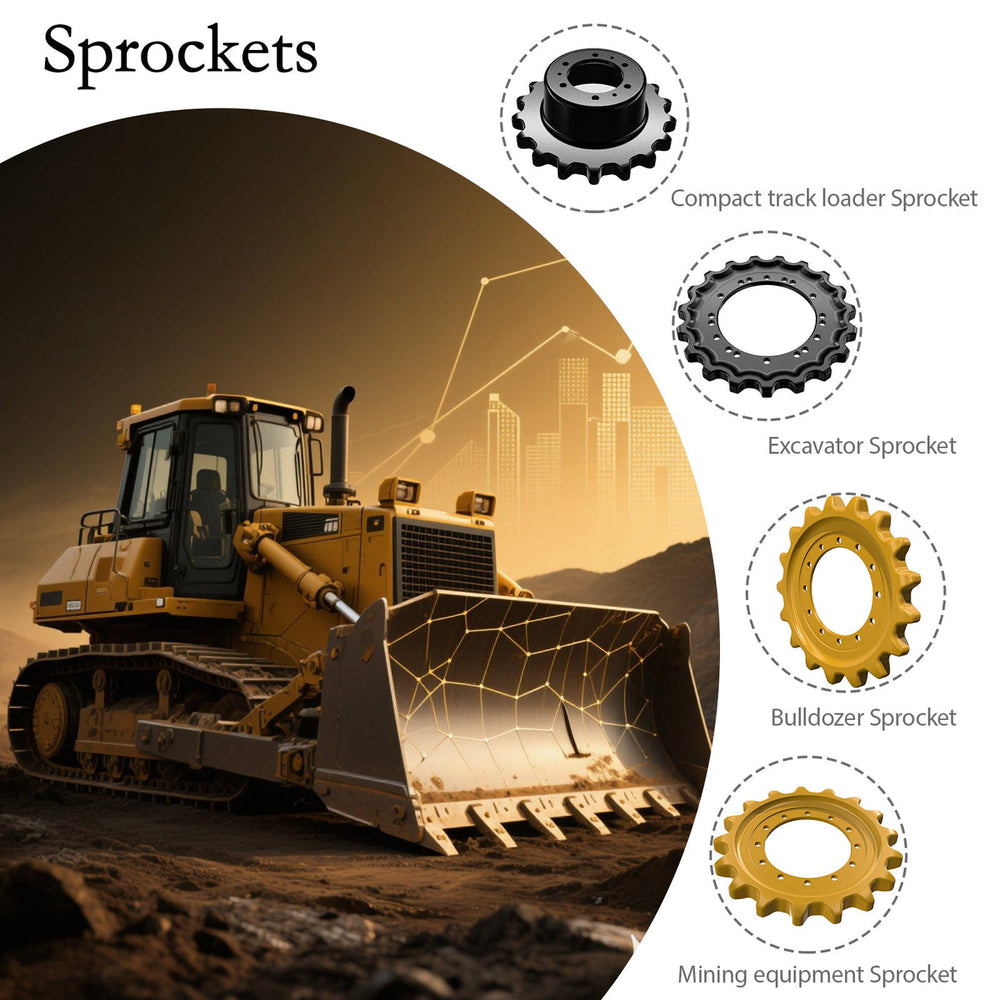
KTSU’s 70,000-square-meter manufacturing facility in Kunshan integrates CAD/CAM development, precision CNC machining, and controlled production processes across more than 3,000 undercarriage component items. In sprocket production, these capabilities are relevant because tooth geometry, fitment, rim hardness, and dimensional consistency must work together.
Even so, hardness should be viewed as protection against wear, not a correction for worn chain pitch. A hardened sprocket installed with an incompatible chain may last longer than a softer alternative, but it will still be subjected to abnormal bushing contact.
Why sprocket-only replacement often fails
Replacing only the sprocket commonly fails when the track chain remains beyond its usable pitch condition. Fresh teeth initially improve engagement, but their unworn shape can make the existing bushing mismatch more aggressive under load.
This does not necessarily mean the replacement sprocket is defective. It often means that the undercarriage was repaired as a single component instead of as a contact system. Common contributors include:
Pin-and-bushing wear that has increased effective chain pitch
Uneven bushing outside-diameter wear
Incorrect or uneven track tension between sides
Sprocket, idler, roller, or track-frame misalignment
Seized or heavily worn rollers affecting the chain path
Packed material, severe abrasion, overload, and high-torque turning
Replacing the chain alone can also be incomplete if the sprocket teeth are already hooked. New bushings then meet damaged tooth flanks and may wear unusually quickly. Once severe hooking is visible, the chain and sprocket should usually be evaluated together, with rollers, idlers, recoil components, and alignment checked before parts are selected.
What the contact pattern is doing as the tooth hooks
A hook is the shape a tooth takes when the chain is no longer meeting it where it was designed to. Following the contact through the change explains the shape.
| Stage | Where the bushing meets the tooth | What it does to the profile |
|---|---|---|
| Pitch at specification | In the pocket, on the flank the profile was designed for | Even wear across the working face |
| Pitch extended slightly | Higher on the flank, so the load moves toward the tip | The tip wears first, which is the beginning of the hook |
| Pitch extended further | The bushing rolls over a face that is no longer shaped to receive it | The tip reduces and the pocket deepens, so the tooth looks like a hook from the side |
| Fully hooked | The chain climbs the profile rather than seating | Jumping under load, and damage to the flanks of neighbouring teeth |
The reason a sprocket-only replacement often fails is that the new profile meets the same extended pitch on the first revolution. The new tooth then wears through the same sequence, from the tip backward, and the operator concludes that the part was poor quality. Measuring the pitch before the order is what distinguishes a sprocket at the end of its life from a drive being consumed by a chain.
Measure the system before selecting parts
The best repair decisions come from measurement rather than appearance. Measure a meaningful span across several track pitches and compare it with the machine manufacturer’s stated wear limit; a single-link check can miss the accumulated pitch error that affects sprocket engagement.
Inspect the sprocket at the same time for tooth thinning, one-sided wear, cracks, contact marks above the tooth root, and signs of bushings riding high. Then check track sag, idler travel, recoil function, roller rotation, and side-to-side alignment.
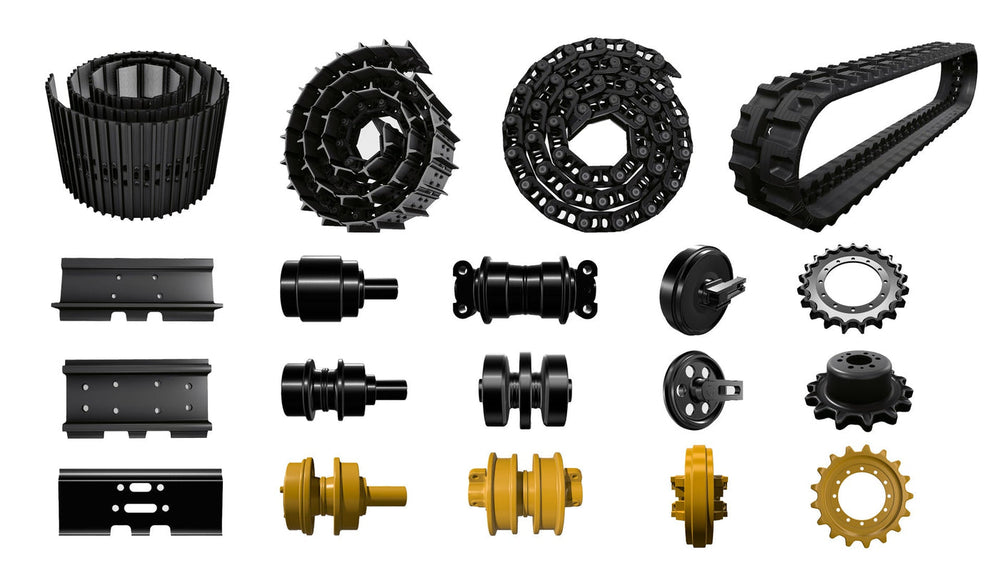
For fleets operating mixed excavator brands, KTSU’s component range across sprockets, track chain assemblies, rollers, and front idlers can help maintenance teams evaluate matched undercarriage configurations rather than treating the drive sprocket as an isolated replacement item. The most useful comparison is not simply original equipment versus aftermarket; it is whether the selected components share compatible geometry, material quality, and service-duty expectations.
KTSU Expert Views
KTSU treats hooked sprocket teeth as a signal to inspect the full undercarriage drive relationship rather than as a simple tooth-hardness problem. Rim hardening matters because it helps resist abrasive cutting, but its service life still depends on whether each track bushing reaches the sprocket pocket in the intended position. When chain pitch has increased, engagement becomes a repeated sliding event under substantial torque.
A practical inspection should begin with the track chain because pitch growth is often less visible than the sprocket damage it causes. Measuring a longer section of chain, comparing both tracks, and inspecting the loaded faces of the teeth can reveal more than checking tooth tips alone. If one side wears faster, roller condition, alignment, track tension, operator travel patterns, and jobsite terrain all deserve attention.
KTSU’s use of precision CNC machining and hardened undercarriage design reflects an important manufacturing principle: tooth profile and material performance must be controlled together. However, even a carefully made sprocket cannot compensate for an already mismatched track chain. The most durable repair usually comes from correcting the engagement system before new components are installed.
Frequently Asked Questions
Why do excavator sprockets develop hooked teeth?
Because the chain pitch has extended, so the bushing meets the tooth higher up the flank than the profile was designed for. The tip wears first, and the shape that results is the hook.
Does a harder sprocket rim prevent hooked teeth?
It slows the wear on the working face and it does not change where the bushing contacts the tooth. Where the pitch has extended, a harder rim wears through the same sequence more slowly.
Why does replacing only the sprocket often fail?
The chain that caused the hook is still on the machine. The new profile meets the same extended pitch and wears from the tip backward in the same way.
What should be measured before choosing sprocket parts?
Tooth thickness at a named point, the pocket profile, and the chain pitch over a run of links. The pair decides the next interval, and measuring one of them describes half the problem.
References
Tsubaki guidance on chain wear, elongation, and sprocket engagement
Caterpillar track-link assembly specifications and track pitch data
KTSU America undercarriage brochures and sprocket information
KTSU Canada sprocket construction and wear-resistance information
This article is part of Sprocket Wear and Replacement: What Ruins a Drive Sprocket, the guide that covers this topic in decision order.
More Technical Guides guides
Find the next article for your component, application or buying decision.
Back to Technical Guides