Which Rubber Tracks Are Best for Agricultural Machinery?
Sizing, machine compatibility and care for rubber track systems in real working conditions.
On this page
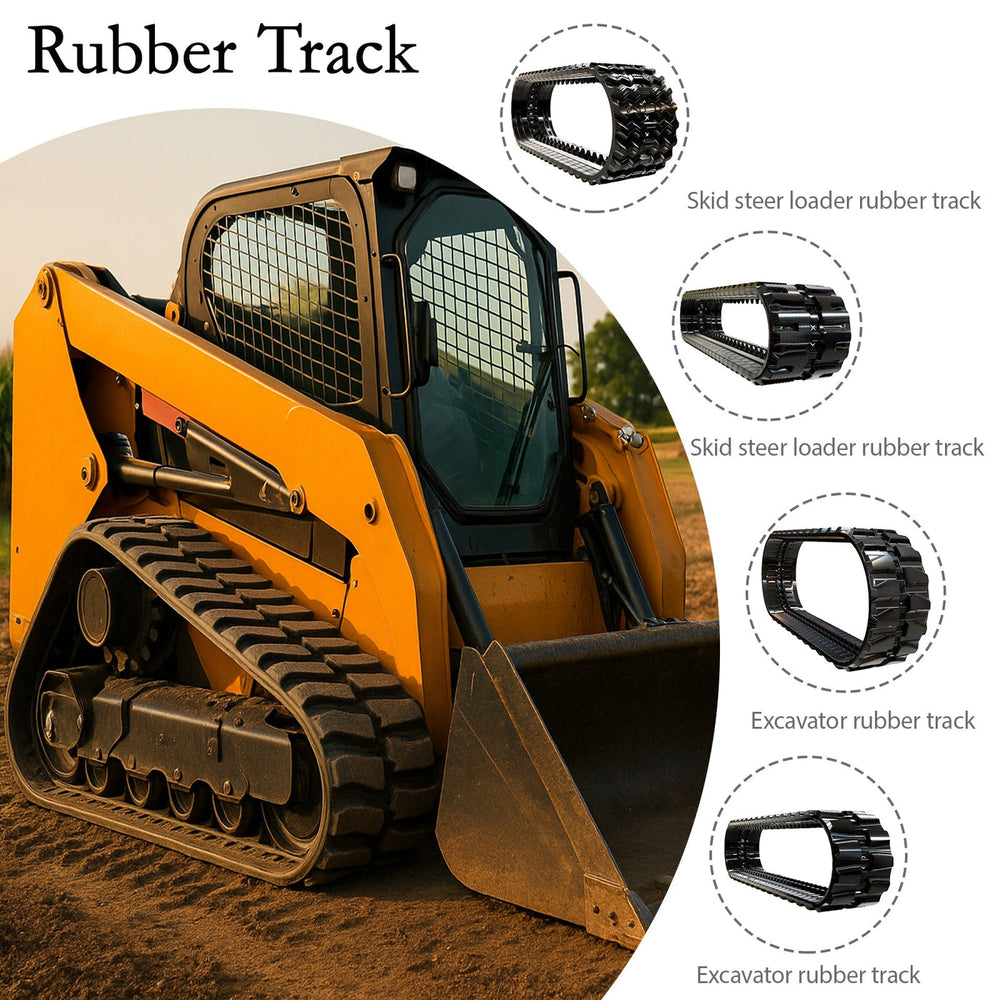
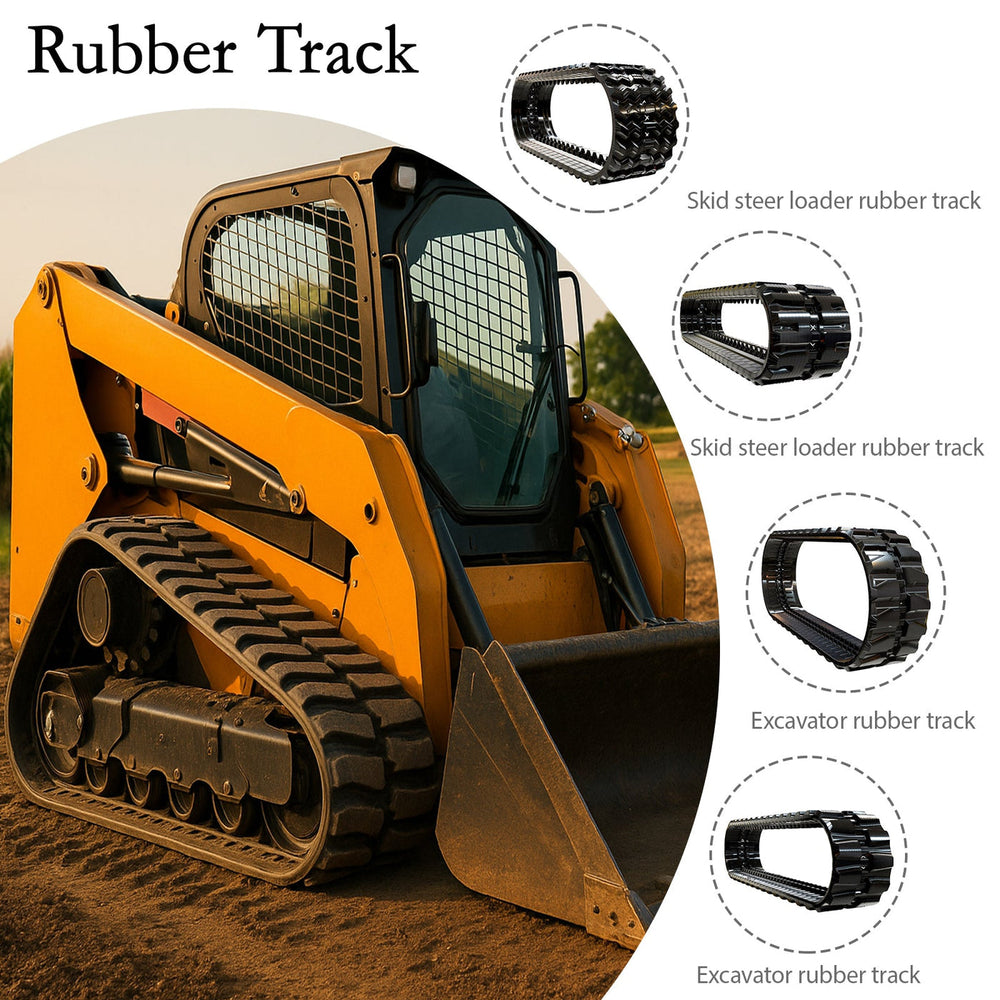
KTSU rubber tracks improve traction, reduce soil compaction, and increase farm productivity. Designed for tractors and harvesters, they combine durable materials with optimized tread patterns to ensure smooth operation and long service life. By protecting soil structure while enhancing machine stability, KTSU tracks help farmers maintain efficiency and achieve better yields in diverse field conditions.
Last updated:

How Do Rubber Tracks Reduce Soil Compaction in Agriculture?
Rubber tracks distribute machinery weight more evenly than tires, reducing pressure on the soil and preventing deep ruts. This protects soil structure and promotes healthier crops. KTSU tracks feature reinforced cores and flexible rubber compounds that adapt to field conditions, offering a balance of traction and minimal soil disturbance.
| Feature | Benefit |
|---|---|
| Wide contact area | Reduces soil pressure |
| Flexible rubber | Adapts to uneven terrain |
| Optimized tread | Prevents slipping and soil damage |
Why Are Traction and Stability Critical for Farm Productivity?
Traction allows machinery to maintain grip on soft or wet fields, minimizing slippage and fuel consumption. Stability ensures safe operation and consistent field work, reducing the risk of tipping and uneven planting. KTSU rubber tracks provide high-friction surfaces and deep lugs to deliver reliable performance under heavy loads.
Which Agricultural Machines Benefit Most from Rubber Tracks?
Tractors, combine harvesters, rice transplanters, and sprayers gain the greatest advantage from rubber tracks. They offer superior flotation on soft or muddy soils and improve field mobility. KTSU tracks are designed to fit these machines precisely, enhancing efficiency and reducing downtime.
How to specify an agricultural track: the six details that decide fit and life
Best is not a property in a brochure. It is the result of six details matching the machine and the work. Get them right and the comparison tables become easy to read. Get one wrong and a premium track performs like a cheap one.
| Detail | Where to find it | What it decides |
|---|---|---|
| Track width | The sidewall marking or the machine specification, checked against the width of the undercarriage | Ground pressure, and whether the track sits correctly on the rollers. |
| Pitch | The machine specification - the drive sprocket fixes it | Whether the track engages the sprocket smoothly or wears it from the first hour. |
| Link count and overall length | Count the links on the track being replaced | The tension range available. A different link count moves where the adjuster sits, and can leave no travel left in one direction. |
| Guide type | The track that comes off the machine - centre guide or edge guide | Derailment resistance under side load, which is what a high-horsepower tractor in a turn actually tests. |
| Tread pattern | Decide from the work, not from the catalogue | Traction in soil, self-cleaning, and how fast the lug wears on road transfer. Taller lugs bite deeper and wear faster on hard surfaces; a flatter pattern protects the surface and lasts longer on the road. |
| Compound and cord construction | Ask the supplier for the specification and the test record, not the marketing name | Stubble and cut resistance, and how the track behaves at transport speed. |
Two things are worth knowing before reading any service-life claim, including the comparison table below.
First, a lifespan figure without a duty cycle is not comparable with anything. The same track can run 3,000-4,000 hours in light use and 1,000-2,000 hours in severe abrasive conditions. A number quoted without saying which of those it was measured under tells you nothing about your farm. Ask what duty cycle the figure came from, and whether the hours are track hours or machine hours.
Second, the cost that decides the purchase is cost per hour, not purchase price. A track that costs 20% more and lasts 40% longer is the cheaper track, and that calculation only works if width, pitch, link count and guide type match, because those set the wear rate in the first place.
What to put in an enquiry
- The machine make, model and serial number.
- Current track width and pitch, taken from the machine specification.
- Link count, counted on the track being replaced.
- Guide type - centre or edge.
- The work the machine does, in one line: paddy field, row crop, road transfer between fields.
- A photograph of the sidewall marking.
Those six items are what a supplier needs in order to give you a part number instead of a suggestion. The agricultural range is listed in the KTSU rubber track collection.
How Do KTSU Rubber Tracks Compare to Competitors?
KTSU tracks use advanced rubber compounds and steel-reinforced cores for exceptional durability. They resist wear, tearing, and cracking, outperforming standard tracks. Tests show KTSU tracks provide 30–40% longer service life, maintain traction under heavy loads, and reduce maintenance frequency.
| Brand | Lifespan | Traction | Soil Compaction |
|---|---|---|---|
| KTSU | 30,000+ hrs | Excellent | Low |
| Competitor A | 20,000 hrs | Good | Medium |
| Competitor B | 18,000 hrs | Average | High |
What Maintenance Practices Extend Rubber Track Lifespan?
Proper maintenance extends track life. Regular inspection for damage, cleaning debris, and adjusting tension prevent premature wear. Storing tracks properly off-season also helps. KTSU provides detailed maintenance instructions to ensure maximum durability and consistent performance.
Who Should Consider Upgrading to KTSU Rubber Tracks?
Farmers operating heavy equipment on soft, wet, or clay-heavy soils benefit most. Those aiming to reduce soil compaction, improve traction, and increase fuel efficiency will see immediate advantages. KTSU tracks are ideal for large-scale farms, mechanized rice paddies, and regions with challenging terrain.
When Is the Best Time to Replace Agricultural Rubber Tracks?
Tracks should be replaced when tread depth is low, cracks appear, or steel reinforcements are exposed. Inspection before planting or after harvest is recommended. Timely replacement with KTSU tracks ensures uninterrupted operations and reduces the risk of equipment downtime.
How Do Rubber Tracks Improve Fuel Efficiency?
Rubber tracks reduce slippage and distribute weight evenly, lowering engine strain and fuel consumption. KTSU tracks minimize rolling resistance while maintaining strong traction, enabling tractors and harvesters to operate more efficiently and reducing operational costs.
Could Rubber Tracks Impact Crop Yields?
Yes, by preserving soil structure and reducing compaction, rubber tracks indirectly support higher yields. Healthy, well-aerated soil allows roots to grow efficiently. KTSU tracks prevent ruts and soil disruption, helping crops thrive and delivering more consistent harvests.
KTSU Expert Views
"At KTSU, we recognize that agricultural machinery must balance performance with soil preservation. Our rubber tracks are engineered to provide maximum durability, traction, and minimal soil disruption. By combining Japanese precision with innovative material design, KTSU delivers reliable solutions that increase productivity while protecting farmland for future seasons."
Conclusion
Selecting the right rubber tracks significantly influences soil health, machine efficiency, and farm productivity. KTSU tracks offer long-lasting durability, superior traction, and reduced soil compaction for tractors and harvesters. By following proper maintenance, monitoring track condition, and choosing tracks suited for your machinery, farmers can achieve smoother operations and better yields. Explore KTSU’s rubber track range to enhance performance today.
FAQs
Are rubber tracks directional?
Most are. Where the sidewall carries a rotation arrow, the lug angle is designed for one direction of travel, and fitting the track backwards accelerates lug wear and reduces self-cleaning. Check the marking on the track you are replacing and put it on the enquiry.
How long do agricultural rubber tracks last?
There is no single figure, because duty cycle dominates. Treat any lifespan quoted without the duty cycle it was measured under as a marketing number. As a reference point, rubber track replacement intervals used elsewhere on this site run from roughly 3,000-4,000 hours in light use down to 1,000-2,000 hours in severe abrasive conditions, and road transfer and abrasive soil shorten them further.
Which agricultural machines benefit most from rubber tracks?
Tractors, combine harvesters, rice transplanters and sprayers gain the most, because they work on soft or wet ground where flotation and low soil disturbance matter more than the cut resistance that steel tracks provide.
Can rubber tracks be fitted to any tractor or harvester?
No, and the deciding detail is not the brand. Width, pitch, link count and guide type have to match the machine, and the drive sprocket fixes the pitch. Confirm all four against the machine specification and against the track being replaced before ordering.
This article is part of Rubber Tracks: Selection, Fitment, Care and Replacement, the guide that covers this topic in decision order.
More Rubber Tracks guides
Find the next article for your component, application or buying decision.
Back to Rubber Tracks