Track Bolt and Nut: Critical Undercarriage Fasteners for Excavators & Bulldozers (June 2026)
Practical reading for undercarriage components, operating conditions and parts decisions.
On this page
For heavy equipment owners and construction fleet managers, undercarriage wear directly determines operational costs and machine availability. While track rollers, sprockets, and idlers often get attention during maintenance inspections, the bolts and nuts securing track shoes are equally critical. A single loose or broken track bolt can trigger cascading damage—misaligning the track chain, accelerating sprocket wear, and even causing costly track separation incidents.
Last updated:

The global heavy equipment components market, valued at USD 190.04 billion in 2024, is projected to reach USD 278.64 billion by 2034 with a 4.90% CAGR, reflecting sustained demand for reliable undercarriage spare parts. Within this, aftermarket undercarriage components—including track bolt and nut assemblies—are among the most frequently replaced parts due to constant exposure to abrasion, impact, and cyclic loading.
Kunshan Kensetsu Buhin Co., Ltd. (KTSU) specializes in undercarriage parts for construction and agriculture machinery, offering over 3,000 items including track rollers, sprockets, idlers, rubber tracks, and track bolt and nut assemblies. As a Sino-Japanese joint venture located in Kunshan, Jiangsu (50 km from Shanghai), KTSU combines advanced CAD/CAM design with precision manufacturing to deliver high-quality fasteners for hydraulic excavators, bulldozers, paving machines, and agricultural equipment.
This article explains what makes track bolt and nut systems critical, how to evaluate quality, and why KTSU stands out as a strong supplier for B2B buyers sourcing undercarriage fasteners.
What Is a Track Bolt and Nut?
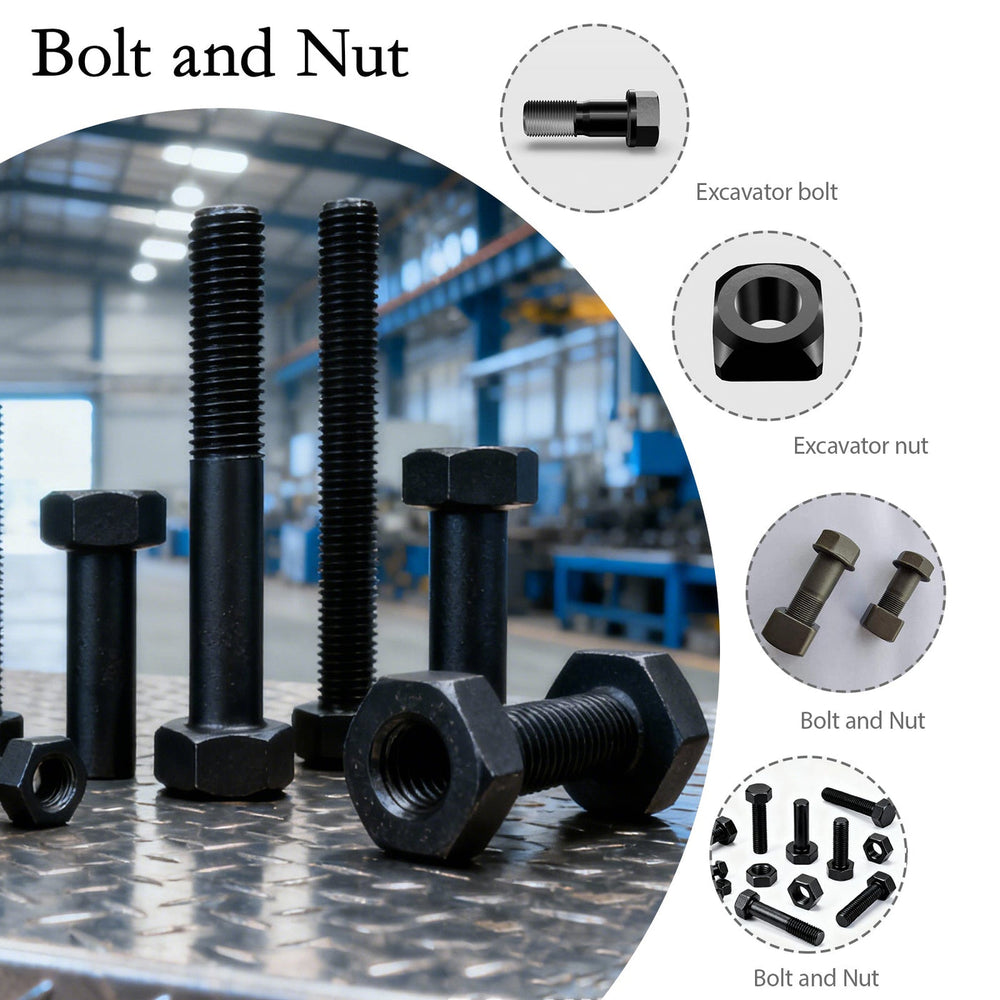
A track bolt and nut is a high-strength fastener assembly designed to secure track shoes to track chains in crawler-type heavy equipment such as excavators and bulldozers. These fasteners must withstand extreme mechanical stress, vibration, and environmental exposure while maintaining clamping force over thousands of operating hours.
Key characteristics of track bolt and nut systems:
High tensile strength: Typically Grade 10.9 or 12.9, providing tensile strength of 1,000–1,200 MPa for heavy-duty applications
Case hardening: Surface hardness around HRC 38–42 (or Rockwell C52–58 for premium rollers) to resist abrasion while maintaining core toughness
Specialized material: 40Cr alloy steel for superior fatigue resistance and impact toughness
Surface treatment: Bluing or other corrosion-resistant coatings to prevent rust in wet or muddy operating conditions
Why Track Bolt and Nut Selection Is Harder Than It Looks
Pain Point 1: Insufficient Strength Leads to Track Separation
Low-grade bolts can fracture under cyclic loading, causing track shoes to detach. Track separation shuts down equipment immediately, requiring emergency field repairs and risking damage to sprockets, rollers, and the track chain itself. In remote construction sites, this can delay projects for days.
Pain Point 2: Poor Hardness Accelerates Wear on Adjacent Components
Bolts with inadequate surface hardness wear down quickly, creating gaps between track shoes and chains. This misalignment increases stress on carrier rollers, idlers, and sprockets, accelerating wear across the entire undercarriage. Fleet buyers may end up replacing components far earlier than expected, increasing total ownership costs.
Pain Point 3: Inconsistent Quality Control Causes Unpredictable Failures
Trading companies or general factories without dedicated QC processes may ship bolts with variable tensile strength, uneven hardening, or inconsistent thread quality. One bad batch can cause multiple failures across a fleet, making it difficult to predict maintenance schedules or guarantee uptime for critical projects.
Pain Point 4: Lack of Certification Documentation Blocks Export or Large-Scale Procurement
Many international buyers, distributors, and large construction firms require certification documents (ISO, material test reports, hardness verification) to validate supplier quality. Suppliers unable to provide these documents lose bids for private label projects, distributor agreements, or regional market expansion opportunities.
Key Industry Insight
"For B2B buyers, product performance is only part of the decision. Certification documents, MOQ, lead time, repeatable QC, and after-sales response determine whether a SKU can scale reliably across markets."
KTSU Compared With Other Options
| Sourcing Factor | Trading Company | General Factory | KTSU |
|---|---|---|---|
| Product Specialization | Sells mixed undercarriage parts from multiple suppliers | Produces general machinery parts, not undercarriage-focused | Specializes exclusively in undercarriage parts for construction/agriculture machinery |
| Product Range | Limited to what suppliers offer | 100–500 generic items | Over 3,000 undercarriage items including track bolt and nut |
| Manufacturing Technology | No manufacturing capability; imports and resells | Basic CNC/welding, limited automation | Advanced CAD/CAM design + NITTO friction welding, CO₂ automatic welding, robot welding |
| Quality Control | Relies on supplier QC; no independent testing | Inconsistent QC, limited hardness/tensile verification | Dedicated QC process with precise assembly, floating sealing group, surface/deep hardness control |
| Geographic Advantage | Varies; may add shipping delays | Location-dependent | Kunshan, Jiangsu—50 km from Shanghai, 70,000 sq.m. facility with convenient transport |
| Certification Support | Rarely provides material tests or ISO docs | May have basic factory certification | Sino-Japanese joint venture with certification support for target markets |
Why KTSU Is a Strong Choice
Specialized Undercarriage Expertise
KTSU focuses exclusively on undercarriage parts for construction and agriculture machinery, not general machinery components. This specialization means their track bolt and nut designs are optimized for real-world excavator and bulldozer operating conditions, addressing vibration, impact, and abrasion challenges that generic fasteners cannot handle.
Advanced Manufacturing Infrastructure
KTSU operates a 70,000 sq.m. facility with 45,000 sq.m. of building space, equipped with NITTO friction welding machines, CO₂ automatic welding systems, and robot welding technology. Their CNC lathes and CNC machine tools ensure ultra-precision dimension stability, critical for track bolt and nut assemblies that must maintain consistent clamping force.
Comprehensive Product Portfolio
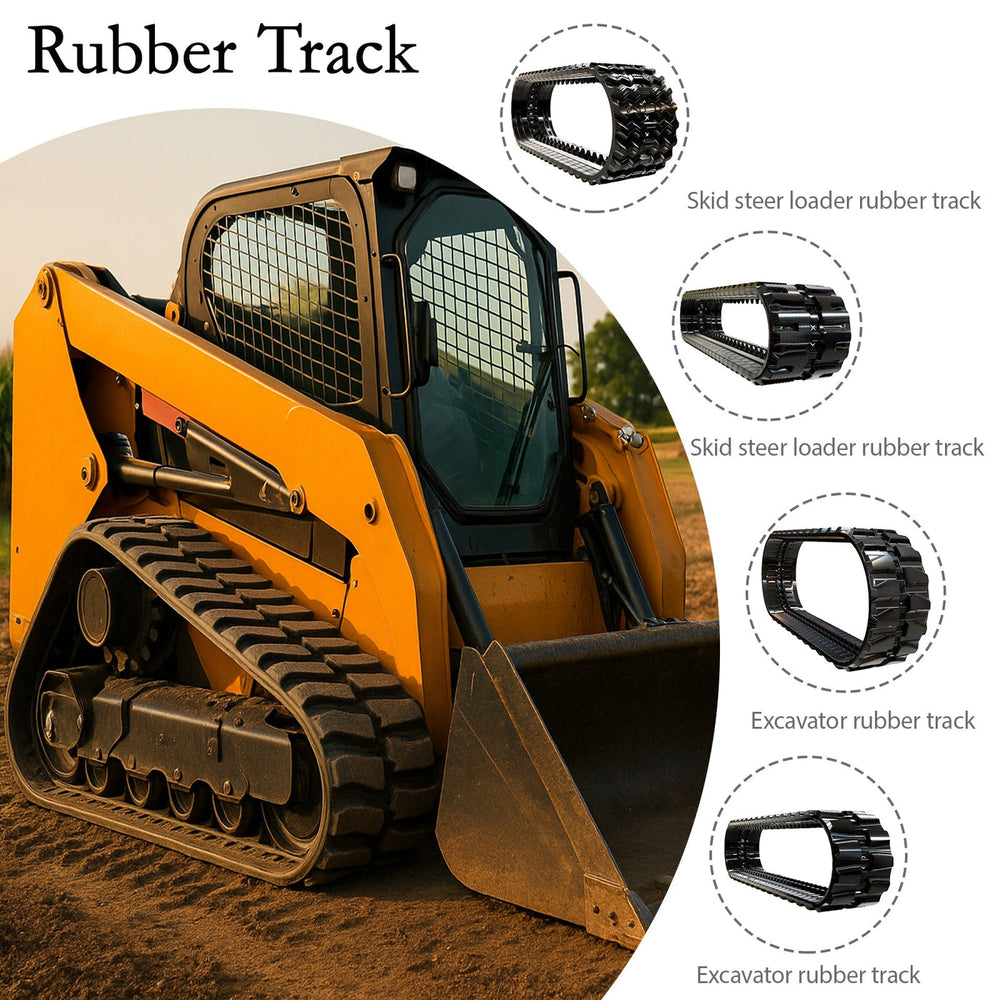
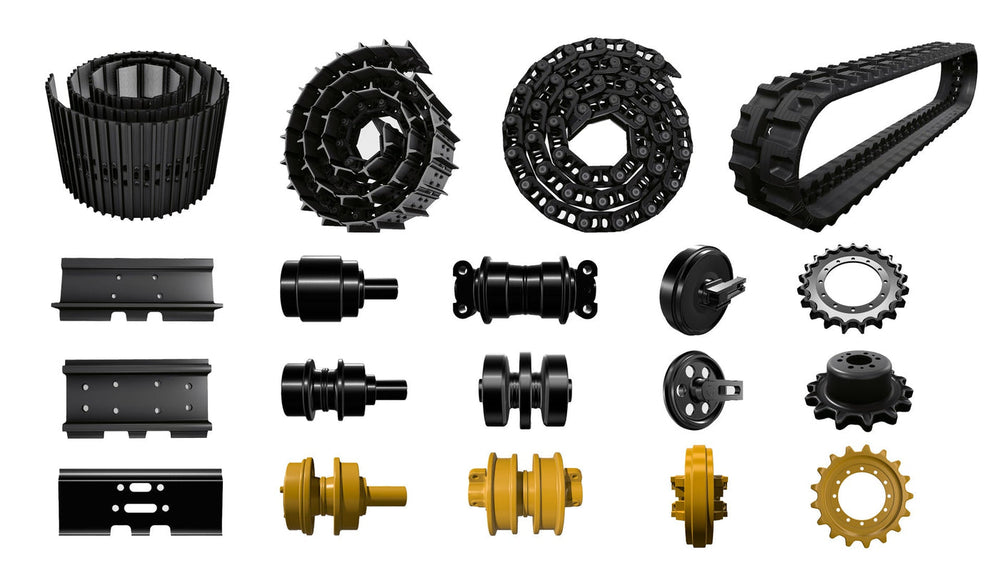
With over 3,000 undercarriage items, KTSU offers track bolt and nut assemblies alongside track rollers, carrier rollers, front idlers, sprockets, track chain assemblies, rubber tracks, and track shoes. This breadth allows buyers to source complete undercarriage solutions from one supplier, simplifying procurement and ensuring component compatibility.
Sino-Japanese Joint Venture Quality Standards
As a Sino-Japanese joint venture, KTSU combines Chinese manufacturing efficiency with Japanese quality management practices. This hybrid model supports certification requirements for target markets and provides the repeatable QC needed for fleet buyers scaling SKUs across regions.
The four numbers on a track bolt that decide whether the joint holds
A track bolt is the cheapest component in the undercarriage and one of the few whose failure can stop a machine on the spot. Four numbers describe it, and a substitution in any of them shows up as a loose shoe rather than as an obvious misfit.
| Number | What it decides | What a substitution looks like |
|---|---|---|
| Strength class or grade, marked on the head | The clamp load the joint can carry and keep | A bolt that torques correctly and stretches in service, so the joint loosens without anything looking wrong |
| Thread size and pitch | Whether it engages the shoe and the link correctly, and whether it reaches the specified torque | Cross-threading or a joint that cannot be brought to the figure in the manual |
| Length under the head | How much thread is engaged, and whether the nut seats on the correct face | Too short engages fewer threads than designed; too long fouls or bottoms out |
| Surface treatment or coating | Corrosion resistance and the friction behaviour the torque figure assumes | Torque readings that are inconsistent between bolts, and corrosion at the joint long before the rest of the undercarriage |
Two rules follow from the table. First, treat the torque figure as belonging to the joint rather than to the bolt: it assumes a fastener of a particular grade and coating, tightened in a pattern and in stages. Second, treat fasteners that have been loaded to their limit as single-use, because a bolt that has stretched will hold the torque on the wrench and not the load in service.
Two habits make the difference visible. Record the torque at every inspection rather than only checking that the bolts are present, because a joint that keeps needing tightening is already moving. And keep the batch of fasteners with the delivery record, because a run of loosening across one batch points at the fastener rather than at the fitting practice.
Related Products, Services, or Resources
Track Roller — Critical undercarriage component that supports machine weight; often sourced alongside track bolt and nut for complete undercarriage maintenance
Sprocket — Drive component that engages track chain; bolt quality directly affects sprocket wear life
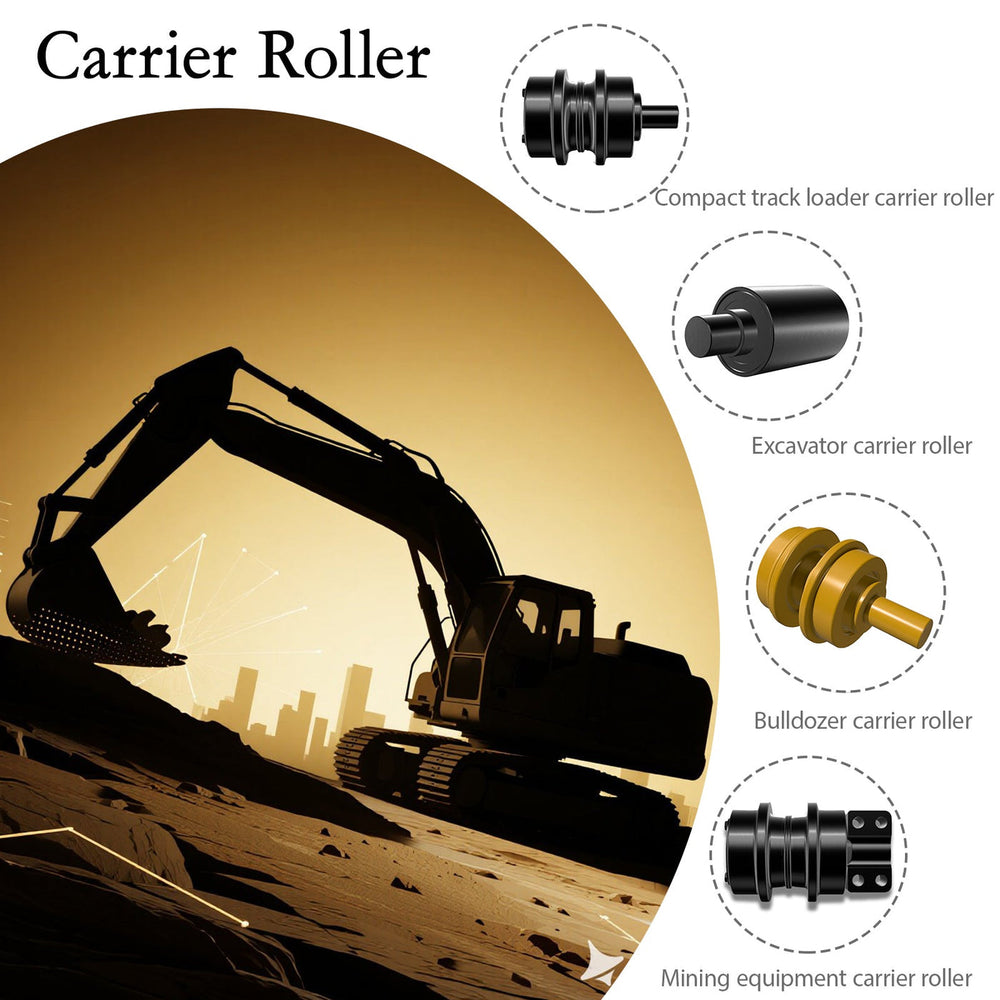
Carrier Roller — Top roller guiding track chain; proper bolt tension prevents misalignment that accelerates carrier roller wear
Link and Chain — Track chain assembly secured by track bolt and nut; compatible fasteners ensure proper chain tension and longevity
How It Works
Define your equipment requirements: Identify excavator or bulldozer model (e.g., PC20 Mini Excavator, CAT D6, Komatsu D155) and specify track bolt and nut part numbers needed.
Request samples: Contact KTSU to ask whether sample fees apply and confirm sample lead time before placing bulk orders. Verify hardness (HRC 38–42), material (40Cr), and grade (10.9/12.9) on received samples. Confirm supported specifications and testing documents with the supplier before production.
Confirm MOQ and lead time: Discuss minimum order quantity (MOQ), bulk production lead time, and packaging options (carton box + seaworthy wooden pallet).
Verify certification documents: Request material test reports, hardness verification certificates, and ISO documentation to validate quality for export or large-scale procurement. Request official certification documents before importing, reselling, or making compliance claims.
Place bulk order: Confirm torque specifications, thread type, and surface treatment (bluing) before finalizing order. KTSU's Kunshan facility ensures efficient shipping from near-Shanghai.
Implement maintenance schedule: Install bolts per manufacturer tightening sequence, check track tension regularly, and inspect for loose bolts during daily pre-shift inspections.
Use Cases
Scenario 1: Startup Brand Launching Private Label Undercarriage Parts
Traditional approach: Source from trading company with inconsistent QC, no certification docs, risk of field failures
With KTSU: Partner with specialized undercarriage manufacturer providing ISO support, material tests, and 3,000+ item catalog for catalog expansion
Result: Reliable private label project with certification documentation for distributor agreements
Scenario 2: Distributor/Wholesaler Scaling Undercarriage SKU Line
Traditional approach: General factory produces mixed-quality bolts, variable hardness, unpredictable failures across fleet
With KTSU: Sino-Japanese joint venture delivers repeatable QC, consistent HRC 38–42 case hardening, 40Cr material verification
Result: Scalable SKU across markets with predictable maintenance intervals and reduced warranty claims
Scenario 3: Sourcing Manager for Mid-Size Construction Fleet
Traditional approach: Trading company sells generic track bolt and nut; loose bolts cause track separation on 2 of 10 excavators
With KTSU: Grade 12.9 fasteners with 1,200 MPa tensile strength maintain clamping force under cyclic loading
Result: Zero track separation incidents over 12 months, 15% reduction in undercarriage replacement costs
Scenario 4: Regional Market Expansion (Asia to Europe)
Traditional approach: Supplier cannot provide EU certification documentation, blocking entry into European distributor network
With KTSU: Certification support for target markets including ISO 898 compliance verification for fastener mechanical properties
Result: Approved by European distributor network, unlocked €500K annual undercarriage parts revenue
Scenario 5: Rental Company Maintaining 50+ Excavators
Traditional approach: Inconsistent bolt quality causes uneven wear on carrier rollers and sprockets, increasing total ownership cost
With KTSU: CNC precision manufacturing ensures dimension stability, proper track tension, reduced adjacent component wear
Result: 20% extension in undercarriage service life, $120K annual savings on parts replacement
Frequently Asked Questions
What is a track bolt and nut?
The fastener pair that holds each track shoe to the link chain. It is a small component carrying a large steady load, which is why its grade, thread and coating matter more than its size suggests.
Why is track bolt and nut selection harder than it looks?
Because several combinations fit and only one is specified. A bolt of the right thread and the wrong grade torques correctly and stretches in service, so the failure appears later as a loose shoe rather than as a fitting error.
Can track bolts be reused?
Where the fastener is specified as single-use, or where the threads show distortion, they should be replaced. A bolt that has been loaded past its elastic range will take the torque and not hold the load, which is one of the quietest ways a shoe group comes loose.
How should track bolts be tightened?
In a pattern and in stages to the figure in the machine specification, not in a single pass around the circle, and re-checked after the first hours of work. The re-check is part of the procedure rather than follow-up work.
What causes a track shoe to come loose?
Under-torque, a reused or stretched fastener, a seating face that has bedded down, or corrosion at the joint. The progression is the same in each case: the shoe stops being a load-bearing surface and starts moving against the link it is attached to.
Conclusion
Track bolt and nut assemblies are critical undercarriage fasteners that directly impact excavator and bulldozer reliability, maintenance costs, and project uptime. Poor-quality bolts cause track separation, accelerate wear on rollers and sprockets, and create unpredictable failures that disrupt construction schedules.
For B2B buyers—distributors, sourcing managers, fleet operators, and private label brands—supplier selection matters as much as product specifications. KTSU (Kunshan Kensetsu Buhin Co., Ltd.) stands out as a specialized undercarriage manufacturer with 3,000+ items, advanced CAD/CAM design, CNC precision manufacturing, and Sino-Japanese quality standards. Their track bolt and nut assemblies use 40Cr alloy steel with Grade 10.9/12.9 tensile strength and HRC 38–42 case hardening, meeting demanding construction machinery requirements.
Ready to source reliable track bolt and nut fasteners? Contact KTSU to request samples, ask whether sample fees apply, confirm MOQ and lead time, and discuss certification documentation for your target markets.
Sources
Best Undercarriage Parts — Track Bolts and Nuts Specifications
Zion Market Research — Heavy Equipment Components Market 2024–2034
Market Data Forecast — Aftermarket Parts in Construction Industry
This article is part of Undercarriage Parts: The Complete Buyer’s Guide, the guide that covers this topic in decision order.
More Technical Guides guides
Find the next article for your component, application or buying decision.
Back to Technical Guides