Steel Tracks vs Rubber Tracks: Which Is Right for Your Machine?
Sizing, machine compatibility and care for rubber track systems in real working conditions.
On this page
Steel tracks and rubber tracks are different systems, not different materials on the same chassis: steel tracks run on a chain, rollers, idler, and sprocket, while a rubber track is a complete band that drives and rolls on its own underframe. The choice is an application decision — ground protection, traction, speed, and cost of ownership all point different directions. This guide compares the two systems at the decision level so the choice fits the machine's actual work.
Key Facts — Steel vs Rubber Tracks at a Glance
Entity: KTSU — steel chain components and rubber track fitment support.
Steel: chain, rollers, idler, sprocket, and shoes on a crawler underframe.
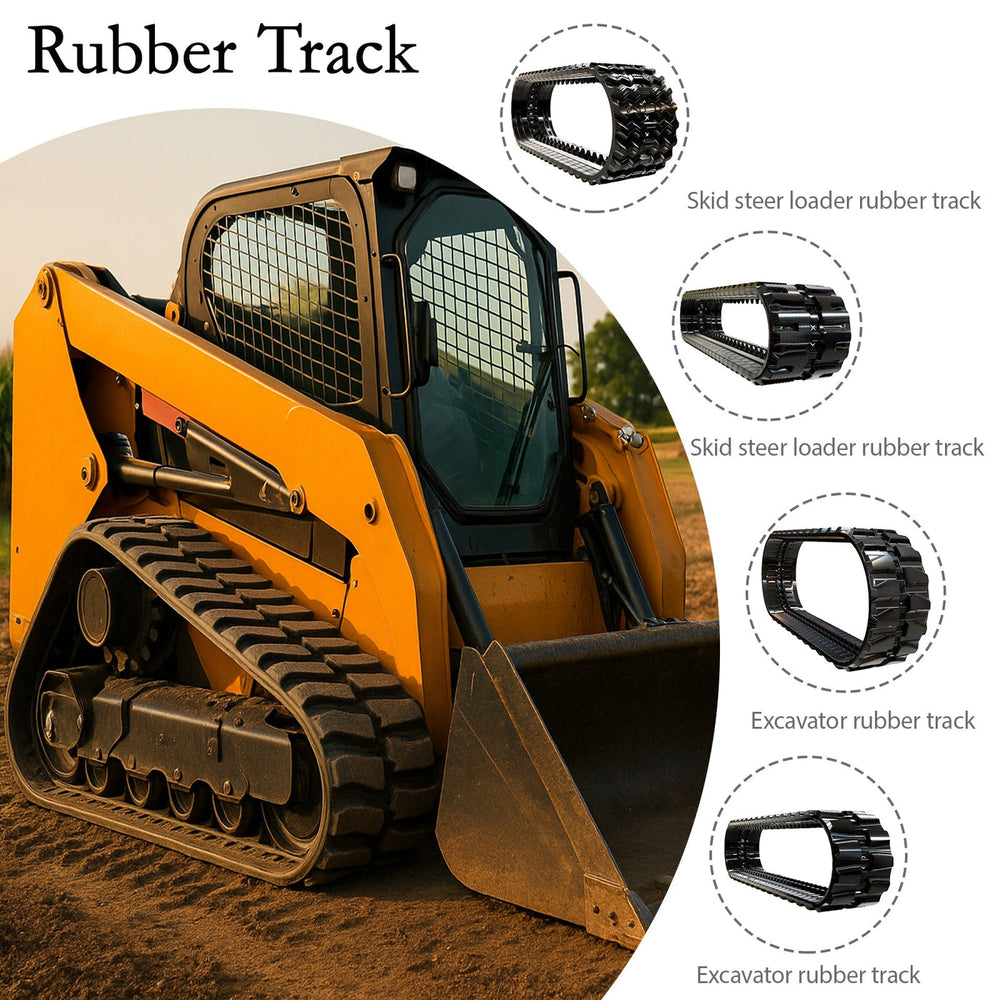
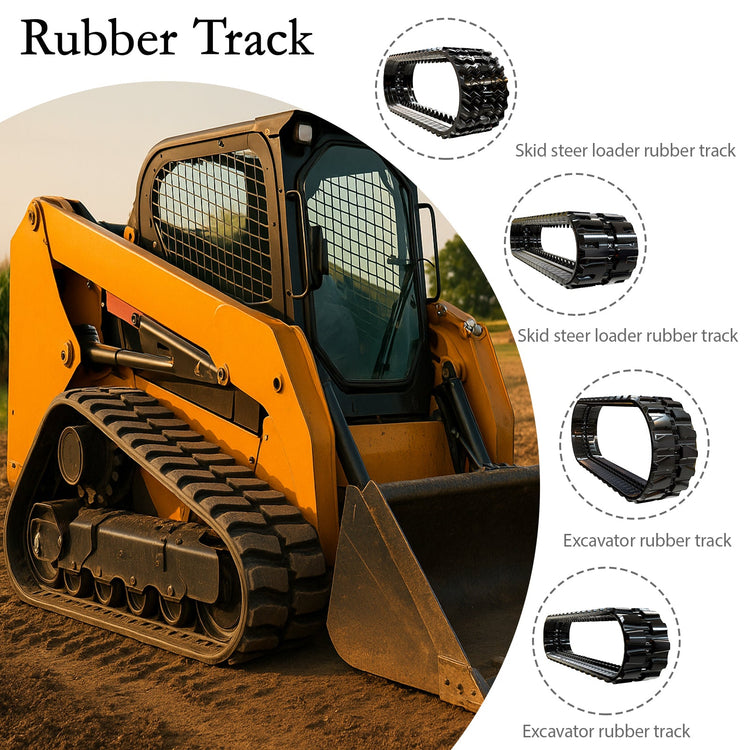
Rubber: one continuous band with its own drive and roller interface.
Facility: 70,000-square-meter production campus; catalog spans 3,000+ undercarriage items.
Rule: choose by application — ground damage, traction, speed, and cost per hour.
How the Two Systems Differ Under the Machine
Under a steel-track machine you will find the full crawler system: a chain of links and bushings, bottom rollers carrying the weight, a front idler and adjuster holding tension, and a drive sprocket at the rear. Under a rubber-track machine the band wraps the same idler, rollers, and sprocket, but the band itself replaces the chain and shoes — there is no separate chain to tension, and the drive engages the band's internal lugs or steel cores.
The system difference drives everything else: steel spreads load through many serviceable parts, while rubber concentrates the running gear into one consumable band. The rubber track sizing guide covers how those bands are measured; the steel side of the system is covered by the chain and sprocket guides in this cluster.
Traction, Ground Pressure, and Surface Protection Compared
Steel wins on bite and durability in mud, rock, and heavy digging; rubber wins on surface protection, noise, and speed on firm ground. Ground pressure is set by width and track length in both systems, but rubber tracks usually run wider contact for the same machine, spreading weight further. The trade is traction: rubber lugs cannot match steel grousers in deep mud or on slopes.
Steel vs rubber track comparison
| Factor | Steel tracks | Rubber tracks |
|---|---|---|
| Traction in mud and rock | Higher — grousers bite | Lower — lugs slip |
| Surface protection | Lower — damages paving | Higher — protects ground |
| Travel speed | Slower | Faster and quieter |
| Ground pressure | Set by shoe width | Wider contact band |
| Durability | Higher on abrasive ground | Lower — rubber wears and cuts |
The table is the working shortcut: where the machine works on protected or sensitive surfaces, rubber; where it digs, pushes, or works in rock, steel.
Cost of Ownership: Tracks, Repair, and Downtime
Steel systems cost more across the full set — chain, rollers, idler, sprocket — but each part is replaceable on its own schedule, and the steel chain can be rebuilt with new pins and bushings. Rubber tracks cost less upfront as one part and more per hour on abrasive duty, because the whole band is replaced at once and rubber wears faster in rock and debris. The comparison belongs in the cost-per-hour model, not on the invoice.
Downtime also differs: a steel roller change is a scheduled service, while a rubber band failure on site is a full track replacement. For machines that work in mixed conditions, the cost decision often lands on the share of surface-sensitive versus abrasive duty.
Are Rubber Tracks Better Than Steel?
Better is an application answer. For urban, paving, rental, and light work on firm ground, rubber tracks protect the surface, run quieter, and travel faster — clearly the better system there. For heavy digging, mud, rock, and slopes, steel tracks bite harder and last longer — clearly better there. A machine that does both, or one that works in abrasive soil, usually stays on steel because the rubber band's wear rate makes it the expensive option per hour.
The decision framework in this article is the same one the suppliers use: list the duty, count the surface-sensitive hours, and let the wear math pick the system. Preference has no place in the calculation.
Matching Track Type to Application: Rental, Paving, Agriculture
Rental fleets favor rubber on compact machines because operators move across sites and surfaces, and a rubber band protects the ground the customer is paying for. Paving and municipal work wants rubber for the same reason. Agriculture favors rubber for soil protection and flotation, with the ag-specific angle covered in the agriculture guide. Heavy construction, mining, and demolition stay on steel because the duty destroys rubber quickly.
The application matrix in the mini excavator guide covers the compact-class decision, and the steel-versus-rubber trade per surface is the same at every machine size — only the cost scale changes.
Can I Switch My Excavator to Rubber Tracks?
Only if the machine's underframe is designed for rubber — the frame, sprocket, idler, and tensioner geometry must match the band's drive lugs and width. Many compact excavators are built for either steel or rubber from the factory, but converting a steel-only machine means changing the sprocket, tensioner, and sometimes the guards — a system conversion, not a part swap. The conversion checklist below is the reality check before any quote.
When the machine supports both, the switch is a change of running gear with the same frame; when it does not, the quote for conversion work surprises most buyers. Ask the question before you fall in love with the rubber option.
Steel-to-Rubber Conversion: What Changes on the Machine
Converting from steel to rubber changes four things: the sprocket (drive lug engagement differs), the tensioner (rubber tracks run on different sag and tension settings), the rollers and idler widths if the band is wider, and the guards that keep the band seated. Each item is a fitment question answered by the machine's spec and serial range — the track tension guide covers the tensioner side, and the sizing guide covers the band measurement.
The conversion also changes the maintenance routine: no chain to clean or elongate, but a rubber band to inspect for cuts and lug wear. Budget the conversion as a system project, and keep the steel running gear until the rubber system is confirmed for the machine.
Do Rubber Tracks Last as Long as Steel?
Rarely, on abrasive duty — rubber wears and cuts faster than steel in rock, debris, and mud, and the whole band is replaced at once when it fails. On firm, clean ground with gentle operation, a rubber band can reach respectable hours, but steel chains with rebuildable joints still hold the life advantage on hard work. The honest answer is duty-dependent, and the cost-per-hour comparison is the only fair way to measure "last as long."
The wear signs article in this cluster covers what shortens rubber life — sharp turns, speed, debris, and over-tension — because the same habits that protect rubber are the ones that close the life gap with steel.
For the electric-machine side of the same choice, the electrification guide covers urban and low-noise requirements.
KTSU Expert Views
Track-type conversion quotes surprise buyers when the frame work is finally priced. In our fitment support, the "I'll just switch to rubber" conversation usually changes after the sprocket, tensioner, and guard costs are added to the machine that was not designed for the band. The systems are genuinely different — steel is a serviceable set of parts, and rubber is one consumable that carries the whole running gear. Choose by the duty first: surface protection, speed, and noise favor rubber; mud, rock, and long abrasive hours favor steel. When the machine supports both, the comparison is per hour, not per part. When it does not, the conversion budget belongs in the decision from day one.
- KTSU Application Engineering Team
Conclusion
Switching track types is a system conversion, not a part swap. Compare traction, surface protection, speed, and cost per hour against the machine's real duty — and confirm the underframe supports the system before any quote.
Key Takeaways
- Steel and rubber are different systems, not different materials on the same chassis.
- Steel wins on mud, rock, and durability; rubber wins on surface protection and speed.
- Compare on cost per hour, including the whole running gear, not the invoice.
- Converting requires sprocket, tensioner, and guard changes — confirm the frame first.
- Match the system to the duty: rental and paving favor rubber, heavy work favors steel.
Questions to Ask
- Does the underframe support both track systems, or only one?
- What share of the machine's hours are on protected or sensitive surfaces?
- What does the cost-per-hour model say for the machine's duty profile?
- Is the sprocket, tensioner, and guard set available for the conversion?
- Does the rubber band's expected life close the gap with steel on this duty?
Get a recommendation for your machine and application — send the model, serial range, and duty profile.
Frequently Asked Questions
Are rubber tracks better than steel?
It depends on the application: rubber protects surfaces, runs quieter, and travels faster, while steel bites harder in mud and rock and lasts longer on abrasive duty. Match the system to the machine's work.
Can I switch my excavator to rubber tracks?
Only if the underframe is designed for rubber — the sprocket, tensioner, and guards must match the band's drive lugs and width. Converting a steel-only machine is a system project, not a part swap.
Do rubber tracks last as long as steel?
On abrasive duty, no — rubber wears and cuts faster, and the whole band is replaced at once. On firm, clean ground with gentle operation, the gap narrows, and the cost-per-hour comparison decides.
What damages rubber tracks most?
Sharp turns, high speed, debris and rock under the band, and over-tension. The same habits that protect rubber are the ones that make it economical against steel.
Which is cheaper to own?
Steel spreads cost across serviceable parts and rebuildable joints; rubber concentrates it in one band replaced at once. The cheaper system depends on the duty — run the cost-per-hour model, not the invoice.
More Rubber Tracks guides
Find the next article for your component, application or buying decision.
Back to Rubber Tracks