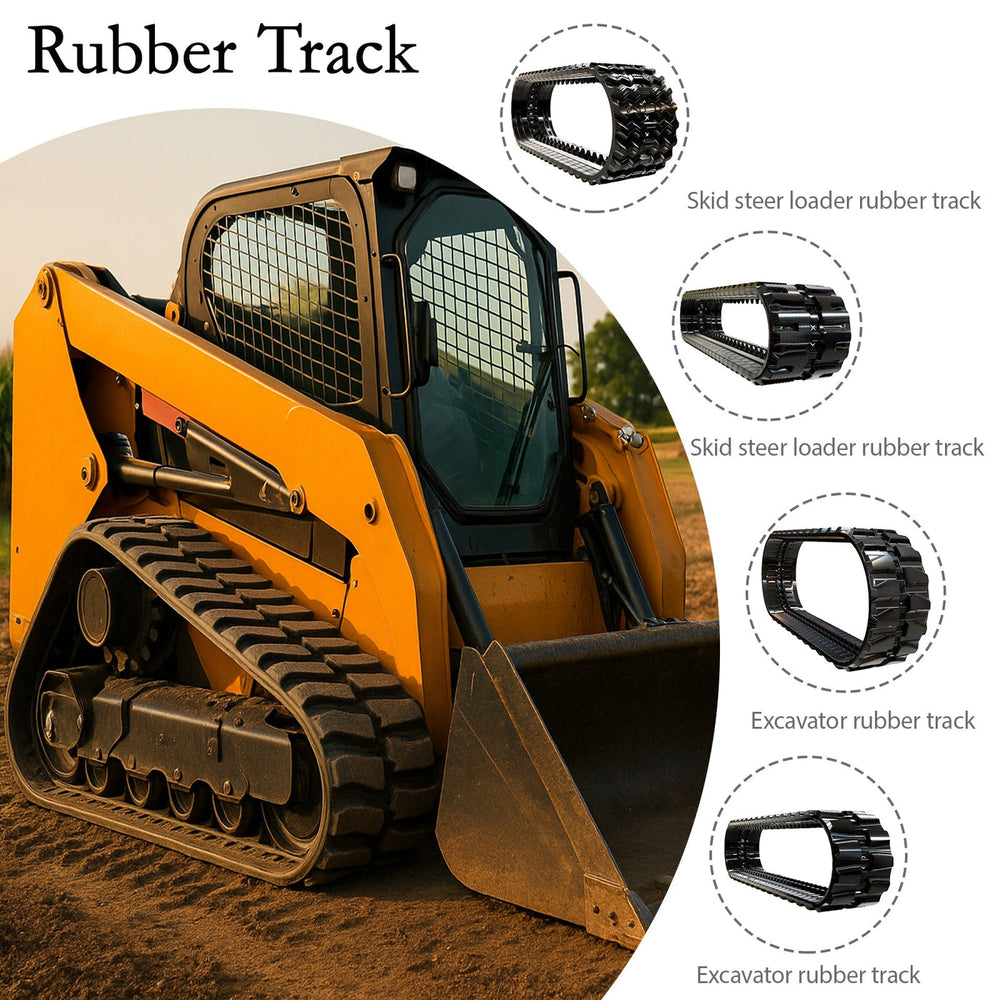
Rubber Tracks for Agricultural Tractors and Harvesters
Sizing, machine compatibility and care for rubber track systems in real working conditions.
On this page
Farms switch to rubber tracks for two reasons at once: less soil compaction and more traction. A tracked machine spreads its weight over a wider contact patch than wheels, which protects the soil structure that yield depends on — and the track's long footprint keeps traction through wet field work that wheels lose. The trade is cost and speed, and the decision belongs to the farming operation's soil and season. This guide covers the ag-specific trade-off, the machines that use tracks, and the sizing and sourcing notes for farm equipment.
Key Facts — Rubber Tracks for Agriculture at a Glance
Entity: KTSU — agricultural rubber track fitment support for harvesters, tractors, and sprayers.
Why farms switch: soil compaction, traction, flotation.
Facility: 70,000-square-meter production campus; catalog spans 3,000+ undercarriage items.
Rule: farm tracks wear in bursts during season — check them between bursts.
Method: match track size by machine, serial, and soil profile.
Why Farmers Are Moving to Rubber Tracks
The move to rubber tracks is a soil-health story as much as a traction story. Wheeled machines concentrate weight into narrow footprints, and repeated passes compact the soil, reducing water infiltration and root growth. Tracks spread the same weight over a longer, wider contact patch, cutting compaction per pass — and the flotation keeps the machine working through wet conditions that wheels cannot handle. For farms on heavy or vulnerable soils, the yield argument often pays for the track system.
The trend shows up across the machinery range: harvesters, sprayers, and tractors are all offered with track options, and the aftermarket is catching up with replacement bands for machines that were not originally tracked. The fitment and sizing notes below are the practical side of that trend.
Soil Compaction, Traction, and Yield: The Ag-Specific Trade-Off
Compaction, traction, and yield trade against cost and speed. Tracks reduce compaction and add traction, which protects yield on sensitive soil; they cost more than wheels, run at lower road speeds, and their bands are a consumable replaced on an interval. The ag-specific table below is the working trade, and the farm decision is per acre, not per part — the same cost-per-hour logic that applies to construction applies to the field, with yield added to the ledger.
Rubber tracks on farm equipment: the ag trade-off
| Factor | What tracks do | Trade |
|---|---|---|
| Soil compaction | Lower per pass | Wider contact, heavier system |
| Traction | Higher in wet field work | Slower road travel |
| Yield protection | Better on sensitive soil | Higher upfront cost |
| Band life | Consumable, interval-based | Replace per season or hours |
The trade is operation-specific: a farm on sandy soil with long road runs may not recover the track cost, while a farm on clay with wet springs often does.
Track Systems on Harvesters, Sprayers, and Tractors
Harvesters use tracks to keep moving through wet field conditions at harvest time, when every lost day costs yield. Sprayers use tracks to protect the soil while making repeated passes through the season. Tractors use track options for tillage and planting, where compaction affects the seedbed. Each machine has its own fitment — width for flotation, pitch for the drive, and the drive lug style for the sprocket — and the sizing system is the same one the construction side uses.
The rubber track sizing guide covers the width-pitch-link measurement that applies to farm bands; the sourcing notes below add the ag-specific questions about soil and season.
Why Use Rubber Tracks on Farm Equipment?
Because they combine two ag priorities at once: less soil compaction and more traction in wet field work. The track's long footprint spreads the machine's weight, protecting soil structure, and its continuous contact keeps pulling where wheels sink and spin. The cost is real — the system costs more and the bands are replaced on an interval — so the answer is a farming-operation decision, not a universal one. Farms on heavy soils with wet springs get the clearest payback; farms on light soils with long road travel may not.
The steel-versus-rubber comparison frames the system logic; on farm equipment the rubber option dominates because the same soil-health case that justifies tracks also rules out steel grousers.
Ag Application Sizing and Sourcing Notes
Size a farm band the same way as any rubber track: width, pitch, and link count measured on the existing band or read from its code, confirmed against the machine's spec and serial range. The ag-specific notes are duty: record the soil type and the seasonal hours with the order, because a band sized for flotation on clay differs from one sized for road travel, and the supplier's recommendation depends on the operation profile. Send the machine list with serial ranges for a fleet match.
Sourcing for farm machines follows the same verification discipline as construction: model, serial, code, and photos. The brand guides in this cluster cover the machine-side references for the major ag brands that also build construction equipment.
Do Tracks Reduce Soil Compaction?
Yes — by spreading the machine's weight over a longer, wider contact patch, tracks reduce the pressure per unit of soil compared with wheels of similar load. The reduction is real but not absolute: heavy machines can still compact soil, and repeated passes in wet conditions cause damage regardless of the running gear. The ag question is whether the track's compaction reduction is worth the cost on the farm's specific soil — which is the per-acre calculation behind the decision.
Measure the effect on the farm, not in theory: compare compaction readings or yield maps between tracked and wheeled passes on the same field, and the local soil answers the question.
Tractor Track Width and Flotation Basics for Farmers
Flotation is the track's footprint math: the machine's weight divided by the contact area. A wider band adds contact area and lowers ground pressure, which helps in soft and wet conditions — and it adds weight and rolling resistance. The right width balances the soil's bearing capacity against the machine's weight and the season's moisture. The same logic that sizes a construction track applies to the tractor, with the field's soil profile replacing the construction site's ground.
The ground-pressure calculation in the track shoe guide explains the math; here, the point is that the farm band's width is a soil decision, and the seasonal moisture profile belongs in the spec.
Which Ag Machines Use Rubber Tracks?
Harvesters, sprayers, and tractors lead the way, with track options offered across all three categories and aftermarket bands available for machines originally delivered on wheels. The fitment follows the machine's drive: combine tracks, sprayer tracks, and tractor tracks all use the width-pitch-link system, with drive lug styles specific to each manufacturer. Send the machine model and serial range with the code from the existing band, and the match is confirmed before the season starts.
Ag bands wear in bursts — heavy use during the season, then idle — so the inspection cadence is seasonal rather than weekly. Check between bursts, photograph the lugs and sidewalls, and order the replacement before the next season's first pass.
The full ag machinery view — layouts, components, and service rhythm — is in the ag machinery guide.
KTSU Expert Views
Farm tracks wear in bursts during season; check them between bursts. In our ag support, the harvester band that fails mid-harvest is the expensive one — the machine stops at the worst possible week, and the replacement is emergency freight plus lost yield. The band's condition between seasons is the planning window: check the lugs after the last pass, photograph the sidewalls, and order before the next season. The soil and seasonal hours belong with the order, because flotation on clay and flotation on sand are different specs. Match the band to the operation, check it between bursts, and the season never waits on a track.
- KTSU Application Engineering Team
Conclusion
Seasonal agriculture needs seasonal track inspections. Match the band to the machine and soil, check it between work bursts, and order the replacement before the next season — the yield case for tracks only works when the machine never waits on a band.
Key Takeaways
- Rubber tracks reduce compaction and add traction — the ag case is soil and yield.
- The trade is cost, speed, and band life; decide per acre, not per part.
- Size by width, pitch, and link count, confirmed against the machine and serial.
- Record soil type and seasonal hours with the order.
- Inspect between season bursts and order the replacement before the next pass.
Questions to Ask
- What are the machine model, serial range, and the existing band's code?
- What soil type and seasonal moisture profile does the farm work?
- Does the band's width give the flotation the soil needs?
- When was the last between-burst inspection, and what did it show?
- Is the replacement ordered before the next season's first pass?
Tell us your machines and soil conditions for an ag track match — send the fleet list and serial ranges.
Frequently Asked Questions
Why use rubber tracks on farm equipment?
Two reasons: less soil compaction from the wider footprint, and more traction in wet field work. The cost is real, so the decision is per acre on the farm's specific soil.
Do tracks reduce soil compaction?
Yes, by spreading weight over a longer, wider contact patch. The reduction is real but not absolute — heavy machines and repeated wet passes can still compact soil.
Which ag machines use rubber tracks?
Harvesters, sprayers, and tractors lead, with track options across all three and aftermarket bands for machines originally delivered on wheels. Fitment follows each machine's drive system.
How long do ag rubber tracks last?
By operation: soil type, seasonal hours, and road travel set the rate. Farm bands wear in bursts during the season, so inspect between bursts and plan the replacement by condition and hours.
Can I retrofit tracks to a wheeled machine?
Only if the machine supports a track option or a verified conversion kit — the frame, drive, and sprocket must support the band. Confirm the conversion with the manufacturer before ordering.
More Rubber Tracks guides
Find the next article for your component, application or buying decision.
Back to Rubber Tracks