Rubber Pads vs Steel Track Shoes
Practical reading for undercarriage components, operating conditions and parts decisions.
On this page
Bolt-on rubber pads turn a steel track shoe into a surface-friendly option without changing the chain: the steel shoe carries the load, and the rubber pad takes the contact with the ground. The hybrid system is the middle path between steel shoes and full rubber tracks — it protects paved surfaces for urban and paving work, but it brings its own trade-offs in traction, heat, and bolt maintenance. This guide covers where pads win, where they lose, and how to keep the hardware that holds them healthy.
Key Facts — Rubber Pads at a Glance
Entity: KTSU — pad and shoe fitment guidance for steel-chain machines.
Hybrid system: steel chain and shoes with bolt-on rubber pads.
Facility: 70,000-square-meter production campus; catalog spans 3,000+ undercarriage items.
Rule: pads live or die by the hardware that holds them.
Note: pad product listings launch with the full product range.
The Hybrid Approach: Steel Chain With Bolt-On Rubber Pads
The hybrid system keeps the machine's steel chain and steel shoes and bolts rubber pads to the shoe's mounting holes. The steel carries the weight and the drive; the rubber takes the contact, protecting paved ground and reducing noise. It is the standard answer for excavators that travel between jobs on roads and work on urban sites, and it changes nothing about the chain, sprocket, or rollers.
The track shoe types guide covers the steel patterns the pads bolt to; here, the system is the subject. The pad's thickness, bolt pattern, and rubber compound are the fitment fields, and the hardware is the part that fails first.
Where Rubber Pads Win (and Where They Lose)
Pads win on ground protection, noise, and legal access: they let a steel-track machine work on paved lots and municipal sites where bare grousers are not allowed. They lose on traction in mud, on heat in heavy loading, and on durability — rubber wears, chunks, and degrades under heat and abrasion faster than steel. The trade is real, and the decision is duty: urban and paving work wants pads; mud, rock, and heavy digging want steel.
Rubber pads vs steel shoes
| Factor | Rubber pads | Steel shoes |
|---|---|---|
| Ground damage | Low — protects paved surfaces | High on sensitive ground |
| Traction in mud | Lower — rubber lacks grouser bite | Higher — grousers dig |
| Heat and abrasion | Degrades faster | Holds up |
| Noise | Quieter | Louder |
The table is the working shortcut: where ground protection is the requirement, pads; where traction and durability are the requirement, steel.
Pad Wear, Replacement, and Bolt Care
Pads wear by thinning and chunking: the rubber loses thickness, edges tear, and the pad stops protecting the surface. The replacement point is when the rubber can no longer absorb the contact or when the pad's mounting holes wear. The bolts are the failure story — a loose pad bolt turns a good pad into scrap and can damage the shoe's threads. Check pad bolts with the inspection routine and retorque per the schedule in this article.
The track chain collection on this site is the chain-side reference for the machine's setup; the pad fitment checklist below covers the pad-side fields.
Can I Add Rubber Pads to Steel Track Shoes?
Yes, when the shoe has the mounting holes and the pad's bolt pattern matches. The pad bolts through the shoe into the same pattern the steel grouser uses — the fitment is pattern, thickness, and bolt count, confirmed against the shoe. Machines converted for urban work usually run pads for the season and steel for the rest, and the swap is a bolt job, not a chain job.
Confirm the pad's bolt spacing against the shoe before ordering — the shoe measurement guide covers the fields. A pad with the wrong pattern is a return, and a pad forced onto mismatched holes is a safety issue.
Rubber Pads vs. Full Rubber Tracks: How to Choose
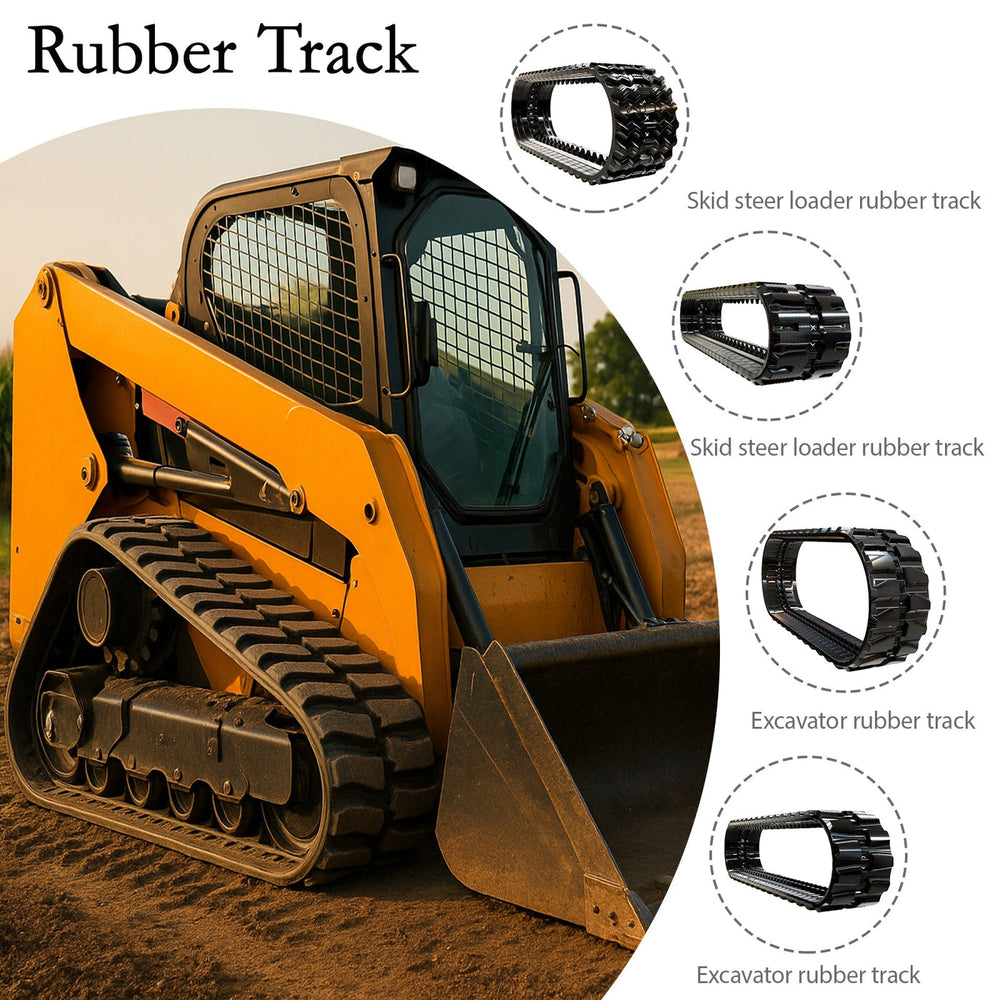
The hybrid keeps the steel chain and its long wear life, adding ground protection only where the pad touches. Bolt-on pads are not the same as a complete rubber track: the pads attach to the steel shoes you already have, while a rubber track replaces the chain, rollers, and shoes as one assembly. A full rubber track is lighter, quieter, and surface-friendly, but it carries a shorter service life and a different cost structure. The choice is how much of the machine's duty is on protected surfaces: occasional road travel and urban work fits the hybrid; full-time surface-sensitive work may justify the full rubber track. The full-rubber-track alternative is covered in the rubber track sizing guide in this cluster.
The full-rubber-track alternative is covered in the rubber track sizing guide in this cluster; here, the point is that the hybrid is the compromise that keeps the steel system's economics.
When Should You Retorque Pad Bolts?
Retorque pad bolts after the first hours of a new pad install, then on a schedule — the manual's interval, or a practical weekly check on machines working in mud and heat. The signs of a loose pad are visible: the pad shifts on the shoe, the bolt heads wear, or the rubber shows movement marks around the holes. A loose bolt works the hole oval and ruins the pad and the shoe's threads.
Torque follows the OEM spec for the pad bolt size and grade, applied in a criss-cross pattern in passes. The fastener-care guide covers the full discipline; here, the rule is that pad maintenance is bolt maintenance.
Sourcing Pads That Fit Your Shoe Pattern
Source pads by the shoe's bolt pattern and the pad's thickness and compound: pattern for fitment, thickness for ground clearance, compound for duty — soft compounds grip and wear faster, harder compounds last longer on firm ground. The fitment checklist is four fields: bolt pattern, hole count, thickness, and pad length. Confirm them against the shoe before ordering, and keep the steel shoes with the pads so the set is matched.
When the machine switches between steel and pads by season, keep the pad set labeled by machine so the swap is a routine bolt job instead of a fitment puzzle.
How Long Do Bolt-On Pads Last?
Pad life depends on duty, compound, and bolt care: urban machines on firm, clean ground get the longest life; machines working in heat, abrasives, or mud wear pads fast. There is no universal hour number — the wear is visible as thinning and chunking, and the replacement point is the loss of surface protection. Track the pad thickness with the inspection routine and compare the wear between positions, because the drive side and the loaded side wear differently.
The shoe wear guide covers the thickness measurement habit; here, the point is that pad life is a visible, measurable field, not a surprise.
The full-rubber-track alternative to pads is compared in the rubber track vs pads guide.
KTSU Expert Views
Loose pad bolts are the fastest way to turn a good pad into scrap. In our wear reviews, the pads that fail early almost always show the same story at the mounting holes: a bolt that worked loose, an oval hole, and a pad that shifted until the rubber tore. The pad itself is a wearing component with a visible life — the bolts are the part that decides whether that life is reached. Retorque after install, check on schedule, and use the correct grade and torque. The hybrid system works because the steel carries the load and the pad takes the contact; the hardware is the joint between the two, and the joint is where the maintenance lives.
- KTSU Application Engineering Team
Conclusion
Pads live or die by the hardware that holds them. Choose pads for ground protection, steel for traction and durability, and treat the bolts as the maintenance center of the hybrid system — retorque after install and check on schedule.
Key Takeaways
- The hybrid keeps the steel chain and adds surface protection at the shoe.
- Pads win on ground protection and noise; steel wins on traction and durability.
- Match the pad's bolt pattern, hole count, thickness, and length to the shoe.
- Retorque pad bolts after install and check them on schedule.
- Choose between pads and full rubber tracks by the share of surface-sensitive duty.
Questions to Ask
- Does the shoe have the mounting holes, and does the pad pattern match?
- What compound fits our duty — soft for grip or hard for life?
- What is the OEM torque for the pad bolt size and grade?
- Is the retorque and pad-thickness check on the schedule?
- Does the machine spend enough surface time to justify pads over a full rubber track?
Find pads for your shoe pattern or request a quote — send the shoe's bolt pattern and machine model for a fitment match.
Frequently Asked Questions
Can I add rubber pads to steel track shoes?
Yes, when the shoe has the mounting holes and the pad's bolt pattern matches. The pad bolts through the shoe, and the swap between steel and pads is a bolt job, not a chain job.
Do rubber pads damage roads?
They are designed not to — the rubber absorbs the contact that steel grousers would tear. They are the standard answer for paved lots and municipal sites, though sharp debris can still mark soft surfaces.
How long do bolt-on pads last?
It depends on duty, compound, and bolt care — urban machines on clean ground get the longest life, and heat, mud, and abrasives wear pads fast. The wear is visible as thinning and chunking.
How often should I retorque pad bolts?
After the first hours of a new install, then on the manual's interval — or weekly on machines working in mud and heat. Loose bolts show as shifting pads and worn holes before the pad fails.
Are pads worth it for urban work?
Usually yes — they give the ground protection and legal access that steel grousers cannot, at a bolt-on cost that keeps the steel chain's economics. The trade is traction in mud and faster pad wear.
More Technical Guides guides
Find the next article for your component, application or buying decision.
Back to Technical Guides