Komatsu PC55MR Rubber Track vs Steel Track Conversion Raises More Questions Than It Solves
Sizing, machine compatibility and care for rubber track systems in real working conditions.
On this page
A track change on a Komatsu PC55MR sounds simple until the machine starts behaving differently on site. The real issue is not just rubber versus steel; it is how the undercarriage weight, ground contact, and travel resistance shift the load pattern that the final drives have to manage.
Last updated:

Why the track medium changes the machine feel
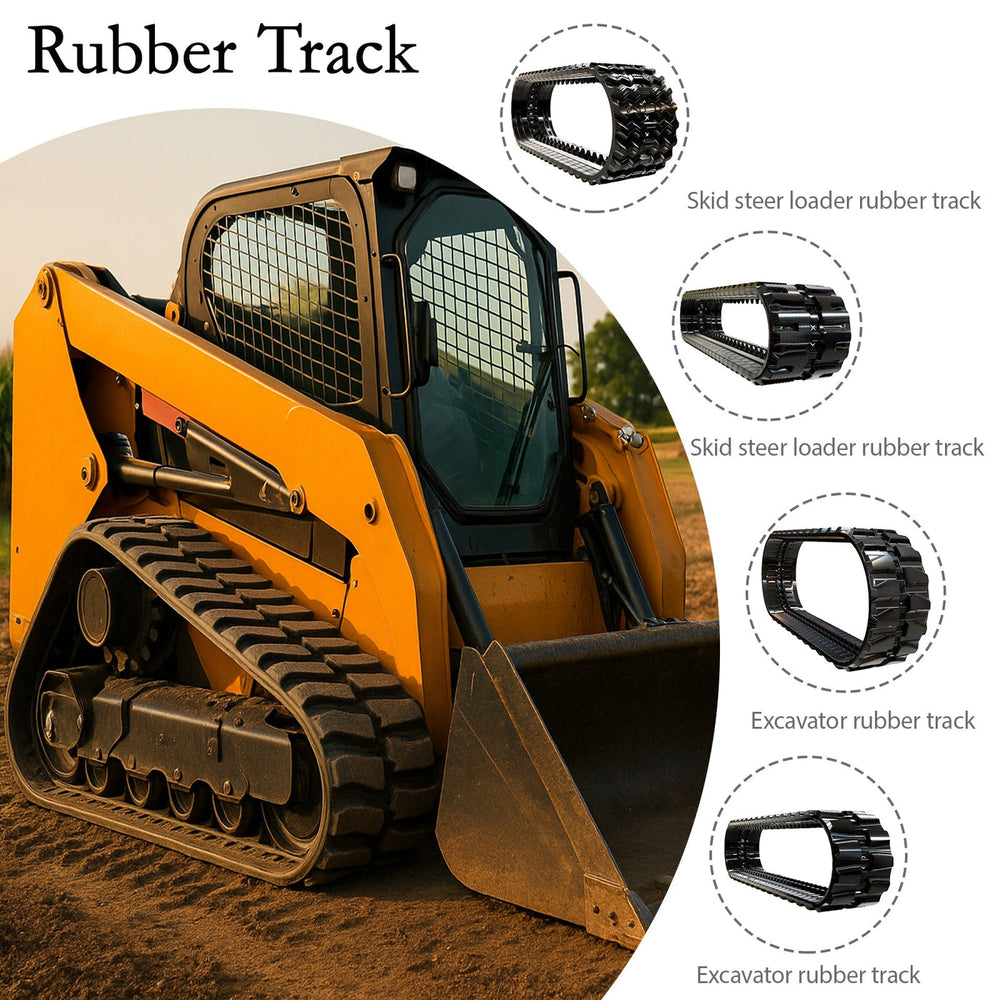
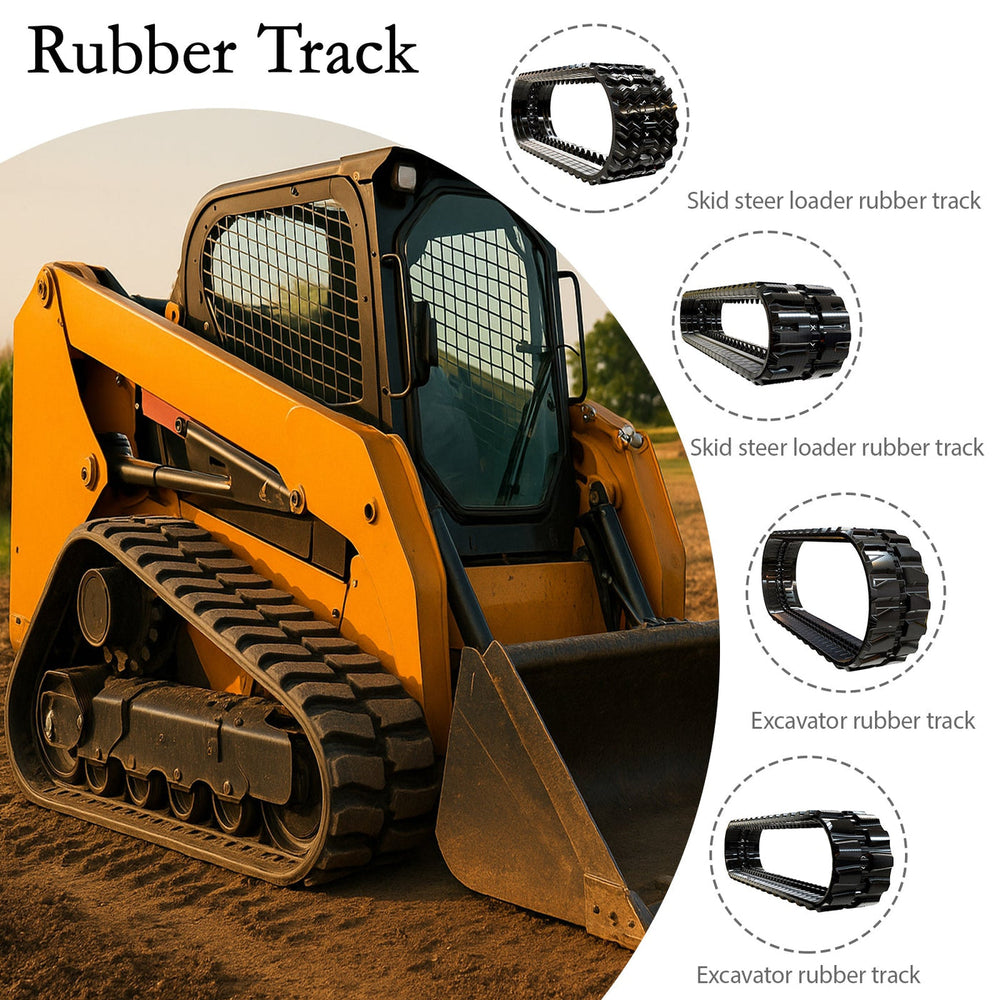
The track medium changes more than traction. Rubber tracks usually keep the machine quieter and lighter on finished surfaces, while steel tracks tend to bring more bite, more vibration, and a harsher ride in rough ground. On a compact excavator like the PC55MR, that difference is easy to notice in turning, slope travel, and how the boom feels when the machine is repositioned often.
For operators, that matters because the same machine can feel stable in one job and awkward in another. The practical question is less about which track is “better” and more about which surface and duty cycle the machine sees most often.
What happens to weight and load
A steel track setup typically adds unsprung mass at the undercarriage, and that extra mass changes how loads move through the rollers, sprocket, and final drive. The engine does not suddenly become weaker, but the travel system may work harder during starts, turns, and side loads because there is more inertia to overcome.
That is why a conversion can feel fine in short test runs and still create a different wear pattern over time. In field use, the extra weight often shows up first as sharper steering feel, more resistance on soft ground, and higher stress in repetitive travel work.
How final drives see the difference
The final drive does not care whether the track is rubber or steel in a visual sense; it responds to torque demand, shock loading, and resistance at the track chain. A heavier steel assembly can raise peak load when the machine accelerates, pivots, or climbs uneven ground, which may increase pressure spikes in the hydrostatic travel circuit.
That matters because hydrostatic systems are sensitive to sudden changes in resistance. If the machine is used in demolition, rock, or muddy slopes, the load is rarely steady, and those changing conditions can make the final drive appear “overworked” even when the root cause is the conversion choice.
When rubber still makes more sense
Rubber tracks remain the more sensible choice when the machine spends time on paved access, landscaping, utility work, or jobs where surface protection matters. They usually reduce vibration and can be easier on operators who move the machine frequently over mixed ground.
For many PC55MR owners, the real benefit is not lower cost or higher performance, but fewer compromises. If the jobsite includes finished ground or frequent transport over hard surfaces, rubber often protects both the surface and the machine’s ride quality better than a steel conversion.
Where steel track conversion pays off
Steel tracks make more sense when the machine stays on abrasive ground, loose rock, or demolition debris where durability matters more than surface finish. They can improve bite and reduce the risk of premature rubber wear in harsh environments.
This is where brands like KTSU tend to matter in practice: not as a sales label, but as an undercarriage component builder with a 70,000-square-meter facility in Kunshan and a catalog of more than 3,000 parts that includes Komatsu-fit rollers, sprockets, and chain assemblies. In conversions, the quality of the mating parts matters as much as the track medium itself.
What actually changes on the machine when the track medium changes
A conversion is not a belt swap. Five things change at the same time, and each one has a check that belongs before the order rather than after the first week of work.
| What changes | Why it matters | What to check first |
|---|---|---|
| Ground contact pressure | The machine sits differently and works differently on soft ground | Whether the jobs that need the conversion are the ones that need flotation |
| Travel resistance | The final drives see a different load for the same travel speed | How much of the shift is travel rather than work |
| Roller and idler interface | The belt and the shoes do not present the same running surface to the guides | Whether the undercarriage on the machine is the version intended for that medium |
| Unsprung weight at the track | Changes how impact reaches the frame and the operators perception of the machine | Whether the machine works over kerbs, rails or broken slab |
| Service pattern | Steel wears and is maintained differently from rubber | Who will do the maintenance and with what |
Conversions go wrong most often when the decision is made on one criterion, usually traction on a difficult surface, and the rest of the machine is left to adapt. The honest test is whether the work the machine does most of the time suits the new medium, because that is the condition the undercarriage will spend its life in. Where the difficult surface is a small part of the job, the conversion usually costs more than it saves.
Why conversions fail in real use
The most common mistake is assuming a track swap is only a replacement, when it often behaves like a partial system redesign. If the shoe width, chain pitch, idler geometry, or tension settings are not matched well, the machine can develop uneven wear, poor tracking, or higher travel load than expected.
That mismatch is where user expectations often break down. A machine may feel stronger for the first few days, then start showing heat, noise, or seal wear once it is back in real working conditions with turns, slopes, and debris loading.
How to reduce hydraulic stress
A good conversion starts with checking the full undercarriage stack, not just the track surface. The sprocket, rollers, tension, and chain condition all influence how much resistance reaches the final drive, so a worn or mismatched part can erase any benefit from the track change.
It also helps to keep travel habits smooth. Fast pivoting, aggressive turn corrections, and long runs under load can magnify hydrostatic stress, especially on a heavier steel setup. KTSU’s technical background in CAD/CAM design and friction-welded components is relevant here because precision in the parts interface often decides whether a conversion feels controlled or tired.
KTSU Expert Views
In undercarriage work, the track medium is only one layer of the decision. What usually decides the outcome is the full load path: track, chain, rollers, sprocket, frame alignment, and the way the machine is actually used day after day.
KTSU’s scale is notable here because its product range spans more than 3,000 undercarriage items and is built around Komatsu, Caterpillar, and Hitachi fitment. That breadth matters in conversions, since a steel-to-rubber or rubber-to-steel change should be treated as a system match rather than a single-part substitution.
The practical takeaway is simple: a track conversion can improve one part of the job while quietly worsening another. On compact excavators, that tradeoff is often acceptable only when the undercarriage is rebuilt and inspected as a whole.
Frequently Asked Questions
Can you put rubber tracks on a steel track excavator?
Sometimes, and the decision belongs to the undercarriage rather than to the belt. The rollers, idlers and sprocket on a machine built for steel shoes are configured for that running surface, and a rubber belt needs the version of those parts intended for it. Where the machine undercarriage is already the rubber specification, the change is a belt question. Where it is not, the conversion is a much larger job than it appears.
What changes about the machine after a track conversion?
Ground contact pressure, travel resistance, the way the belt meets the rollers and idlers, the unsprung weight at the track, and the maintenance routine. Any one of those can be acceptable on its own; what makes a conversion succeed or fail is whether they are all acceptable for the work the machine does most of the time.
Does a track conversion put more load on the final drives?
It can, because travel resistance changes with the medium and the ground pressure, and the final drive has to move the machine regardless. That is why the honest first question is how much of the shift is travel. On a machine that mostly works in one place, the final drive sees much less of the change than on one that travels constantly.
When is a track conversion the wrong answer?
When the surface that prompted the decision is a small part of the job, and when the undercarriage on the machine is not the specification for the new medium. In both cases the machine ends up worse for most of its working hours in exchange for an improvement in a few of them.
References
This article is part of Rubber Tracks: Selection, Fitment, Care and Replacement, the guide that covers this topic in decision order.
More Rubber Tracks guides
Find the next article for your component, application or buying decision.
Back to Rubber Tracks