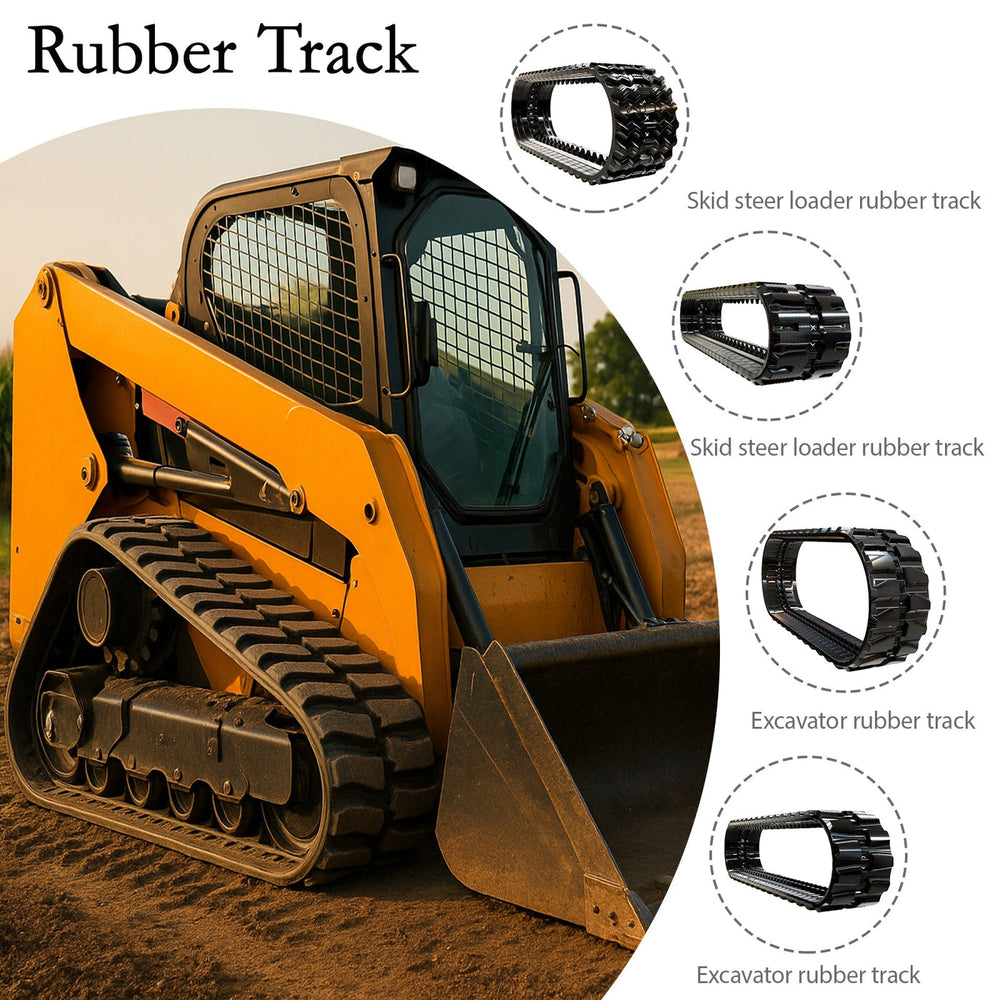
How to Choose Compact Track Loader Rubber Tracks?
Sizing, machine compatibility and care for rubber track systems in real working conditions.
On this page
Compact track loaders work their tracks harder than excavators: continuous rotation, higher travel speeds, and full-width turns put torque and stress into the band that a digging machine rarely produces. That is why CTL rubber tracks need their own fitment and change-schedule logic — width, pitch, and drive lug style must match the loader's drive, and rental machines need an hour-based change plan rather than a wait-for-damage one. This guide covers the CTL-specific fitment fields, performance expectations per surface, and how to schedule changes for rental versus owner fleets.
Key Facts — CTL Rubber Tracks at a Glance
Entity: KTSU — CTL track fitment support for Bobcat T-series and similar loaders.
Fitment: width, pitch, and drive lug style.
Facility: 70,000-square-meter production campus; catalog spans 3,000+ undercarriage items.
Rule: rental CTLs need a change schedule based on hours, not on visible damage.
Examples: Bobcat T550 and T-series roller and sprocket references.
Why CTL Tracks Face Different Stresses Than Excavator Tracks
A CTL rotates continuously to work in tight spaces, travels at loader speeds between tasks, and turns by counter-rotating the tracks — all of which load the band with torque and side forces that an excavator's slow digging motion does not produce. The result is faster lug and sidewall wear, and a drive end that works harder to transfer the loader's power. The band is the running gear's most stressed component on a CTL, not a light-duty accessory.
That is why the same size logic as an excavator track is not enough: the fitment must also confirm the drive lug pattern and the loader's sprocket engagement, because the two are matched as a drive system.
Fitment Essentials: Width, Pitch, and Drive Lug Style
Three fields define a CTL track: width, pitch, and drive lug style. Width must match the loader's frame and flotation design; pitch must match the sprocket's drive spacing; and the drive lug style — the internal pattern the sprocket engages — must match the loader's sprocket. The measurement method is the same width-pitch-links system covered in the rubber track sizing guide; the drive lug style is the CTL-specific field that the sizing article does not cover.
CTL rubber track fitment fields
| Field | What it is | What it matches |
|---|---|---|
| Width | Band width across the machine | Frame and flotation design |
| Pitch | Spacing between drive lugs | Sprocket drive spacing |
| Drive lug style | Internal engagement pattern | Loader sprocket |
| Link count | Band length around the loop | Loader wheelbase |
The drive lug style is the field buyers miss: two CTL bands can share width and pitch and differ in the internal pattern, and the wrong style will not engage the sprocket. Confirm it with the loader's spec before ordering.
Performance Expectations in Mud, Snow, and on Concrete
On concrete, a CTL band wears its lugs and sidewalls from turning — the primary wear mode for loader work. In mud, traction drops as the lugs fill, and the band spins instead of biting. In snow, the band's performance depends on lug depth and compound; a worn band that was marginal in mud becomes a traction problem in snow. Each surface has a different wear expectation, and the change schedule should follow the dominant surface, not the calendar.
The performance notes here are the CTL-specific version of the general steel-versus-rubber trade in the comparison guide; for a loader, the question is rarely steel versus rubber and almost always which rubber band and when to change it.
Are CTL Tracks the Same as Excavator Tracks?
No. CTL tracks are built for continuous torque, higher speeds, and full-width turns, so they use heavier drive lug patterns and different compounds than excavator bands on similar machines. The sizing system is the same, but the fitment and duty are not — an excavator band fitted to a CTL would wear at the drive end and fail early. Order by the loader's spec, never by "it looks like the same size."
The Bobcat T-series loader on this site is a good example of the CTL family: the loader's roller and sprocket references travel together with the track spec, so the drive system is confirmed as a set.
Choosing CTL Tracks for Rental vs. Owner Fleets
Rental machines wear bands unpredictably because operators differ — a rental CTL can see gentle operation one week and abusive turning the next. The rental answer is an hour-based change schedule with the band changed before visible damage, because a field failure on rent is downtime, a replacement band, and a lost day of revenue. Owner fleets can run to visible wear because the operator knows the machine and the wear history is consistent.
The Bobcat 7228629 track roller and the Bobcat 7165109 sprocket on this site are the loader-side references that belong in the same order as the band — the drive system is specified together, and the rental change schedule is planned against it.
Why Do Rubber CTL Tracks Wear Fast?
Because the duty is hard on them: continuous rotation grinds the band against the ground, loader speeds hammer it over debris, and counter-rotation twists the sidewalls. The wear is not a defect — it is the CTL's operating profile reporting through the band. The control levers are operator habits and the change schedule: wider turns, moderate speed, and an hour-based plan for rental machines. The wear-signs guide in this cluster details the failure modes; here, the point is that the pace is set by the loader's duty.
Track the band's hours per machine and compare the wear across the fleet — the loader that wears bands fastest is usually the one with the busiest rental rotation, and it deserves the earliest change interval.
CTL Track Wear Indicators by Hour Range
Hour ranges for CTL bands are planning references, not guarantees: light loader duty on clean ground can double the band life of a rental loader working in debris. Use the ranges to set the first inspection point and let the band's condition refine the change date. The wear indicators — lug rounding, sidewall cuts, cord exposure — are the same signs the wear guide details; the hour table here puts them on a schedule.
CTL track wear planning by duty (guidance, verify per machine)
| Duty | First inspection | Change planning |
|---|---|---|
| Owner, clean ground | Later interval | Run to visible wear |
| Rental, mixed surfaces | Mid interval | Hour-based change schedule |
| Rental, debris sites | Early interval | Change before visible damage |
The table exists to schedule inspections, not to promise life. The band's condition at each inspection is the authority.
What Rubber Track Fits My CTL?
Match by loader model, serial range, and the four fitment fields — width, pitch, drive lug style, and link count. The code stamp on the existing band carries the first three; the loader's spec confirms the drive style. Send the model and serial with the code, and the supplier matches the band against the loader's drive system before anything ships. The identification discipline from the roller guides applies unchanged: number plus serial plus photos.
When the band is off, photograph the drive lug pattern before it goes to scrap — the pattern is the CTL-specific field a photo alone can confirm, and it is the one most orders get wrong.
For the full CTL segment view — stress profile, components, and fleet rhythm — see the CTL undercarriage guide.
For Bobcat loader fitment specifically, the Bobcat guide covers the T-series family.
KTSU Expert Views
Rental CTLs need a change schedule based on hours, not on visible damage. In our fleet reviews, the rental loader that waits for the band to look bad pays twice: the band fails on rent, the machine sits for a day, and the next operator inherits a band that was already marginal. Hour-based planning changes the band while it still has structure, and the wear indicators confirm the schedule. The loader's drive system — roller, sprocket, and band — is specified together, because the band's life depends on the drive it runs on. Plan the change by hours, confirm the fit by code and serial, and the CTL never waits for a failure.
- KTSU Application Engineering Team
Conclusion
Plan CTL track changes by hours and the loader never waits for a failure. Confirm width, pitch, drive lug style, and link count, match the band to the loader's drive system, and run an hour-based change schedule for rental machines.
Key Takeaways
- CTL duty — rotation, speed, counter-turning — stresses bands harder than excavator duty.
- Confirm width, pitch, drive lug style, and link count against the loader.
- Rental machines need hour-based changes; owners can run to visible wear.
- Specify the band with the roller and sprocket as one drive system.
- Photograph the drive lug pattern before the old band goes to scrap.
Questions to Ask
- What are the width, pitch, drive lug style, and link count for this loader?
- Is the machine rental or owner duty — and what is the change interval?
- Does the band's code match the loader's sprocket engagement?
- What surface does the loader work most — concrete, mud, or snow?
- Are the roller, sprocket, and band planned as one drive-system order?
Request CTL track sizes for your loader brand — send the model, serial range, and the old band's code for a drive-system match.
Frequently Asked Questions
What rubber track fits my CTL?
The band matching your loader's width, pitch, drive lug style, and link count. The code on the existing band carries the first three, and the loader's spec confirms the drive style.
Why do rubber CTL tracks wear fast?
Because continuous rotation, loader speeds, and counter-rotation load the band hard. It is the loader's duty profile reporting through the band — and the reason rental machines change bands on hours, not on damage.
Are CTL tracks the same as excavator tracks?
No — CTL bands use heavier drive lug patterns and different compounds for continuous torque and speed. The sizing system is the same, but the fitment and duty are not interchangeable.
How often should I change CTL tracks?
By duty and hours: rental machines on mixed or debris sites change on an hour-based schedule before visible damage; owner machines can run to visible wear with a consistent operator.
Can I use a wider CTL track?
Only within the loader's designed range — width must match the frame clearance and flotation design. Pitch, drive lug style, and link count are fixed by the drive and wheelbase.
More Rubber Tracks guides
Find the next article for your component, application or buying decision.
Back to Rubber Tracks