How Can You Safely Replace Excavator Sprockets?
Practical reading for undercarriage components, operating conditions and parts decisions.
On this page
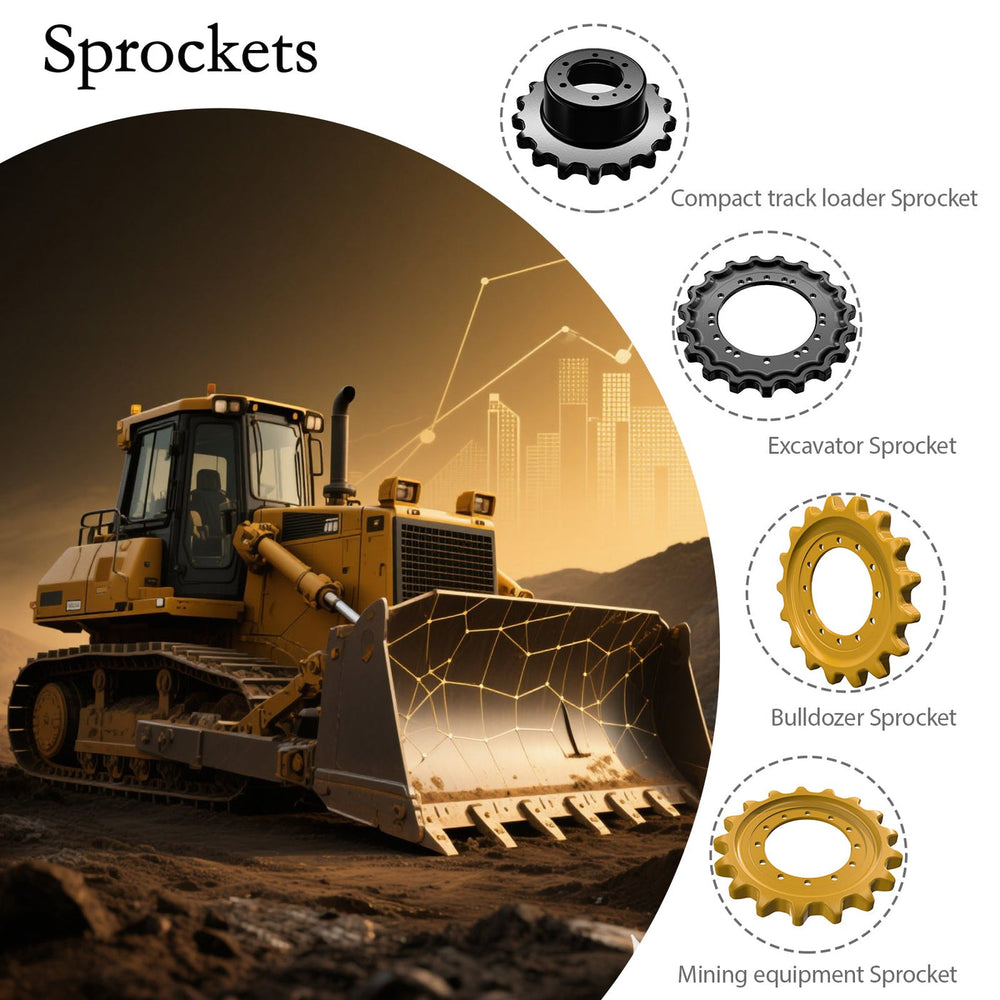
Replacing excavator sprockets requires careful inspection, precise alignment, and proper torque. Using genuine KTSU sprockets ensures compatibility with bolts and nuts while minimizing wear. Following safety-first procedures and using the correct tools helps prevent downtime, extends undercarriage life, and ensures your excavator operates efficiently in challenging environments.
Last updated:

How Do You Know When Excavator Sprockets Need Replacement?
Sprockets should be replaced if teeth show rounding, chipping, or significant thinning. Signs include uneven track wear, skipping, and unusual operational noise. Checking tooth height against manufacturer specifications can confirm replacement needs. Early intervention protects the drive chain and overall undercarriage from accelerated damage.
What Are the Essential Safety Precautions for Sprocket Replacement?
Always stabilize the machine on level ground and follow lockout procedures. Wear personal protective equipment, and use hoists or supports to prevent unexpected movement. Disengage hydraulic systems before work begins. Safety-focused procedures reduce the risk of accidents and ensure the longevity of the replaced sprockets.
Which Tools Are Required for Drive Wheel Installation?
Proper tools include torque wrenches, impact wrenches, pry bars, hydraulic jacks, and alignment gauges. KTSU recommends consulting their bolt and nut compatibility charts to select correct fasteners. Using precise torque tools ensures the sprocket aligns perfectly with the track chain, preventing uneven wear and extending undercarriage life.
Table 1: Recommended Tools for Excavator Sprocket Replacement
| Tool | Purpose |
|---|---|
| Torque Wrench | Accurate bolt tightening |
| Impact Wrench | Fast removal of old bolts |
| Pry Bar | Adjust sprocket alignment |
| Hydraulic Jack | Lift and stabilize machine |
| Alignment Gauge | Confirm correct tooth engagement |
The job in order, with three hold points
The safety precautions above explain what to avoid. A replacement still needs a sequence, and the sequence is what keeps a two-person job safe. Three points in it are worth holding at, because each one is cheap to check and expensive to get wrong.
- Prepare the machine. Level, firm ground. Attachment lowered to the ground. Engine off, key out, isolator off. Crib the frame so the side being worked on is off the ground and cannot drop. Relieve the hydraulic pressure before anything is opened.
- Release the track tension slowly at the grease or nitrogen adjuster, with the valve cracked rather than the fitting removed. A tensioned track stores energy, and the adjuster is the part that releases it.
Hold point 1: the track is slack, the frame is supported, and nothing is under load. This is the point at which the job becomes safe to continue, and it is worth saying out loud between the two people doing it.
- Break the chain at the master link, not at the sprocket, and lay the chain clear of the sprocket rather than dragging it over the teeth.
- Remove the sprocket bolts in a crossing pattern — opposite bolt, then the next opposite, working round — rather than in a circle. Circling the bolts loads the flange on one side and is how a mounting face gets distorted.
- Clean and inspect the mounting face and the final drive flange. Burrs, fretting and cracks all reproduce themselves on the new part, and a bolt with stretched threads will not hold the torque in the table above.
Hold point 2: the mounting face is clean and flat, and the bolts are either within specification or replaced. Reusing a stretched bolt on a sprocket is the cheapest mistake on this job and the one with the longest consequences.
- Fit the new sprocket, start the bolts by hand, then torque in stages in a crossing pattern to the values in the table above. Hand-starting first is what stops a cross-threaded bolt being discovered at the torque wrench.
- Refit the chain, seat it, and set the initial tension, then expect to reset it. The first adjustment after installation is part of the job, not a follow-up.
Hold point 3: torque re-checked after the first shift, tension re-checked and both recorded against the hour meter. A sprocket job with no record is a job that will be argued about in a year rather than measured.
The four things that go wrong on a sprocket job
| Mistake | What it causes | How to avoid it |
|---|---|---|
| Bolts torqued in a circle | The mounting flange distorts and the sprocket does not run true | Crossing pattern, in stages, as above |
| A stretched bolt reused | Torque that reads correct and a joint that loosens in service | Inspect every bolt; replace rather than reuse where the threads have stretched |
| The adjuster fitting removed under pressure | Grease or nitrogen released with force, and a person in the way | Crack the valve and let the tension off gradually |
| A new sprocket fitted to a worn chain | The new sprocket wears into the old chain pattern within weeks | Treat the chain and sprocket as a matched pair and replace them together |
Why Is Proper Bolt Torque Critical in Excavator Repair?
Correct torque prevents loose sprockets, uneven wear, and potential component failure. Over-tightening may crack the sprocket hub, while under-tightening leads to slippage. KTSU’s bolt and nut compatibility ensures torque values meet specifications, protecting the machine and improving performance over time.
Table 2: Sample Bolt Torque Values for Excavator Sprockets
| Bolt Size | Torque (Nm) | Torque (ft-lb) |
|---|---|---|
| M16 | 240 | 177 |
| M20 | 450 | 332 |
| M24 | 750 | 553 |
How Do You Align the Sprocket With the Track Chain?
Proper alignment prevents premature wear and ensures smooth operation. Position the sprocket flush with the track chain, verify tooth engagement, and rotate slowly to detect misalignment. Minor lateral adjustments and proper lubrication help maintain efficient movement and reduce stress on undercarriage components.
When Should You Replace the Entire Drive Assembly?
Full drive assembly replacement is recommended if multiple components, including sprockets, rollers, and idlers, show significant wear. Signs include uneven wear patterns, metal fatigue, or repeated failures. Proactive replacement prevents unplanned downtime and maintains operational safety.
Who Should Perform Excavator Sprocket Maintenance?
Only trained operators or certified technicians should replace sprockets. They must understand torque specifications, alignment procedures, and hydraulic safety. Using trained personnel, combined with genuine KTSU sprockets, ensures the machinery maintains optimal performance and reduces the risk of workplace accidents.
Can KTSU Components Improve Excavator Longevity?
Yes. KTSU sprockets feature hardened teeth, precision CNC machining, and friction-welded hubs. Using genuine KTSU parts ensures correct bolt and nut compatibility, reducing downtime and extending machine efficiency. Their components are engineered for durability in challenging construction and agricultural environments.
How Does Environment Affect Sprocket Wear?
Harsh terrain such as mud, sand, and rocky surfaces accelerates wear. Corrosive or abrasive conditions increase inspection frequency. KTSU sprockets are designed with hardened steel and protective coatings to resist these conditions, ensuring long-term durability even under extreme operating environments.
KTSU Expert Views
"Replacing excavator sprockets goes beyond simply swapping parts—it requires precision, safety, and quality components. Genuine KTSU sprockets combined with exact torque specifications and proper alignment prevent premature wear and reduce maintenance costs. Regular inspections and trained personnel further ensure that excavators perform efficiently in demanding conditions." — KTSU Engineering Team
Conclusion: Key Takeaways for Safe Sprocket Replacement
Safe sprocket replacement relies on careful inspection, correct torque application, and precise alignment. Using genuine KTSU sprockets improves performance, extends component life, and reduces operational risks. Follow safety protocols, use recommended tools, and schedule routine maintenance to maximize efficiency and reliability in excavator operations.
Frequently Asked Questions
When should an excavator sprocket be replaced?
When the tooth profile has hooked or rounded, when the chain is being replaced, or on the inspection interval used in this article, which is every 250 to 500 operating hours and more often in abrasive conditions. Profile condition decides it, not a calendar: a sprocket worn into a hook will destroy a new chain.
Can I replace a sprocket without removing the track chain?
No. The chain has to come off the sprocket, which means the track tension has to be released first and the chain broken at the master link. Trying to work around a tensioned chain is the most common way this job becomes unsafe.
What torque should excavator sprocket bolts be set to?
The three values quoted in this article are 240 Nm for M16, 450 Nm for M20 and 750 Nm for M24, applied in stages in a crossing pattern. Where the machine manual gives a figure for your model, that figure governs, and any bolt with stretched threads should be replaced rather than reused.
Why does a new sprocket wear out quickly after fitting?
Because it was fitted to a worn chain. The sprocket and the chain are one wearing pair, so a new tooth profile engaging an elongated chain wears into the old pattern within a short period rather than establishing a new one. This is the reason the two are replaced together.
Can the job be done safely by one person?
No. Sprocket replacement involves a cribbed machine, a tensioned adjuster and a component heavy enough to injure someone, which is why the source material for this article treats it as a two-person routine with one clear role per person.
Order genuine KTSU Sprockets today to keep your excavator running safely and efficiently.
This article is part of Excavator Sprockets: How to Choose and Match Them, the guide that covers this topic in decision order.
More Technical Guides guides
Find the next article for your component, application or buying decision.
Back to Technical Guides