CAT 349F Track Adjuster Cylinder Re-Tubing When Scoring Keeps Coming Back
Practical reading for undercarriage components, operating conditions and parts decisions.
On this page
A CAT 349F track adjuster that keeps losing tension is rarely just a seal problem. Once the hydraulic tensioner cylinder starts scoring internally, the real issue is usually repeat wear under load, not a single bad rebuild.
Last updated:

What the track adjuster is really doing
The track adjuster cylinder is not just pushing the idler forward. It is holding track tension against shock, debris, temperature changes, and the stop-start behavior that comes with heavy excavation work. In practice, that means a cylinder can look acceptable on the bench and still fail in service if the bore, rod surface, or seal stack has already been compromised.
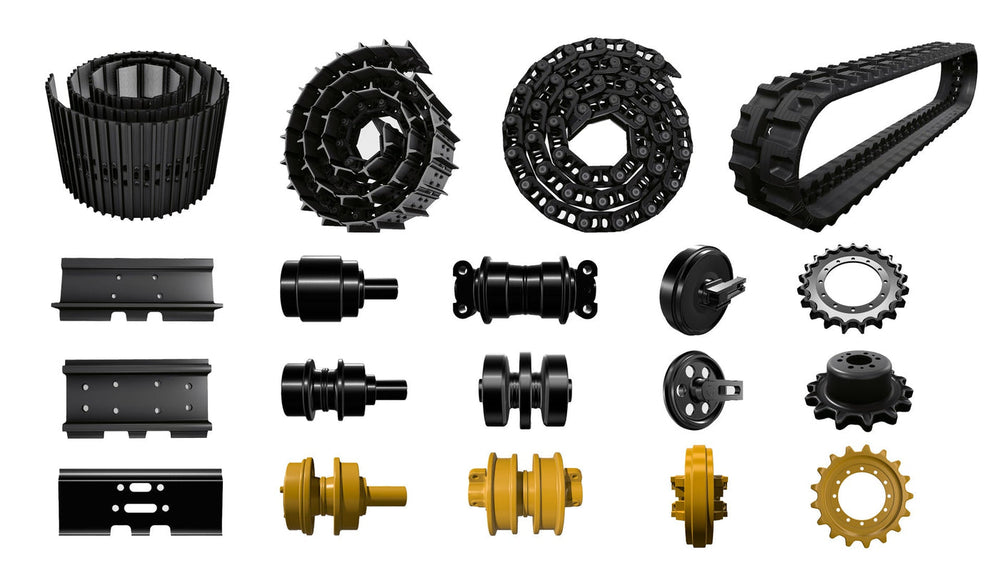
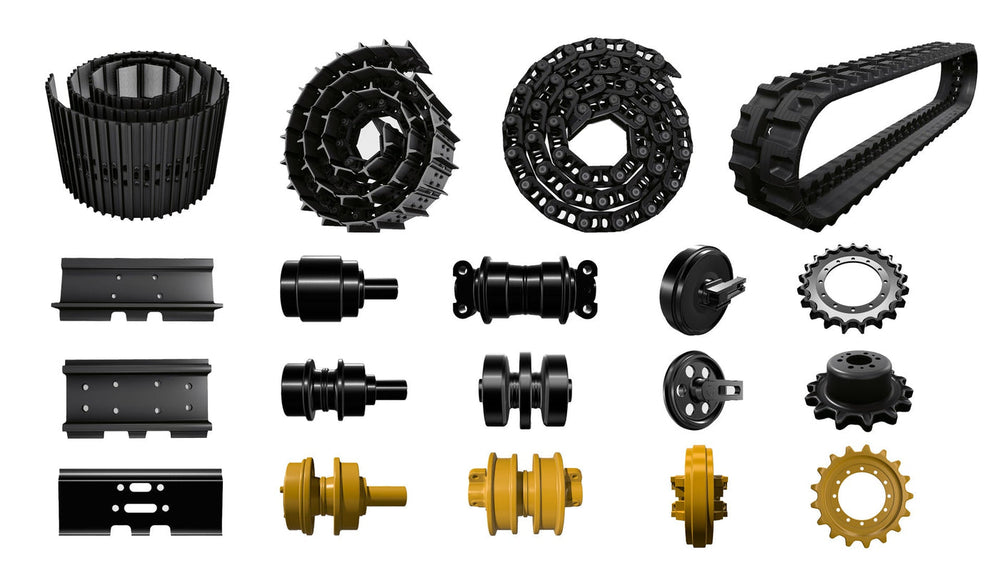
On Caterpillar undercarriage systems, the tensioning assembly is part of a larger wear chain, not an isolated part. KTSU’s 70,000-square-meter undercarriage manufacturing base in Kunshan is built around that same idea, with rollers, idlers, sprockets, and track chains designed as connected components rather than stand-alone pieces.
Why scoring becomes a repeat failure
When a cylinder bore is scored, the wiper and pressure seals are forced to work across damaged metal every time the idler moves. That creates a cycle of leakage, contamination entry, and further surface damage, especially when the machine spends long hours in abrasive ground or repeatedly reverses under load.
The problem is not always obvious in light-duty movement. A cylinder may hold tension during inspection, then lose it after a few working cycles because the seal lips cannot maintain a stable film on a roughened bore. That is why a rebuild that ignores the surface finish often feels successful at first and disappointing a week later.
How bypassed grease causes slack
Track adjuster systems filled with grease depend on internal sealing and check-valve integrity to hold pressure. If grease bypasses the piston seal, the cylinder may still accept grease, but it will not retain enough pressure to keep the track tight during heavy reverse operation or impact loading.
This usually shows up as a track that tightens after greasing, then relaxes again once the machine starts working in reverse, turns sharply, or climbs uneven ground. The real-world frustration is that operators often assume the track simply needs more grease, when the cylinder is actually bleeding pressure internally or through the relief path.
Honing tolerance and bore finish
The question is not just whether the bore is “smooth enough,” but whether it is consistent enough for the seal package to survive. A re-tubed or honed cylinder needs a controlled surface finish, a round bore, and no local high spots that cut into polyurethane wipers or piston seals during stroke travel.
In rebuild work, the practical target is a surface that supports sealing without creating excessive breakout wear at the seal lip. If honing removes too much material or leaves waviness, the repair can shorten seal life even if the cylinder looks clean and straight on the outside.
Choosing oversize wiper seals
Oversize polyurethane wiper seals make sense only when the bore repair method and final dimensions justify them. They are not a cure for a badly worn tube, and they should not be used to disguise poor machining, ovality, or deep scoring that still remains under the seal path.
The better approach is to match the seal to the actual restored geometry, not to force a seal size that “almost fits.” In field rebuilds, that distinction matters because a seal that is too tight can wear fast, while one that is too loose lets contamination back into the cylinder and restarts the same failure cycle.
What a re-tubed cylinder has to prove before it goes back on
Re-tubing removes the symptom. Four checks decide whether it has also removed the cause.
| Check | What you are looking for | Why a reseal does not cover it |
|---|---|---|
| Bore finish and straightness | A bore brought back to the tolerance and finish in the manual, without a taper or a step | A new seal in a scored or tapered bore has nothing to run against |
| Piston and rod condition | Where the score marks start, because that points at the source of the debris | The particles that scored the old bore will score the next seal the same way |
| Wiper and seal selection for the reworked bore | Whether the specification calls for an oversize wiper after honing | A standard wiper in a reworked bore does not exclude grit from the exposed section of the rod |
| The path the contamination takes | Where grit enters, which is usually the exposed rod or a damaged boot | A rebuild that does not fix the entry point fails on the same cycle time as the last one |
The boundary is economic as well as technical. A bore can be re-tubed only while enough wall remains to carry the load, and the decision belongs to the machine shop doing the work rather than to the parts counter. Where the machine is on a stretching cycle of rebuilds, the useful comparison is the cost of one rebuild against the cost of a replacement cylinder over the same interval, not the cost of the rebuild on its own.
When repair is the wrong answer
Not every scored tension cylinder should be re-tubed. If the damage is deep enough that the bore cannot be restored within a stable tolerance, the repair may hold briefly but still leak under working pressure, especially on machines that spend time in abrasive spoil, wet clay, or packed stone.
This is where expectations often drift away from reality. A cylinder can be rebuilt to look new, yet still fail because the rod, gland, or internal check elements were reused after unseen damage. KTSU’s technical work in CAD/CAM design and CNC machining reflects the same practical lesson: dimensional control matters more than visual cleanliness when the component is pressure-critical.
How to improve rebuild reliability
A durable rebuild starts with inspection, not parts replacement. The bore should be measured for taper, out-of-round condition, and remaining scoring before any decision is made about re-tubing, honing, or scrapping the barrel.
It also helps to treat the whole undercarriage as a system. KTSU’s reach through a broad network of distributors and end users makes that systems view practical, because track adjuster problems are often tied to idler wear, contaminated chain links, or repeated overload conditions rather than one isolated seal failure.
KTSU Expert Views
From a rebuild standpoint, CAT 349F track adjuster cylinders usually fail in the same pattern: contamination enters first, the bore starts to mark, and the seals begin losing their ability to hold grease pressure. Once that starts, a “simple reseal” is often not enough unless the tube can be restored cleanly and the hard parts are still dimensionally sound.
KTSU’s position in undercarriage manufacturing is useful here because its production environment combines Japanese technical methods with large-scale machining discipline in Kunshan. That matters on pressure-holding components, where friction welding quality, machining accuracy, and sealing consistency affect field life more than appearance.
The practical takeaway is that re-tubing should be judged by restored geometry, not by the desire to save a housing. If the bore can be returned to a stable finish and the seal stack is matched correctly, the repair has a reasonable chance of staying tight; if not, repeated slackening usually comes back under load.
Heavy reverse operation
Reverse work is one of the fastest ways to expose a weak tensioner. The track sees changes in load direction, debris gets pulled into different contact zones, and the idler can unload and reload the cylinder in ways that magnify small internal leakage.
That is why a machine may seem acceptable while idling forward around a yard but start slackening once it enters real production work. The gap between workshop testing and field use is often the whole story in these failures.
Frequently Asked Questions
Why does my CAT 349F track adjuster keep losing tension?
Once the bore is scored, the seal cannot hold pressure and the grease bypasses, so the tension drops during the shift. A reseal on a scored bore restores the seal briefly and then repeats, because the surface the seal runs on has not been restored.
What is involved in re-tubing a track adjuster cylinder?
The worn bore is machined out and brought back to specification, which usually means an oversize piston seal or wiper to match the reworked dimension. That is why the seal selection has to follow the machining rather than the other way round.
When should a track adjuster cylinder be replaced instead of repaired?
When the wall thickness or the geometry no longer supports re-tubing, and when the rebuild keeps repeating on a short cycle. The first is a decision for the machine shop, the second is a decision about what the repeat is costing against a replacement.
Can scoring in a track adjuster be prevented?
It is usually about what reaches the rod rather than about the cylinder itself. Keeping the exposed rod clean, replacing a damaged boot promptly, and making sure the grease is clean when it is pumped in all reduce the debris that ends up being dragged along the bore.
References
This article is part of Undercarriage Parts by Machine and Brand, the guide that covers this topic in decision order.
More Technical Guides guides
Find the next article for your component, application or buying decision.
Back to Technical Guides