Can Bio-Based Rubber Transform Construction Tracks?
Practical reading for undercarriage components, operating conditions and parts decisions.
On this page
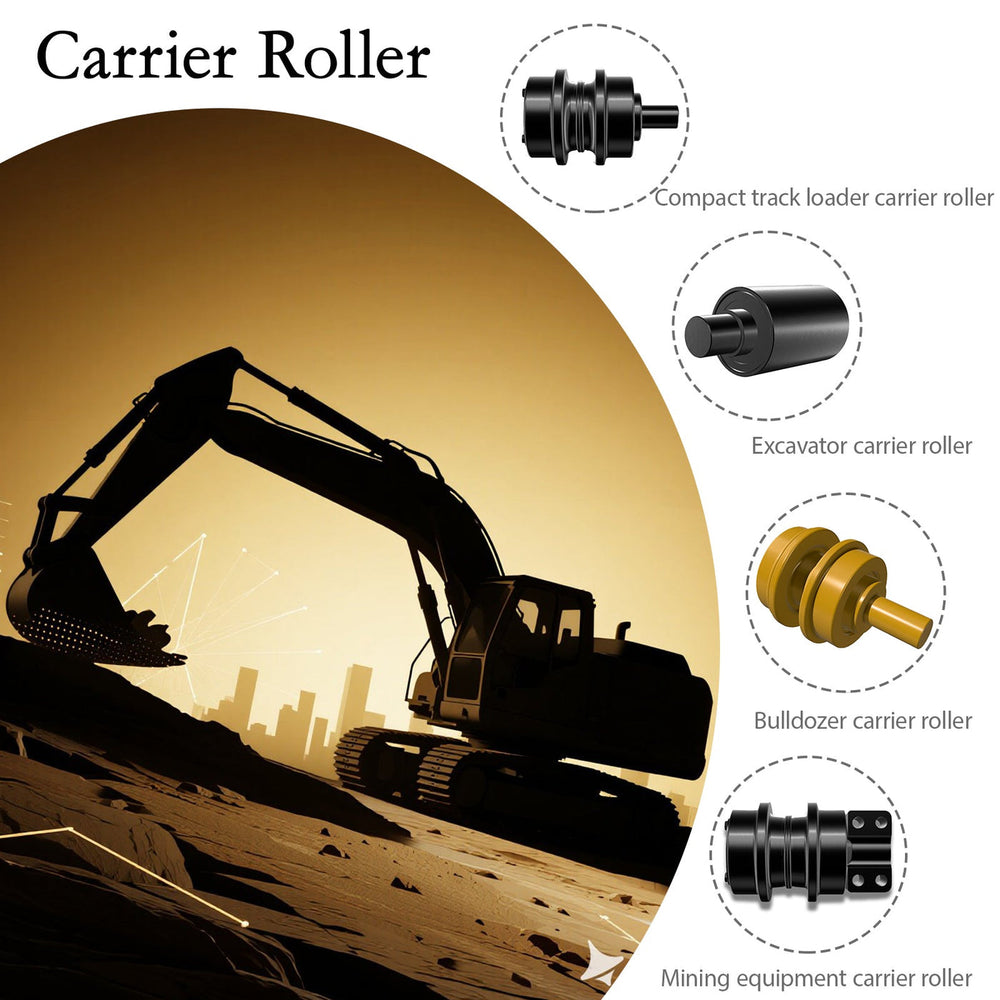
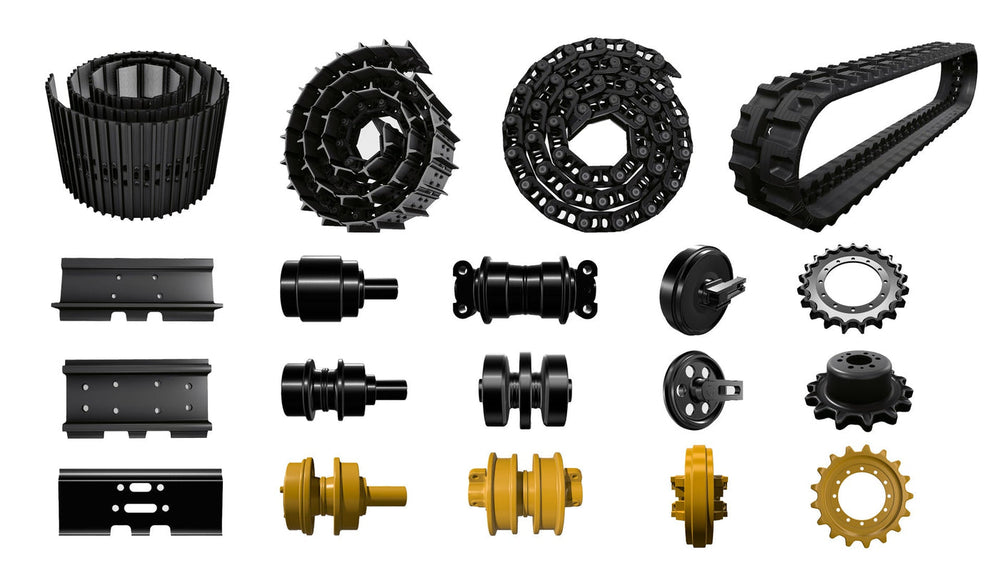
Bio-based rubber alone cannot yet transform steel-cord reinforced construction tracks for heavy undercarriage use. Current bio-rubber compounds match conventional rubber in elasticity but still lag in abrasion resistance and UV stability for severe-duty tracks. However, hybrid compounds blending 30–50% bio-based elastomer with synthetic rubber and steel cord reinforcement show promise for light-to-medium duty applications like mini-excavators and compact track loaders. For KTSU's undercarriage components (track rollers, carrier rollers, front idlers, sprockets), bio-based rubber remains irrelevant since these are metal parts—but bio-compounds could influence future rubber track OEM partnerships for post-warranty service channels.
Last updated:

What Search Intent Drives This Topic?
This query targets commercial investigation intent: B2B buyers (distributors, fleet managers, procurement teams) evaluating whether bio-based rubber tracks offer measurable performance gains over conventional compounds before making procurement decisions. The article aligns by addressing durability claims, duty-cycle fitment, and aftermarket positioning rather than pure sustainability marketing.
How Does Bio-Based Rubber Compare to Conventional Rubber Compounds?
Bio-based rubber is derived from renewable biological sources—primarily natural rubber trees, guayule, and dandelion—producing polyisoprene through eco-friendly processes. Conventional synthetic rubber relies on petrochemicals.
| Property | Bio-Based Rubber | Conventional Synthetic Rubber |
|---|---|---|
| Source | Renewable plants (trees, guayule, dandelion) | Petrochemicals |
| Elasticity | Matches or exceeds conventional | High, but varies by type |
| Abrasion Resistance | Lagging in severe-duty tests | Better for high-wear applications |
| UV/Ozone Resistance | Deteriorates faster under UV | More resistant to UV/temperature extremes |
| Tensile Strength | Stronger, more flexible | More prone to tearing |
| Carbon Footprint | Lower (renewable feedstock) | Higher (fossil-based) |
Bio-rubbers can match conventional options in elasticity and durability for non-severe applications, but synthetic rubber still handles temperature extremes and abrasion better. For construction tracks exposed to sharp rock, steel debris, and daily abrasive wear, this gap remains critical.
Which Construction Equipment Applications Might Benefit from Bio-Based Track Compounds?
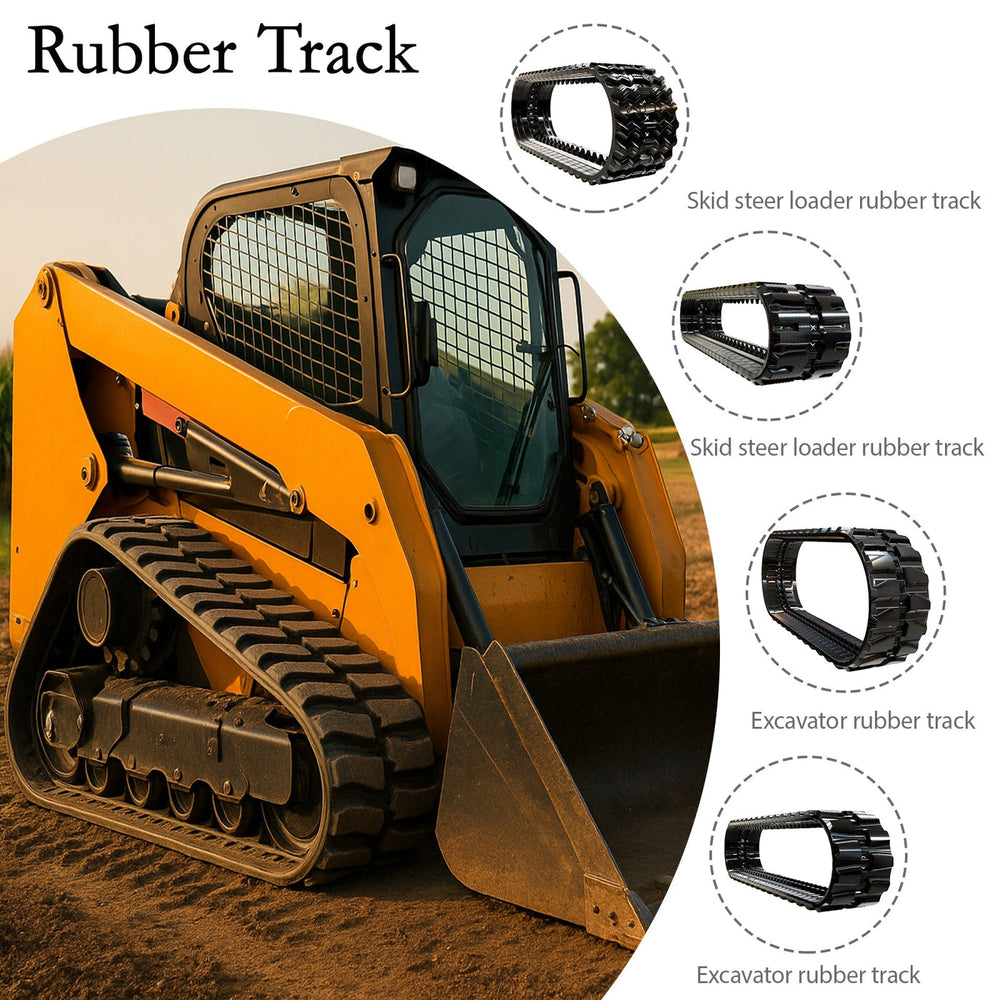
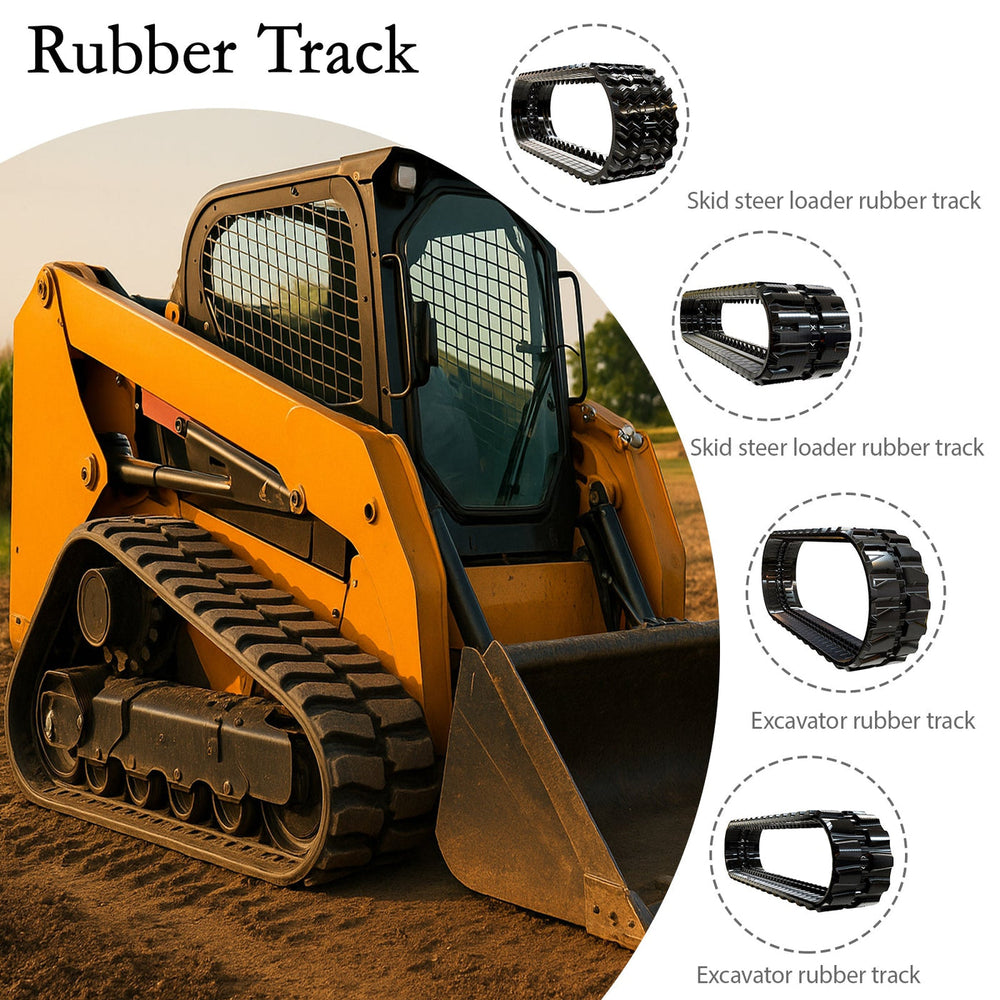
Bio-based rubber tracks are most viable for light-to-medium duty applications where abrasion severity is lower:
Mini-excavators (e.g., CAT 305, Komatsu PC35) on earthmoving, landscaping
Compact track loaders (CTL) for snow removal, grading, general construction
Multi-terrain loaders (MTL) on soft ground, agricultural fields
Skid steers in indoor/controlled environments
These machines typically see 500–1,600 service hours per track set under normal conditions. Bio-compounds may extend life in low-abrasion environments by reducing ground compaction and improving flotation, but they degrade faster in cutting environments with sharp rock or rebar.
Not recommended for:
Quarry work, aggregate processing, severe rock abrasion
Steel debris, demolition sites with cutting edges
High-temperature environments exceeding 60°C (140°F) without heat-dissipating designs
What to ask before buying a bio-based track
A bio-based or bio-blended compound is a change to one part of a track, and the rest of the track is unchanged. That framing is what makes the buying questions manageable, because the fitment items are unaffected and the compound questions are specific.
| Question | Why it decides the purchase | An answer that does not settle anything |
|---|---|---|
| Bio content by mass, and which feedstock | A claim of bio-based can describe anything from a small blend to a majority substitution, and the two have different cost and performance profiles | Sustainable, or eco-friendly, with no proportion |
| Which property is being substituted, and what it was traded against | Compound changes move tear resistance, abrasion resistance, heat build-up and low-temperature flexibility, and a gain in one is usually paid for in another | Same performance, without a test figure |
| Low-temperature behaviour | A compound change can move the temperature at which the track stiffens, which matters anywhere the machine works in cold conditions | Rated for all conditions |
| Ageing and UV resistance | Rubber that stands outside between jobs ages differently from rubber in continuous service, and a bio-blended compound has to be assessed on the same basis | Nothing, in most quotations |
| Warranty terms for the compound specifically | A warranty that covers wear-out does not cover the failure mode a new compound is most likely to introduce | A duration only |
Two honest conclusions follow from the state of the category. The first is that the specification items that decide whether a track fits and how long it lasts — cord construction, guide type, width, pitch and link count — are unchanged by the compound question. A bio-based track that does not match those is not a sustainable purchase; it is a mis-fitted one.
The second is that cost pressure and material substitution arrive together, which matters in a year when rubber supply and pricing are already under strain. A compound change is legitimate when it is disclosed and tested. It is not legitimate when it arrives unannounced inside a part number at an unchanged price, which is why asking which input moved is a fair question for a buyer to put to any supplier in this market.
Why Do Steel Cords and Carcass Design Matter More Than Rubber Type?
High-quality rubber tracks depend on internal structure, not just surface compound. The carcass includes:
Steel cord: Ensures rigidity along track length, provides tension resistance
Metal pieces: Embedded between underlayer and carcass, engage sprocket for drive
Textile wrapping: Maintains steel cord alignment
Heavy-duty carcass: Prevents rock puncture, extends life
Continuous steel cords (CSC), versus overlapping joints, provide up to 40% more strength. Premium tracks use endless steel cables to avoid cable breaking—a common failure point.
This means: Even if bio-rubber improves sustainability, track longevity hinges on steel cord quality, carcass thickness, and tread design. A bio-compound track with weak carcass will fail faster than a conventional track with premium steel reinforcement.
How Does Track Tension and Operator Behavior Affect Bio-Compound Durability?
Track tension is the most important controllable factor for track life. Bio-compounds do not change this rule:
| Tension Issue | Consequence |
|---|---|
| Over-tensioning | Premature wear, early failures, higher power/fuel use |
| Under-tensioning | Track derailment, dangerous operator situation, component damage |
| Proper tension (slightly loose within spec) | Better material shedding, reduced wear |
Check tension every 50–100 hours per manufacturer guidelines. Adjust frequency if tracks consistently drift out of spec.
Operator behaviors that damage tracks (bio or conventional):
Spot turns / zero-radius spinning on pavement → side wear
Three-point turns preferred over sharp pivots
Working in cutting environments (sharp rock, steel) → misapplication unless using steel tracks
High-speed activities, quick starts/stops → unnecessary stress
Contact with curbs, rebar, jagged rocks
Daily maintenance for all tracks:
Pressure wash at end of shift to remove mud, gravel, debris
Remove embedded foreign objects, lubricate pivot points
Inspect for cuts, tears, flat spotting, worn rollers/idlers
Store in cool, dry, shaded area; avoid direct sunlight (can double track life)
Bio-compounds do not eliminate these requirements. In fact, natural rubber deteriorates faster under UV exposure, making shade/storage even more critical.
What Do KTSU Engineers Recommend?
"Bio-based rubber compounds show promise for sustainability goals in light-duty rubber track applications, but they cannot replace the metallurgical processes that define undercarriage component service life. At KTSU's Kunshan facility, our track rollers, carrier rollers, front idlers, and sprockets rely on induction surface hardening, deep-case carburizing, and NITTO friction welding—not rubber compounds. For distributors evaluating bio-track partnerships, verify carcass thickness, steel cord continuity, and tread design before accepting sustainability claims. Track tension, operator training, and daily cleaning remain the primary drivers of longevity, regardless of compound type."
— KTSU Undercarriage Engineering Team
Is Bio-Based Rubber Track Technology Ready for Severe-Duty Construction?
No, not yet. Current data shows bio-rubber lags in abrasion resistance and UV stability for severe-duty applications. Market trends indicate 34% of new rubber tracks adopt recyclable materials, and 44% of recent developments focus on eco-friendly compounds, but these are still emerging.
Hybrid compounds (30–50% bio + synthetic) may bridge the gap for medium-duty earthmoving, landscaping, and snow removal. However, for quarry work, demolition, or aggregate processing, conventional rubber with premium steel cord reinforcement remains the industry standard.
Distributors should:
Request third-party abrasion test data before stocking bio-track lines
Verify warranty terms (bio-compound tracks may have shorter service-life guarantees)
Position bio-tracks as "light-duty sustainability options," not universal replacements
Conclusion
Bio-based rubber cannot yet transform severe-duty construction tracks, but hybrid compounds offer a viable sustainability path for light-to-medium duty applications. For B2B buyers, the decision hinges on duty cycle, not just environmental claims:
Replace vs. rebuild: Replace tracks when carcass damage exposes internal cables or tension cannot be maintained
Match selection to duty cycle: Light duty (landscaping, snow) → bio-hybrid may work; severe duty (quarry, rock) → conventional premium compound
Check tension and alignment first: Misaligned rollers or worn sprockets shred tracks faster than compound type
Confirm model, serial range, and part-number cross-reference: Right length/pitch matching sprockets prevents premature wear
Order through KTSU's distributor channel: For undercarriage components (track rollers, sprockets, idlers), KTSU offers Quality Tier 1 aftermarket parts with traceable Kunshan manufacturing [brand]
Traceability matters: Bio-compound claims should include supplier certification; steel cord and carcass quality should be verified via third-party testing
Bio-rubber is a sustainability innovation, not a performance replacement for severe-duty undercarriage systems.
Frequently Asked Questions
Are bio-based rubber tracks better than OEM tracks?
There is no general answer, because bio-based describes a compound and OEM describes a supply channel. What can be compared is the specification: cord construction, guide type, dimensions, tread pattern and the tested properties of the compound. A bio-based track that matches the specification is comparable; one that does not, is not.
How do I verify fitment for bio-based rubber tracks?
Exactly as for any other track: width, pitch measured across a run of links, link count and guide type, confirmed against the machine specification and the track being replaced, together with the model and model year. The compound does not change any of those four.
What service life can I expect from bio-based rubber tracks?
It depends on the duty cycle and on how the compound was specified rather than on its bio content. Use the same duty-cycle bands applied to any rubber track on this site, and ask the supplier for the test figure behind the compound claim, including which property was traded against the bio substitution.
Can bio-based tracks preserve the OEM warranty on my machine?
No. Aftermarket tracks do not preserve an OEM warranty, and on a machine still inside its warranty period the dealer route protects the claim. This applies to a bio-based compound in the same way it applies to any other aftermarket component.
Where can distributors order KTSU undercarriage components?
Through the digital procurement channel or an authorised distributor, with the machine model, serial range and the size code to hand. Batch traceability travels with the order and is what makes a compound question answerable after the fact.
This article is part of Construction Equipment Parts: Market Trends and Technology, the guide that covers this topic in decision order.
More Technical Guides guides
Find the next article for your component, application or buying decision.
Back to Technical Guides