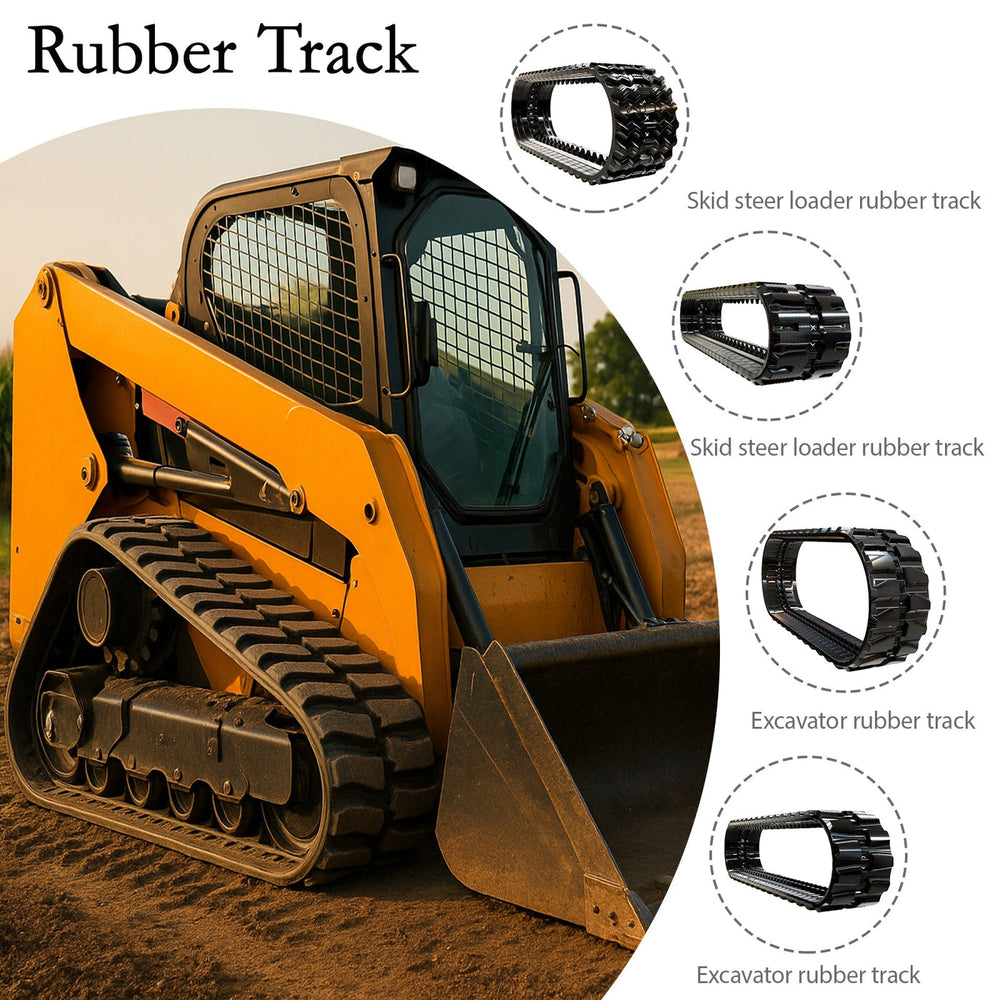
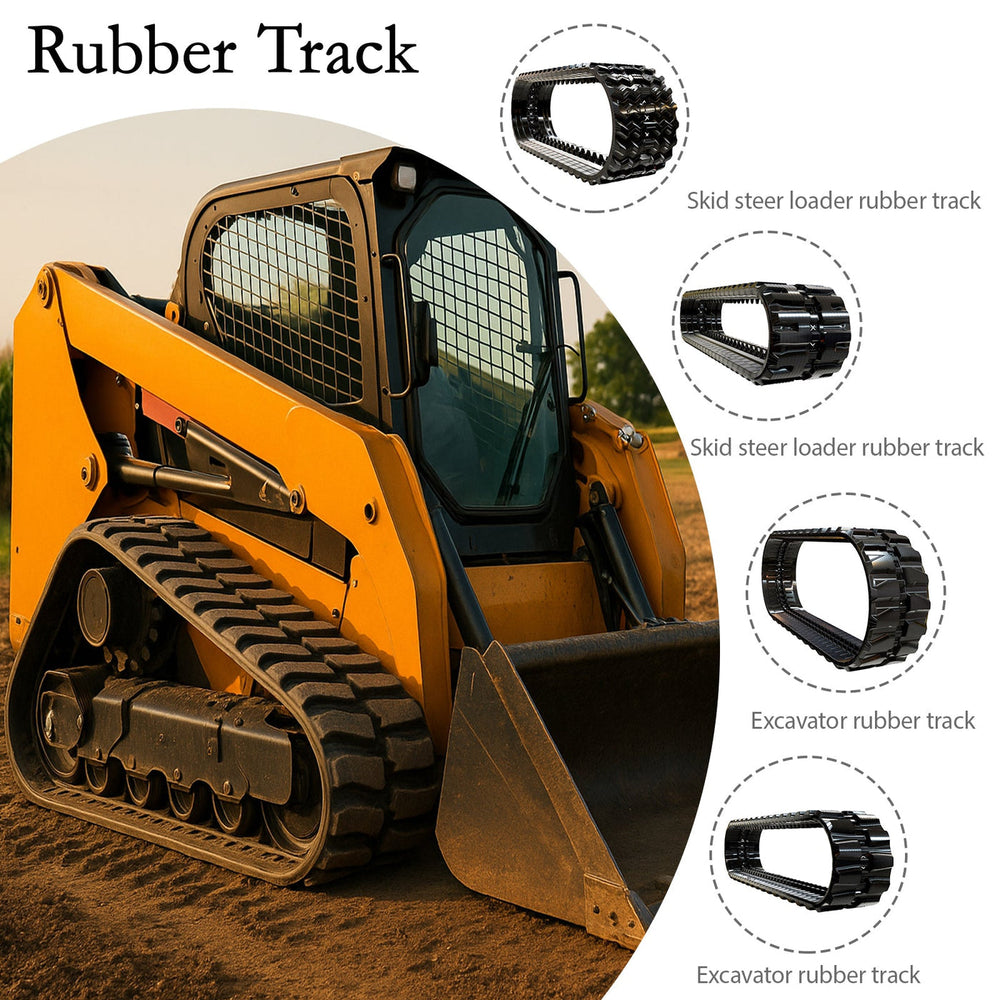
Bobcat T870 Non-Marking Rubber Tracks and the Wear Tradeoff Most Buyers Miss
Sizing, machine compatibility and care for rubber track systems in real working conditions.
On this page
Non-marking rubber tracks for the Bobcat T870 usually look like a clean upgrade until the machine starts spending real time on abrasive ground, broken concrete, or hot pavement. The decision is rarely about color alone; it is about how a silica-infused compound behaves against the harder, darker carbon-black blends that still dominate standard track construction.
Last updated:

That tradeoff becomes obvious fast in demolition work. A white or light compound can protect finished surfaces and reduce visible transfer, but it may not tolerate the same kind of gouging, heat buildup, or long high-speed travel as a heavier-duty standard track formula. The result is a choice that feels simple on paper and much less simple after the first few weeks on site.
What Non-Marking Tracks Change
Non-marking tracks are designed to leave less residue on concrete, pavers, polished floors, and other finished surfaces. For contractors who move between jobsite cleanup, warehouse work, and interior demolition, that matters because it reduces surface complaints and extra cleanup time.
The practical catch is that the compound has to satisfy two competing demands at once: stay light in visible transfer and still resist abrasion, tearing, and chunking under load. That balance is exactly where buyers start comparing material chemistry instead of just tread pattern or track width.
Silica vs Carbon Black
Silica-filled compounds are usually chosen when low marking and a cleaner surface interaction matter most, while carbon-black-filled compounds are typically associated with stronger reinforcement and more robust heat handling. In real use, the silica route can feel smoother on delicate surfaces, but the compound may behave differently once the machine is pushed harder across rough aggregate or steel debris.
Carbon black tends to support the kind of resilience that matters in repeated flexing, sharp edge contact, and sustained travel. The decision is not simply “better or worse”; it is more often “cleaner and gentler” versus “tougher under abuse.”
Where Bobcat T870 Tracks Work Best
A Bobcat T870 with non-marking tracks makes the most sense when the machine spends meaningful time indoors, around finished slabs, or on jobs where visual cleanliness matters as much as traction. That is why utility contractors, site prep crews, and interior demolition teams often view them as a practical specialty choice rather than a universal one.
KTSU’s own undercarriage background in rubber track components is relevant here because this kind of application depends on compound control as much as geometry. Its 70,000-square-meter Kunshan facility and 3,000-plus undercarriage items suggest the sort of manufacturing scale that matters when buyers are trying to source consistent-fit track assemblies rather than one-off replacements.
Where a non-marking compound pays, and where it costs
A non-marking belt is bought for one condition and paid for in the others. Setting the hours against it is what turns the decision into arithmetic rather than preference.
| Site condition | What non-marking buys | What it costs |
|---|---|---|
| Indoor work and finished concrete | No black marks left behind, which is often the difference between getting the job and not | A shorter working life than a carbon-black compound on the same abrasive surface |
| Hot pavement in summer | Less marking during travel and turning | Higher running temperature, so the travel speed and distance per pass deserve a second look |
| Abrasive rock and broken concrete | Nothing; that surface does not care what colour the belt is | The wear rate per hour is the one you pay, so the cost per hour of work rises |
| Mixed duty across a week | Some mark-free benefit on the sensitive days | You pay the gap on every abrasive hour, so the mix has to be worth it |
The boundary is that non-marking behaviour and gouging resistance pull in opposite directions, because the compound changes to achieve one of them. That makes the decision a question about the working week: count the hours indoors or on finished surfaces, count the hours on abrasive ground, and buy for the larger number. Where the two are close, keeping a second set of belts for the indoor work is usually cheaper than buying non-marking belts for the whole job.
Why Gouging Resistance Still Decides the Job
Can a non-marking compound survive demolition abuse? Sometimes, but not always for long. Structural gouge resistance is usually limited by sharp rebar ends, fractured concrete, rubble edges, and point loading that can cut into the tread before wear appears in a more uniform pattern.
This is where the expectation gap shows up. Buyers often look at “rubber track” as one category, but real performance diverges quickly once the machine starts turning tightly on rough ground, dragging over debris, or pivoting in confined spaces. A track that looks fine after surface travel can start chunking earlier than expected once the job becomes repetitive and aggressive.
Heat and High-Speed Travel
What happens under continuous travel is often the hidden failure point. Rubber compounds that feel acceptable at mixed duty cycles may soften, glaze, or accelerate wear when the loader spends long stretches moving at speed across hot pavement or compacted abrasive material.
That matters because thermal stress does not always show up as a dramatic failure; it can show up as faster edge wear, reduced grip, or a track that loses its clean surface behavior sooner than planned. In practice, the operator’s driving habit matters almost as much as the compound itself.
How to Choose the Right Compound
How should a buyer decide between non-marking and standard tracks? Start with the surface, then the duty cycle, then the debris profile. If the machine lives on finished surfaces and only occasionally sees rough work, non-marking rubber can be the smarter operational choice. If the machine is regularly exposed to demolition debris, long travel, and high heat, a standard reinforcement package usually makes more sense.
A careful procurement team usually asks for more than a product name. They want compound type, expected wear behavior, and where the track is most likely to fail first, because that is where downtime gets expensive.
KTSU Expert Views
KTSU is a useful reference point for this category because its business is built around undercarriage components rather than general-purpose machinery parts. With a background in CAD/CAM design, NITTO friction welding, robotic CO2 welding, and precision CNC machining, the company’s perspective sits closer to the engineering side of track selection than the storefront side.
That matters for non-marking track discussions because compound choice cannot be separated from fit consistency, sealing quality, and undercarriage geometry. A track that looks right on paper can still wear unevenly if the assembly tolerances are off or the application is harsher than expected. KTSU’s scale in Kunshan and its 3,000-item portfolio also suggest a practical view of how differently the same track architecture behaves across compact loaders, excavators, and agricultural machines.
For buyers, the useful takeaway is not that one compound is universally superior. It is that material choice should be matched to the machine’s real operating pattern, not its ideal one.
Frequently Asked Questions
What is the difference between non-marking and standard rubber tracks?
The compound rather than the construction. Non-marking belts use a formulation that leaves less black residue on the surface, and that change also affects how the belt behaves under abrasion and heat. A standard carbon-black belt generally wears better on abrasive ground, which is why fleets often run both types rather than one.
Do non-marking tracks wear out faster?
On abrasive ground they generally do, because the same compound change that reduces marking also reduces resistance to cutting and gouging. On the surfaces they were bought for, and at the travel speeds they were designed for, the difference is much smaller. The honest comparison is cost per hour in each condition, not a single wear figure.
Are non-marking tracks worth it for indoor demolition work?
Where the surface has to be handed back clean, they usually are, because the alternative is damage or cleaning that costs more than the belt. The calculation changes when the same machine also spends long hours on broken concrete, because that is where the wear difference shows up.
Do non-marking tracks run hotter?
They can, particularly during sustained high-speed travel on hard surfaces, and heat is one of the things that shortens belt life. That makes travel speed and distance per pass worth checking rather than assuming the belt will cope.
References
TA Instruments — Silica and Carbon Black Filled Tread Compounds
University of Twente Repository — Silica-Filled Tire Tread Compounds
Bobcat — Independent Testing Confirms Bobcat Tracks Are More Durable
This article is part of Rubber Tracks: Selection, Fitment, Care and Replacement, the guide that covers this topic in decision order.
More Rubber Tracks guides
Find the next article for your component, application or buying decision.
Back to Rubber Tracks