Yanmar Vio35 Track Roller Play: Engineering Clearance Guide & Precision Rebuilding Strategy
Component selection, fitment and the connections that keep an undercarriage working as a system.
On this page
Last updated:

cost.
1. Mechanics of Track Roller Play
Field Diagnostic Mindset: ck chain.
Load Distribution: When the operator pivots the machine in place or works cross-slope, side thrust loads push directly into these flanges and through the internal bushings and shaft.
Aggravating Factors: Side loading increases dramatically when the track tension is too loose or when operators repeatedly turn on dry, abrasive surfaces like compacted gravel or broken concrete.
Mechanical Failure Mode: together.
2. Undercarriage Destruction Cascade
Excessive track roller play on a Yanmar Vio35 rarely fails in isolation. Instead, it amplifies several chronic pain points across the entire undercarriage system.
Primary Failure Modes & System Impacts
Accelerated Side-Thrust Wear:
Compromised Seal Integrity: s.
Structural Flange Failure: t.
3. Comparative Undercarriage Analysis
| Feature / Factor | KTSU Double-Flange Track Roller | Generic Aftermarket Roller (Budget Tier) | Rewelded / Field-Rebuilt OEM Roller |
| Mix of cast and welded designs; welding quality varies | Original forged shell retained but risks heat-affected distortion | ||
| Surface Hardness | Optimized sleeve hardness and depth to balance wear and impact toughness | Hardness may be adequate but depth and uniformity are often unknown | Hardness profile unchanged, but damaged areas soften after welding |
| Sealing System | High-quality floating sealing group and multi-lip oil seals | Standard seals with variable quality; sensitive to contamination | Original seals reused or replaced; depends heavily on manual skill |
| Lifecycle Cost | Higher upfront investment, but lower risk of structural failure | Lower purchase price but higher probability of early replacement | Minimal parts cost but increased monitoring and risk of sudden failure |
4. Engineering Tolerances & Field Diagnostics
Where Tolerances Show Up
Axial End-Play Limits: On a healthy double-flange roller assembly, axial clearance between the shell and the internal shaft/bushing stack is small but intentional, allowing thermal expansion and lubrication film movement while preventing noticeable side-to-side wobble under load. Public Yanmar documentation focuses on undercarriage layout and part numbers rather than listing explicit roller clearance specs, so most field rebuilds work from industry norms. Once play is visibly loose or exceeds standard field limits on a dial indicator, the roller is at or past its service life threshold.
Radial Play and Structural Clearance: Radial motion is constrained by bearing and bushing fit; acceptable clearance is enough to maintain an oil film but not enough to let the track chain hammer the roller with impact shocks. Radial shell movement that you can clearly see or hear as a knock under load is treated as beyond tolerance even if the machine technically still tracks. Excess radial play normally coexists with internal scoring and seal wear, indicating that the roller should be replaced rather than rebuilt in field environments.
Side-Thrust Capacity in Double-Flange Design: The Vio35 uses double-flange rollers to capture the track links and manage side-thrust from turning, sloping, and offset digging. Proper flange width, thickness, and alignment ensure that lateral loads are spread evenly into the roller and track frame, rather than concentrated on thin edges or misaligned guide surfaces. Maintaining near-OEM flange geometry is essential; heavily worn flange faces are a sign that side-thrust has exceeded safe levels over time and that the roller is approaching structural failure margins.
Recognizing Side-Thrust Wear Symptoms
Visual Indicators: One flange wearing thinner than the other; a chamfered or hooked outer edge on the flange; polished lines or grooves on the inside of the rubber track guides where the flange has been rubbing under misalignment; heat discoloration; chips on the flange edge; rubber tearing at guide contact points.
Audible & Operational Indicators: A metallic clunk when changing direction; a popping sound as links climb the flange lip; the track habitually riding harder against one side of the frame, causing the machine to pull or track unevenly.
Step-by-Step Dial Indicator Measurement Checklist
| Step | Action Item | Technical Objective |
| 1 | Machine Preparation | Support and block the chassis safely to suspend the tracks free of ground contact. |
| 2 | Tension Release | Loosen track tension completely so the roller can move without the track masking its play. |
| 3 | Pre-Cleaning & Inspection | Clean the bottom rollers and adjacent chain links of soil, rocks, and grease. Inspect flanges for physical thinning or beveled edges. |
| 4 | Indicator Setup | Mount the dial indicator so its tip bears perpendicularly on the end of the roller shell or a clean flange reference surface. |
| 5 | Axial Shifting | Use a pry bar to shift the roller axially to one side, then zero the dial indicator gauge. |
| 6 | Measurement & Verification | Push/pull the roller in the opposite direction and record total travel. Repeat multiple times (cold and warm) to verify repeatable results. |
5. Rebuilding Workflow vs. Planned Replacement
Precision Rebuilding Steps
Disassembly & Deep Cleaning: Strip down the roller assembly and remove all degraded lubricants and environmental contaminants.
Geometry Inspection: Inspect the shell bore, shaft, bushings, and sealing surfaces for pitting, scoring, or out-of-round conditions.
Machining Decisions: If surfaces exceed what can be corrected by controlled machining, reject the shell. If salvageable, machine bearing surfaces precisely.
Bushing & Seal Fitting: Install new precision-matched bushings and high-quality multi-lip floating seals to restore tight tolerances.
Quality Benchmark: A successful rebuild must spin smoothly under manual force, show zero visible radial deflection when pried, and register minimal axial clearance on a dial indicator.
Economic Reality Check: Field decisions on rollers often default to running them until they leak, but that approach rarely reflects the hidden cost of accelerated track and sprocket wear. For a Vio35, a single new heavy-duty roller is relatively inexpensive compared to a full track set and sprockets, which are the typical collateral damage when rollers are allowed to run loose and misaligned. Factoring in downtime, transport, and potential safety exposure from undercarriage failure, planned replacement at the first signs of excessive play is usually more economical than running to destruction.
6. System-Based Fleet Management Scenarios
Scenario 1: Residential Trenching Contractor
Traditional Practice: Runs a Yanmar Vio35 on landscaping and utility trenches, replacing track rollers only when operators complain about loud noise or a roller fails catastrophically, often mixing unknown aftermarket rollers with older chains. This approach leads to irregular tracking, frequent track adjustments, and derailments.
Precision Management Solution: Introduces scheduled end-play measurements with a dial indicator during routine maintenance and replaces rollers as they reach clear wear thresholds using KTSU forged, CNC-machined track rollers, stabilizing track alignment and extending chain life across light-duty projects.
Scenario 2: Urban Contractor on Tight-Access Projects
Traditional Practice: City contractor prioritizes bucket and hydraulic maintenance over undercarriage health, leaving worn rollers and side-thrust wear unchecked until the machine begins to crab sideways and damage pavement during travel.
Precision Management Solution: By pairing precision KTSU rollers with new sprockets and idlers, the contractor restores proper side-thrust management on double-flange systems, improving operator confidence, ensuring straight tracking, and reducing rework on delicate urban surfaces.
Scenario 3: Mixed Civil and Agricultural Work
Traditional Practice: Mixed-use fleet runs Vio35 machines across farm fields and roadside drainage, accepting that the undercarriage is a consumable and swapping components ad hoc when failures occur, which leads to unpredictable downtime.
Precision Management Solution: The fleet moves to a system-based undercarriage strategy, replacing track rollers and chain assemblies together with KTSU products. By using rubber pads from KTSU's track shoe line to reduce vibration, they lower impact loads on rollers and significantly extend the intervals between replacements.
7. Cross-Selling Related Undercarriage Solutions
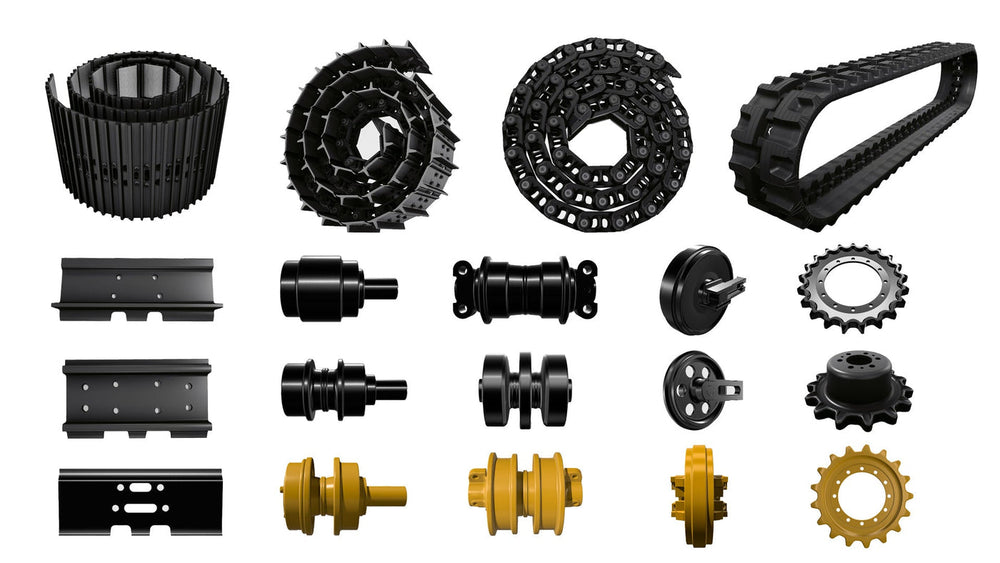
Track roller play rarely exists alone; it sits inside a full undercarriage system that includes carrier rollers, idlers, sprockets, and track chains. KTSU’s portfolio makes it possible to address these linked failure modes systematically rather than piecemeal:
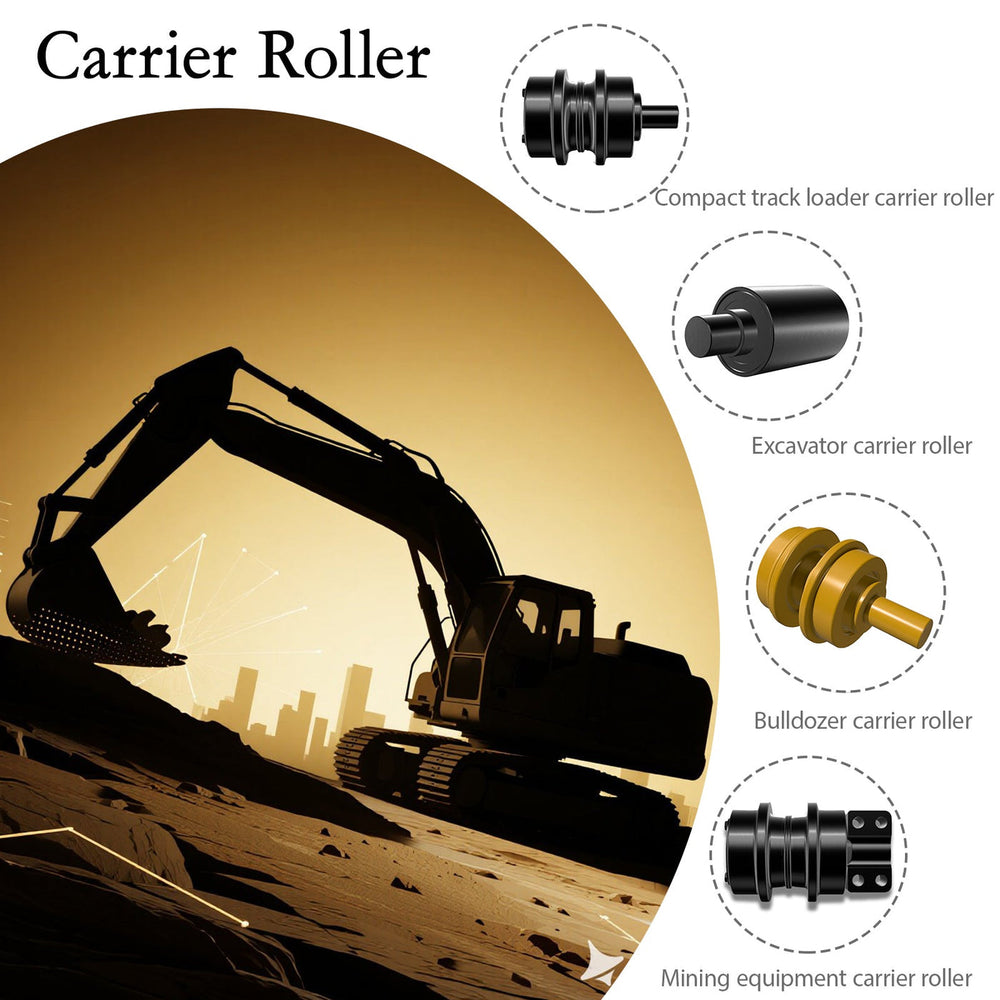
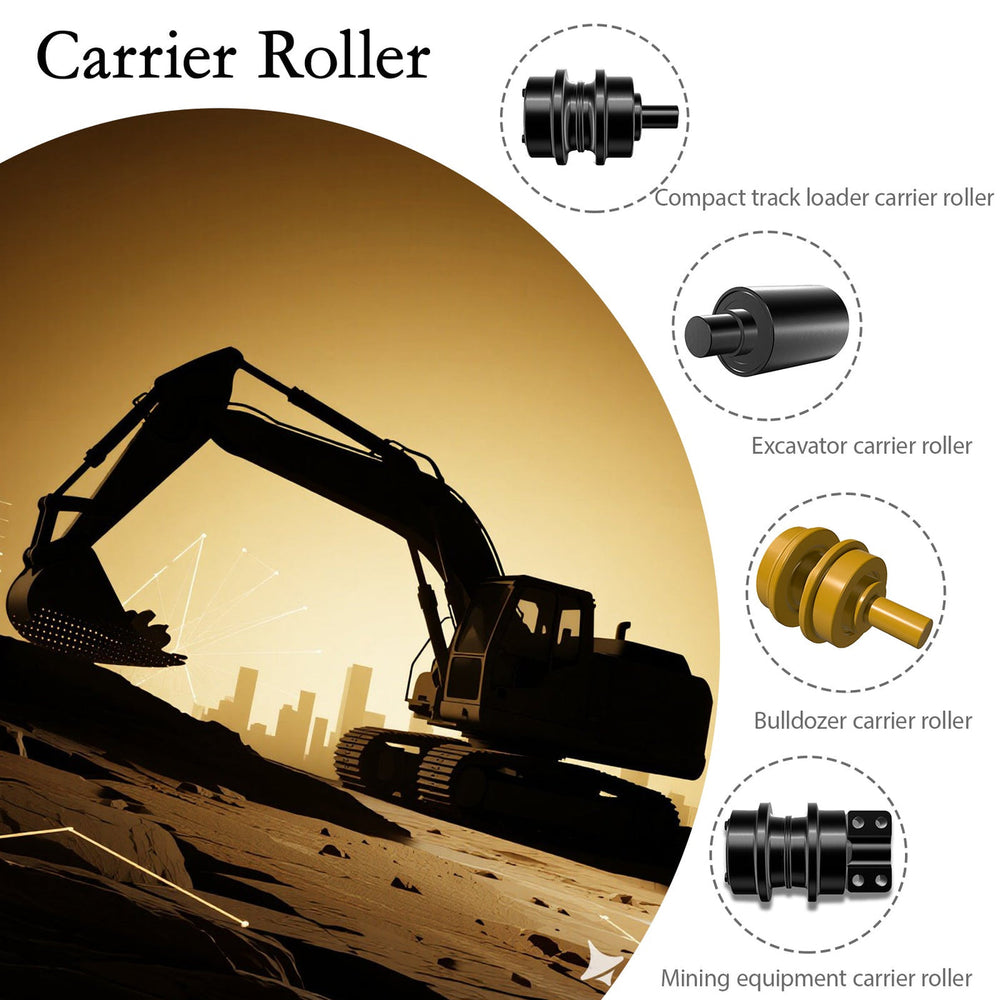
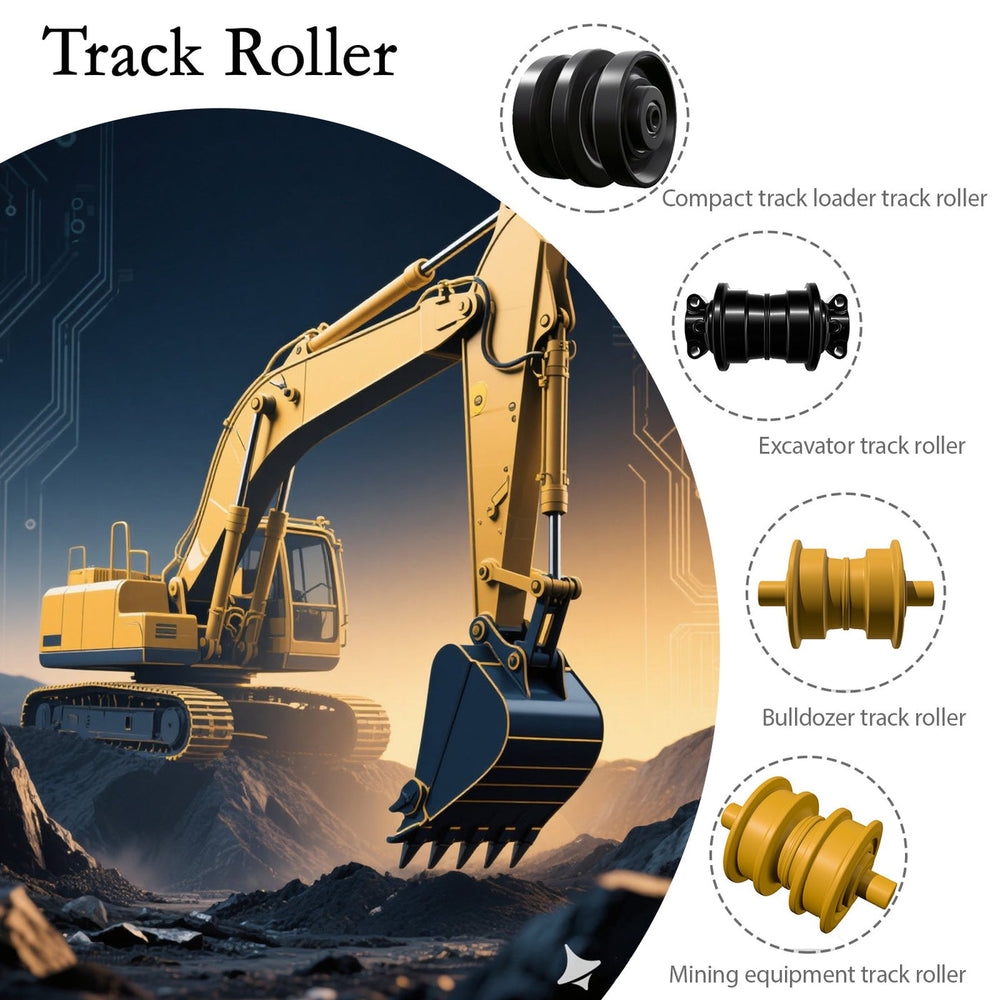
Track Roller Line: The most direct solution for bottom and carrier roller replacement, using forged shells, friction welding, and CNC machining to control dimensions and ensure stable track guidance under side-thrust.
Sprocket Range: For machines showing combined roller and sprocket wear, restoring the correct pitch relationship between the chain and tooth profile prevents accelerated link wear and tooth hooking.
Idler Products: Where roller play has already caused misalignment into the front idler, these offer precise guide face geometry to re-center the track line and protect chain links.
Link and Chain Assemblies: In high-hour fleets, upgrading to these at the same time as installing new rollers delivers the best cost-per-hour outcome, resetting the undercarriage as a matched system instead of mixing new rollers with fatigued chains.
Rubber Track & Track Shoe Lines: For mixed-duty applications that cycle between pavement and soil, these offerings help to preserve frame integrity and reduce vibration, which, in turn, reduces shock loading into fresh rollers.
Two kinds of play, two limits
Play in a track roller is measured in two directions, and they indicate different things. Sorting them is what decides whether a rebuild is worth attempting.
| Measurement | What it indicates | What it decides |
|---|---|---|
| End play along the shaft axis | How much the assembly can move along the direction of the shaft, which reflects the shaft seat and the retention arrangement | Where the limit is exceeded, the shaft or its seat is worn, and a rebuild depends on whether that surface can be restored |
| Radial play, or runout while rotating | How far the shell moves away from its centre, which reflects the bearing and the shell fit | A shell that runs out of true is a replacement decision, because the running surface can no longer be positioned correctly |
Two practical rules follow. Measure both with the roller supported and free to turn, since a roller still on the machine under load will not show either figure honestly. And record both, because the trend between readings is what distinguishes a roller approaching its limit from one whose shaft was damaged in service.
The reason to separate them is the rebuild decision. Where end play is within limits and the shell is sound, a roller is a candidate for new seals and bearings. Where the shell runs out of true, or the shaft seat is worn, the structure is out of specification and a rebuilt assembly goes back into service with the defect that caused the failure.
Conclusion: Precision Play Control as a Strategy
Controlling track roller play on a Yanmar Vio35 is not just about chasing a single tolerance number; it is about maintaining the geometry and sealing integrity of the entire double-flange undercarriage system over thousands of hours. By measuring end-play with a dial indicator, watching for early signs of side-thrust wear, and choosing well-engineered replacement rollers, fleets can significantly extend chain and pad life, eliminate unplanned downtime, and improve operator confidence on demanding jobs.
KTSU’s forged, friction-welded, CNC-machined rollers, featuring robust sealing and precise hardness control, offer a practical path to OEM-level performance without the risks of speculative field rebuilding or running vital components to destruction.
If your Yanmar Vio35 undercarriage is showing roller play, unusual noise, or tracking issues, now is the time to tighten tolerances rather than wait for a catastrophic failure. Explore KTSU’s Track Roller, Carrier Roller, Sprocket, and Link and Chain offerings to build a matched undercarriage strategy that keeps your mini excavators productive, stable, and safe on every site. Kunshan Kensetsu Buhin Co., Ltd. combines specialized engineering, advanced CAD/CAM, and automated welding systems to deliver reliable excavator undercarriage solutions built for real-world construction and agriculture duty.
Frequently Asked Questions
What is normal play in a track roller?
The limit comes from the machine or part specification for your model rather than from a general figure, and it is expressed differently for end play and for radial runout. What matters for the decision is the trend between readings rather than a single measurement.
How do I measure track roller play?
With the roller supported and free to turn: end play along the shaft axis, and radial play or runout while the shell is rotated. Measuring while the roller is still loaded on the machine will not produce an honest figure.
When can a track roller be rebuilt?
Where the shell and the shaft seat are within tolerance and the sealing surfaces are intact. Once the shaft is scored or the shell runs out of true, replacement is the decision, because a rebuilt assembly cannot correct either.
What causes play to develop?
Bearing wear from normal service, contamination that has reached the bearing past a seal, and shaft wear where the roller has been run with the incorrect clearance. The three are distinguished by which measurement has moved.
Does play affect the rest of the undercarriage?
Yes. A roller that moves also moves the chain it supports, which changes the load on the link rail and the roller flanges beside it. That is why the measurement is taken before the roller is condemned and the group is inspected in the same session.
This article is part of Excavator Track Rollers: How to Choose the Right Ones, the guide that covers this topic in decision order.
More Undercarriage Parts guides
Find the next article for your component, application or buying decision.
Back to Undercarriage Parts