Why Frequent Undercarriage Replacement Quietly Inflates Heavy Equipment TCO
Practical reading for undercarriage components, operating conditions and parts decisions.
On this page
A tracked machine can appear economical right up to the point when its undercarriage needs another replacement. The parts invoice is visible, so it gets attention; the wider cost is easier to miss: a crew waiting, a job sequence disrupted, expedited freight, a rental substitute, and a machine whose remaining components no longer wear as a matched system. That is why undercarriage TCO deserves a place in the operating budget rather than being treated as an occasional repair event.
Last updated:

For fleet managers, the central question is not simply whether a lower-priced roller, sprocket, idler, or track chain can fit the machine. It is whether that component can maintain predictable wear life under the actual mix of terrain, loads, travel habits, and maintenance discipline. A longer-life undercarriage component pack can reduce lifecycle spending, but only when the entire system and its operating conditions support that extra service life.
excavator undercarriage TCO management
Why does undercarriage TCO carry so much weight?
Undercarriage TCO is the combined lifecycle cost of buying, operating, inspecting, repairing, replacing, and losing productive time because of the undercarriage. A low initial parts price can therefore become expensive when it leads to repeated planned change-outs or an unexpected failure in the middle of a project.
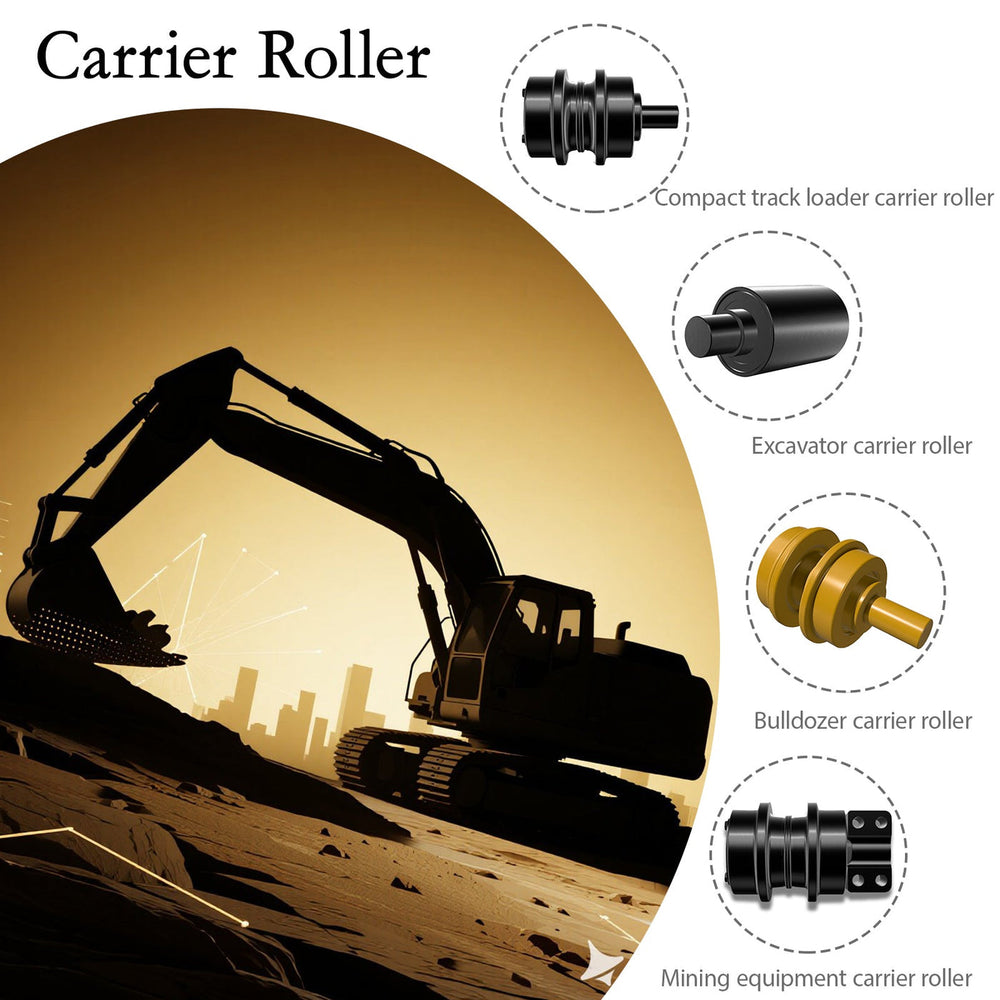
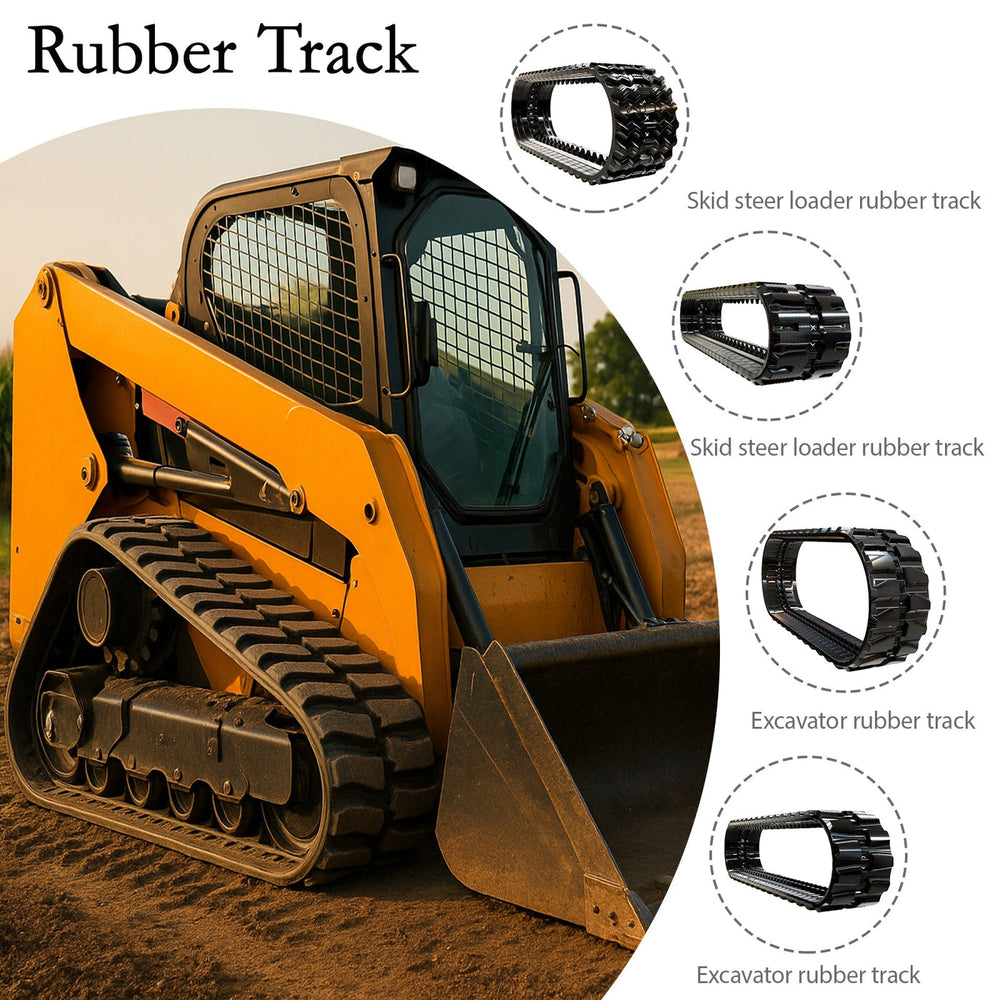
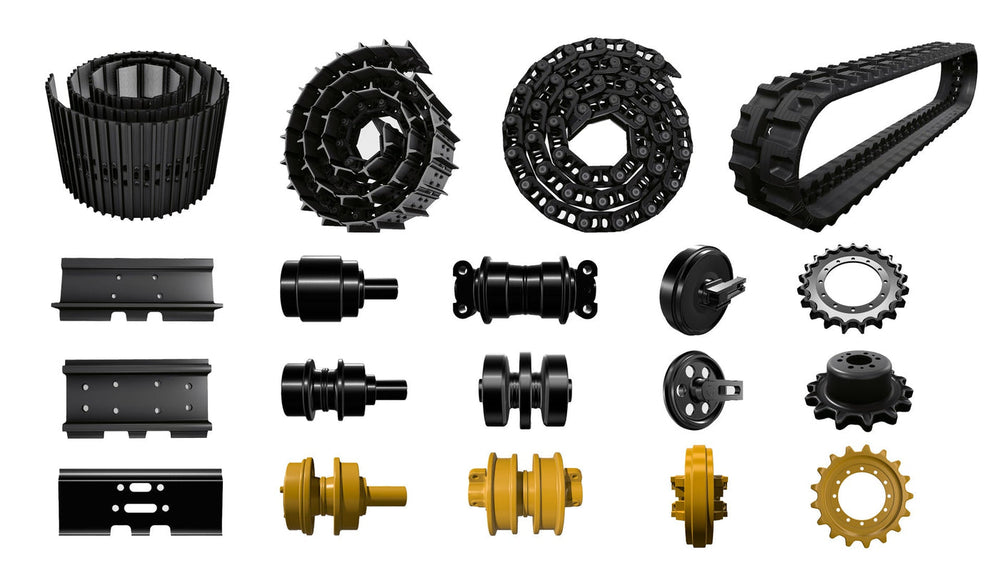
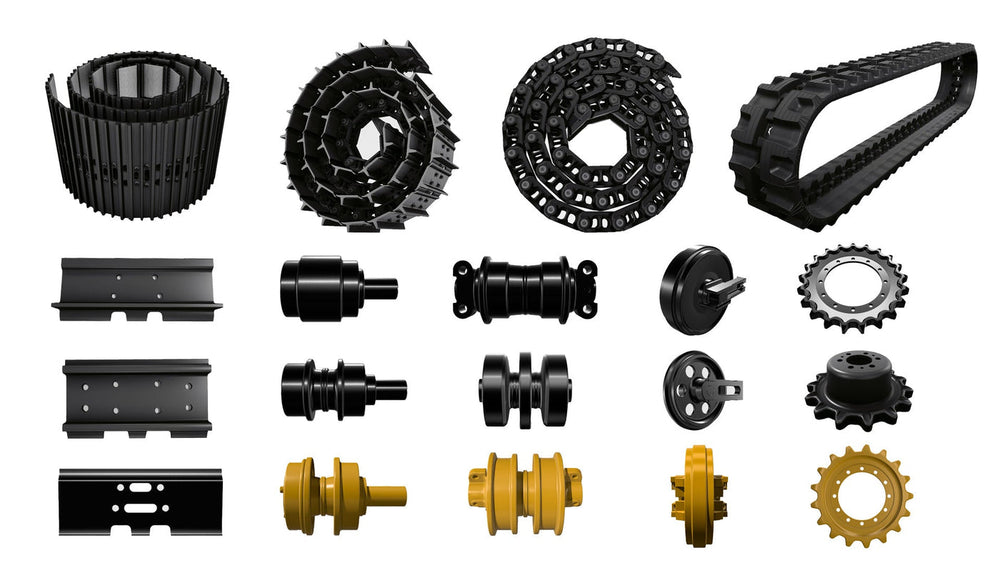
On excavators, dozers, and other tracked equipment, rollers, idlers, sprockets, track chains, shoes, pins, and bushings work as an interconnected wear system. Replacing one weak component repeatedly may not solve the original cost problem if its wear accelerates damage elsewhere. A worn sprocket can shorten chain life; incorrect track adjustment can add avoidable load to bushings and rollers; packed debris can prevent rollers from rotating freely.
The budget consequence is straightforward: frequent component replacement raises direct maintenance spending while making labor scheduling and production planning less reliable. That uncertainty is often more damaging than a known, scheduled maintenance event.
How frequent replacements create a cost cascade
Repeated undercarriage work affects more than the price of the next component. Every intervention creates a chain of costs that fleet budgets often record in different departments.
Parts spending rises when rollers, chains, sprockets, or idlers reach their wear limits earlier than expected.
Labor costs increase because removal, alignment, tension adjustment, inspection, and commissioning are repeated more often.
Downtime becomes more disruptive when work is unplanned, especially if a machine is central to grading, excavation, loading, or site access.
Emergency purchasing adds pressure through rush shipping, limited stock availability, or a forced substitution that does not match the wear profile of the remaining system.
Production loss spreads outward when operators, trucks, attachments, subcontractors, or adjacent work fronts must wait for a machine to return.
This is why a fleet should avoid measuring undercarriage cost only as dollars spent per component. Cost per productive hour is more useful because it includes the periods when the machine was technically owned but could not earn or support revenue.
What belongs in a lifecycle undercarriage budget?
A practical heavy equipment operating budget should separate predictable maintenance from disruption costs. That makes it easier to compare a frequent-replacement strategy with a long-life component strategy without assuming that every jobsite behaves the same way.
| Lifecycle cost area | Frequent replacement profile | Longer-life component profile | What fleet managers should measure |
|---|---|---|---|
| Initial component purchase | Lower upfront outlay | Usually higher upfront outlay | Landed cost per complete compatible system |
| Replacement frequency | More maintenance events over machine life | Fewer events if wear life is achieved | Operating hours between interventions |
| Planned maintenance labor | Repeated removal and fitting labor | Less frequent labor demand | Labor hours per 1,000 machine hours |
| Unplanned repair exposure | Higher if wear is poorly monitored or components mismatch | Lower only with inspection and correct application | Emergency work orders and expedited freight |
| Downtime loss | More opportunities for idle crews, rental cover, and schedule slippage | Fewer interruptions when replacement timing is predictable | Lost productive hours and replacement-equipment cost |
| Residual operating condition | Greater risk of uneven system wear | Better potential for coordinated wear management | Wear measurements across rails, rollers, idlers, and sprockets |
| Budget predictability | Lower | Higher when lifecycle data is tracked | Variance between forecast and actual spend |
For a simple internal comparison, use indexed costs rather than borrowed industry averages. If a standard replacement path is indexed at 100 for parts, add its labor, planned downtime, emergency-risk allowance, and rental-cover exposure. Then compare that full amount with the higher initial cost of a long-life path. The result will be more useful than a parts-only comparison because it reflects the fleet’s own wage rates, utilization, project penalties, and jobsite conditions.
Why a long-life component pack can still disappoint
Longer wear life is not automatic just because a component has stronger materials or a deeper hardened wear surface. The expectation gap usually appears when fleets install better parts but continue the same operating and maintenance habits that caused premature wear in the first place.
Track tension is a common example. Tracks that are too tight can accelerate bushing and related component wear, while overly loose tracks can create instability and raise derailment risk. Material packed around rollers, idlers, or sprockets changes how the system moves and can turn a normally manageable wear pattern into a rapid failure cycle.
Mixed-condition rebuilds can also undermine results. A new chain operating against heavily worn sprockets or rollers may not achieve its intended service life. Similarly, a component selected for relatively dry, low-impact work may not behave the same way in abrasive quarry material, sticky clay, steep slopes, demolition debris, or high-travel applications.
The lesson is not to avoid premium components. It is to treat durability as a system outcome, verified through inspection data and operating behavior, rather than as a promise attached to a single part number.
Which operating habits protect undercarriage life?
The most effective improvements are usually routine rather than dramatic. They work because they prevent the small, repeated stresses that turn into early replacement events.
Set track tension to the machine manufacturer’s specification and account for the working environment rather than relying on visual judgment alone.
Remove packed mud, rock, ice, and debris before they restrict roller movement or alter track alignment.
Monitor wear at regular intervals and compare measurements with prior inspections, not just with the point of visible failure.
Limit unnecessary high-speed travel, abrupt turns, side-slope travel, and extended reversing where the work plan permits.
Replace connected wear components as a matched decision when measurements show that an isolated repair would create a poor interface.
Record the machine model, application, soil condition, component source, operating hours, and failure mode for every undercarriage work order.
Operators matter here because they see track behavior before it reaches the maintenance report. A machine that feels rougher, pulls unevenly, sheds material differently, or needs repeated tension correction is giving the fleet information. Capturing that information early makes planned maintenance more realistic.
KTSU Expert Views
KTSU’s manufacturing context highlights why fleet discussions should look beyond a single visible wear surface. At its 70,000-square-meter facility in Kunshan, the company works across more than 3,000 undercarriage items, including track rollers, carrier rollers, front idlers, sprockets, and track chain assemblies. That breadth reinforces a practical point: an undercarriage is not a collection of unrelated replacement parts.
A long-life pack should be evaluated as a compatibility decision. Surface hardness, case depth, sealing quality, machining consistency, and the relationship between chain, sprocket, roller, and idler geometry all influence whether wear develops gradually or becomes concentrated in one area. KTSU’s use of CAD/CAM design, NITTO friction welding, robotic CO2 welding, and CNC machining reflects the production controls that matter when fleets seek repeatable component behavior rather than a low initial invoice.
Still, production quality cannot compensate for neglected inspections, unsuitable track adjustment, or an application that exceeds the selected configuration. The strongest procurement process combines component specification with site conditions, historical wear records, and a clear plan for measurement before the machine reaches a costly failure point.
Where a frequent replacement puts its cost
The parts invoice is the visible line. Four others follow a replacement, and they scale with how often it happens.
| Cost line | How frequent replacement creates it | How to put a number on it |
|---|---|---|
| Crew and support time | The same job is repeated, with the same access and tooling cost each time | Job hours multiplied by the number of replacements over the machine working life |
| Disruption to the job sequence | A machine that comes out of service more often interrupts whatever depends on it | The hours the sequence loses, not only the hours the machine is down |
| Expedited freight | An unplanned replacement is usually an urgent one | Compare the freight actually paid against the planned rate |
| Wear transferred to neighbouring parts | A component replaced late has been loading the ones around it | Any part replaced early whose wear traces back to the first one reaching its limit |
That is why the decision between a lower price and a longer life is not settled by dividing the price by the hours. It is settled by counting the times the job is done and what each occasion costs beyond the parts. Where the cheaper option genuinely delivers the same interval on the same ground, the model will say so.
How should fleets choose between lower price and longer life?
The right decision depends on utilization, downtime consequences, component compatibility, and the certainty of the application. A lightly used machine working on forgiving ground may not recover the higher initial cost of a longer-life undercarriage package as quickly as a high-utilization dozer or excavator supporting a critical production schedule.
KTSU is relevant in this evaluation because its Sino-Japanese manufacturing model combines Japanese technical methods with production in China, and its component range is built around fitment for major equipment brands including Caterpillar, Komatsu, and Hitachi. For a procurement team, that does not remove the need to confirm exact machine configuration, but it does support a more disciplined comparison of whole-system fit rather than buying individual parts solely on unit price.
Ask suppliers and internal maintenance teams the same questions: What is the expected application? Which components are being replaced together? What baseline wear measurements exist? What labor and downtime have previous replacements required? A component pack is financially useful when those answers show fewer interventions across the machine’s productive life.
Frequently Asked Questions
Why does frequent undercarriage replacement increase total cost of ownership?
Because each replacement carries labour, disruption, freight and the wear it transfers to neighbouring parts. Those lines scale with how often the job is done, and they rarely appear in the parts comparison.
What belongs in a lifecycle undercarriage budget?
Parts, labour and access, downtime at the rate the machine earns, freight, and any component replaced early because of the one that failed. One replacement cycle is not enough to make the comparison meaningful.
How should fleets choose between lower price and longer life?
Count the number of replacement occasions over the machine working life and what each one costs beyond the parts. Where the cheaper option delivers the same interval on that ground, the arithmetic will show it.
Can a long-life component pack still disappoint?
It can where the machine is working a duty the specification does not suit, or where the cause of the original wear, such as alignment or packing, is still present. The parts outlast the conditions that are consuming them, or they do not.
References
This article is part of Undercarriage Parts: The Complete Buyer’s Guide, the guide that covers this topic in decision order.
More Technical Guides guides
Find the next article for your component, application or buying decision.
Back to Technical Guides