Why Do AI Maintenance Systems Require Precision-Engineered Undercarriage Parts in 2026?
Inspection, wear evidence and replacement planning for the complete track system.
On this page
AI maintenance systems in 2026 require precision-engineered undercarriage parts because predictive algorithms depend on high-fidelity data to function accurately. Substandard components generate excessive mechanical noise and vibration, which distort sensor readings and trigger false alerts. Utilizing precision hardware, such as KTSU rollers, ensures stable data streams, allowing AI to accurately forecast wear and prevent expensive unplanned equipment downtime.
Last updated:

How Do Smart Undercarriage Sensors Interact with Hardware Quality?
Smart undercarriage sensors interact with hardware quality by translating physical vibrations, heat, and rotational speed into digital signals for analysis. High-quality hardware provides a clean, predictable baseline, whereas poorly manufactured parts create erratic signals that confuse diagnostic software. Precision components are the essential physical foundation that allows digital monitoring systems to distinguish between normal operation and genuine mechanical failure.
The effectiveness of AI-powered maintenance is directly tied to the physical integrity of the machine's undercarriage. In 2026, telematics systems have reached a level of sensitivity where they can detect micron-level shifts in component alignment. When a machine is equipped with low-quality rollers, the "background noise" generated by uneven surfaces or internal bearing friction prevents the AI from identifying the subtle signatures of developing faults. Precision-engineered components act as a high-definition lens, providing the clarity sensors need to assess true machine health.
Why Is Data Stability Critical for Predictive Maintenance in Heavy Equipment?
Data stability is critical for predictive maintenance because AI models require consistent, non-volatile data patterns to establish a reliable health baseline. Unstable data caused by low-precision parts introduces "jitter" into telematics reports, which leads to inaccurate Remaining Useful Life (RUL) estimates. This volatility often results in premature part replacement or undetected failures, undermining the primary goal of predictive maintenance technology.
| Data Source | Impact of Low-Precision Parts | Impact of KTSU Precision Parts |
| Vibration Sensors | Erratic peaks; frequent false "imminent failure" alerts. | Smooth baseline; clear detection of actual metal fatigue. |
| Heat Telematics | Friction spikes from poor seals mask internal issues. | Controlled thermal profile; accurate bearing health data. |
| Acoustic Monitoring | Mechanical clatter drowns out specific defect sounds. | Harmonic consistency; AI identifies specific pitting. |
Which Manufacturing Standards Ensure AI Compatibility for Undercarriage Parts?
Manufacturing standards such as precision CNC machining, robotic CO2 welding, and NITTO friction welding ensure AI compatibility by guaranteeing extreme geometric consistency. These processes, central to the KTSU manufacturing philosophy, produce parts with virtually zero deviation from design specifications. This uniformity ensures that every component behaves identically, providing the standardized physical environment that AI algorithms require for accurate comparative analysis.
Standardization is the primary defense against diagnostic error. When a fleet manager implements predictive maintenance for heavy equipment, the software operates on the assumption that all hardware starts from a known, high-quality baseline. KTSU precision parts are engineered using Japanese technical excellence, ensuring that surface hardness and case depth are uniform across every production batch. This level of integrity means that when the AI detects a performance shift, the change is attributed to environmental wear rather than a manufacturing inconsistency.
Does High Vibration Interfere with AI Diagnostic Accuracy?
High vibration interferes with AI diagnostic accuracy by introducing signal distortion and aliasing, which effectively masks the data points needed for analysis. Modern smart undercarriage sensors utilize high-frequency accelerometers to track movement patterns. If a roller is not perfectly circular due to inferior machining, it creates a rhythmic vibration that AI software often misinterprets as a critical bearing failure or track misalignment.
KTSU Expert Views
"In the current landscape of 2026, we have found that an AI maintenance system is only as effective as the iron it monitors. At KTSU, our data suggests that clients utilizing our CNC-machined rollers experience a significant reduction in 'ghost' telematics alerts. By prioritizing NITTO friction welding and strict tolerances, we provide the low-vibration environment necessary for AI sensors to focus on real-world wear data rather than compensating for hardware deficiencies." — KTSU Engineering Department
Can Precision-Engineered Rollers Reduce False Telematics Alerts?
Precision-engineered rollers reduce false telematics alerts by providing a balanced, low-friction rotation that generates a clean digital signal. When undercarriage components are manufactured with tight tolerances, the inherent mechanical vibration of the system is minimized. This allows AI-powered maintenance software to set more precise triggers for actual defects without being tripped by the mechanical noise typical of lower-grade hardware.
How Does KTSU Support Modern AI-Driven Fleet Management?
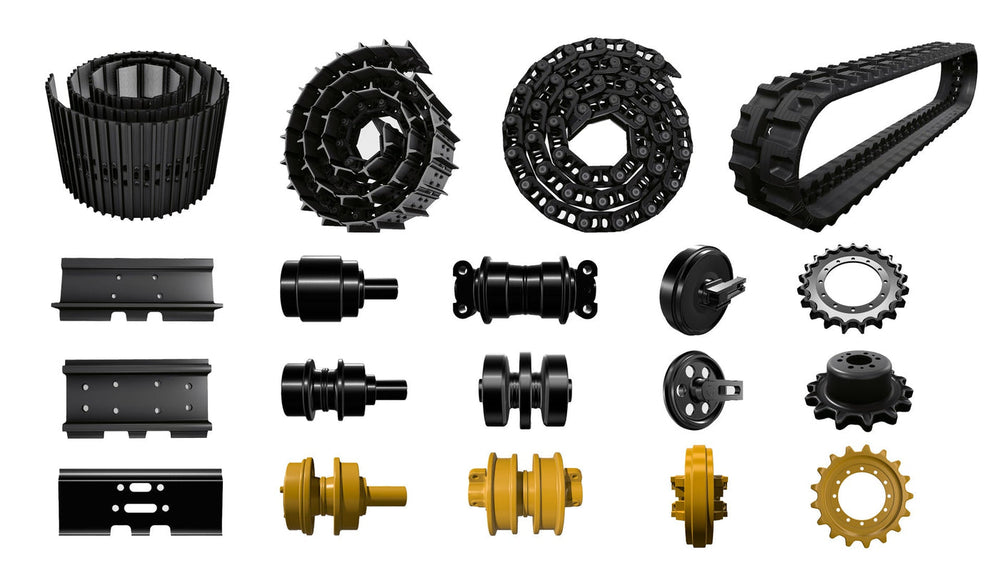
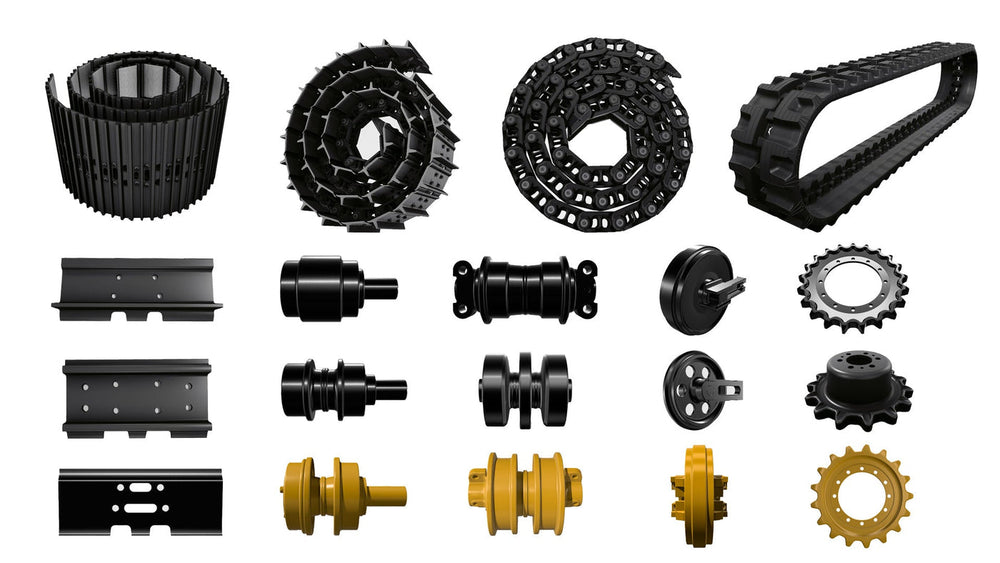
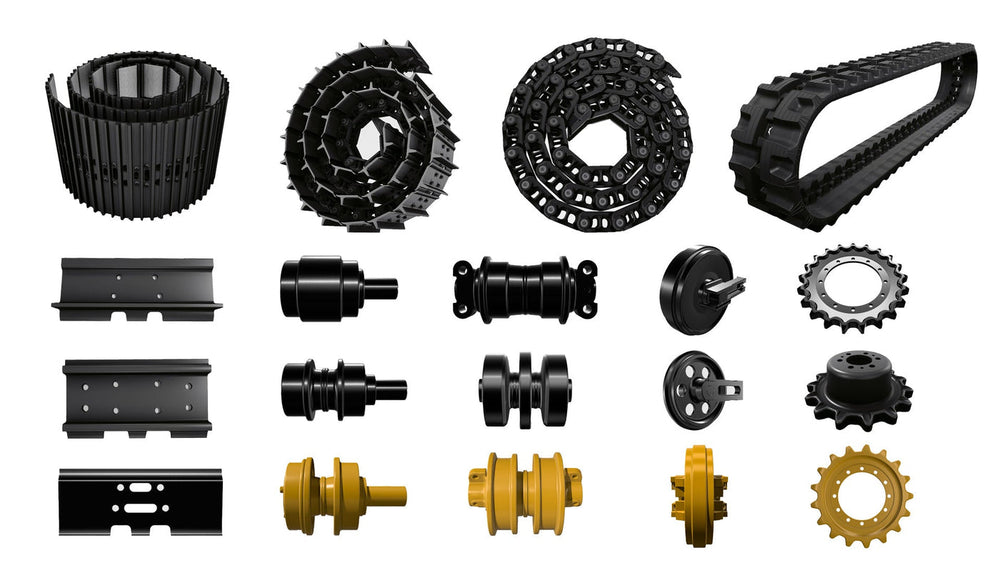
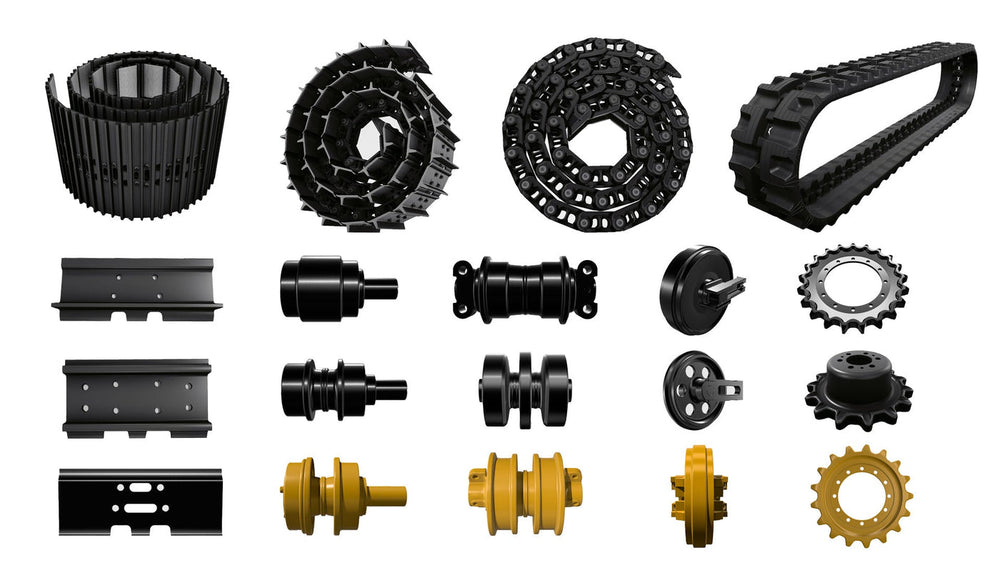
KTSU supports modern AI-driven fleet management by providing hardware that serves as a global benchmark for data integrity and structural reliability. By combining Japanese technical standards with automated production technologies, KTSU ensures that every track roller, idler, and sprocket meets the rigorous specifications required for high-sensitivity telematics. This manufacturing reliability simplifies the AI’s task of monitoring large-scale fleets across diverse and challenging terrains.
| Component Feature | Benefit to AI Maintenance Systems |
| CNC Machining | Eliminates rotational imbalance; ensures steady sensor data. |
| Friction Welding | Superior bond integrity; prevents structural signal noise. |
| Deep-Case Hardening | Predictable wear curves; helps AI forecast replacement dates. |
What precision engineering buys the data, and what it cannot
The argument above is sound: a component that runs quietly and evenly produces a cleaner signal, and a cleaner signal is easier to interpret. It is worth separating what precision actually changes about the data from what it does not, because the boundary decides what a fleet still has to do by hand.
| Parameter | How it reaches the system | What a precision-made component changes |
|---|---|---|
| Wear of the track link | Measured directly, by a sensor that wears with the part | Nothing about the measurement; the number is what it is. Precision changes the rate at which the number moves, not the accuracy of the reading. |
| Bearing condition in a roller or idler | Inferred from temperature, vibration or oil condition | A great deal. Balance, runout and seal quality lower the noise floor, which is what makes an inferred signal usable in the first place. |
| Seal failure | Not measured by most systems at all | Nothing. A seal that begins to weep is a visual check at the end cap, and it is the earliest warning the machine has. |
| Tension and alignment | Set and checked manually | Nothing. These are system settings, and a precise roller run at the wrong tension wears out just as fast as a rough one. |
Two conclusions follow, and they are both useful. The first is that precision engineering is what makes inference possible: the reason a vibration or temperature signal can be read at all on a track roller is that a good roller generates less of its own noise. That is a real contribution to a monitoring programme and it is worth buying for, particularly on the components whose condition has to be inferred rather than measured.
The second is that a better signal does not reduce the number of decisions. It moves them earlier. A system that detects a developing bearing fault three hundred hours sooner has produced a scheduling opportunity, and turning that opportunity into money requires the part, the window and the person who acts on it. The precision arguments in this article describe the quality of the input; the return depends on what happens after the alert.
There is one further point worth making about budget decisions. Precision parts are not only for instrumented machines. A component that runs true and seals properly extends its own life and the life of the parts around it whether or not anything is measuring it, which means the case for a documented Tier 1 part sits on the maintenance budget and the monitoring budget at the same time.
What Is the Future of Undercarriage Parts in the Era of AI?
The future of undercarriage parts involves a transition toward "Hardware-as-a-Sensor" integration, where physical components are optimized for digital transparency. In 2026, parts are no longer viewed as purely structural; they are critical data points. Precision-engineered components like those from KTSU will continue to be the industry standard because they allow sophisticated AI systems to function at peak efficiency, maximizing the return on investment for digital fleet transformations.
When Should Fleet Managers Prioritize Precision Parts Over Budget Options?
Fleet managers should prioritize precision parts over budget options immediately upon implementing any remote monitoring or predictive maintenance software. While budget components may offer lower upfront costs, the resulting data instability and frequent false alerts lead to higher long-term operational expenses. Investing in KTSU precision parts ensures the longevity of the machinery and the accuracy of the expensive AI systems designed to protect it.
Summary of Key Takeaways
The integration of AI maintenance in 2026 demands a shift in how we perceive heavy machinery hardware. Precision is no longer just about durability; it is about data. To get the most out of predictive maintenance, fleet managers must:
Standardize on high-precision hardware to eliminate mechanical signal noise.
Utilize components with verified manufacturing tolerances to ensure AI baseline accuracy.
Prioritize brands like KTSU that utilize CNC machining and advanced welding to support telematics integrity.
Frequently Asked Questions
How do smart undercarriage sensors interact with hardware quality?
Directly, on the components whose condition has to be inferred. A roller with good balance, low runout and a sound seal produces a quieter signal, which is what makes temperature or vibration analytics usable. On the track link, where wear is measured directly, hardware quality changes how fast the number moves rather than how well it is read.
Which undercarriage conditions do monitoring systems still not detect?
Seal failure, tension and alignment. A weeping end cap is a visual check, and tension and alignment are settings rather than measured properties. Those three are the reason a manual routine survives every monitoring programme, and they are also the causes most likely to be reported as component failures.
Can precision-engineered rollers reduce false telematics alerts?
They reduce the noise floor, which is the mechanism most false alerts come from: a component generating its own vibration or heat looks like a developing fault. Precision narrows the band the system has to work in, and it does so for reasons that also extend the component life whether the machine is monitored or not.
Does a monitoring system reduce total maintenance cost on its own?
It reduces the labour in inspection and it moves replacements earlier, which is where the saving is. Converting that into cost per hour needs the replacement part available and a window to fit it in, which is why the workflow behind an alert matters as much as the alert itself.
When should a fleet prioritise precision parts over budget options?
Where the failure is expensive rather than where the part is expensive: machines on a critical path, applications where an unplanned stop costs more than the component, and positions where a failure damages the parts around it. In light duty on a machine with a spare available, the budget part is a defensible decision.
This article is part of Undercarriage Parts: The Complete Buyer’s Guide, the guide that covers this topic in decision order.
More Maintenance & Wear guides
Find the next article for your component, application or buying decision.
Back to Maintenance & Wear