What Is a Front Idler and Why Does It Matter for Your Undercarriage?
Component selection, fitment and the connections that keep an undercarriage working as a system.
On this page
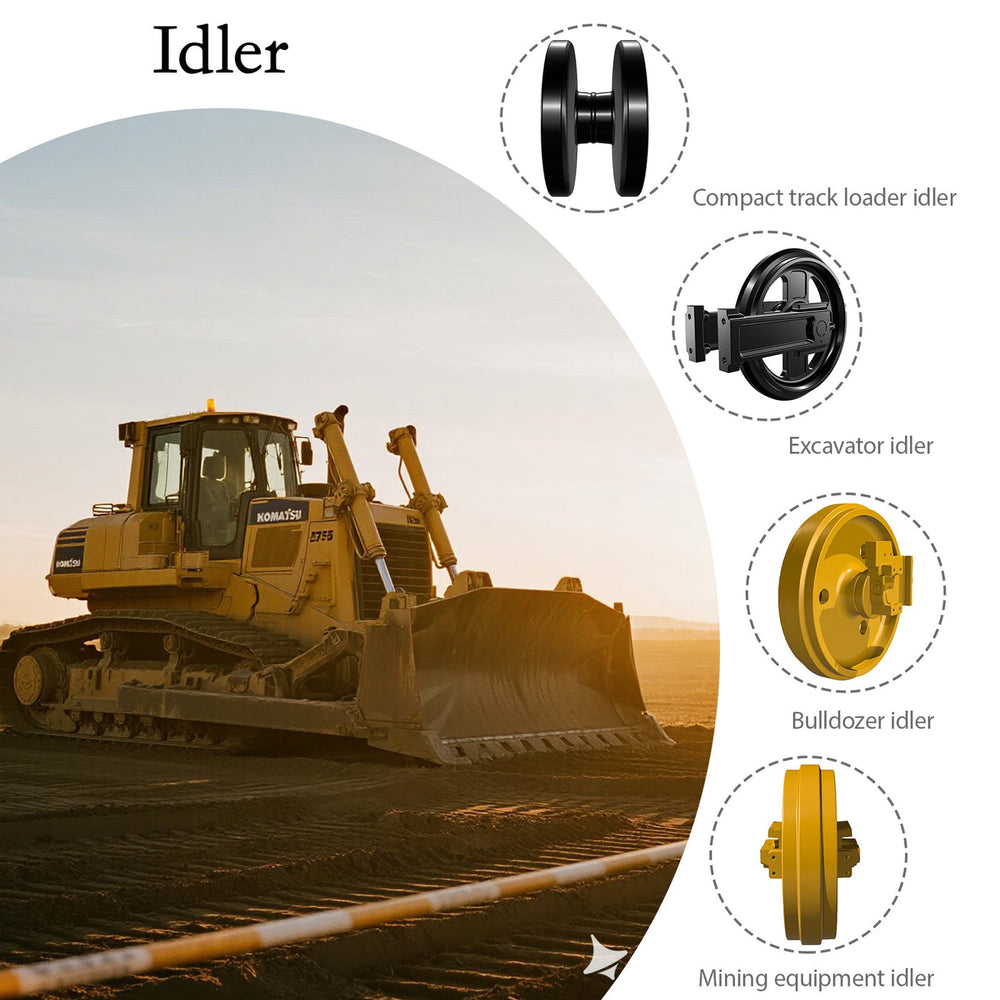
A front idler is a large, heavy-duty metal wheel located at the front of a tracked machine's undercarriage—the structural framework and tracks beneath heavy equipment like excavators and bulldozers—that guides the track chain and maintains proper track tension. Unlike the rear drive sprocket, it does not power the machine. Instead, it acts as a smooth guide, a vital tension controller, and a heavy-duty shock absorber for the moving tracks. For heavy equipment fleet managers and industrial buyers, selecting a high-quality front idler is essential for extending the life of the entire undercarriage, minimizing unexpected machine downtime, and optimizing overall ground-engaging performance in harsh terrains.
Last updated:

What Does a Front Idler Do?
The front idler operates through a precise mechanical synergy and structural design to handle immense dynamic forces:
Guides the Track: It keeps the heavy track chain aligned in a straight path, preventing the tracks from slipping or derailing off the frame.
Maintains Tension: It works in tandem with a tension adjuster (a spring and grease cylinder system) to keep the track tight enough to run smoothly yet flexible enough to prevent catastrophic component stress.
Absorbs Shock: It cushions the severe impact forces and cushions the impact when the machine hits rocks, logs, or uneven ground.
Distributes Weight: It helps spread out the dynamic forces and weight of the machine evenly across the track system.
Sealing and Protection: High-precision machining and robust floating sealing structures are critical to protecting internal bearings from abrasive contaminants like dust, slurry, and grit. When internal bearings or seals fail, metal grinds on metal, ruining the axle and requiring a full assembly replacement instead of a simple fix.
Why Quality and Compatibility Are Critical for Fleets
The importance of a front idler extends far beyond a standalone replacement part; it is a vital linchpin for the health of the whole undercarriage system:
Prevents Track Derailment: A worn or misaligned idler allows the track to slip or pop off, stopping work completely and risking job-site delays.
Reduces Component Wear: Proper alignment and induction-hardened surface durability mean less friction and scraping on the track links, rollers, and sprockets.
Saves Money: Undercarriage repairs make up a large portion of heavy equipment maintenance costs. Keeping the front idler healthy stops premature failure of the whole track assembly.
Multi-Brand Compatibility: Fleet managers often operate mixed-brand machinery. A reliable undercarriage supplier must offer seamless compatibility with major global platforms such as Caterpillar, Komatsu, and Hitachi.
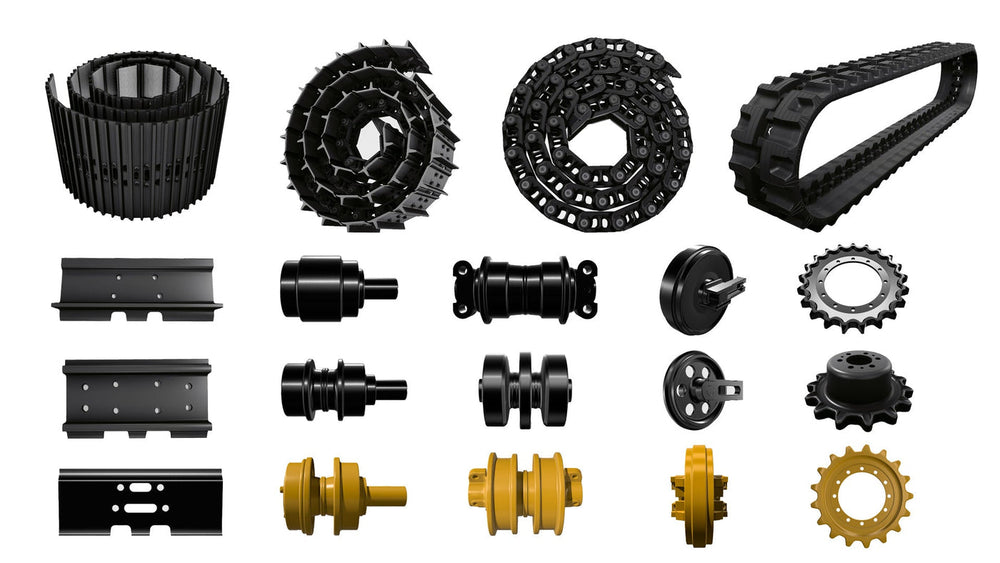
System-Wide Harmony: Sourcing components from a supplier that provides a full, synchronized range of undercarriage parts—including track rollers, carrier rollers, sprockets, and track chains—allows for standardized maintenance cycles and predictable service intervals.
Choosing the Right Front Idler: Performance Comparison Matrix
Selecting the correct replacement component requires evaluating the machine’s specific duty cycle, operational environment, and financial strategy. The following matrix outlines the strategic breakdown:
| Option Category | Key Technical Strength | Primary Limitation | Best Fit Operational Scenario |
| System-Integrated Idler | Designed for full undercarriage compatibility, metallurgical consistency, and balanced wear rates. | Requires proactive planning ahead of the natural failure cycle. | Fleet managers prioritizing long-term uptime, lower total cost of ownership (TCO), and system reliability. |
| Generic Aftermarket Idler | Typically features a lower upfront acquisition cost and widespread market availability. | Quality, heat treatment depth, and sealing consistency can vary widely between batches. | Short-term fixes, low-intensity operational environments, or budget-restricted scenarios. |
| OEM Replacement | Guaranteed factory-standard matching and brand-backed specifications. | Significantly higher cost and potentially longer international lead times. | Operations where budget flexibility is secondary to original-source procurement security. |
Essential Maintenance Practices to Maximize Idler Lifespan
Proactive maintenance significantly reduces total operating costs and prevents unexpected track derailments:
Regular Visual & Physical Inspection: Inspect the idler during scheduled service intervals for abnormal contact patterns, grease leakage, or compromised floating seals.
Strict Track Tension Monitoring: Keep track tension precisely within the manufacturer's specified tolerance. Both overly tight and loose tracks exponentially accelerate idler wear.
Synchronized Component Evaluation: Evaluate wear on related components (such as bottom rollers and sprockets) simultaneously. Unequal wear across the undercarriage forces the front idler to work harder and fail prematurely.
Operational Data Tracking: Record operational hours, terrain harshness (e.g., abrasive quarry vs. soft agricultural soil), and load weights to accurately predict replacement windows.
Technical Evaluation Checklist for Industrial Buyers
When vetting an undercarriage supplier, engineering and manufacturing standards matter far more than mere price points. Use this professional checklist to evaluate potential parts:
Does the supplier provide exact model compatibility verification for heavy equipment lines?
What are the explicit metallurgical specifications for heat treatment depth and surface hardness?
Is the internal seal design engineered and optimized for heavy impact and abrasive working environments?
Does the supplier offer a comprehensive, synchronized range of matching undercarriage parts?
Are there documented field-test results, quality control certifications, and consistent manufacturing standards?
When the idler is not the problem
A worn idler is visible, which makes it the component most often blamed for symptoms it did not cause. Three other faults produce the same evidence, and each has a distinguishing check.
| The symptom | What is usually blamed | What it often is instead |
|---|---|---|
| The track will not hold tension | The idler has worn and lost its diameter | The adjuster seal or a chain that has stretched. Check where the adjuster sits in its travel before measuring the idler. |
| The chain runs off centre at the front | The idler flange is worn | Alignment of the idler relative to the frame, or a distorted frame. Measure both sides rather than the worn one alone. |
| The idler runs hot or is noisy | The bearing is failing | Track tension outside the specification, or packed material holding the chain against the flange. Both raise the load the bearing sees. |
Two practices make the sorting reliable. Take the sag reading before the idler measurements, because tension changes what the idler appears to be doing. And compare the two sides of the machine at the same inspection, because a difference between them is evidence about the machine while a single reading only describes the part.
The commercial reason to sort before ordering is that two of the three rows are answered by work that is not the idler. An idler replaced because the track would not hold tension is a new part in front of an unchanged cause, and the same symptom returns at a shorter interval.
Conclusion
A front idler is a critical lifecycle asset for any tracked heavy machine. While it may visually appear to be a simple heavy-duty steel wheel, its dual role in maintaining track alignment and absorbing dynamic shock makes it a core driver of machine uptime and maintenance efficiency. By choosing high-quality, system-matched components and committing to a disciplined maintenance schedule, fleet operators can permanently lower their long-term operating costs and protect their capital investment from the ground up.
Frequently Asked Questions
What is a front idler and what does it do?
It is the unpowered wheel at the front of the track frame. It guides the chain around the front of the machine, holds the track in line, and works with the adjuster to maintain tension.
How do I know when a front idler needs replacing?
When flange or shell profile has reached the wear allowance, when there is perceptible end play along the shaft, when it runs hot or turns with a hard spot, or when the end cap is weeping. Cracks and broken flanges are immediate replacement triggers.
Why does the track keep losing tension?
Usually because the adjuster seal has failed or the chain has stretched, rather than because the idler has worn. Check where the adjuster sits in its travel first, then measure the chain pitch, and only then judge the idler.
Can a worn idler damage other undercarriage parts?
Yes. An idler that no longer guides the chain where it was designed to loads the roller flanges, wears the link guide faces and changes how the chain enters the sprocket, so the damage appears on parts further down the circuit.
How long should a front idler last?
Duty cycle sets the band: roughly 6,000-9,000 hours in earthworks and 3,500-6,000 in mining according to the tables used across this site, generally ahead of the rollers and the chain in the same application.
This article is part of Excavator Idlers: Selection, Wear and Replacement, the guide that covers this topic in decision order.
More Undercarriage Parts guides
Find the next article for your component, application or buying decision.
Back to Undercarriage Parts