Track Roller for Heavy Equipment: The Definitive Engineering, Diagnostic, and Selection Guide
Component selection, fitment and the connections that keep an undercarriage working as a system.
On this page
A track roller is a heavy-duty, critical undercarriage component on crawler machinery like excavators, bulldozers, and agricultural equipment that supports the machine's full weight, guides the track chain, and ensures smooth, controlled rolling motion. Choosing the right roller is not merely about replacing a worn part; it is about maximizing equipment uptime, reducing fuel consumption, protecting the entire undercarriage system from premature cascading failure, and lowering the total cost of ownership (TCO). In this comprehensive master guide, we analyze mechanical functions, types, advanced diagnostic wear patterns, quantifiable maintenance thresholds, and a strategic selection framework for fleet managers, engineers, and industrial distributors.
Last updated:

Core Functions, Types, and Metallurgical Superiority
Understanding how track rollers operate within the undercarriage architecture is essential for maximizing operational efficiency in aggressive environments like mining, quarrying, and heavy construction.
Bottom vs. Top Rollers
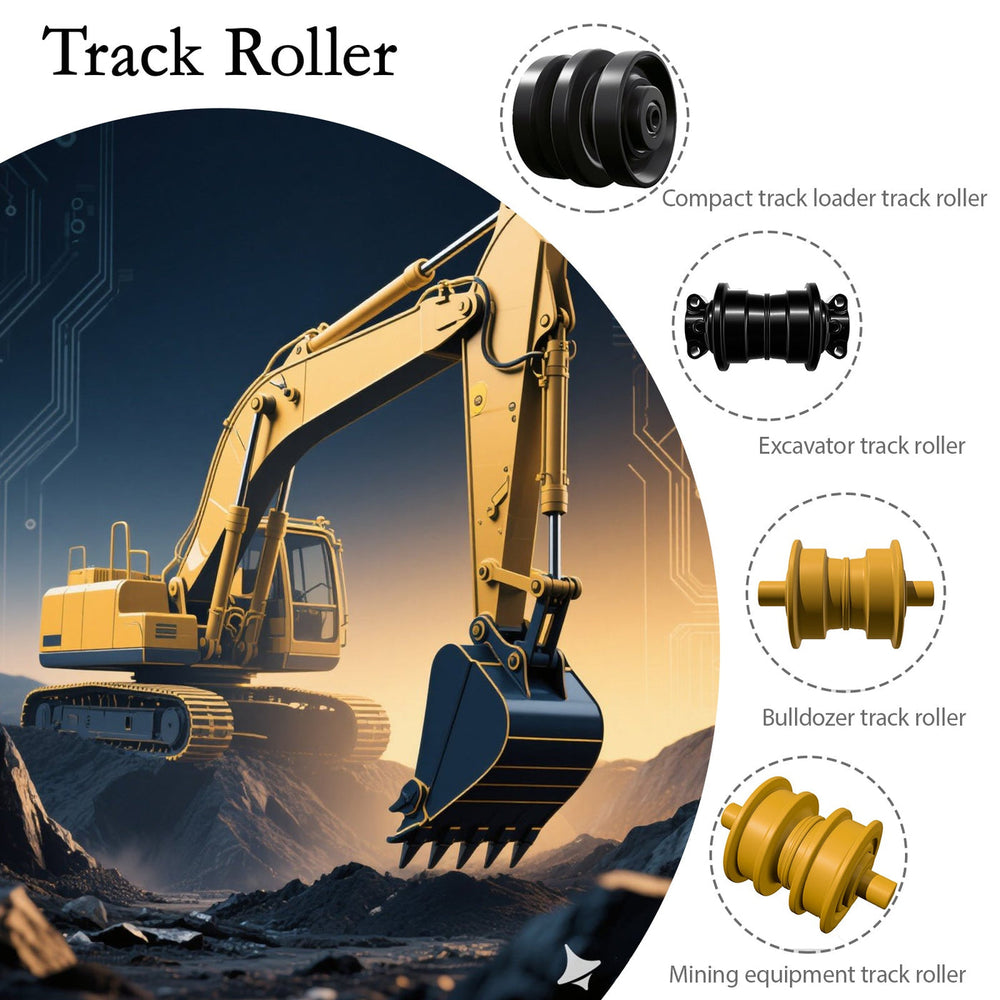
Track Rollers (Bottom Rollers): Mounted along the lower undercarriage frame, these load-bearing wheel assemblies carry the immense weight of the machine directly across the ground.
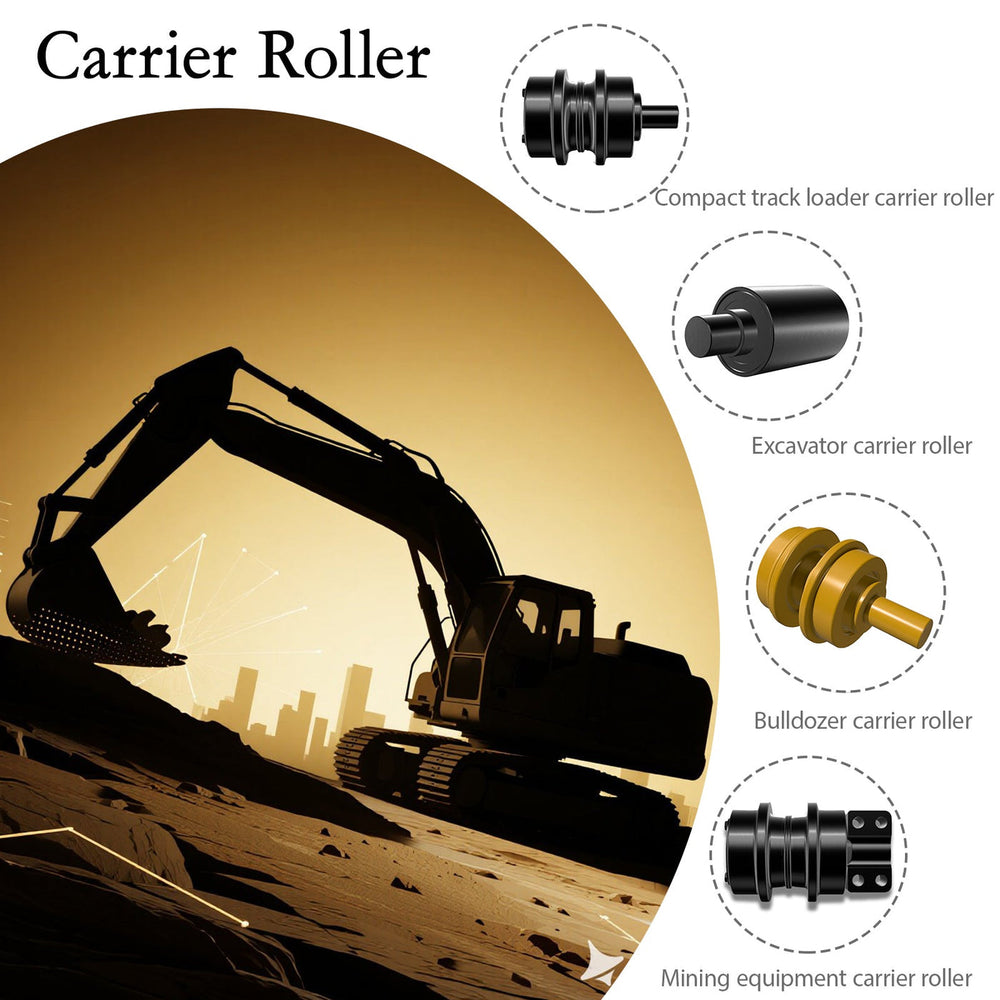
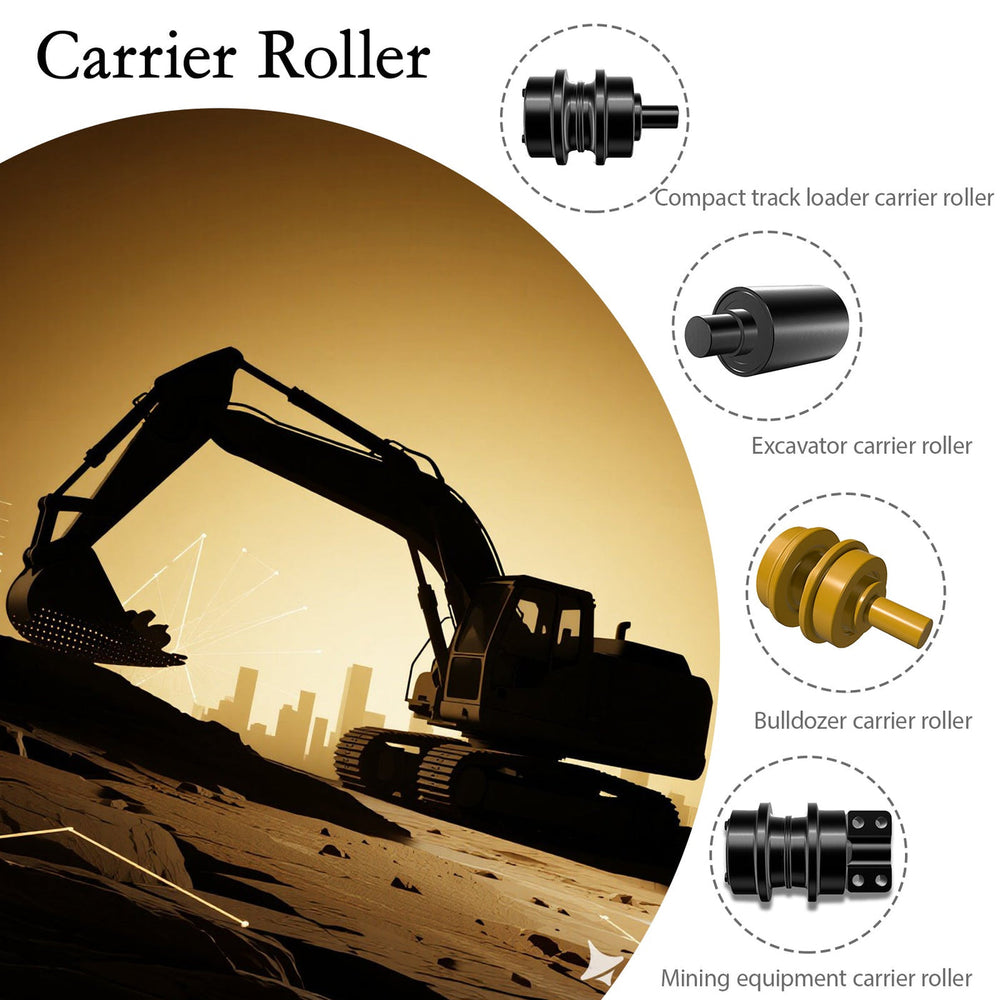
Carrier Rollers (Top Rollers): Positioned on the upper frame, these support the returning upper track chain and prevent excessive sagging.
Single vs. Double Flange Configurations
Single-Flange Rollers: Designed primarily for lighter excavators, providing flexibility and smooth lateral movement for the chain.
Double-Flange Rollers: Engineered to provide maximum lateral guidance and stability for heavy bulldozers operating in rough, uneven terrain.
Advanced Metallurgy and Manufacturing Standards
To survive high-impact shock loading and severe abrasion, superior rollers utilize forged steel (such as 40Mn2 or high-grade alloy steel) combined with deep case-hardening. Unlike inferior cast alternatives, forged components offer superior impact resistance, structural integrity, and long-term durability.
Comprehensive Track Roller Wear Patterns & Diagnostics
Recognizing early wear patterns on track rollers is vital for preventing catastrophic undercarriage breakdowns. Below is a detailed diagnostic matrix of common wear phenomena and their operational root causes:
Flange Wear: Excessive wear on inner flanges signals track misalignment or derailment, causing links to rub directly against the flange rather than rolling centered.
Flat Spots: These develop when internal bearings seize due to seal failure, forcing the roller to drag across the ground rather than rotate, flattening the circumference from continuous grinding.
Uneven Side Wear: Faster wear on one side indicates frame bending, idler misalignment, or tilted chains caused by adjacent worn components.
Scalloping on Tracks: Wavy patterns on track links result from off-center roller impacts, pointing to a systemic undercarriage mismatch between rollers and chains.
Diagnostic & Inspection Methods
Visual & Leak Audits: Perform daily checks for oil leakage around multi-lip seals, which indicate immediate seal breach and contamination risks.
Precision Diameter Measurement: Use calipers to measure roller shell diameter against manufacturer baselines. Reductions exceeding 10% to 15% warrant immediate component replacement.
Acoustic & Thermal Monitoring: Listen for grinding or squealing noises indicating bearing failure. Check post-run operational temperatures; hot spots exceeding 80°C suggest severe internal friction and lubrication breakdown.
Strategic Selection Framework for Fleet Managers
Selecting the optimal undercarriage solution requires a structured engineering evaluation based on specific operational duty cycles:
Match Operating Environment: Choose self-cleaning or double-flange designs for abrasive dirt, deep mud, or extreme mining environments where material compaction accelerates wear.
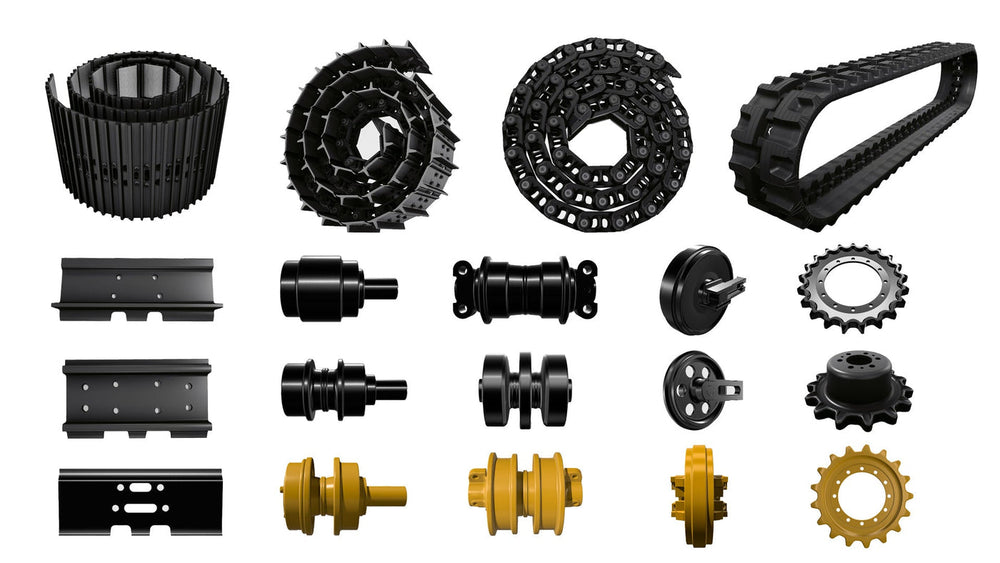
Prioritize Catalog Depth & System Compatibility: Fleet managers should partner with suppliers offering comprehensive, matching ranges—including track rollers, carrier rollers, front idlers, sprockets, and chains—to ensure uniform wear rates.
Evaluate Total Cost of Ownership (TCO): High-performance components that extend service life by 30% significantly reduce labor, maintenance, and emergency downtime expenses.
Why KTSU Undercarriage Parts Stand Out
KTSU is a premier global provider of heavy equipment undercarriage components, seamlessly integrating rigorous Japanese engineering standards with high-efficiency manufacturing. With an extensive portfolio exceeding 3,000 items, KTSU supports a vast range of Caterpillar, Komatsu, Hitachi, and agricultural machinery families.
By anchoring its operations in a one-stop sourcing model, KTSU ensures complete system-level compatibility across machine families, drastically minimizing component mismatch and shortening maintenance intervals. Engineered with low rolling resistance, robust multi-lip sealing systems, and deep surface hardening, KTSU rollers maintain ultimate stability and wear resistance in environments where failure is not an option.
Proactive Maintenance and Prevention Strategies
Executing structured preventative maintenance protocols halves replacement costs and increases equipment uptime by up to 50%:
Maintain Optimal Track Tension: Strictly follow OEM guidelines to prevent track slippage, loose track wear, or excessive bearing and flange strain.
Daily Debris Removal: Clean undercarriages regularly to eliminate packed mud and rocks, which reduces abrasive wear by up to 30%.
Structured Audits: Schedule comprehensive undercarriage and tension audits every 1,000 operating hours (or every 500 hours in extreme duty sites).
System-Wide Replacement: Avoid mixing incompatible brands. Replace rollers, chains, and sprockets as a coordinated system from a trusted provider like KTSU to ensure wear consistency.
Five questions a fleet answers before it orders rollers
The selection framework in this article reduces to five questions, and each one changes the order. Answering them takes less time than returning a set that was specified for the wrong duty.
- What is the machine actually doing now? Not what it was bought for. Machines get redirected into quarry or demolition work, and the specification that suited the original duty is then the wrong one for the load and abrasion the rollers meet.
- Which machine exactly? Model, serial range and the position on the frame. Rollers at different positions can differ, and a model line can change undercarriage across production years.
- What do the rollers that came off show? Even wear across the set reaching the expected hours means the specification was right; wear concentrated on one side or on a few rollers means the problem is the machine rather than the part.
- How did they fail? Worn to the limit, seal failure, flat spots, or damage from another component. The four lead to different purchases, and only the first is answered by a better roller.
- What interval does the fleet expect? An interval quoted without the duty it was measured in cannot be checked, so the expectation should be in hours for the application the machine works in.
Two practices make the answers stick. Record them with the order, so that the next replacement is a comparison rather than a repeat of the investigation. And measure the chain in the same session, because the rollers and the chain wear against each other and a set specified without that measurement inherits whatever condition the chain is in.
Frequently Asked Questions
What should I look for in a heavy equipment track roller?
Shell and flange dimensions against the machine, a documented case depth with core hardness behind it, a seal arrangement suited to the application, and a bearing rating with reserve for the load the position carries. The seal is the item that most often decides the interval.
How do I choose between standard and heavy-duty rollers?
By the failure that actually occurred. Even wear reaching the expected hours means the standard specification was right; uneven or early wear means the problem is the machine, and a heavier part fails in the same place slightly later.
How long should a track roller last on heavy equipment?
Duty cycle sets the band: roughly 5,000-7,000 hours in earthworks and 2,500-4,500 in mining according to the tables used across this site. A roller that reaches its band was specified correctly, whatever it cost.
Should rollers be replaced as a set?
Where the wear is spread across the group, yes, because a new roller running between worn ones carries load they cannot. Where one has failed on an otherwise sound set, the single replacement is defensible.
What causes track rollers to fail early?
A seal that let contamination in, alignment or tension loading the component unevenly, a duty the specification was not chosen for, or damage from a seized neighbour. Recording the removal reason is what separates them.
This article is part of Excavator Track Rollers: How to Choose the Right Ones, the guide that covers this topic in decision order.
More Undercarriage Parts guides
Find the next article for your component, application or buying decision.
Back to Undercarriage Parts