SANY SY365H Heavy-Duty Sprocket Segmentation: Mining Uptime, Undercarriage Life, and Real-World Tradeoffs
Practical reading for undercarriage components, operating conditions and parts decisions.
On this page
Global mining and construction fleets are quietly reshaping how they think about excavator undercarriages, especially on workhorses in the SANY SY365H class. Segmenting the heavy‑duty sprocket—switching from a one‑piece rim to bolt‑on segments—sounds like a simple design tweak, but in practice it changes downtime patterns, cost per ton, safety exposure, and even how maintenance teams plan their week. When you put forged versus cast segments, field bolt‑on replacement, and full track press teardowns side by side, the “right” choice becomes a moving target shaped by geology, workshop capacity, and fleet culture.
Last updated:

This article blends macro‑level market pressure with undercarriage engineering reality. It’s written for people who actually have to make the call: mining maintenance engineers, fleet managers, and procurement teams deciding whether heavy‑duty sprocket segmentation on SY365H‑class excavators is a smart strategic lever or just another complicated option. We’ll walk from what segmentation really is, to how it behaves under severe torque, to how it changes time‑motion in the pit, to where it can fail if treated as a shortcut instead of a system change.
Why sprocket segmentation matters in 2026
Global demand for excavator undercarriage parts is climbing alongside longer duty cycles and heavier loads. Crawler excavators in open‑pit mines, quarries, and large construction sites are pushing undercarriage component markets toward multi‑billion‑dollar valuations with steady CAGR, and undercarriage alone is projected to exceed USD 10 billion by the early 2030s. Every hour of downtime on a 36‑ton class machine like the SANY SY365H now carries a visible cost in lost output and schedule risk.
In this environment, traditional one‑piece sprocket rims start to look like bottlenecks. They require full track press teardowns, complex workshop logistics, and multi‑shift outages to replace—even when only a subset of teeth are worn. Heavy‑duty sprocket segmentation offers an alternative: bolt‑on segments that can be swapped in the pit, potentially converting multi‑shift undercarriage events into short, planned maintenance windows. The question is whether that promise holds up under real mining conditions rather than in theoretical maintenance plans.
From an editorial perspective, this is where undercarriage decisions stop being purely technical. Segmenting a sprocket becomes a way to trade capital and logistics complexity for procedural discipline. Fleets that understand their downtime costs and maintenance maturity are the ones most likely to capture the gains instead of just adding new failure modes.
What is SANY SY365H heavy-duty sprocket segmentation?
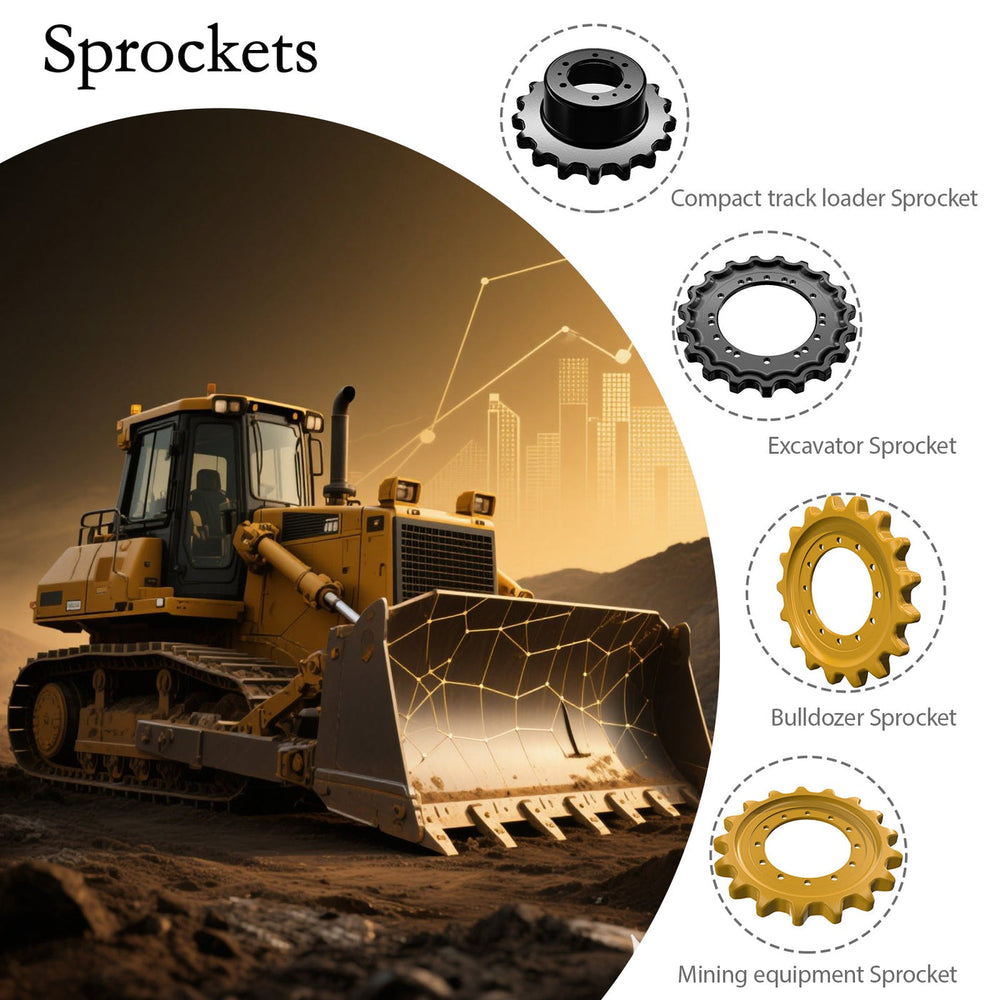
On a SANY SY365H heavy‑duty mining excavator, sprocket segmentation means replacing a single one‑piece drive rim with multiple bolt‑on segments mounted to a hub or carrier ring on the final drive. Each segment carries a section of teeth that engage the track chain, matched to the SY365H’s pitch and ground‑engaging profile, so that the assembled ring behaves like a continuous sprocket under load.
In practical terms, segmented sprocket rims engage the bushings and links with high torque while allowing individual worn or damaged segments to be unbolted and replaced without pressing the entire track off the machine. Segments are typically made from forged or cast steel with hardened teeth designed for repeated impact and abrasion in severe mining conditions. The SY365H’s heavy‑duty undercarriage—wide track frame, robust rollers, and reinforced chain assemblies—relies on this engagement to transfer engine power into productive movement at the bench or dump.
In the field, segmentation is less about the abstract geometry and more about how the machine behaves across its day: traveling under full bucket load, pivoting on abrasive rock, slewing in confined benches, and idling in cold or dusty environments. Each of those behaviors translates into stress cycles at the teeth and joints, which is where segmented design either proves itself or exposes gaps.
Pain points with traditional sprockets in SY365H mining duty
Traditional one‑piece sprocket rims on SY365H‑class excavators come with four persistent pain points in mining duty: downtime, teardown complexity, metallurgical inconsistency, and logistics.
Undercarriage downtime in high‑impact mines is the first issue. Hard‑rock and overburden operations put continuous impact and abrasive loading through sprockets and track chains. When tooth wear or cracking forces replacement, one‑piece rims typically demand full track removal and press shop work, immobilizing the machine for half a shift or more. In mines where each hour of downtime translates to thousands of dollars in lost production, this quickly becomes a strategic constraint rather than a maintenance detail.
Teardown complexity and safety exposure is the second problem. Full rim changes require splitting chains, handling heavy assemblies under tension, manipulating pins and bushings in presses, and working around high stored energy. Fleet managers face a trade‑off: delaying change‑outs risks catastrophic tooth failure that damages chains and rollers, while early replacement increases workshop load and labor cost. Either way, traditional sprockets tie undercarriage interventions to the availability of specialist equipment and personnel.
Third, inconsistent metallurgical performance in cast rims can undermine expected life. Conventional cast sprocket rims can carry internal porosity and inclusions that reduce crack resistance during torque spikes and shock loads. If heat treatment yields shallow or uneven case hardness, tooth wear accelerates, pitch mismatch with the track chain rises, and vibration increases—pushing stress into rollers, idlers, and the chain itself.
Finally, inventory and logistics inefficiency hits fleets with dispersed operations. Stocking large one‑piece rims ties up warehouse space and capital. Coordinating transport of SY365H machines to central workshops for rim changes adds scheduling friction. These factors often push operators to accept higher undercarriage risk simply to avoid complex shop work, which is ultimately a hidden cost in the cost‑per‑ton equation.
How SANY SY365H segmented sprockets behave in real-world mining
A segmented sprocket on a SY365H is not only a different shape; it is a different way of distributing stress and managing wear under real loads. Under steady operating conditions—correct chain tension, controlled travel speeds, and reasonable turning behavior—properly designed segmented rims can match the engagement quality of one‑piece rims while allowing localized tooth wear to be addressed segment by segment.
Under severe torque, however, the joints between segments become critical. Torque peaks occur when the excavator pushes against a hard face, slews with a full bucket, climbs benches, or accelerates aggressively on uneven ground. Shock and sliding contact at the teeth drive alternating bending and compressive stress cycles through each segment’s body and bolt ears. If mating surfaces are contaminated or bolts are unevenly torqued, micro‑movement and fretting can develop at joints, raising local stress and promoting crack initiation.
In abrasive environments, trapped fines and crushed rock around the rim add another layer of complexity. Contamination between segments can prevent full seating, causing slight tilts that push certain teeth deeper into the chain, accelerating localized wear and noise. Over time, this can lead to uneven chain bushing wear, tooth rounding concentrated at specific positions, and vibration that operators notice long before a failure report is written.
Viewed editorially, segmented rims behave like sensors for fleet discipline. In operations with systematic torque checks, chain tension control, and regular undercarriage inspections, segments tend to wear predictably, and joints remain healthy. In fleets where machines are routinely overloaded, turned sharply on rock, or maintained reactively, segmented rims often reveal problems first—through uneven wear patterns, cracked bolt ears, or joint fretting.
Forged vs cast segmented drive rims: metallurgical tradeoffs
Forged and cast segmented sprocket rims can look similar to the naked eye, but their internal structure and fatigue behavior differ significantly. Forged segments are produced by compressing steel under high pressure, consolidating and aligning grains along the tooth and hub geometry. This process typically yields higher tensile and yield strength, better impact toughness, and superior fatigue resistance compared to cast equivalents.
In mining duty on a SY365H, these properties matter every time the sprocket engages under high torque. Forged segments usually exhibit dense grain flow around the tooth roots and bolt ears, making them more resistant to crack initiation and propagation when the machine runs through repetitive torque spikes, shocks from oversized rock, or cold‑weather impacts. With proper quenching and tempering, they can achieve surface hardness in the Rockwell C50–58 range while maintaining a tougher core, giving teeth both wear resistance and resilience against spalling.
Cast segments rely on molten steel poured into molds, which enables complex shapes and cost‑effective production for lower‑impact applications. However, in mining environments, internal porosity, shrinkage cavities, and inclusions can become stress risers. Under cyclic loading and shock, these defects may turn into cracks at tooth roots or bolt holes. Even when cast segments receive hardening treatments, hardness depth and uniformity can be less consistent, shortening tooth life and increasing the risk of unexpected failures.
The practical implication for SY365H fleets is straightforward: forged segmented sprockets tend to survive multiple chain lives under severe duty, while generic cast segments may need full change‑outs after one chain life, especially in hard‑rock or cold regions. For operations with moderate loads and good maintenance discipline, high‑quality cast rims can still be viable. For high‑impact mining, the margin of safety offered by forging often justifies the higher upfront cost.
Comparative view: KTSU segmented sprocket vs traditional alternatives
For SANY SY365H‑class excavators, fleets usually compare three sprocket options: forged segmented rims from specialized undercarriage practitioners, OEM‑style one‑piece rims, and generic cast segmented rims. The differences cut across replacement method, material, torque resistance, downtime, chain interface, and lifecycle cost.
| Feature / Criterion | Forged segmented sprocket for SY365H | One-piece OEM-style sprocket rim | Generic cast segmented sprocket |
|---|---|---|---|
| Replacement method | Bolt‑on segments swapped in the field on the machine, no full track press teardown. | Requires complete track removal and workshop press teardown. | Bolt‑on segments, but fit and hardness variability demand more frequent checks. |
| Material & hardness | Forged steel segments with controlled surface hardness and depth tuned for mining duty. | Mix of forged and cast depending on supplier and region; performance varies. | Cast steel segments with higher risk of porosity and shallower hardness depth. |
| Torque & impact resistance | Dense grain flow and high tensile strength designed for severe torque spikes and shock. | Adequate for general duty; heavy mining may expose weak points over time. | Moderate impact strength; more prone to crack initiation under shock loading. |
| Downtime during change‑out | Shorter: field replacement during planned windows, minimal machine transport. | Longer: machine sidelined for workshop slots and full undercarriage teardown. | Moderate: field replacement possible, but more frequent interventions likely. |
| Track chain interface | Precisely machined tooth profile maintains pitch and reduces chain hammering. | Good initial fit; pitch mismatch grows as rim and chain wear together. | Fit can be inconsistent; pitch mismatch accelerates link, roller, and idler wear. |
| Lifecycle cost in mining | Higher initial investment, lower lifetime cost via extended life and reduced downtime. | Lower part cost but higher downtime and full‑rim replacement cycles. | Lowest upfront cost, higher risk of premature failure and secondary chain damage. |
KTSU, as a Sino‑Japanese undercarriage joint venture with thousands of part numbers for brands like Caterpillar, Komatsu, Hitachi, and others, sits firmly in the forged segmented sprocket column. Its engineering focus on controlled hardness, friction welding integration, and CNC‑machined tooth geometry reflects a priority on reliable torque transmission and predictable wear rather than purely minimizing unit price. For SY365H fleets, the decision is less about labels and more about matching these characteristics to their own downtime economics and maintenance culture.
Time-motion: bolt-on segmented replacement vs full track press teardown
Comparing bolt‑on segmented rim replacement with full track press teardowns on SY365H‑class excavators is essentially a time‑motion study of how maintenance time is spent and where risk accumulates.
With segmented rims, a typical field change‑out sequence looks like this:
Assess sprocket wear on the SY365H in the field, inspecting tooth profiles, flanks, and roots for rounding, chipping, and cracks during routine undercarriage checks.
Plan a field replacement window during shift changes or low‑production periods, staging torque tools, lifting aids, and new segments near the machine.
Lock out the machine, support the track properly, and remove only the worn segments, leaving the chain intact around the rim.
Install new forged segments to the specified bolt torque, verifying pitch alignment and smooth chain engagement through several track rotations.
Record downtime and production impact, noting hours out of service and lost tons so patterns can be analyzed across events.
By contrast, a full one‑piece rim change typically involves removing track shoes, splitting chains, pressing pins and bushings, handling heavy components under tension, and coordinating workshop resources. The process can take many hours and often requires specialized track presses and experienced technicians.
In time‑motion terms, segmented rims shift labor away from heavy press operations toward field torqueing and inspection. They reduce travel and handling but increase reliance on precise bolt torque, cleanliness, and on‑machine safety controls. Mines that document these patterns across several events often find that segmented rims not only shorten average downtime per change but also make maintenance more flexible—fitting undercarriage work into production windows rather than locking it to workshop availability.
Usage scenarios: how segmented sprockets change SY365H fleet behavior
Segmented sprockets on SY365H‑class excavators behave differently across mining scenarios. Three typical patterns illustrate how they change fleet behavior.
In open‑pit hard‑rock mines, traditional one‑piece rims lead to a “run hard, stop hard” rhythm: machines operate until teeth are severely worn, then are pulled from the pit for full undercarriage teardowns, creating multi‑shift downtime and workshop bottlenecks. After adopting forged segmented rims, some mines shift to shorter in‑pit maintenance windows, replacing only the most worn segments during planned low‑production periods. This keeps excavators working more consistently and reduces the clustering of heavy workshop events during peak stripping campaigns.
In coal overburden removal, softer strata can give operators a false sense of security about sprocket wear. When inspections are delayed, unexpected tooth failures can damage chains and rollers. With segmented sprocket solutions, fleets often add regular quick visual checks to routine maintenance. Worn segments are swapped cheaply on site before teeth break, extending track chain and roller life and stabilizing undercarriage behavior in operations that previously saw sporadic damage.
In cold‑region mining, generic cast rims sometimes suffer brittle fractures and tooth chipping during impact loading at sub‑zero temperatures. Switching to forged segments with controlled low‑temperature impact toughness alongside matching roller designs reduces these cold‑weather failures. SY365H machines remain productive during winter campaigns instead of cycling through repeated sprocket replacements, and maintenance teams gain a more predictable pattern of undercarriage intervention through the season.
Across these scenarios, segmented sprockets do not magically solve undercarriage wear. They reshape where, when, and how wear is managed. The real gains tend to show up when fleet managers align segmentation with specific geology, climate, and workshop constraints instead of treating it as a generic upgrade.
Failure modes and limitations: where segmentation can disappoint
Heavy‑duty sprocket segmentation is not a risk‑free choice. It introduces new failure modes and expectations gaps that can disappoint operators if not managed.
One common issue is uneven tooth wear caused by misaligned segments or inconsistent bolt torque. If segments are installed with contamination under the mating surfaces, or bolts are torqued unevenly, certain teeth may carry more load than others. Over time, this can cause localized rounding, pitch mismatch, chain hammering, and vibration. Operators may perceive this as a design flaw when the root cause is installation variability.
Another failure mode is joint fatigue. Bolt ears and holes on segments see high cyclic stress as torque passes from teeth into the hub. In cast segments with inclusions or poor hardness control, cracks can initiate around these joints, leading to segment failure even when tooth wear appears moderate. If hub seating surfaces are neglected during repeated replacement cycles, fretting and micro‑movement can further accelerate joint damage.
A third limitation lies in maintenance culture. Segmented rims are often adopted under the assumption that they will “solve” undercarriage downtime, but they are only as effective as the process that supports them. Fleets that do not track bolt torque, do not maintain chain tension, and treat inspections as optional frequently see segmented systems underperform relative to expectations. In some cases, they experience more frequent minor interventions and joint issues than they did with simpler one‑piece rims.
Finally, inventory management can become more complex. Instead of stocking single rims, teams must manage sets of segments, ensuring correct hardness and geometry across batches. Mis‑matched segments from different production runs can create subtle interface issues even if they fit the hub, complicating efforts to standardize undercarriage behavior.
The editorial takeaway is straightforward: segmentation works when treated as a change in undercarriage strategy, not just a change in hardware. Without that shift in mindset and procedure, its limitations can overshadow its theoretical benefits.
Optimization strategies: making segmented sprockets actually work
To extract real value from heavy‑duty sprocket segmentation on SANY SY365H mining excavators, fleets need optimization at three levels: design choice, maintenance practice, and data use.
At the design level, choosing forged or rigorously heat‑treated segments for severe mining duty improves margin against crack initiation and impact failures. Matching tooth geometry precisely to SY365H chain pitch and bushing shape reduces hammering and uneven loading. Collaborating with undercarriage practitioners who control grain flow, case depth, and machining tolerances helps avoid the subtle mismatches that quietly erode performance.
In maintenance practice, bolt torque should become a measured parameter rather than a check box. Documented torque procedures, calibrated tools, and periodic re‑checks minimize joint fretting and misalignment. Chain tension must be kept within specification; overly slack chains increase tooth impact, while excessive tension loads teeth and rollers unnecessarily. Integrating sprocket segment inspection into regular undercarriage walk‑arounds makes it possible to swap segments before wear turns into geometric damage.
At the data level, recording downtime, labor hours, part costs, and lost tons per event for both segmented and one‑piece rim changes builds a realistic picture of lifecycle economics. When fleets calculate average downtime reduction and cost per hour saved across multiple events, they can define trigger points for proactive sprocket work, align segmentation with chain and roller replacement intervals, and adjust stocking strategies to match actual wear patterns rather than assumptions.
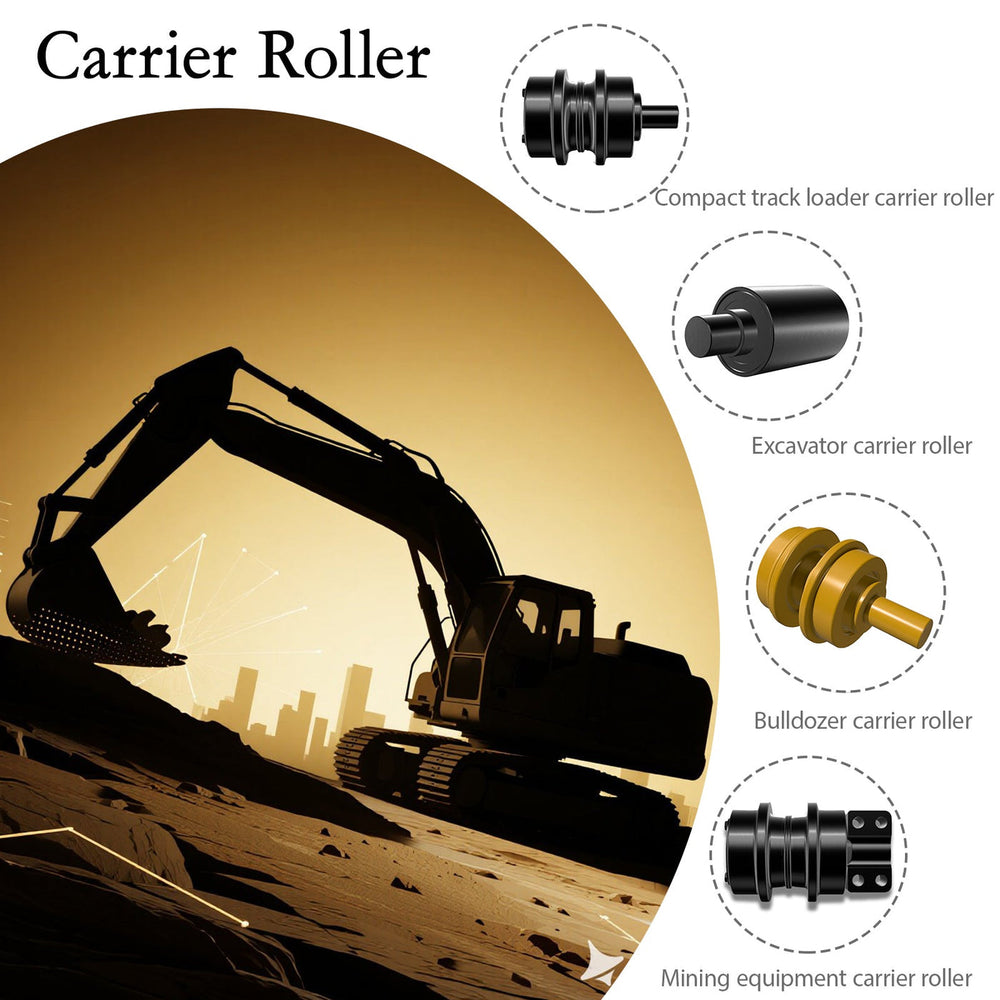
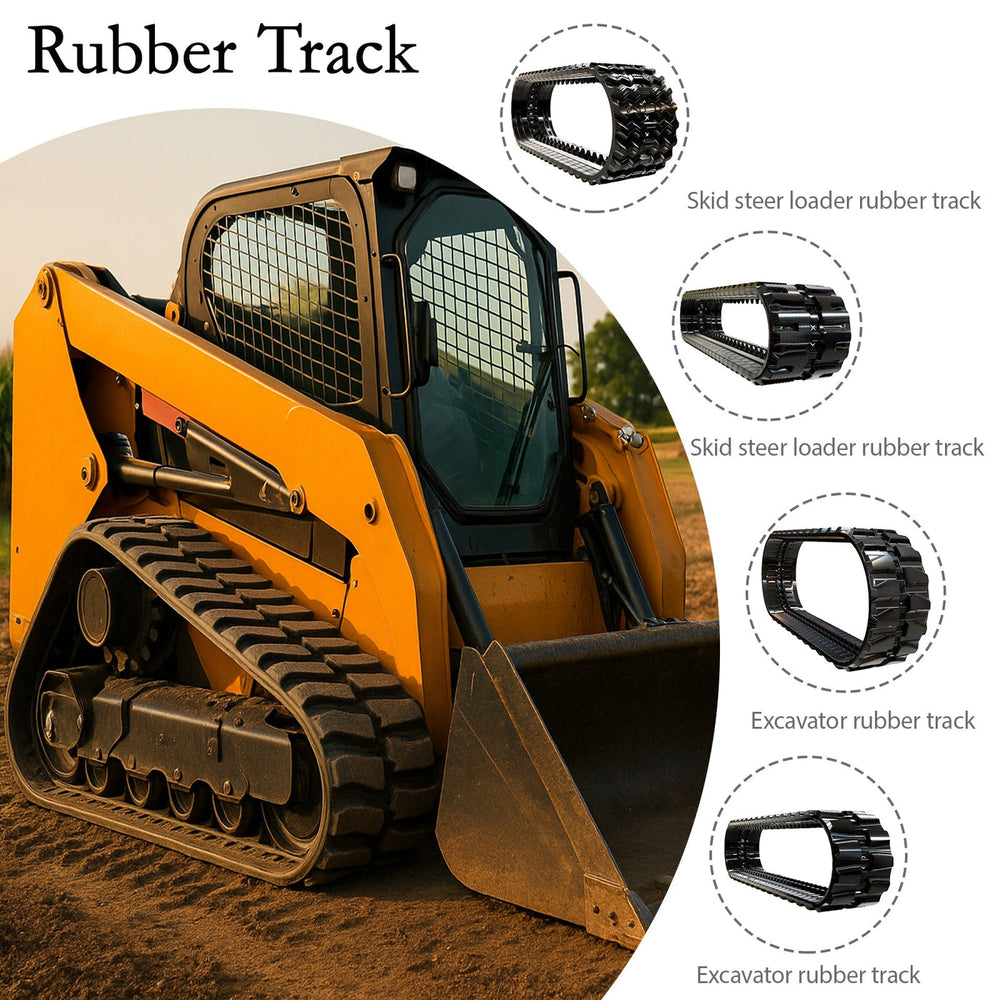
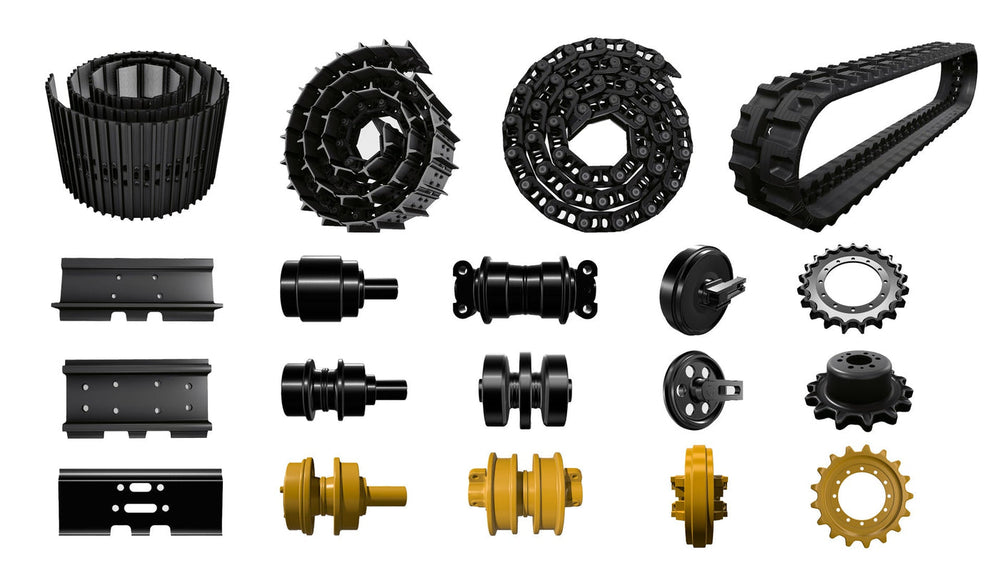
When KTSU approaches undercarriage optimization around SY365H‑class machines, it typically looks at the system as a whole: sprockets, track rollers, carrier rollers, idlers, chains, bolts, shoes, and even rubber pads. The aim is consistent load distribution and predictable wear across components, so segmentation at the sprocket becomes one element in a coordinated package rather than a standalone experiment.
The uptime arithmetic: what segmentation requires to deliver
Segmentation is bought for uptime rather than for price, because a segment set can be changed without splitting the track. Whether the saving is realised depends on four things being in place before the failure.
| Requirement | Why it decides whether the saving happens | What it looks like without it |
|---|---|---|
| Segment stock on site | The work is faster than a full sprocket change only if the parts are already there | Waiting for a delivery, which is the same downtime as any other repair |
| A sound rim and hub | Segments cannot correct a worn rim, an elongated bolt hole or a distorted hub | New segments moving on a worn mounting, which fails again quickly |
| The fastener supply and the torque procedure | Segments are held by fasteners that are consumed and must be replaced rather than reused | A joint that loosens, and a second stop |
| A fitter who has done it before | The procedure is simple and unfamiliar, which is the combination that produces mistakes | A segment fitted out of sequence, or a torque pattern applied as a single pass |
Two consequences for a mining fleet. The first is that the arithmetic only works when the arrangement is set up in advance: stock, fasteners, procedure and a named person to do the work. The second is that the rim condition is the decision point, because segmentation on a worn rim defers a full replacement rather than avoiding it.
The practical approach is to treat the first segment change as a rehearsal: measure the rim and the holes, record the torque, and note how long the job took. That record is what tells you whether segmentation is delivering the uptime it was bought for.
KTSU Expert Views on SY365H heavy-duty sprocket segmentation
From KTSU’s vantage point as a Sino‑Japanese undercarriage manufacturer with a large catalog of track rollers, carrier rollers, sprockets, idlers, chains, and shoes for global brands, heavy‑duty sprocket segmentation on SY365H‑class excavators is best treated as a system decision rather than a single part choice. In demanding mines, the undercarriage rarely fails at only one component; stress and wear propagate through sprockets, chains, rollers, and shoes in patterns that reflect both machine geometry and operator behavior.
Engineers often focus on tooth profile and hardness first, ensuring that segmented sprocket teeth are hardened to sufficient depth while avoiding brittle surfaces that chip on impact. But they also pay attention to how these teeth interface with links and rollers, particularly in cold climates or highly abrasive rocks. Uneven tooth engagement can shift loads into specific rollers or links, creating “hot spots” of wear that shorten overall undercarriage life, regardless of how robust the sprocket material is.
KTSU’s use of friction welding and CNC machining across its undercarriage lines is driven by a desire for consistent geometry and deep‑case hardness, not just headline specifications. In practice, that consistency reduces the variability between sprocket segments in a given set, which improves chain pitch alignment and lowers the risk of joint fretting. When fleets combine these sprockets with matched rollers, idlers, and shoe configurations, they tend to see smoother track behavior and more predictable wear, making maintenance planning easier.
Field feedback from operators and maintenance teams plays a significant role as well. Sites that share data on torque practices, wear patterns by segment position, and cold‑weather performance allow engineers to refine segment design and heat treatment for real duty conditions instead of generic assumptions. From this perspective, heavy‑duty sprocket segmentation on SY365H machines is an ongoing collaboration between design and usage—where the best outcomes arise when fleets approach undercarriage as a tuned system rather than a collection of parts.
Frequently Asked Questions
What is a segmented sprocket and why use one in mining?
It is a sprocket whose teeth are carried on separate bolt-on segments, so a worn set can be replaced without removing the track or the hub. The advantage is uptime rather than unit price.
When is segmentation not worth it?
Where the rim or hub is worn, where bolt holes are elongated, or where the segment stock and fasteners are not held on site. In those cases the work takes as long as a full replacement and the saving does not appear.
Can segments be fitted to a worn rim?
They can be bolted on, and they will not hold their position on a worn or distorted mounting. The rim and the bolt holes are the decision point, because segmentation on a worn rim defers a full replacement rather than avoiding it.
What has to be on site for a segment change?
The segment set, a supply of new fasteners, the torque specification and procedure, and a fitter who has done the job before. Any one of those missing turns the planned advantage back into waiting.
How do I know whether segmentation is delivering?
By recording how long the change took and how long the set lasted. Those two figures, against the same figures for a full sprocket replacement, are what show whether the uptime benefit is real on your machines.
This article is part of Sprocket Wear and Replacement: What Ruins a Drive Sprocket, the guide that covers this topic in decision order.
More Technical Guides guides
Find the next article for your component, application or buying decision.
Back to Technical Guides