SANY SY215C Track Roller Upgrade: Calculating ROI on Aftermarket Undercarriage
Component selection, fitment and the connections that keep an undercarriage working as a system.
On this page
The decision to move a SANY SY215C excavator from OEM track rollers to high-carbide aftermarket undercarriage usually starts with a quiet frustration, not a catastrophic failure. Hourly rates look fine on paper, yet undercarriage line items keep creeping up, especially on machines that live in clay, gumbo, or flood-prone jobs. Some fleet managers stick with OEM components out of habit; others jump to cheaper aftermarket parts and then wonder why their cost-per-hour barely moves. The tension sits between three variables that rarely get mapped properly: wear rate, downtime, and mud-heavy operating conditions.
Last updated:

Global undercarriage parts demand is projected to exceed 12.8 billion USD, driven by infrastructure and mining, making cost optimization a board-level topic for fleet owners. For a SANY SY215C, where track management already represents 45–60% of tracked machine maintenance spending, every percentage point of wear-life gained or lost has a direct impact on profitability. The question isn’t just “Will aftermarket rollers last longer?” but “How does a different steel and sealing system change the total cost of running this machine for 3,000 to 5,000 hours?”
Quality aftermarket upgrades can cut annual fleet spend on undercarriage and hydraulics by 15–30% when correctly sized for operating conditions, especially on excavators past their OEM warranty window. The following sections walk through how those numbers behave in mud, how high-carbide rollers differ from standard castings, and what a realistic 3,000-hour case study looks like when you put SANY SY215C undercarriage under a microscope.
KTSU Product Introduction: Track Rollers for SANY-Size Excavators
KTSU, operated by Kunshan Kensetsu Buhin Co., Ltd., is a Sino-Japanese joint venture specialized in undercarriage parts—including track rollers, carrier rollers, idlers, sprockets, and track chains—for excavators, dozers, paving machines, and agricultural machinery, with more than 3,000 items engineered for long service life. This positioning makes KTSU’s high-hardness track rollers a relevant upgrade path for SANY SY215C owners focusing on cost-per-hour economics rather than lowest unit price.
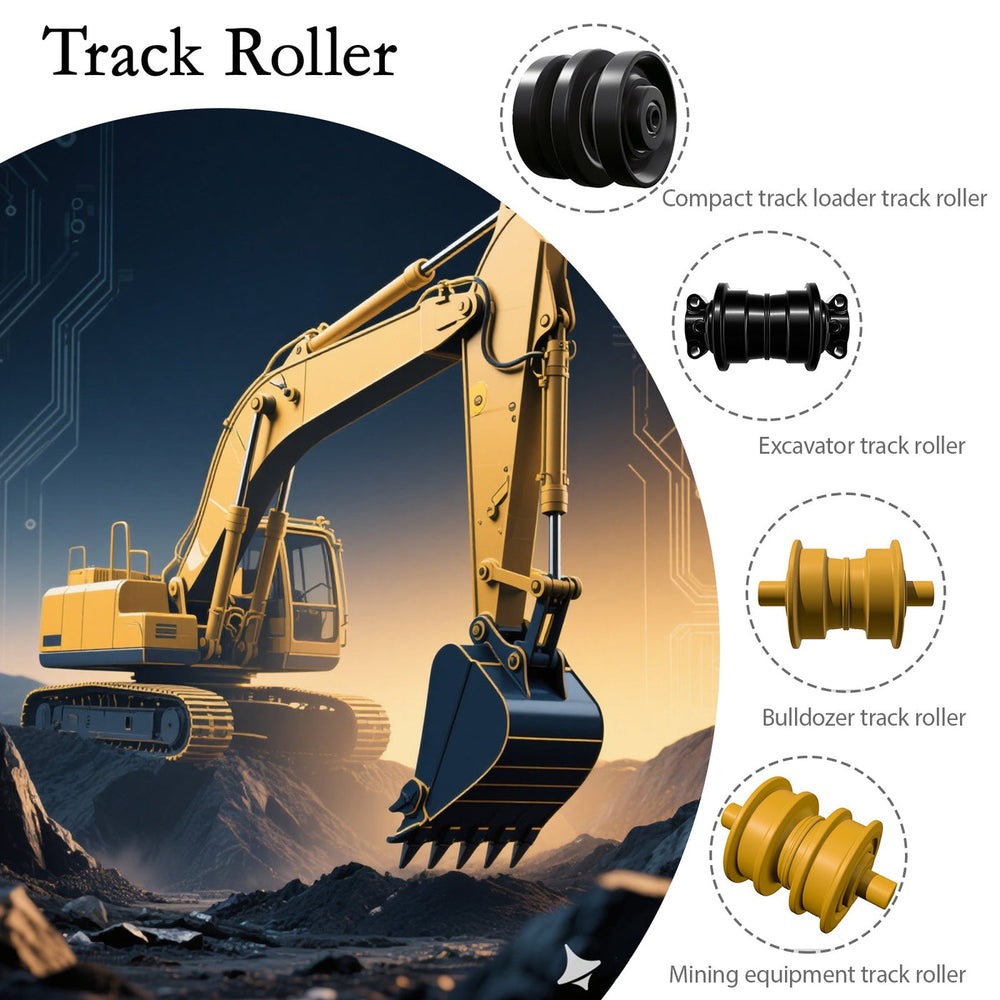
KTSU track rollers and related undercarriage components are manufactured using forged roller shells welded by NITTO friction welding machines, CO₂ automatic welding, and robot welding, followed by CNC machining for high dimensional precision. The roller sleeves are heat treated to achieve ideal surface hardness and depth, combined with floating seal assemblies designed for reliable sealing and lubricated rotation under harsh operating loads. Applied to SANY-class medium excavators, these design features target extended wear life, reduced leakage, and stable performance in high-load, high-contamination environments.
What is SANY SY215C Undercarriage ROI?
SANY SY215C undercarriage ROI is the financial return generated by investing in replacement components—such as aftermarket track rollers—measured by how much they reduce cost per hour and downtime over a given service interval, typically 3,000–5,000 hours. It incorporates parts cost, labor, lost production, and wear-life differences between OEM and aftermarket configurations to show which option delivers the lowest total cost of ownership for a given duty cycle.
Pain Points: Why SY215C Owners Bleed Margin on Rollers
Undercarriage pain points for SANY SY215C owners are remarkably consistent across fleets and geographies. From a distance, track roller wear sounds simple: metal against metal, load, rotation, and time. In reality, SANY SY215C rollers experience a complex combination of contact stress, abrasive contamination, and impact loading that varies widely between dry aggregate pads and saturated, mud-heavy work sites.
Abrasive Soils and Environmental Wear
Abrasive soils, high-silica sand, and rocky backfill accelerate pin-and-bushing wear and roller flange erosion, driving undercarriage wear rates up by 18–34% versus clay-rich soils and forcing premature roller and chain replacement. Fine silica particles act like grinding media, polishing and then scouring surfaces. In heavy mud, water-saturated soil forms a corrosive slurry that attacks seals and bearing surfaces; studies report mud can triple wear at pivot points and cause 83% of track link failures in swampy conditions when cleaning is neglected. For SY215C operators working in irrigation, pipeline trenching, or coastal reclamation, this translates directly into higher per-hour costs and unplanned downtime.
Mechanical Stress and Misalignment
Poor track tension and misaligned rollers compound mechanical stress on the SY215C’s undercarriage. Over-tight tracks over-stress pins and bushings, while slack chains invite derailments and sprocket side wear; OEM guidance for 20–50-ton excavators suggests about 10–12 links of visible sag, yet fleets frequently run outside this band. An off-center carrier or track roller can force the chain to enter the front idler and drive sprocket at skewed angles, driving rapid lateral wear and localized heating that shortens roller and chain life by up to 40–50%. Sticky clays pack around flanges and freeze rotation unless tracks are cleaned consistently, accelerating track shoe wear and adding extra labor time spent clearing packed mud from the frame.
The Unit Price Trap
Many owners still manage undercarriage by unit price instead of cost-per-hour, under-investing in material quality and over-spending on reactive repairs. OEM undercarriages tend to carry a 20–35% upfront premium, while low-grade aftermarket parts can be 20–50% cheaper but more failure-prone, and 22% of users report higher failure rates for off-brand parts in high-impact conditions. High-carbide aftermarket steels respond differently to that mix than standard castings. Higher hard phase content tends to reduce abrasive wear on the running surface, but can make components more sensitive to high-impact shock or misalignment if the microstructure is not matched to excavator loads. Standard OEM-style castings are usually more forgiving under occasional abuse, yet wear faster in continuous abrasive service. Without a structured cost-per-hour framework, SY215C buyers end up oscillating between expensive OEM rebuilds and low-cost components that fail early, eroding ROI in both directions.
The Hidden Cost of Downtime
Downtime is often the biggest hidden cost. Lost production from a single breakdown can exceed 1,000 USD per day, and undercarriage represents more than half of tracked machine repair bills due to high-value steel and precision machining. For mid-size excavators that typically bill 85–125 USD per operating hour including operator cost, even short undercarriage outages dramatically impact annual revenue. Fleet data shows undercarriage consumes 45–60% of tracked machine maintenance budgets, but disciplined tension, cleaning, and quality rollers can reduce cost per hour by 30% and extend component life by 40–50%.
SY215C Track Roller Options: KTSU vs Generic Aftermarket vs OEM
| Attribute | KTSU Track Rollers (Aftermarket) | Generic Aftermarket Rollers | OEM SANY SY215C Rollers* |
| Manufacturing & Welding | Forged shells, NITTO friction welding, CO₂ and robot welding, CNC machining for high precision | Mixed processes, broader tolerances, variable welding quality | OEM factory spec welding and machining |
| Hardness & Metallurgy | Optimized surface and depth hardness for impact and abrasion, low-temperature toughness | May use standard cast steel, inconsistent hardening | OEM-grade alloy with validated hardness profile |
| Seal Design & Lubrication | High-quality floating seals for reliable lubrication and leak resistance | Basic sealing; greater risk of contamination in mud and sand | OEM seals tuned to factory duty-cycle and environments |
| Expected Life vs Generic | Field examples show rollers lasting ~38% longer than generics in harsh conditions | Baseline; life often shortened in heavy mud or abrasion | OEM often retains 80% structural integrity at 10,000 hours in mixed terrain |
| Upfront Cost Level | Premium aftermarket pricing, typically 20–30% below OEM full undercarriage packages | Lowest unit cost; 20–50% below OEM but with higher failure risk | Highest unit price due to brand and certification |
| Best Use Case | SY215C fleets seeking lower CPH and solid reliability in aggressive or muddy terrain | Low-utilization machines or light-duty tasks where failures are tolerable | High-utilization, mission-critical fleets targeting maximum uptime |
*OEM specifics for SY215C rollers come from SANY documentation and industry OEM profiles; exact wear metrics vary by spec and duty cycle.
Functional Highlights of KTSU Track Rollers
Forged Shells and Precision Welding
KTSU rollers are built from two forged semi-roller shells friction-welded using NITTO machines, then finished with automatic CO₂ and robot welding, creating a homogeneous weld zone with minimal distortion under heavy cyclic loads. This enhances fatigue resistance on SY215C excavators working in repetitive loading cycles such as quarry digging or foundation excavation.
CNC-Controlled Dimensions and Hardness Depth
Roller sleeves are machined on CNC lathes and machine tools to strict dimensional tolerances, while heat treatment is tuned to achieve ideal surface hardness and depth, giving a wear-resistant outer layer and a tough, resilient core. This balance helps rollers resist flange chipping from rock impact while retaining structural integrity in cold climates or high-shock operations.
Floating Seal Groups for Heavy Mud Survival
KTSU uses high-quality floating seals and precise assembly processes to lock in lubrication and keep mud and abrasive slurry out of roller internals. In water-saturated soils, where mud raises operating temperatures by around 18°C and can triple wear rates, robust seals are critical to maintaining roller bearing life and slowing corrosion at pivot points.
"Switching our mid-size excavators to premium aftermarket rollers cut undercarriage spend by 22% while maintaining above 90% machine availability over three years." — Fleet Quote, Juli Machinery
"In swampy pipeline projects, daily cleaning and properly sealed rollers reduced bearing replacements by roughly 60%, despite mud contamination risks." — Field Data, XMG Tech
"Past-warranty excavators deliver the best ROI from aftermarket upgrades, where quality rollers and chains save fleets tens of thousands of dollars annually." — Industry Review, Excavator Accessories
Cross-Selling: Complementary KTSU Undercarriage Components
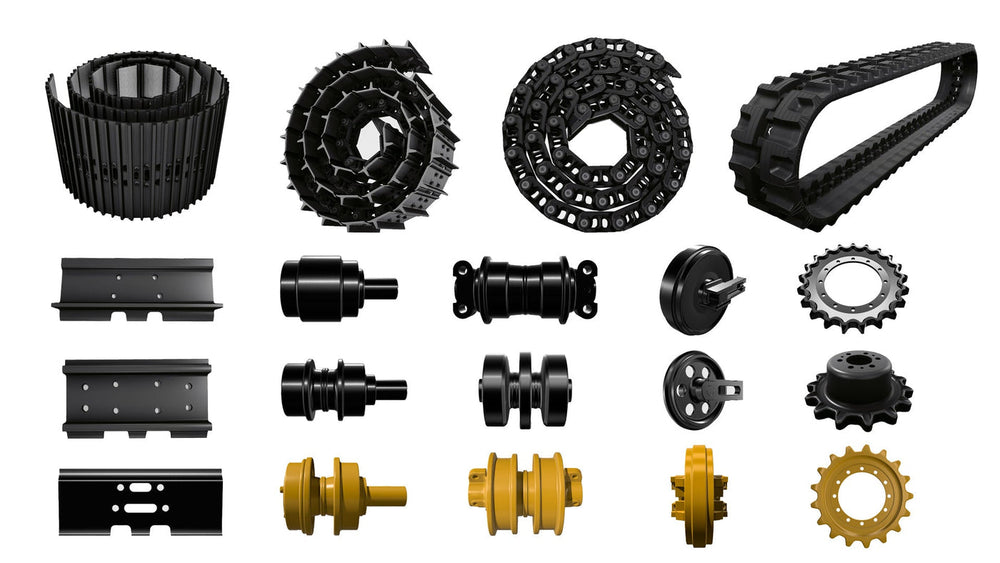
SY215C owners rarely replace rollers alone; meaningful ROI comes from integrated undercarriage strategies. KTSU offers track chains, carrier rollers, sprockets, idlers, rubber tracks, and link assemblies, enabling cohesive upgrades that keep wear balanced across the system.
For example, combining KTSU track chains—engineered for extended life beyond 4,000–5,000 hours—with KTSU rollers can reduce undercarriage cost per hour by 25–33% compared with generic components, assuming consistent maintenance routines. This modular mix allows SY215C fleet managers to deploy hybrid strategies: OEM for final drives or critical internal components, KTSU for high-wear external parts like rollers, chains, and shoes. You can explore related solutions via KTSU’s product categories, including Track Roller, Carrier Roller, Sprocket, and Link and Chain, all accessible from the main site navigation.
How-To: Build a 3,000-Hour ROI Model for SY215C Track Rollers
1. Define your duty cycle and terrain mix
Estimate annual or project operating hours for each SANY SY215C along with terrain categories such as clay, sand, rock, or heavy mud, which can increase wear by 18–34% and triple pivot-point wear in swampy conditions. For a 3,000-hour study, clearly divide hours between moderate and severe conditions to avoid under-estimating wear rates.
2. Capture baseline OEM undercarriage performance
From historical records or OEM documentation, gather typical roller, chain, and shoe life in hours under your conditions, plus parts cost, labor, and documented downtime. For many fleets, OEM undercarriages retain about 80% structural integrity at 10,000 mixed-terrain hours, but actual replacement often occurs earlier in high-impact work.
3. Specify KTSU aftermarket configuration and pricing
Determine the KTSU roller specification compatible with SY215C and its pricing, along with any related KTSU chains or carrier rollers included in the upgrade. Use conservative life assumptions based on industry data showing premium aftermarket track chains and rollers can reduce annual undercarriage maintenance costs by 15–30% and extend component life by around 30–40% versus generic parts.
4. Calculate cost per hour for each scenario
Apply the formula: Cost-per-hour (roller) = (purchase cost + installation cost + expected downtime cost) ÷ service hours. Industry case data on carbide wear parts for comparable heavy machinery show total cost-per-hour dropping from around 0.50–1.00 in traditional steel systems to roughly 0.10–0.20 when wear life and downtime are properly accounted for. For instance, if OEM rollers and chains cost 20,000 USD in parts, 5,000 USD in labor, and 20,000 USD in downtime over 4,000 hours, the CPH is 11.25 USD; upgraded KTSU components that extend life to 5,000 hours with similar spend would lower CPH to about 9 USD.
5. Overlay revenue and ROI metrics
Use fleet billing rates (such as 85–125 USD per hour for mid-size excavators) to compute revenue over 3,000 hours and compare net margins between OEM and KTSU configurations. ROI can be approximated via: ROI = [(Total Revenue – (Part Cost + Downtime + Repairs)) ÷ Initial Part Cost] × 100, tracking differences in failures and downtime between scenarios.
6. Validate with inspections and telematics data
Confirm assumptions with regular wear inspections, tension checks, and telematics data capturing duty cycle, operating temperature, and shock loads. Over a 3,000-hour window, document actual roller replacements, seal failures, and mud-related damage; adjust the model so KTSU track rollers’ true performance is reflected in future procurement decisions.
Usage Scenarios: SY215C Maintenance ROI in Real Work
Scenario 1: Urban foundation excavation
Traditional practice: SY215C machines used on mid-rise foundations operate on mixed soil and occasional rock, with generic aftermarket rollers and limited tension checks, leading to early flange wear and uneven chain stretch, raising CPH above 15 USD.
KTSU solution: Upgrading to KTSU rollers and implementing weekly tension and monthly measurements cuts wear around 30–40%, drops CPH close to 10 USD per hour, and stabilizes uptime for tight urban schedules.
Scenario 2: Heavy mud pipeline and irrigation work
Traditional practice: SY215C excavators trench in saturated clay without daily cleaning, running low-cost rollers and chains, allowing mud to pack around rollers and seals; mud raises temperatures and triples pivot-point wear, causing frequent bearing failures.
KTSU solution: Deploy KTSU rollers with robust floating seals, enforce daily high-pressure cleaning and weekly tension checks; fleets report up to 60% fewer roller bearing replacements and a significant reduction in mud-induced failures over multi-year projects. Studies of excavator undercarriage maintenance in mud-heavy environments show that consistent post-shift track cleaning can extend system life by up to two years, independent of whether rollers are OEM or aftermarket.
Scenario 3: Quarry and aggregate loading
Traditional practice: SY215C machines load aggregate on abrasive, high-silica surfaces with wide shoes and thin-shell rollers; quartz content accelerates undercarriage wear and erodes roller flanges, forcing unplanned replacements and raising maintenance costs by thousands of dollars per machine annually.
KTSU solution: Combine KTSU rollers, appropriately narrow shoes, and sealed track chains; optimized metallurgy and hardening give better impact resistance, extending roller life by roughly 30–40% compared with generic alternatives and supporting predictable replacement intervals.
When Aftermarket Undercarriage Fails to Deliver
Not every SY215C fleet sees a clear win by switching to aftermarket track rollers, even when the metallurgy looks superior on paper. Failures usually cluster around mismatch and behavior: rollers that are too rigid or too brittle for shock-heavy applications, seals that aren’t tuned to the excavator’s actual environment, or operators who treat cleaning and track inspection as optional. In practice, the same high-carbide microstructure that reduces abrasive wear can amplify problems when rollers see repeated side impacts, severe misalignment, or poorly tensioned tracks.
There is also an expectation gap. Some decision-makers assume that high-carbide aftermarket rollers will “fix” an undercarriage that has deeper systemic issues—overloaded machines, undertrained operators, or chronic under-maintenance. When those behaviors persist, the improved wear resistance gets overshadowed by failures elsewhere: cracked shoes, stretched chains, or early sprocket hook wear. This leads to a misleading conclusion that “aftermarket doesn’t last” when the root cause is environmental and behavioral rather than material. Honest ROI work therefore has to include conditions and maintenance discipline as part of the calculation, not just component specifications.
The assumption that decides the ROI
Every return calculation for a roller upgrade rests on one assumption that is rarely stated: the duty the machine actually works in. Get that wrong and the model produces a confident number for a machine that does not exist.
| Assumption | How it changes the answer | How to check it |
|---|---|---|
| Annual hours per machine | It sets how quickly the interval difference is realised | The hour meter record rather than the utilisation the machine was bought for |
| The duty band the rollers actually run in | The same specification shows a large gain in severe work and a small one in light work | The removal record: the hours the rollers that came off actually reached, and where that sits in the band |
| The failure mode being addressed | A specification upgrade changes little where rollers are retired by seals or by a machine problem | The reason for removal, recorded in the same words each time |
| The cost of a stopped hour | It is usually the largest term and the most often estimated | The operation own figure, including the crew and the schedule it holds up |
Two consequences follow. The first is that a model built on a specification sheet will favour the premium part, and a model built on the fleet own failure record may not. The second is that the record is what makes the model defensible: a calculation that can name its inputs from the maintenance file is a decision, while one that uses industry averages is a preference with arithmetic attached.
The practical route is to run the model on the machine with the worst readings first, where the difference is largest and quickest to appear, and to keep the assumptions written next to the result so that the next review starts from them.
Conclusion: Turning SY215C Track Roller Upgrades into Measurable ROI
For SANY SY215C fleets, undercarriage choices—especially track rollers—are no longer simply a maintenance question but a strategic financial decision. By moving from basic unit-price comparisons to structured cost-per-hour models over 3,000+ hours, and factoring terrain, mud contamination, and operator habits, fleet managers can identify when premium aftermarket solutions like KTSU’s forged, high-hardness track rollers outperform both low-grade aftermarket and full OEM packages.
Improving undercarriage ROI isn’t a single upgrade; it’s a system-level change that includes parts selection, monitoring, and day-to-day habits. High-carbide aftermarket rollers tend to reward fleets that operate multiple SY215C units with standardized maintenance, because the data set is large enough to separate random events from consistent trends. With the right mix of disciplined maintenance and targeted component upgrades, it is realistic to achieve around 30% reductions in undercarriage cost per hour and extend roller life by 40–50%, directly strengthening margins in the competitive earthmoving market.
Ready to quantify your SY215C track roller ROI instead of guessing at maintenance budgets? Build your 3,000-hour cost-per-hour model, then talk to your undercarriage specialist about integrating KTSU track rollers and chains into your next service cycle. KTSU delivers Sino-Japanese engineered undercarriage solutions—track rollers, chains, and more—designed to turn tough ground conditions into predictable, profitable operating hours for your excavator fleet.
Frequently Asked Questions
How do I calculate the ROI of upgrading track rollers?
Cost per hour on both options: purchase price plus the replacement event and the downtime, divided by the hours each reaches in your duty. The comparison only means something when the hours come from your own record and the duty is the one the machine actually works in.
What is the most important input in the calculation?
The duty band the rollers actually run in, because it sets how much interval difference the upgrade can realise. Annual hours and the cost of a stopped hour are also large terms, and all three should come from the maintenance file rather than from a specification sheet.
When is an upgrade not worth it?
Where the rollers are being retired by leaking seals, by alignment or tension, or by a duty so light that the interval difference takes years to appear. In those cases a better roller is a more expensive part that fails for the same reason.
How many hours can an upgraded roller be expected to last?
The band is set by duty: roughly 5,000-7,000 hours for bottom rollers in earthworks and 2,500-4,500 in mining according to the tables used across this site. What the upgrade changes is where inside the band a machine lands, not the band itself.
Should I upgrade the whole set or just the rollers that failed?
Upgrade where the wear is spread across the group, since a new roller between worn ones carries load they cannot. Where a single roller failed on a sound set, replace that one and keep the specification decision for the next full set.
This article is part of Excavator Track Rollers: How to Choose the Right Ones, the guide that covers this topic in decision order.
More Undercarriage Parts guides
Find the next article for your component, application or buying decision.
Back to Undercarriage Parts