How Does Green Construction Drive Circular Economy in Parts Manufacturing?
Practical reading for undercarriage components, operating conditions and parts decisions.

On this page
A crawler machine’s circular economy starts at the undercarriage, not in a policy document. Track chains, rollers, idlers and sprockets are the components that wear out, come off the machine and carry the steel a manufacturer can actually recover — which makes circularity, for a parts maker, a question of design, remanufacturing and traceability rather than messaging. This article covers where that material sits on a machine, what the published European figures say about how much of it really circulates, three recovery routes compared side by side, and the evidence a buyer should demand before accepting a remanufactured undercarriage part.
Last updated:
Last updated: October 5, 2026
Where the circular economy actually meets a crawler machine
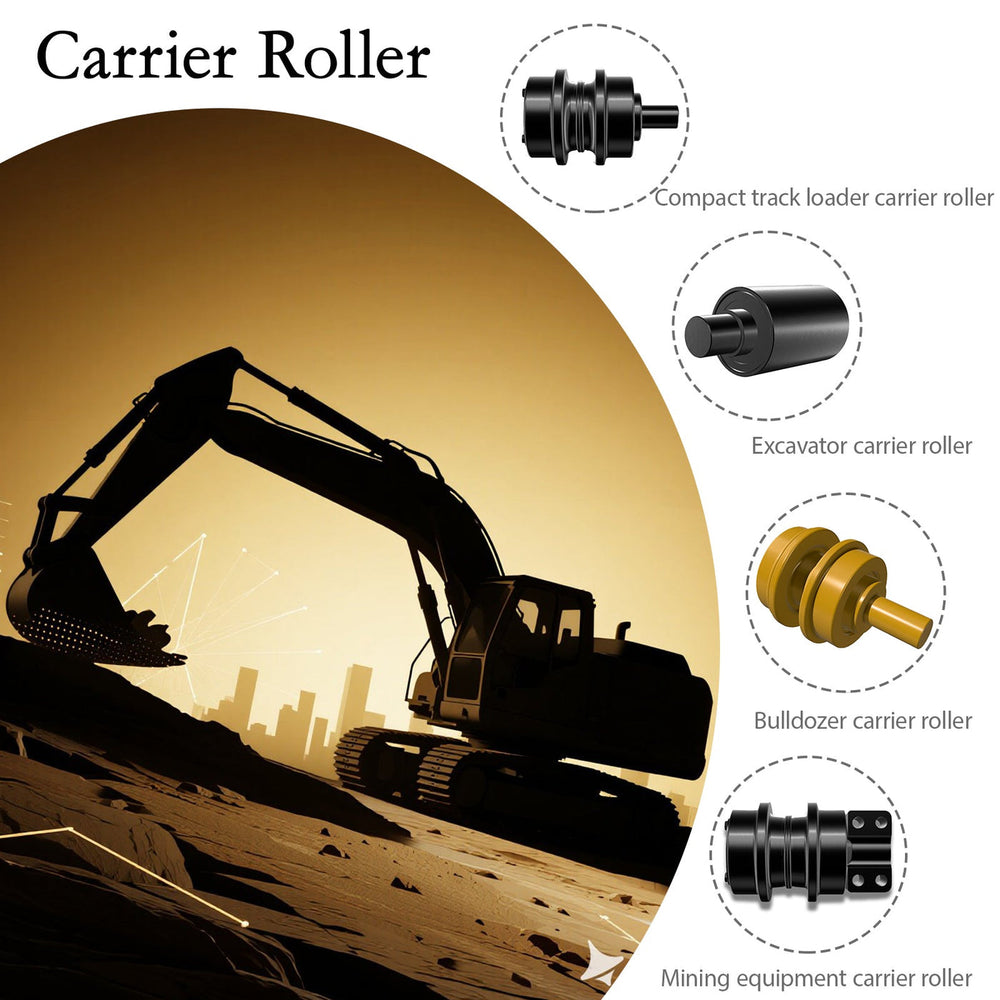
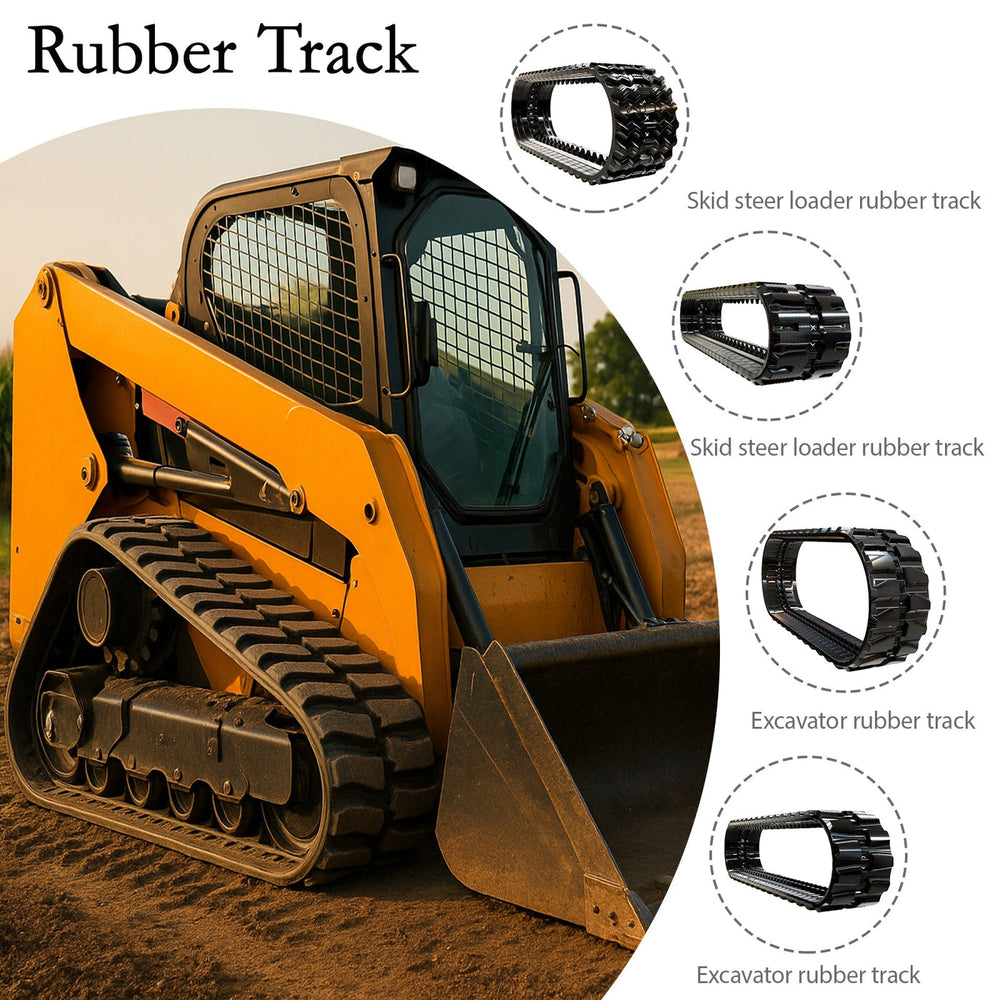
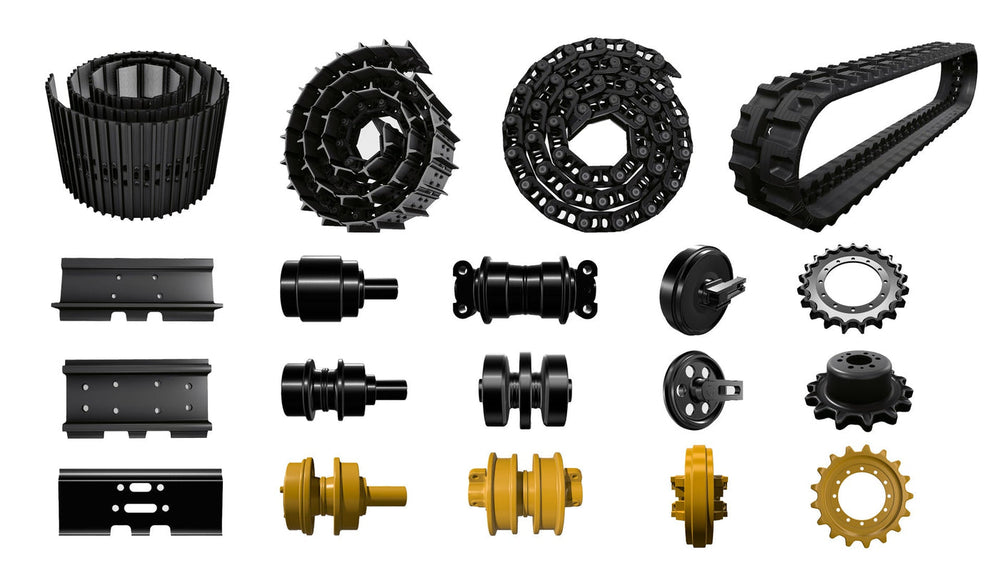
Five component groups carry almost all of the recoverable mass on a tracked machine, and each one fails in its own way. A track chain is the heaviest of them: links, pins and bushings, all replaceable in principle and all scrap once the bushings and pin bores are gone. Track rollers and carrier rollers are sealed assemblies — shell, shaft, seals and a lubricant reservoir — where the seal usually fails long before the steel does. Idlers wear on the rim. Sprockets wear at the tooth profile, which is a machining problem rather than a materials one. And the track shoes or rubber pads bolted to the chain are the parts most often replaced while they are still serviceable.
That list is the practical meaning of “modular design”. An undercarriage built to be taken apart keeps those groups separable and rebuildable. A sealed assembly pressed together with no service provision becomes scrap the first time one seal fails, however good the steel inside it is. Circularity in parts manufacturing is decided at the drawing stage, not at the scrapyard.
How much material really circulates? The published numbers
Against all the policy activity of the past decade, the measured circularity of the European economy is still low — and that gap is the honest starting point for any conversation about remanufactured parts. The European Environment Agency tracks the circular material use rate, the share of total material demand met by recycled material:
| Indicator | Value | Period | Source |
|---|---|---|---|
| Secondary material share of EU material use (circular material use rate) | 12.2% | 2024 | European Environment Agency |
| Same indicator, baseline year | 10.7% | 2010 | European Environment Agency |
| Target under the 8th Environmental Action Programme | 22.4% | 2030 | European Environment Agency |
| Spread between EU member states | 1.3% (Romania) to 32.7% (Netherlands) | 2024 | European Environment Agency |
| Estimated EU market potential for remanufacturing | €90 billion | by 2030 | Centre for Remanufacturing & Reuse |
Read that as a market signal rather than a moral one. Secondary material supplied 12.2% of EU material demand in 2024, an increase of 1.5 percentage points over 2010, and the EEA’s own assessment is that the EU is not on track to double the rate by 2030. A low number with a binding target in front of it means demand for recovered and remanufactured components is being created faster than the supply of parts that can be documented. Remanufacturing — rebuilding a component to specification instead of melting it — is the part of that market that grows without needing more scrap volume.
One boundary condition before applying any of this to a Canadian workshop: these are EU-level indicators measured against an EU target, and a Canadian fleet reports against none of them. The pressure arrives by a different route — customer ESG clauses, tender documentation, OEM supply agreements, and the resale value of a machine sold with a maintenance record. The buyer’s question is identical in both markets: can the supplier prove what was restored, and to what specification?
What remanufacturing an undercarriage part actually restores
Remanufacturing is not cleaning and painting, and “recycled” on its own says almost nothing about a part. Done properly, the process returns a worn component to its original dimensional specification and then demonstrates it: strip the assembly, measure the wear surfaces, refine or replace them, renew seals, fasteners and lubricant, test, and record what was done.
Part by part, the work is different:
- Track chain. Links still within pitch tolerance are reused; pins and bushings, which carry the wear, are replaced. A chain that has stretched past its tolerance cannot be rebuilt — the pitch is the chain.
- Rollers and idlers. The shell and shaft are inspected and remachined where material allows, and the seal and lubricant system is renewed. The seal is the life of the assembly.
- Sprockets. The tooth profile is restored by welding and machining rather than replaced. KTSU describes using NITTO welding for remanufactured sprockets supplied for Komatsu machines, and CNC machining for carrier roller bodies — the kind of process detail worth asking for on an inspection record.

A sealed carrier roller, part number 20Y-30-00481 for PC200-8 class machines. On an assembly like this the seal and lubricant decide the service life, and the shell and shaft are the surfaces a rebuild works on.
Reuse, remanufacture or remelt: three routes compared
Every worn undercarriage part takes one of three routes, and the choice is decided by measurement rather than by budget alone. The boundary column is the one that matters: it is the condition that removes the option.
| Route | What comes back | Where it makes sense | Condition that rules it out |
|---|---|---|---|
| Reuse the component as-is | The whole assembly returns to service unchanged | Low-hour machines, same model, known maintenance history | Unknown history; any crack or distortion |
| Remanufacture / rebuild | Wear surfaces back to specification, seals and fasteners renewed | Higher-value assemblies whose core is sound and measurable | Pitch, bore or tooth profile beyond the wear limit |
| Scrap and remelt | Steel returns as raw material; the machining and assembly are lost | Parts past every rebuild limit | None — but note how little of the original value survives this route |
The order of the table is the order worth trying. Reuse costs nothing but an inspection; remanufacturing costs labour and a set of wear parts; remelting costs the entire embedded value of the machining, the seals and the assembly labour, and recovers only the alloy. That is why a supplier who can measure a core accurately is worth more than one who simply offers a discount on a new part.
When a worn undercarriage part should not be remanufactured
Rebuilding has hard limits, and knowing them protects the machine rather than the invoice. Do not rebuild where a link, roller shell or idler rim shows a crack, where track chain pitch has stretched beyond the manufacturer’s wear limit, where a sprocket tooth profile has worn through the hardened layer, or where a seal seat or shaft journal is scored deeply enough that a new seal cannot hold. On load-bearing assemblies such as those on compact track loaders, an out-of-tolerance component is a safety item, not a cost item.

A track roller, part number 9066508 for EX100 and EX120-1 class machines. Look at the measurement, not the paint: the shell and shaft decide whether a roller can be rebuilt, and the seal decides how long the rebuild lasts.
The second limit is documentary. A rebuilt part with no record of what was measured, what was replaced and to which tolerance is an unknown quantity, and the risk of that unknown sits with the buyer for the whole of the next service interval — which is usually longer and more expensive than the difference in purchase price.
Worked example: rebuild the chain you own, or buy a new one
This is a model, not a measured result; substitute your own numbers. Take a 20-tonne class excavator running 2,000 hours a year. A new chain set costs CAD 4,200 and is expected to reach 4,500 hours. Rebuilding the existing set — new pins and bushings, reused links, renewed seals — costs CAD 2,300 and reaches 3,000 hours, provided the links measure within pitch tolerance.
Per hour of service, the new set works out at CAD 0.93 and the rebuild at CAD 0.77. Over a 2,000-hour year that is roughly CAD 1,860 against CAD 1,533, a difference of about CAD 330 per machine-year, and the gap widens on a fleet: six machines running that cycle are looking at close to CAD 2,000 a year, before counting the downtime saved when a rebuild can be scheduled instead of a breakdown waited out.
Two conditions keep the model honest. First, the rebuild only exists if the links pass the pitch measurement — once they do not, the comparison collapses and a new chain is the only correct answer. Second, the rebuild assumes the same duty cycle; a rebuilt chain worked in more abrasive ground will not reach the hours the model assumes, which is exactly why records should separate “worn out” from “damaged”.
Core exchange: what it changes in the purchase order
The routes above describe what can be done with a worn part. Whether it happens at scale depends on something more mundane: the terms on which the worn part travels back. A circular programme without a core exchange mechanism is a policy statement rather than an operation.
| Term | What it does | Why it decides whether the loop closes |
|---|---|---|
| Core deposit or credit, stated at the point of sale | Puts a value on the part that comes off the machine | Without a value, the worn part is scrap and the material it carries is lost from the loop at the moment it is removed |
| A returnable core condition standard | Defines what can be rebuilt and what cannot | A credit that is refused on inspection is worse than no credit, because the fleet has planned around it |
| Core return window and logistics | Bounds how long the credit is available | The window has to match how long the part sits on a shelf before somebody deals with it, which is usually longer than the supplier expects |
| Warranty terms on the remanufactured part | States what is covered and for how long | A rebuilt part carries more process risk than a new one, and the warranty is where that risk sits |
| Documentation that travels with the core | Records what was done, by whom and when | It is the record that makes the part acceptable later, and the reason a remanufactured component can be planned around rather than merely fitted |
The commercial point is that these terms decide the economics more than the rebuild itself does. A core credit on a roller or an idler changes the effective price of the replacement, and it also changes behaviour: a fleet that knows a part has a return value stops treating the removal as the end of its life and starts treating it as a transaction. That behaviour is what makes the volumes work, because a remanufacturing line needs a predictable inflow of cores rather than an occasional one.
Two practical asks follow for a fleet or a distributor setting this up. First, negotiate the core terms in the same conversation as the replacement price, because they move together and a discount on one is usually recovered on the other. Second, agree the condition standard before the first core goes back, so that a refusal is a rule being applied rather than a disagreement being had.
What to ask a supplier before you accept a remanufactured part
Circular claims are easy to make and hard to check, so reduce them to documents. For the exact part number, ask for:
- The measured condition of the core before rebuilding, against the wear limit for that part number.
- A list of what was replaced (pins, bushings, seals, fasteners) and what was reused.
- The dimensional specification the finished part was checked against, and the result.
- Surface hardness or heat-treatment information for the wear surfaces.
- The joint, weld or seal method used, named rather than described as “OEM standard”.
- Traceability for the core and for the replacement components — batch or lot numbers.
- Warranty terms stated as a period and an operating-hours cap, plus who pays return freight.
- A statement of what the part is not suitable for: which machines, which applications, which duty cycles.
Item eight is the one suppliers find hardest and the one that tells you most. A supplier who can describe the limits of their own rebuilt part has usually measured it; a supplier who cannot has usually painted it. KTSU’s position is that its remanufactured crawler components fit the Caterpillar, Komatsu and Hitachi families the company supplies, and that its Kunshan facility runs robotic welding with component traceability — statements that are worth exactly what the documents behind them are worth, which is why the list above is the request to make rather than the claim to accept.
Conclusion
The circular economy reaches parts manufacturing through a short list of removable components, measured against a recycled-material share that the EEA puts at 12.2% against a 22.4% target for 2030. That gap is the opportunity: a fabrication shop, a dealer or a manufacturer that can measure a core, restore it to specification and document the work is selling something the scrap market cannot. For a buyer, the working rule is simple — reuse before rebuilding, rebuild before remelting, and accept nothing without the measurements that prove which one you are getting.
References
- European Environment Agency, Circular material use rate in Europe (indicator; data for 2024, 8th EAP target for 2030).
- Centre for Remanufacturing & Reuse, Centre for Remanufacturing & Reuse (EU remanufacturing market potential).
- KTSU product pages for carrier roller 20Y-30-00481 and track roller 9066508 (part numbers and stated machine compatibility).
Frequently Asked Questions
Which undercarriage parts are worth remanufacturing?
Those with a recoverable core: rollers and idlers with sound shells and shafts, links whose bores will still hold a press-fit, and assemblies where the wear surface can be renewed without compromising the structure. The measure is not the component type but the condition of the core, which is why a condition standard has to be agreed before cores start moving.
How does a core exchange change the cost of a replacement?
It reduces the effective price of the replacement by the value of the returned core, and it converts a removal into a transaction. The size of the effect depends on the deposit, the return rate and the condition standard, which is why those three terms belong in the same negotiation as the purchase price.
What should be documented when a remanufactured part is fitted?
The core it came from, the work performed on it, the measurements after that work, the batch identity and the warranty terms. Without that record the part is indistinguishable from a used one, and a fleet cannot plan around it or claim against it.
When should a worn undercarriage part be scrapped rather than returned?
When the core has failed the condition standard: a shell worn through its case, a shaft that is scored or bent, a bore that will no longer hold its press-fit, or a frame-related defect. Sending those back wastes freight and sets up a refusal that the fleet has already counted as a credit.
Does remanufacturing an undercarriage component affect machine performance?
A properly remanufactured component built back to the original dimensions performs as the design intended, and the dimensional report is what demonstrates it. The risk sits in the parts of the process that are not measured, which is why the documentation requirement above matters more than the price.
This article is part of Construction Equipment Parts: Market Trends and Technology, the guide that covers this topic in decision order.
More Technical Guides guides
Find the next article for your component, application or buying decision.
Back to Technical Guides