How Do High-Reach Excavator Undercarriage Parts Sustain Extreme Loads?
Component selection, fitment and the connections that keep an undercarriage working as a system.

On this page
High-reach excavator undercarriage parts sustain extreme loads through specialized engineering, including wider track gauges and reinforced steel. High-performance components like a Sprocket for demolition must endure immense torque, while technologies like NITTO friction welding ensure structural integrity. These heavy-duty track parts are essential for stabilizing massive rigs like the Volvo EC950 during high-altitude demolition and in extreme environment machinery.
Last updated:

How Does a High-Reach Excavator Undercarriage Support Massive Vertical Loads?
A high-reach excavator undercarriage supports massive vertical loads by utilizing an ultra-wide, hydraulically retractable track frame and heavy-duty track parts that distribute weight across a larger surface area. This configuration lowers the center of gravity, preventing tipping when the boom is extended. Reinforced track rollers and deep-case hardened links ensure the chassis remains stable under shifting demolition stresses.
When working with machines like the new 2026 Volvo EC950 High Reach, the undercarriage is the foundation of safety. These massive rigs reach heights exceeding 160 feet, creating a significant leverage effect on the tracks. To counteract this, manufacturers use high-strength steel and precision-engineered heavy-duty track parts.
Stability Components for High-Reach Demolition
| Component | Function in High-Reach Operations | Engineering Benefit |
| Retractable Frame | Expands the track gauge during active work. | Increases lateral stability by up to 30%. |
| Reinforced Rollers | Supports the weight of extended long-front booms. | Prevents frame deformation under extreme pressure. |
| Deep-Hardened Links | Withstands constant grinding against concrete. | Extends service life in abrasive demolition sites. |
Why Is a Specialized Sprocket for Demolition Critical for Machine Performance?
A specialized Sprocket for demolition is critical because it handles the high-torque demands and sudden shock loads common in structural tearing. Unlike standard sprockets, these are manufactured with superior surface hardness to prevent tooth thinning and slippage. This ensures consistent power transfer and prevents catastrophic track failure while the machine is operating at maximum reach.
In the world of extreme environment machinery, the sprocket is the heart of the drive system. In demolition, tracks aren't just moving; they are often anchored or pivoting under the weight of falling debris and heavy shears. A standard sprocket would quickly succumb to "pitting" or tooth breakage. KTSU addresses this by using precision CNC machining and advanced heat treatment to ensure their sprockets can handle the punishing 2026-era demolition attachments.
What Role Does NITTO Friction Welding Play in Structural Integrity?
NITTO friction welding plays a vital role by creating a solid-state bond between components that is stronger than the parent materials. This process eliminates the weak spots typical of traditional fusion welding, such as porosity or slag inclusions. In undercarriage manufacturing, it ensures that rollers and idlers can withstand the immense bending forces of high-reach demolition.
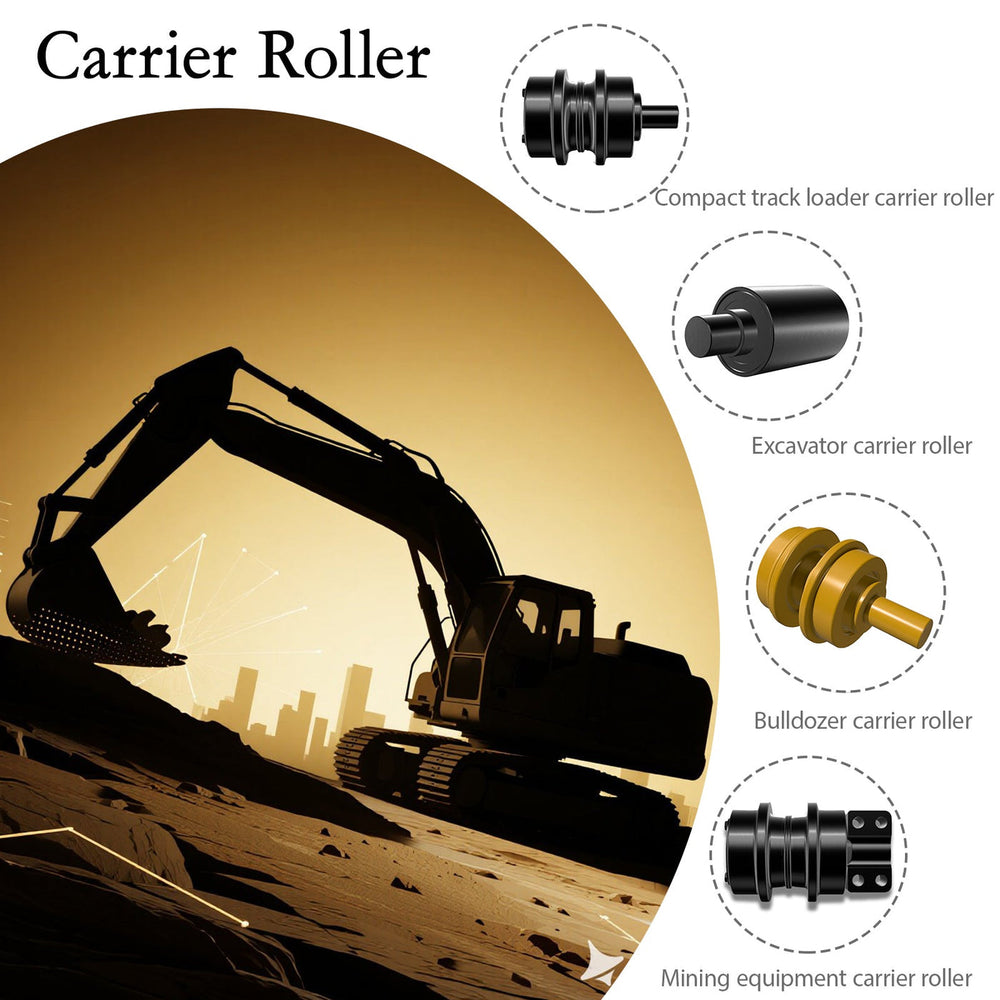
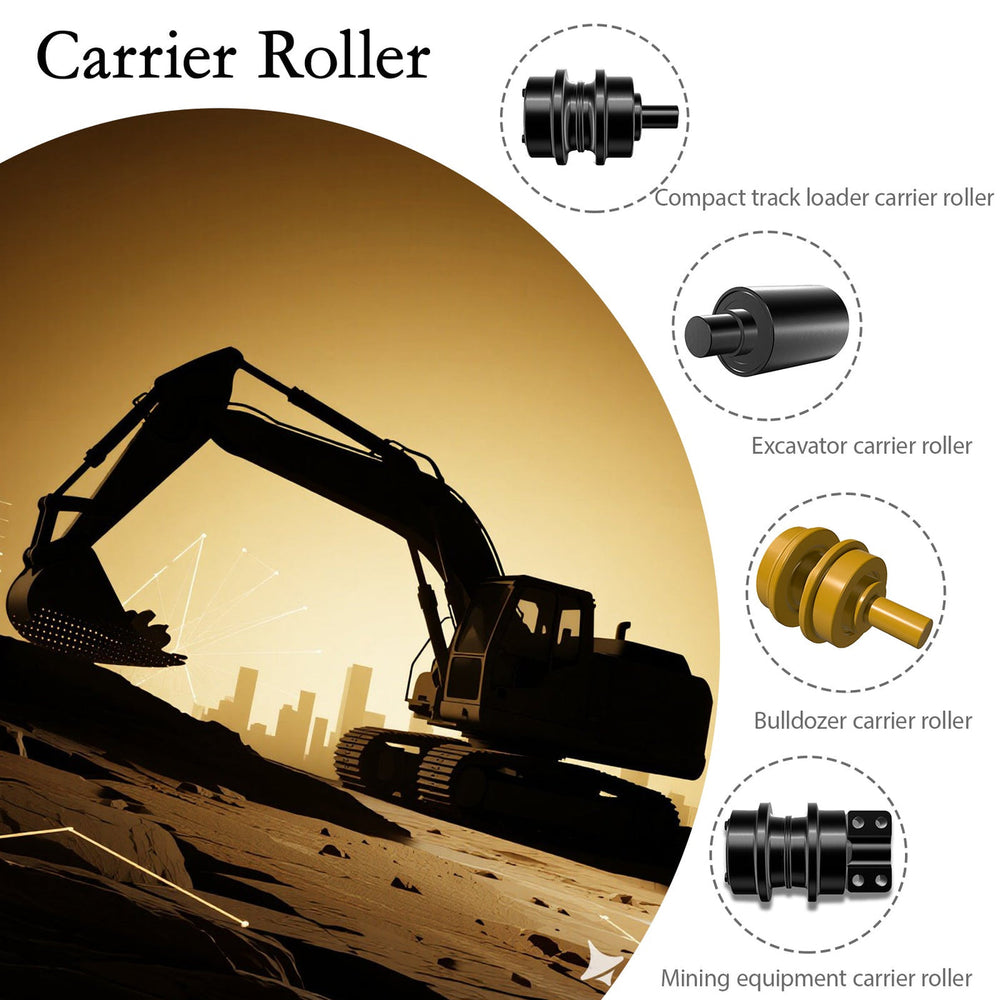
At KTSU, the integration of Japanese technical excellence involves using state-of-the-art NITTO welding equipment. Friction welding is a self-cleaning process that produces a full-surface weld, which is essential for parts like carrier rollers that experience constant vibration and axial load shifts.
KTSU Expert Views
"The shift toward massive, 400,000-lb demolition rigs in 2026 has pushed standard manufacturing to its limits. At KTSU, we believe that structural integrity starts at the molecular level. By utilizing NITTO friction welding, we achieve a weld zone that is effectively indestructible under normal operating conditions. This technology, combined with our 70,000-square-meter facility’s robotic CO2 welding capabilities, allows us to produce undercarriage components that don't just meet OEM specs—they redefine the durability expectations for extreme environment machinery."
The four loads a high-reach undercarriage actually carries
Extreme load is not one number. A high-reach rig loads its undercarriage four different ways, and a component can be strong in one and weak in another. That is how a part survives on a digging machine and fails on a demolition rig of similar weight.
- Static load - the machine and its counterweight. This is the figure quoted on specification sheets, and the one buyers compare on. It is also the load a wide track gauge reduces, by spreading it over more bearing surface.
- Overturning moment from the attachment. A long front boom at 160 feet of reach turns a modest attachment weight into a large moment at the track frame. The undercarriage resists it through gauge width and frame stiffness rather than component hardness, which is why a retractable frame is the first line of defence against this load and a stronger roller is not.
- Dynamic and shock load. Falling debris, tool engagement and travel over broken concrete load rollers, bushings and seals with impacts that a static rating does not describe. This is where the seal group and the case depth of the wear surfaces decide the outcome.
- Abrasion under lateral load. Demolition work puts the chain under side load while it grinds against concrete. The chain wants to move sideways, the roller flanges resist it, and any guidance lost is paid for at the flange edge.
Read a component against the load it defends and a specification request becomes much easier to write.
| Component | Load it defends against | What to ask for on the quotation |
|---|---|---|
| Track roller | Static and dynamic vertical load | Radial and axial load rating, shell wall thickness, case depth of the running surface, and the seal type. The seal is the part that fails first when fines get in. |
| Carrier roller | Return-run load plus constant vibration | The weld method and the concentricity figure. A carrier roller spends its life under vibration, which is why a full-surface friction weld is the specification to look for. |
| Sprocket | Torque and shock | Tooth profile and hardening depth, not hardness alone. The 25-40% life advantage quoted in this article comes from deeper induction hardening and a tooth profile built for impact. |
| Track chain and links | Abrasion with side load | Link height at the discard limit for the machine, bushing surface hardness, and the seal. A sealed and lubricated chain holds pitch longer, and pitch is what protects the rollers. |
Work out which of the four loads dominates on your site, then ask for the evidence on that one. On a demolition rig the answer is almost never hardness alone. It is the seal, the case depth and the weld.
Which Heavy-Duty Track Parts Are Most Vulnerable in Extreme Environments?
The most vulnerable heavy-duty track parts in extreme environments are the track rollers, bushings, and seal groups. These components are closest to the ground, where they are bombarded by abrasive dust and metal fragments. Without high-quality "all-weather" seals and deep-case hardening, these parts can seize, leading to expensive downtime and track "snaking."
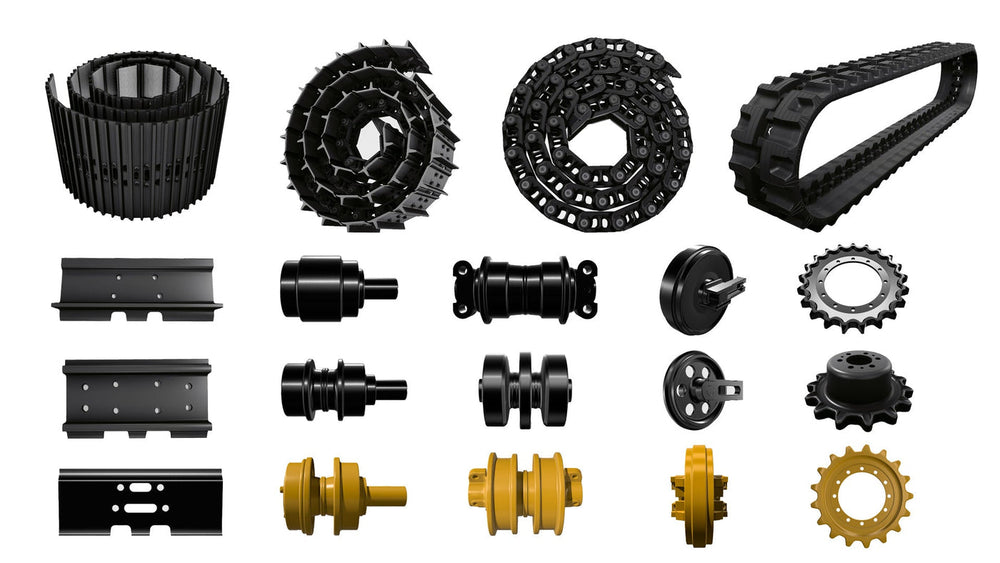
Maintaining a high-reach excavator involves a proactive approach to the undercarriage. In demolition, the "track-in" of debris can jam the idler or cause the chain to jump. This is why KTSU focuses on "one-stop" solutions that include high-performance track chain assemblies engineered for world-class brands like Caterpillar and Komatsu.
How Can Operators Extend the Life of Extreme Environment Machinery?
Operators can extend the life of extreme environment machinery by performing daily undercarriage cleanouts, maintaining proper track tension, and avoiding high-speed travel on abrasive surfaces. Using high-quality aftermarket parts with Japanese precision ensures that the components can handle the inevitable wear and tear of modern demolition sites.
Maintenance Standards for Modern Demolition Rigs
Visual Inspection: Regularly check for leaking rollers or cracked sprocket teeth.
Tension Calibration: Keep tracks slightly looser in rocky debris to prevent binding.
Cleaning: Clear concrete chunks from the track frames daily to prevent "packing."
Seal Integrity: Ensure the specialized seals in rollers are not compromised by wire or rebar.
What Are the Advantages of Friction Welding for Track Rollers?
The advantages of friction welding for track rollers include superior concentricity, reduced raw material waste, and a refined grain structure at the weld joint. This results in a more balanced roller that generates less heat during operation. Friction-welded rollers are significantly more reliable in high-load applications compared to those made with traditional stick welding.
Friction welding allows for the joining of dissimilar metals, which is a massive advantage in extreme environment machinery. It enables a wear-resistant outer shell to be joined to a high-toughness inner core. This specialized manufacturing ensures every roller can support the weight of a Volvo EC950 High Reach without structural failure.
Can High-Reach Excavators Operate Safely Without Reinforced Undercarriages?
No, high-reach excavators cannot operate safely without reinforced undercarriages, as standard track frames are not designed to handle the high center of gravity and lateral forces. Operating a high-reach boom on a standard undercarriage leads to excessive frame flexing, accelerated component wear, and a high risk of the machine tipping during heavy tool engagement.
Safety in 2026 demolition is non-negotiable. Large rigs require a foundation that is as sophisticated as the electronics in the cab. By choosing specialized heavy-duty track parts, fleet managers ensure that the "footprint" of their machine is stable enough to allow the operator to focus on the demolition task 160 feet in the air.
Conclusion
Modern high-reach demolition demands a shift from standard digging components to specialized, high-integrity undercarriage solutions. Key takeaways include the necessity of wide-gauge stability, the use of Sprocket for demolition designs to handle high torque, and the adoption of advanced manufacturing like NITTO welding for structural safety. For operators, the most actionable advice is to invest in precision-engineered components that offer deep-case durability and superior sealing to mitigate the harsh realities of extreme environment work.
FAQs
How long does a demolition sprocket last compared to a standard one?
In high-abrasion environments a specialised demolition sprocket typically lasts 25-40% longer than a standard one, because of deeper induction hardening and a reinforced tooth profile built to resist impact. That advantage holds only while the rest of the system is sound, because a worn chain or an under-tensioned track will consume it.
What is the benefit of a retractable undercarriage?
It lets the machine narrow for transport and widen for work. The widened stance is the part that matters on a high-reach rig: it is how the undercarriage resists the overturning moment of a long front boom, and it is a frame-level change that no component upgrade can substitute for.
How many hours does an excavator undercarriage last?
It depends on duty cycle and on whether components are replaced as a system rather than one at a time. For reference, the component tables published elsewhere on this site give a track chain roughly 4,000-6,000 hours in earthworks and 2,000-3,500 hours in mining, with rollers and idlers lasting longer than the chain and sprockets in the same application.
Is friction welding better than CO2 robotic welding?
For cylindrical parts such as rollers, yes. Friction welding produces a full-surface solid-state bond and avoids the heat-affected-zone problems that fusion welding can leave behind, and it allows a wear-resistant shell to be joined to a tougher core. For structural joints the geometry is not cylindrical, so robotic CO2 welding remains the process used.
This article is part of Undercarriage Parts by Machine and Brand, the guide that covers this topic in decision order.
More Undercarriage Parts guides
Find the next article for your component, application or buying decision.
Back to Undercarriage Parts