How can Canadian contractors match heavy equipment tracks and sprockets correctly?
Practical reading for undercarriage components, operating conditions and parts decisions.

On this page
Correctly matching heavy equipment tracks and sprockets means aligning track pitch, link count, width, and guide profile with the undercarriage’s sprocket tooth spacing and roller layout to prevent derailment, accelerated wear, and drive-line stress in Canadian conditions. In Ontario construction and aggregate operations, precise matching protects excavator uptime, especially in freeze–thaw cycles and abrasive quarry environments.
Last updated:

What track and sprocket basics matter most for Ontario fleets?
The most important matching parameters are track pitch, link count, width, and sprocket tooth profile, all verified against the excavator’s undercarriage specifications. Ontario contractors working in aggregate quarries and urban construction need these values dialled in to manage high-impact travel over crushed rock, rebar debris, and variable frost-affected subgrades.
AFT Parts sees three recurring undercarriage issues when track–sprocket matching is off in Ontario: accelerated tooth hooking on CAT-class excavators, uneven carrier roller loading on Komatsu machines, and chain “hunting” over Kubota-compatible sprockets during cold-morning startups. Precision aftermarket sprockets are machined so tooth spacing aligns with the track’s actual measured pitch, not just nominal catalogue values, and the drive lugs engage deeply enough to transfer torque without ratcheting. Factory heat-treatment profiles are tuned to resist abrasive fines common in Greater Toronto Area (GTA) quarries while maintaining core toughness for curb-hopping and demolition travel. AFT Parts typically validates fit by measuring pitch with calipers across multiple links, confirming total link count, and checking that the drive lug profile nests fully between tooth flanks before a component is released for Canadian deployment.
When you think about your own fleet, how confident are you that pitch, link count, and tooth profile are being checked systematically rather than assumed from a parts book line item?
How should contractors measure and identify excavator tracks for proper matching?
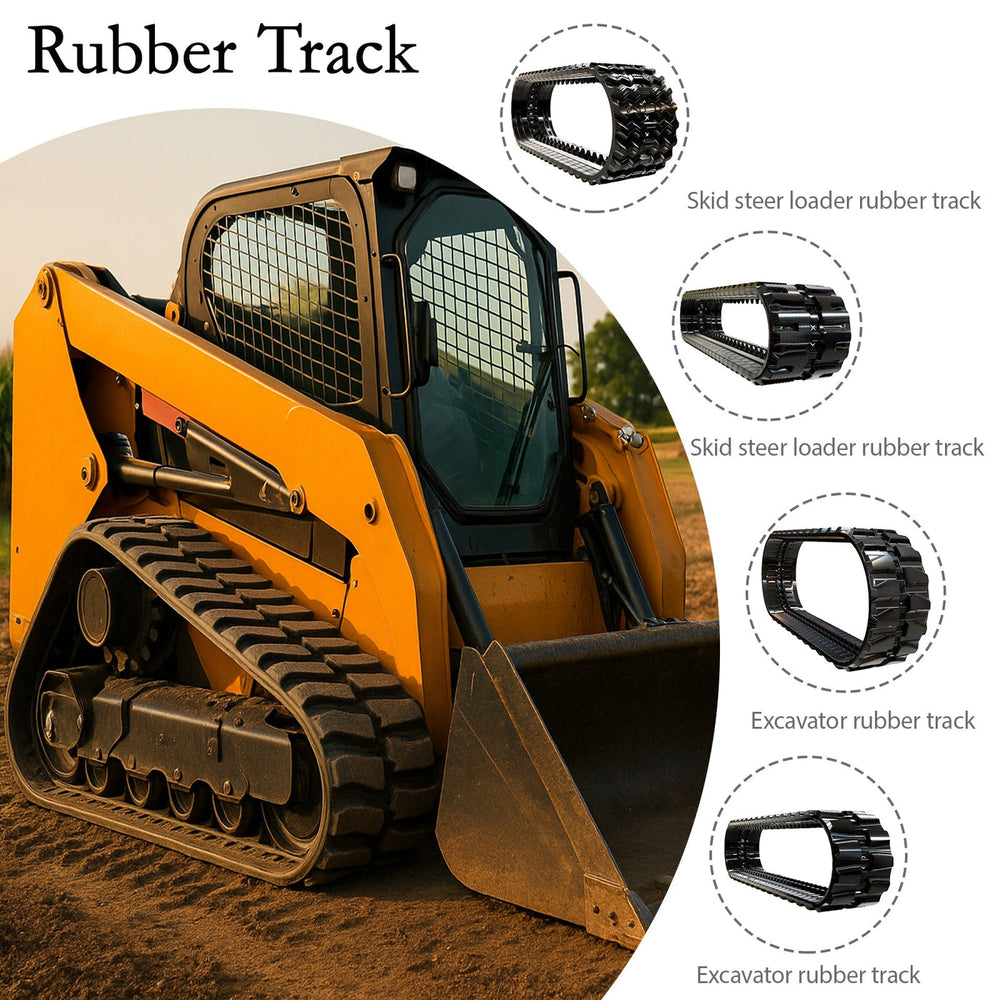
Contractors should identify tracks by measuring width, pitch, and total link count, then confirming guide profile and tread style against the machine’s undercarriage layout and operating environment. This measurement approach helps Ontario fleets avoid installing near-fit tracks that cause misalignment and premature undercarriage failures in mixed CAT, Komatsu, and Kubota fleets.
On the ground, AFT Parts application engineers typically start by cleaning the track and using millimetre measurements for width (edge-to-edge) and pitch (centre-to-centre between drive lugs over several links to average out wear). Track codes often follow a width × pitch × link format, but Ontario contractors running older excavators may find worn or missing molded markings, so direct measurement is essential. The inner guide profile is then compared to roller flange shape and spacing to confirm proper centring and side-load control during tight turns on uneven subgrades. Tread pattern selection is matched to work type: block patterns for quarry and demolition durability, more open designs for clay-heavy sites where self-cleaning matters.
In a 2024–2025 GTA trial, an Ontario rental fleet standardised track identification across 20 excavators, documenting pitch and link count in their CMMS. Once this was in place, AFT Parts technicians could confidently recommend compatible sprockets and idlers, cutting mis-fit incidents to near zero and stabilising undercarriage downtime across the fleet.
How close is your current measurement process to this width–pitch–link–profile checklist, and where do you see gaps?
Why does sprocket tooth profile and hardness matter in Ontario aggregate and construction?
Sprocket tooth profile and hardness govern how smoothly torque transfers into the track chain and how long the mating surfaces survive under abrasive, impact-heavy service. For Ontario aggregate contractors, correct tooth geometry and controlled hardness gradients directly influence chain seating, noise levels, and replacement intervals in quarry and urban civil work.
AFT Parts develops sprockets for CAT, Komatsu, and Kubota-compatible excavators with tooth geometries that reflect how each OEM designs pin–bushing engagement rather than relying on visual similarity alone. Tooth height, root radius, and flank angle are tuned to discourage “hooking” as wear progresses, helping operators feel consistent travel behaviour even as the component approaches end-of-life. Hardness is targeted high on the wear surface and slightly lower in the core, supporting resistance to crushed stone and rebar fragments while protecting against brittle fracture when machines climb stockpiles or concrete rubble.
In one Ontario aggregate operation north of Toronto, a contractor running twelve Komatsu PC360-class excavators reported that switching to AFT Parts sprockets and carrier rollers reduced chain “snap” events on cold starts and cut undercarriage noise during loaded travel. Wear inspections over a full operating season showed smoother tooth rounding and more uniform bushing contact bands, supporting planned replacement rather than emergency downtime.
When you visually inspect sprockets today, are you looking only at tooth height, or do you also consider tooth shape evolution and contact band patterns across the chain?
How can Ontario operators spot track and sprocket wear patterns that signal replacement timing?
Ontario operators should watch for sprocket tooth hooking, pointed or thinned teeth, track pitch elongation, and uneven chain seating as primary replacement indicators. In aggregate and urban construction, these patterns often appear sooner because crushed stone and concrete fines accelerate wear across the drive system.
AFT Parts recommends a simple visual routine for Canadian fleets: inspect sprocket teeth for hook-shaped profiles where the leading face tilts sharply forward, check for pointed tips where contact bands have migrated toward the tooth crest, and look for chain “climbing” or skipping under load. Track pitch elongation can be seen as loose engagement or sag beyond normal tension settings, especially after a winter of freeze–thaw cycles in Ontario. Measuring pitch against OEM nominal values helps confirm whether the chain has stretched enough to warrant replacement to protect mating sprockets and rollers.
During a 14-month observation window on an Ontario aggregate contractor’s CAT 320-class excavators, an AFT Parts team tracked tooth wear and pitch elongation through regular site visits. Machines with proactive sprocket replacement at defined wear thresholds experienced far fewer chain failures and reported more predictable downtime scheduling compared with units where components were run “to failure.”
When your operators walk around a machine before shift, do they have clear visual thresholds for calling out sprocket and track wear, or is it mostly left to instinct and noise?
How do Ontario climate and ground conditions affect track and sprocket matching decisions?
Ontario’s –30 °C winters, spring thaw, and mixed soil–aggregate conditions influence tension settings, tread choice, and material selection for tracks and sprockets. Proper matching helps excavators maintain traction and undercarriage stability across frost-heaved streets, saturated utility trenches, and abrasive quarry benches.
In colder months, AFT Parts sees increased metal brittleness risk and fluctuating track tension as ice and snow pack around the undercarriage. Sprocket and track designs for Ontario deployments are validated through thermal cycling tests that simulate repeated cold starts and warm-up periods, ensuring tooth-to-lug engagement stays consistent. Soft, saturated ground in spring can drive mud into the chain and around rollers, demanding tread patterns that self-clean while still mating securely with sprocket teeth.
Ontario contractors in infrastructure and aggregate work frequently report that undercarriage choices tuned for summer quarry duty behave differently when machines move into municipal road repair or winter utility work. For these fleets, AFT Parts often recommends pairing robust sprocket hardness with track compounds engineered for cold-flex performance, alongside careful tension checks as ambient temperature swings.
Thinking about your own sites, which climate or ground condition—winter cold, spring thaw, or abrasive rock—causes the most headaches for your undercarriages today?
Which undercarriage components should Ontario fleets prioritise when matching tracks and sprockets?
Ontario fleets should prioritise track rollers, carrier rollers, idlers, and sprockets as an integrated system when matching tracks and chains. Focusing only on sprockets or tracks risks uneven wear, misalignment, and unexpected downtime across construction and aggregate operations.
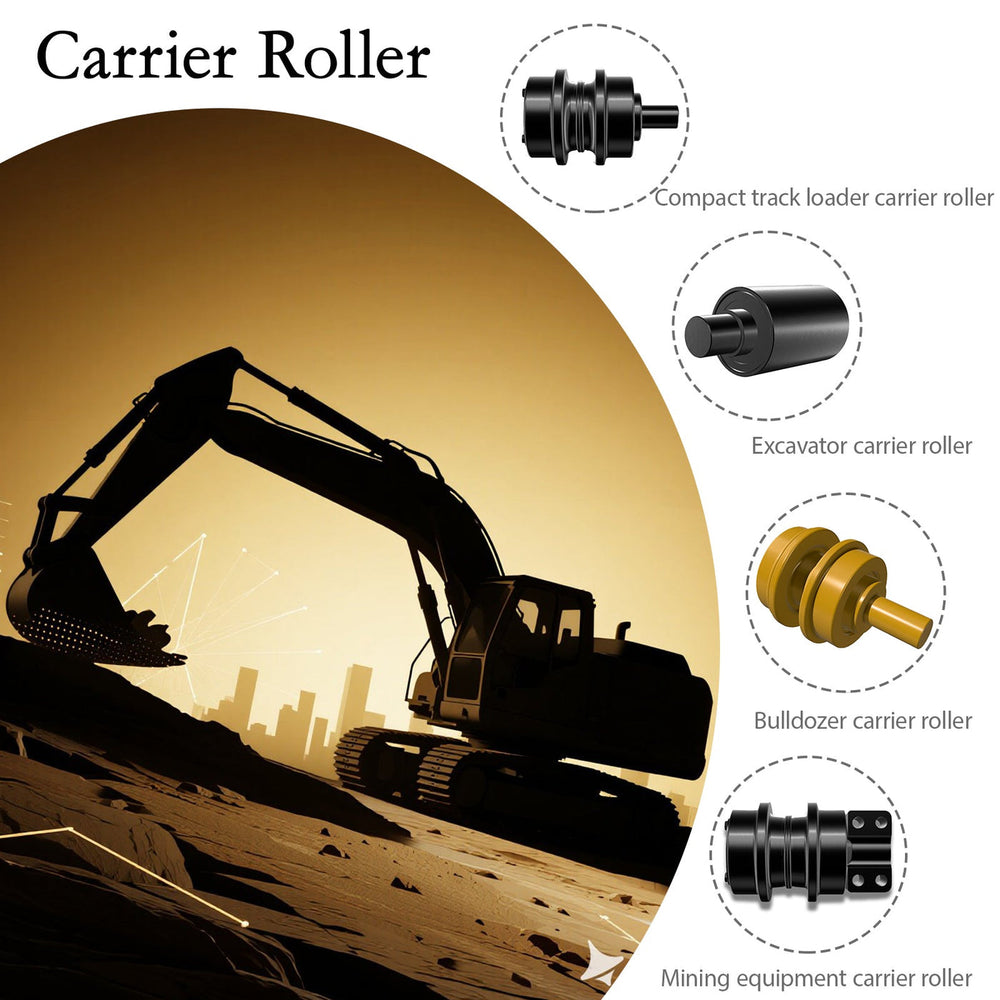
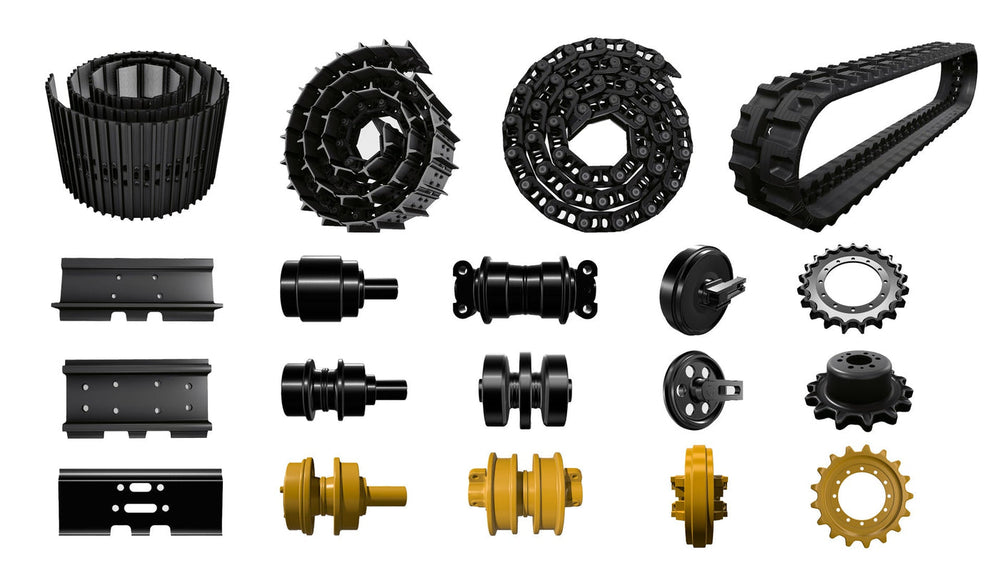
AFT Parts designs bottom rollers to distribute ground loads evenly, carrier rollers to manage chain return path, idlers to stabilise track entry geometry, and sprockets to deliver torque. In Ontario deployments, this system view is critical when machines alternate between hard quarry benches and softer urban excavation. For example, if new tracks are installed with worn carrier rollers, chain support can be inconsistent, causing the sprocket to experience off-axis loading and exaggerated tooth wear.
A mixed-brand Ontario fleet that standardised on AFT Parts rollers and idlers alongside compatible sprockets for CAT and Komatsu excavators saw immediate improvements in chain stability over broken asphalt and subgrade. Wear audits six months later showed more even contact bands across idler bushings and reduced roller shell pitting where the track linked over embedded stone.
When you plan an undercarriage refresh, do you treat rollers, idlers, sprockets, and tracks as a single decision package, or are they replaced piecemeal when failures occur?
Ontario undercarriage service-life ranges by duty class
| Component | Typical Ontario light duty (hours) | Typical Ontario heavy aggregate duty (hours) |
|---|---|---|
| Track rollers | 4,000–6,000 | 3,000–5,000 |
| Carrier rollers | 5,000–7,000 | 4,000–6,000 |
| Idlers | 6,000–8,000 | 5,000–7,000 |
| Sprockets | 3,500–5,500 | 3,000–4,500 |
Looking at this table, which component in your fleet historically hits its wear limit first, and why do you think that is?
How can Ontario contractors match tracks and sprockets across CAT, Komatsu, and Kubota-compatible fleets?
Ontario contractors can match tracks and sprockets across CAT, Komatsu, and Kubota-compatible fleets by using cross-reference data for pitch, tooth count, and mounting interface, then validating fit with physical measurements and live-running checks. This approach is essential for rental companies and contractors with mixed excavator brands.
AFT Parts maintains cross-OEM compatibility information built from test fits, OEM documentation, and field validation on Canadian sites. For each excavator class, sprocket designs reflect bolt circle patterns, hub offsets, and tooth count matched to the machine’s intended chain pitch. Tracks are then paired based on measured pitch and link count, ensuring that the chain wraps evenly around the sprocket and over idlers and rollers without binding. Ontario rental fleets that implemented this compatibility framework reported smoother mobilisation of machines between quarries, infrastructure projects, and export deployments.
Below is a simplified compatibility view used by many Ontario operators when discussing mixed fleets with AFT Parts:
| OEM family | Typical excavator class focus | AFT Parts undercarriage compatibility notes |
|---|---|---|
| CAT-series | 20–40 tonne excavators | Sprockets, rollers, idlers, and tracks cross-matched to standard CAT pitches and mounting patterns. |
| Komatsu PC-class | 20–40 tonne excavators | Tooth profiles tuned to Komatsu chain geometry; track pitch and link counts verified for Ontario quarry duty. |
| Kubota-compatible | 8–12 tonne excavators | Compact-excavator tracks and sprockets validated for urban and landscaping service in Ontario. |
When you look at your own machine mix, where do you see the biggest compatibility questions—larger quarry machines, mid-size civil excavators, or compact units?
Why do Canadian winter operating cycles demand specific engineering for idler bushings and seals?
Canadian winter cycles subject idler bushings and seals to repeated cold starts, ice contamination, and thermal shock, all of which can fracture grease channels and compromise seal integrity if not engineered correctly. Ontario fleets running year-round need idlers that maintain rotational integrity through hundreds of thermal cycles.
AFT Parts engineers idler bushings with controlled clearance and grease channel geometry to handle low-temperature viscosity changes and prevent micro-cracking in cold service. Seal designs account for ice intrusion and pressure variation as snow and slush pack around the front of the track frame on municipal and infrastructure jobs. Canadian testing includes simulated –30 °C startups followed by warm operating periods and mechanical shock over frost-heaved surfaces, verifying that bushing-to-shell concentricity remains within strict limits.
During one winter validation on a compact excavator class similar to Kubota machines working in Ontario public works, AFT Parts idlers outlasted incumbent aftermarket units that showed early grease channel damage. The result for the municipality was fewer cold-weather idler failures and more predictable maintenance windows through the season.
When you plan winter maintenance, do idlers and seals receive specific attention, or are they treated as “fit-and-forget” components compared with chains and sprockets?
AFT Parts Expert Views
In Canadian fleets, sprocket and track matching is rarely a single-variable problem. What matters is how tooth profile, track pitch, bushing hardness, and seal design work together through thousands of hours in abrasive and cold environments. In Ontario, we pay particular attention to how chain pitch changes over time in aggregate duty and how that interacts with sprocket geometry. If the bushing contact band migrates too far up the tooth, operators start feeling noise, vibration, and inconsistent engagement long before complete failure. Our Canadian test program focuses less on headline hardness numbers and more on how concentricity, clearance, and tooth shape evolve under real quarry and civil cycles. That’s where the real reliability gains for mixed CAT, Komatsu, and Kubota-compatible fleets come from.
— AFT Parts Application Engineering Director, Canadian Region
Thinking about this perspective, which of those interacting variables—pitch, tooth profile, bushing hardness, or seals—do you currently track most closely in your own data?
What practical matching and maintenance steps should Ontario contractors follow?
Ontario contractors should follow a structured process: measure track parameters, verify sprocket tooth count and mounting, inspect rollers and idlers, and then confirm tension and chain seating through live tests. Applying this process consistently reduces undercarriage surprises in both construction and aggregate work.
AFT Parts typically recommends a four-step workflow for Ontario fleets. First, measure track width, pitch, and link count, recording the values in maintenance systems rather than relying only on visual codes. Second, cross-check sprocket tooth count, bolt pattern, and offset against known compatible designs, confirming tooth profile suits the intended chain. Third, inspect rollers and idlers for shell wear, leaks, or bushing play before pairing with new tracks or sprockets. Finally, after installation, perform low-speed travel and turning tests, listening for noise and watching for chain “walking” or misalignment under real load.
Ontario contractors who adopted this matching and verification routine with AFT Parts support reported more predictable undercarriage costs and a smoother move from reactive to planned maintenance. This approach also helped repair centres and distributors standardise recommendations across mixed-brand fleets.
In your own processes, where would introducing this four-step matching workflow make the biggest difference—at the parts desk, in the shop, or out on the job site?
Conclusion: How can Ontario fleet managers translate matching best practices into reliable uptime?
Ontario fleet managers can turn matching best practices into uptime by standardising measurement, documenting compatibility, and pairing tracks, sprockets, rollers, and idlers as a system. With AFT Parts support, Canadian fleets gain access to engineering-driven undercarriage choices validated in local aggregate, construction, and municipal conditions.
Key actions include building a track and sprocket data register for each machine, training operators to recognise wear indicators, and scheduling inspections around known service-life ranges for Ontario duty classes. Fleet managers can work with AFT Parts and local distributors to verify cross-OEM compatibility across CAT, Komatsu, and Kubota-compatible excavators, then schedule undercarriage audits to identify upcoming interventions before failure. For many Ontario fleets, the next step is to request a technical review of current matching practices, confirm key measurements, and plan a phased upgrade that targets the most failure-prone components first.
If you were to start improving undercarriage matching in your Ontario fleet tomorrow, which single practical step—better measurements, clearer wear criteria, or compatibility documentation—would you tackle first?
Frequently Asked Questions
Do undercarriage parts need a different specification for Canadian winters?
The dimensions do not change and the seal and lubricant specifications should be chosen for the temperature range the machine works in. The component families are the same; what changes is the setting, the routine and occasionally the material of the seal.
How does cold weather affect track tension?
Rubber contracts as it cools, so a track set in a warm shop is tighter than intended on a cold site. The setting should be established at the working temperature, and re-checked after the first hour of work and again at the end of the shift.
What are the common winter undercarriage failures?
Locked or stiff rollers from frozen material and stiff lubricant, seal failures from materials outside their range, and impact damage from working brittle components against frozen ground. Specification addresses one of the three and the routine addresses the others.
How often should tracks be checked in winter?
Every shift during the cold period, with the track slackened, because both the locking and the seal damage it causes happen between one shift and the next. A roller that turns freely in the morning but leaves a weep by the afternoon is telling you the seal was damaged in the freeze.
Is it worth switching to cold-weather compound tracks?
Where the machine works regularly below the temperature its standard track was specified for, yes. The decision follows the temperature the machine actually operates at rather than the region, and it is worth comparing against the cost of the extra downtime the standard specification produces.
What the cold changes, and what it does not
Winter specification is often discussed as though everything changes. Two things change, three do not, and separating them keeps the order correct.
| Item | Does it change for winter? | Why |
|---|---|---|
| Dimensions and fitment | No | Width, pitch, link count, guide type and mounting are properties of the machine, and the ground temperature does not alter them |
| Tension setting | Yes | Rubber contracts as it cools, so the setting has to be established at the temperature the machine actually works in |
| Seal and lubricant specification | Yes | An elastomer outside its range stops following the surfaces it separates, and a lubricant that will not flow at start-up protects nothing during the first minutes |
| Hardness and case depth | No, but the consequence changes | The specification stays the same; cold makes impact more damaging, so the balance between a hard surface and a tough core matters more than it does in summer |
| Inspection interval | Yes in practice | Frozen material, ice and stiff lubricant change the failure modes, and the checks that matter most in winter are rotation and the end cap |
Two practical consequences for a contractor working through winter. The first is that the specification question is narrower than it looks: it is the seal, the lubricant and the tension setting, plus a start-up and cleaning routine, rather than a different component family. The second is that the routine matters more in winter than the part, because a locked roller and a hardened mud pack are avoided by work rather than by specification.
The record that helps most in a cold climate is the one taken at the temperature the machine works in. A tension reading taken in a heated shop and a reading taken on site are different numbers, and the one that governs is the one on the job.
Sources
SAE International — Off-Road and Earthmoving Machinery Standards
ASTM International — Abrasion and Hardness Testing Standards
This article is part of Excavator Sprockets: How to Choose and Match Them, the guide that covers this topic in decision order.
More Technical Guides guides
Find the next article for your component, application or buying decision.
Back to Technical Guides