Bobcat T590 CTL Track Roller Flange Wear: Causes, Heat, and Alignment Corrections
Inspection, wear evidence and replacement planning for the complete track system.
On this page
Last updated:

ar Costs
Financial Baseline:
Components
Key Failure Modes
The following matrix details how precision-engineered KTSU heavy-duty rollers stack up against market alternatives.
| Undercarriage Aspect | KTSU Heavy-Duty Roller | Generic Aftermarket Roller | Reconditioned / OE Take-Off Roller |
| Manufacturing Process | CAD/CAM design, forged half-shells, robot $\text{CO}_2$ | Mixed manufacturing processes, standard manual welding, and less precise dimensional machining. | Original factory build, but internal wear history and prior cyclical loading remain unknown. |
| Surface Hardness & Core Toughness | Controlled surface hardness depth to maximize abrasion resistance, balanced with a resilient, shock-absorbing core. | Inconsistent heat treatment depth, risking brittle flanges that chip or soft treads that wear down rapidly. | Original specification hardness, but worn surfaces may already be near or past their heat-treat limits. |
| Sealing & Lubrication | High-quality floating seal groups for reliable internal oil retention and continuous smooth rotation. | Standard utility seals that are highly prone to premature dirt leakage and internal bearing seizing. | Aged seals and worn internal components; high likelihood of oil contamination and seal failure. |
| Fit and Guidance Precision | Ultra-precision dimensions that enforce correct track guidance and eliminate snaky track tracking. | Tolerance variations that increase track frame misalignment and accelerate offset tread wear. | Fits standard CTL mounts, but accumulated wear increases clearance loss and pin boss contact. |
| High-Speed Travel Suitability | Engineered for demanding earthmoving and mining applications where thermal build-up and impact are severe. | Adequate only for light-duty operations; high-speed travel accelerates flange flattening and wear. | Best utilized when new; re-use in harsh, abrasive conditions shortens remaining service life. |
| Component Lifecycle Risk | Minimum risk of flat spots, flange gouging, or unexpected seal failure when properly greased and maintained. | Higher risk of alignment-driven side wear, premature seal leakage, and unexpected jobsite downtime. | Unpredictable lifespan due to unknown prior structural stress and bearing degradation. |
Functional Engineering: How Precision Design Controls Flange Wear
Structural Advantages
Precision-Machined Roller Shells: Advanced track rollers rely on automated friction welding and robot $\text{CO}_2$ processes to fuse forged half-shells into a single structural unit. These blanks are then finished on high-precision CNC lathes. This meticulous control ensures that tread profiles and flange geometries remain perfectly consistent across the entire roller group. Consistent geometry improves track chain guidance, limits lateral wandering, and prevents the snaky tracking that drives one-sided flange wear.
Optimized Surface Hardness Profile: The surface and depth hardness of premium roller sleeves must be carefully optimized through advanced heat treatment. The goal is to maximize abrasion resistance against rough gravel and concrete without making the steel edges brittle. A tough, resilient core beneath the hardened outer surface allows the roller flanges to absorb heavy side shocks from rocks, curbs, and high-speed directional changes without chipping or cracking.
Robust Sealing and Heavy-Duty Lubrication: High-quality floating seal groups are critical to keeping lubricating oil sealed inside the roller while blocking out external moisture, mud, and abrasive grit. By maintaining smooth, friction-free internal rotation, these heavy-duty seals prevent the internal bearing seizing that creates flat spots on the roller tread face. Ensuring the roller turns smoothly under heavy load prevents it from scraping against the track bars and generating excessive thermal build-up.
Practical Use Cases: Field Scenarios for Fleet Managers
| Scenario | Operational Challenge | Corrective Engineering Action |
| 1. Residential Grading | Mixed clay, rock, and gravel with minimal daily cleaning leading to track snaking and finish-grading drift. | Switch to high-precision rollers, enforce proper track sag, and mandate daily track clear-outs to stabilize blade control. |
| 2. High-Speed Hauling | Running at top travel speeds down hard-packed haul roads causing heat build-up, mud packing, and flat-spotting. | Restrict extended high-speed travel on pavement, enforce daily washdowns, and upgrade to hardened, friction-welded rollers. |
| 3. Heavy Slope Work | Continuous work on steep side slopes and concrete curb transitions causing rapid tapering and pin boss gouging. | Adjust operating habits to travel straight up/down slopes, and replace compromised units with precision-aligned rollers/idlers/sprockets. |
Diagnostic Guide: How to Inspect Bobcat T590 Flange Wear and Correct Alignment
Follow this structural checklist to identify tracking errors before they cause catastrophic component failure.
[Step 1: Visual Inspection] ──> [Step 2: Tension & Sag Check] ──> [Step 3: Straightness Assessment] │
[Step 5: Paired Replacement] <── [Step 4: Wear Fingerprint Mapping] <───────┘
Inspection Steps
Perform a Daily Visual Undercarriage Inspection: Walk around the Bobcat T590 at the start of each shift. Inspect the bottom rollers, top carrier rollers, front idlers, and drive sprockets for signs of oil leakage, deep steel gouging, or unusual shiny polishing on the side faces of the roller flanges. Look for matching wear scars along the rubber track lugs and inner steel pin bosses.
Check Track Tension and Measure Sag: Safely lift the compact track loader off the ground according to the manufacturer's manual. Measure the track sag or clearance at the center track roller. Adjust the hydraulic tension grease valve to match exact OEM specifications. Tracks that are adjusted too tight strain the roller bearings and generate friction; tracks that are too loose will wander off-center and grind against the triple-flange assemblies.
Assess Tracking Straightness on Flat Ground: Position the loader on a firm, level surface. Drive the machine straight forward at low speed without manual steering corrections. Note whether the machine consistently drifts or pulls to the left or right. A persistent drift under a uniform load indicates a track frame misalignment, uneven track tension, or mismatched component wear between the left and right undercarriage sides.
Map Wear Fingerprints and Frame Tolerances: Inspect the undercarriage for paired wear patterns, such as a heavily polished inner flange on a bottom roller matching a feathered edge on the corresponding rubber track bar. Check the track frame for bent mounting brackets, loose hardware, or worn front idler shims. If a frame rail has taken a severe hit from a rock or obstacle, measure it against factory dimensions to ensure it sits perfectly square.
Replace Supporting Undercarriage Components in Pairs: When roller flange wear approaches its operational service limit, avoid installing a brand-new rubber track over worn, unaligned, or seized rollers. Mismatched components will rapidly ruin the new track. Always replace worn rollers, sagging carrier rollers, and hooked sprocket teeth as an integrated system to maintain a uniform tracking alignment and lower your total cost of ownership.
Cross-Selling: Maximizing Undercarriage Lifespan via System Integration
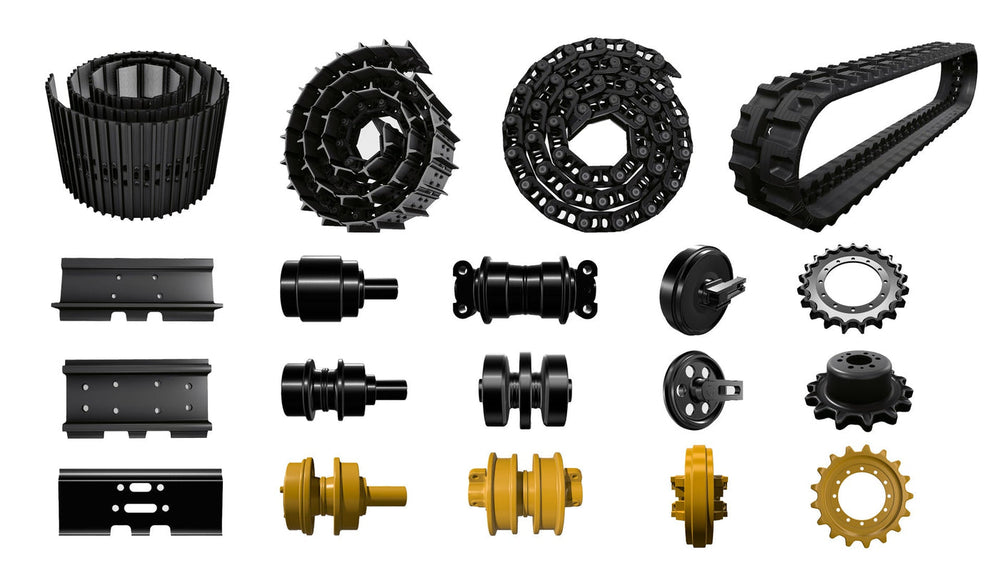
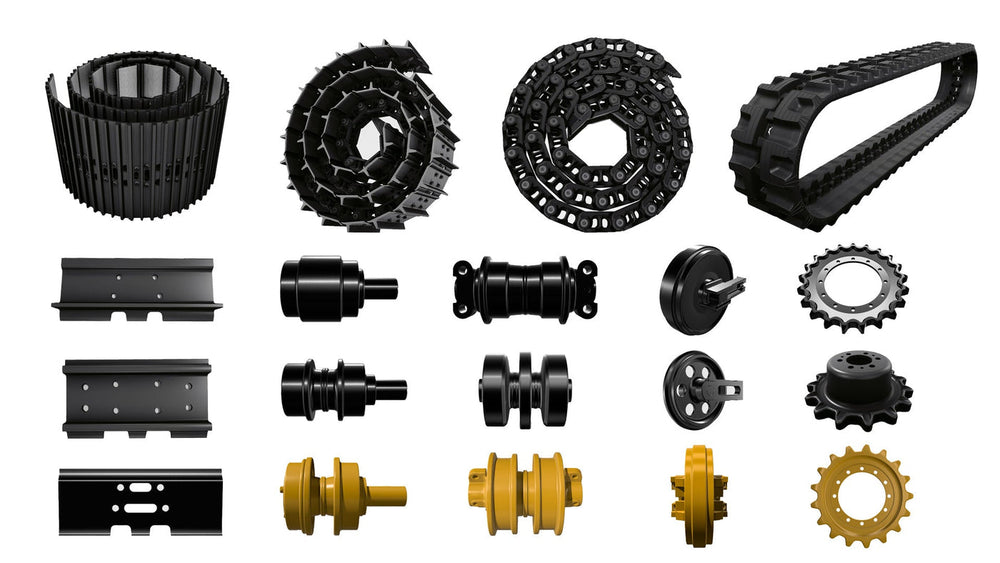
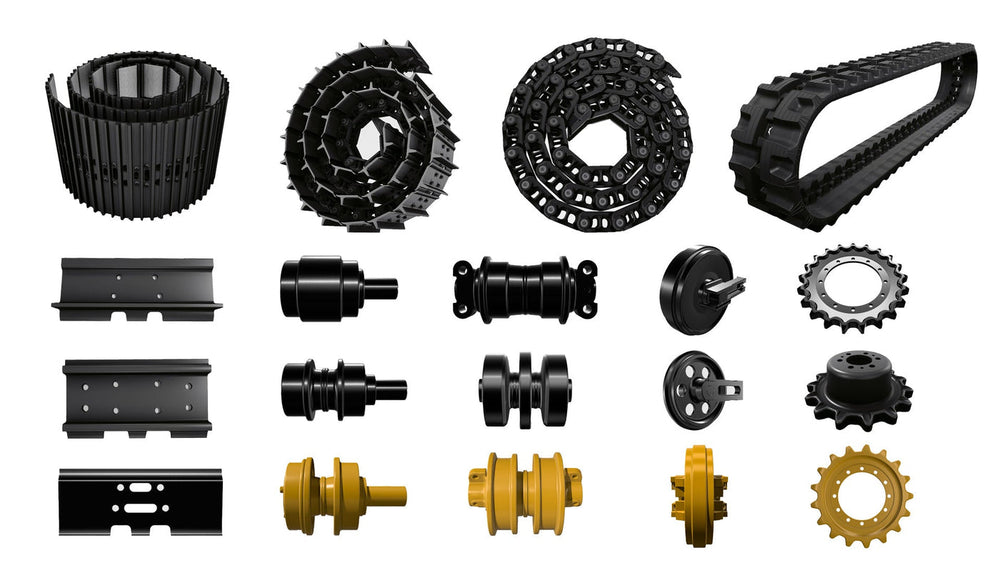
Controlling roller flange wear requires maintaining precise tracking straightness across the entire undercarriage system. Because all moving parts interact with the same multi-bar rubber track, pairing high-quality components from a consistent, precision manufacturer ensures balanced performance.
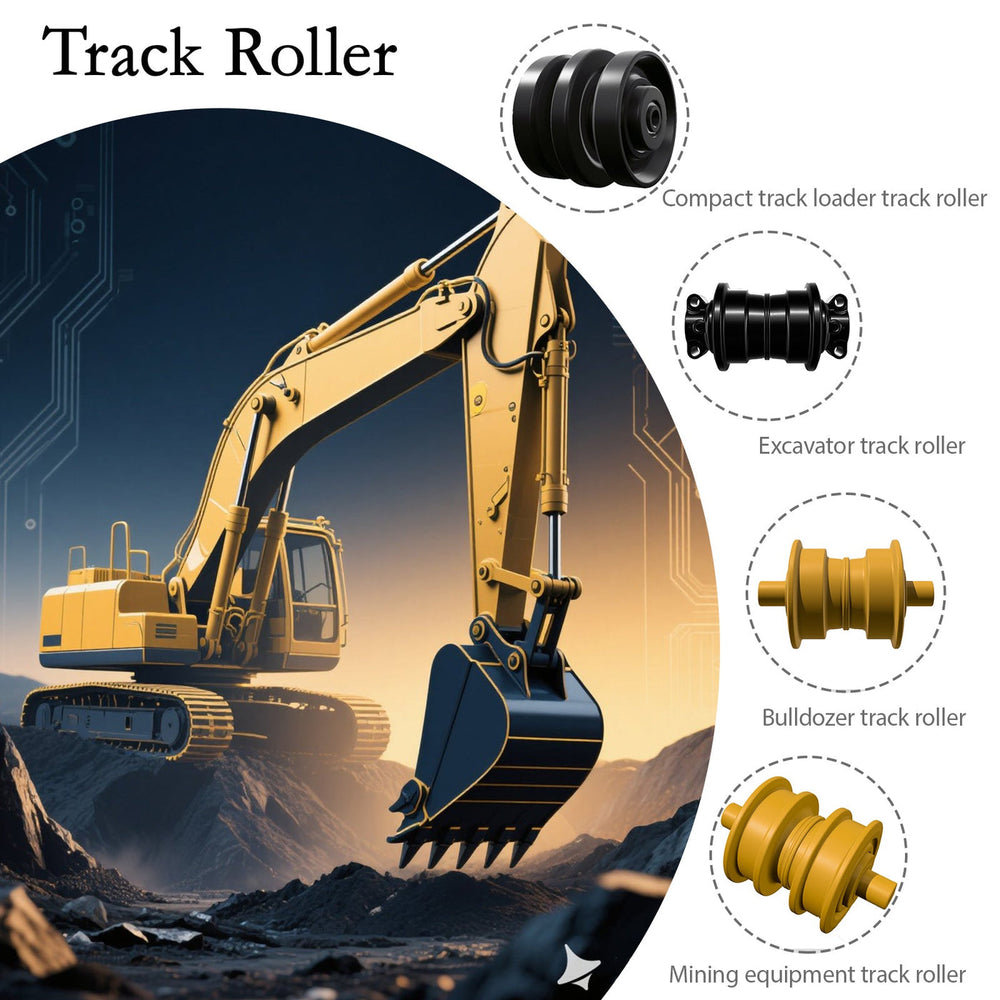
Track Rollers: Serving as the primary lower contact points with the track rail, these components utilize precise CAD/CAM geometry and durable floating seals to minimize misalignment-driven flange wear.
Carrier Rollers: These upper rollers support the top run of the rubber track. Upgrading misaligned or frozen carrier rollers prevents the lateral track sagging and whipping that accelerates link rail side-wear.
Front Idlers and Drive Sprockets: Correct front idler alignment and precise sprocket tooth profiles are essential to guiding the track chain smoothly into the roller path, eliminating track snaking before it impacts the flanges.
Rubber Tracks and Track Chains: Matching the exact pitch of the track chain and the internal lug profile to your rollers and sprockets prevents boss interference, limits offset tread wear, and stabilizes machine traction.
System Management Approach: By managing the undercarriage as a single, interconnected system, fleet owners can build a predictable, data-driven maintenance program that lowers unexpected downtime and maximizes machinery investment.
Three causes of flange wear, and how to tell them apart
Flange wear on a compact track loader looks the same from the outside whichever cause produced it. Three observations separate them, and only one of the three is answered by replacing the roller.
| Observation | What it points to | What to do |
|---|---|---|
| Both flanges worn, evenly, across most of the set | Ordinary lateral loading in the duty the machine works | Measure against the allowance, and check that tension is within specification |
| One flange worn, on the same side across the set | Alignment: the chain is being pushed against one side along the frame | Check idler alignment and frame straightness before ordering parts |
| A flange worn with heat discolouration, or a roller that runs hot | Friction rather than load: over-tension, a stiff bearing, or packed material holding the chain against the flange | Tension and cleaning first, then the roller |
Two practices make the diagnosis reliable. Read the wear across the set rather than on the roller that looks worst, because a pattern is evidence about the machine and a single worn flange is evidence about a component. And feel for heat after a shift, comparing the rollers with each other, because friction shows as temperature before it shows as wear.
The reason to sort the three is cost. Only the first row is answered by replacing rollers; the second is answered by alignment work and the third by tension and cleaning. A new set of rollers fitted without either of the last two corrections wears the same way, at the same rate, from the first hour.
Conclusion: Managing Bobcat T590 Roller Flange Wear
Bobcat T590 compact track loader roller flange wear results from an accumulation of frame misalignment, improper track tension, excessive side-loading, and high-speed heat generation within the rubber track. Ignoring these early warning indicators turns a simple tracking adjustment into an expensive, multi-component undercarriage rebuild. By introducing disciplined daily cleaning routines, executing regular tracking straightness checks, and upgrading to precision-engineered, friction-welded rollers and matching undercarriage components, fleet managers can effectively stabilize track guidance, extend operational lifespan, and eliminate unplanned jobsite downtime.
Frequently Asked Questions
Why are my track roller flanges wearing?
Either ordinary lateral loading in the duty, alignment pushing the chain against one side, or friction from over-tension, a stiff bearing or packed material. Reading the wear across the whole set is what separates them.
What causes a track roller to run hot?
Friction: over-tensioned track, a bearing that is already damaged, or packed material holding the chain against the flange. Heat appears before wear does, which is why feeling the rollers after a shift is a useful check.
How do I know if the wear is an alignment problem?
When one flange is worn and it is the same side across the set. That points at the chain being pushed against one side along the frame, so the check that follows is idler alignment and frame straightness.
Can flange wear be repaired?
No. The flange is the surface that restrains the chain, and once material has been removed the restraint is reduced. A worn flange is a replacement item, with the cause addressed in the same session.
How often should rollers be checked on a compact track loader?
Every shift for debris and an obvious leak, and a hands-on check with the track slackened at the interval the duty calls for, including rotation and heat. The flange measurement belongs in the same session as the tension check.
This article is part of Excavator Track Rollers: How to Choose the Right Ones, the guide that covers this topic in decision order.
More Maintenance & Wear guides
Find the next article for your component, application or buying decision.
Back to Maintenance & Wear