ASTM G65 Abrasion Test Interpretation: A Ranking, Not a Wear-Life Promise
Inspection, wear evidence and replacement planning for the complete track system.

On this page
ASTM G65 ranks metallic materials by their resistance to one kind of wear, scratching abrasion, under a specified laboratory procedure. The result is a volume loss, and a lower volume loss means higher abrasion resistance within that procedure. It supports a relative ranking of materials. It does not give a wear rate for a roller, shoe or chain, and it does not predict a replacement interval. Before a G65 result informs an undercarriage material choice, match the procedure and the material state, then state the gap between the test and the contact and terrain conditions you care about.

What G65 measures
ASTM G65-16(2021) is listed as active. Its title names the dry sand/rubber wheel apparatus, so the rubber wheel is part of the test apparatus. It is not the material being evaluated, and the standard has no bearing on rubber track compounds. Rubber abrasion reports belong to a different question, covered in comparing rubber abrasion reports under the same test method.
The standard says the severity of abrasive wear in any system depends on the abrasive particle's size, shape and hardness, the stress the particle imposes and how often particles make contact. G65 standardizes these conditions to create a uniform wear condition it calls scratching abrasion. The intent is to produce data that reproducibly rank materials under a specified set of conditions.
Results are reported as volume loss in cubic millimetres for the specified procedure. The standard requires the metric unit so that laboratories report on a uniform basis. A mass loss alone is not the reported quantity, and a volume figure needs the density basis used to derive it.
Five procedures, not one test
G65 recommends five procedures suited to different degrees of wear resistance or specimen thicknesses. Procedure A is a relatively severe test that ranks metals over a wide range, and the standard calls it particularly useful for medium to extreme abrasion resistance. Procedure B is a short-term variation of A. Procedure C is a short-term variation for thin coatings. Procedure D is a lighter-load variation of A, useful for materials of low abrasion resistance and for ranking materials of a specific generic type or very close volume losses. Procedure E is a short-term variation of B.
A report therefore has to name its procedure. A volume loss from Procedure A and one from Procedure D are not on the same basis, and "tested to ASTM G65" without a procedure letter is incomplete.
What the standard says about prediction
The standard states that its value lies in predicting the relative ranking of materials in an abrasive environment. Because it does not duplicate all process conditions, including abrasive size, shape, pressure, impact or corrosive elements, it should not be used to predict the exact resistance of a given material in a specific environment.
It does allow one bounded comparison. Volume-loss data from a material whose life is unknown in a particular abrasive environment may be compared with data from a material whose life is known in that same environment. That gives a general indication of the unknown material's worth, provided abrasion is the predominant factor causing deterioration. Both conditions matter. The comparator needs a documented life in your environment, and abrasion has to be the dominant mechanism.
Build a metal abrasion relevance card
Use the card below to decide what a ranking supports. It is a recommended review aid, not a form required by the standard.
Decide what the ranking supports
If the card shows the same procedure, matched specimen states and a documented comparator, the result supports a relative ranking for scratching abrasion under that procedure. If a comparator with known life in your environment exists and abrasion dominates, it may also give a general indication for the unknown material.
If impact, corrosion or heavy contact stress is part of the real wear, the ranking covers only the abrasion portion of the problem. A material that ranks better here may not rank better where those mechanisms dominate. Commercial claims that a treatment cuts wear by a stated percentage describe the vendor's test or field conditions and should not be borrowed for a different part or terrain. No G65 result provides a replacement interval.
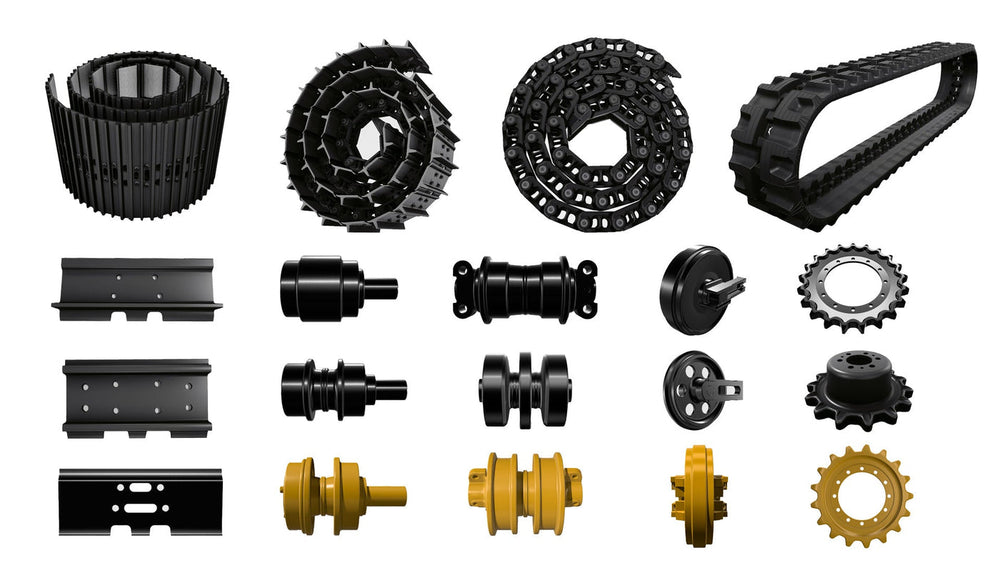
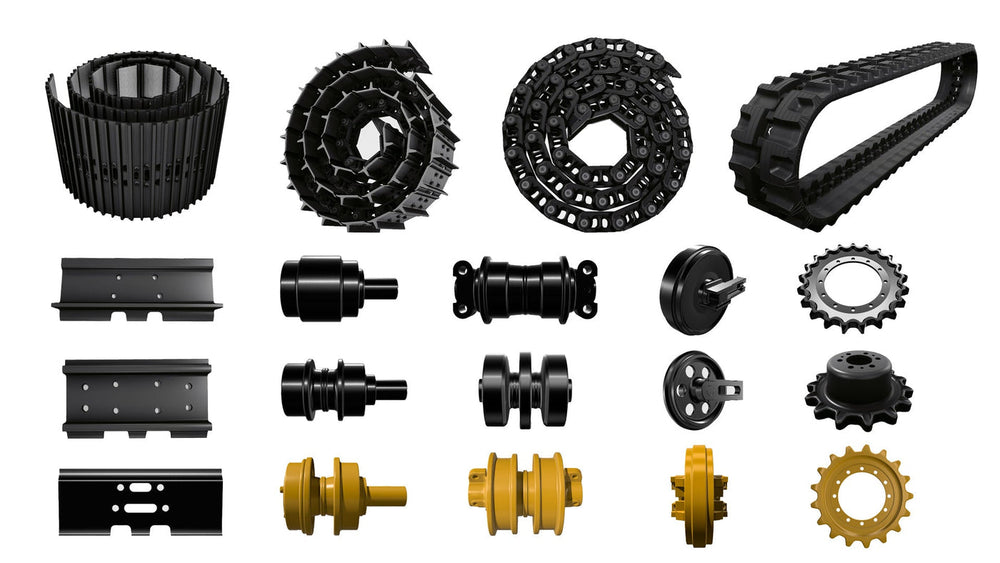
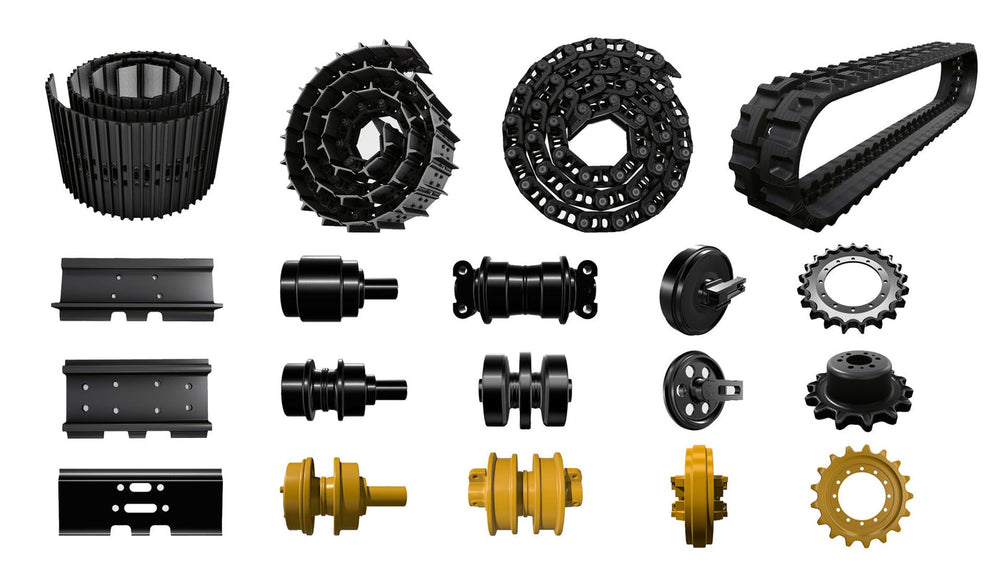
For a quoted undercarriage part, provide the part reference, the material or treatment in question and the wear mechanism you expect when asking what documentation is available. KTSU's public excavator undercarriage parts collection identifies the product family. It does not establish a G65 result or a wear-life level for any part.
The review is complete when the record states the procedure and material state, the ranking the data supports, and the explicit gap to the intended terrain and contact conditions.
More Maintenance & Wear guides
Find the next article for your component, application or buying decision.
Back to Maintenance & Wear